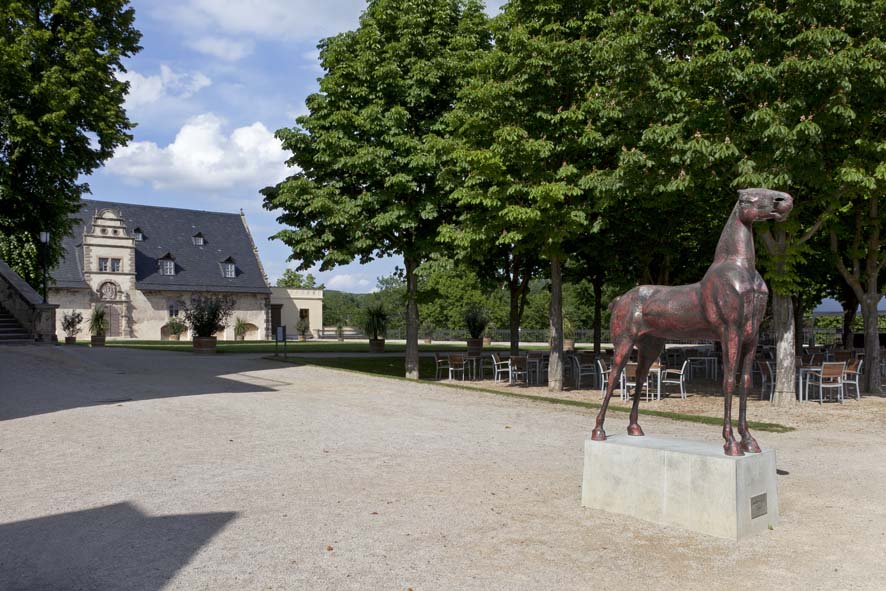
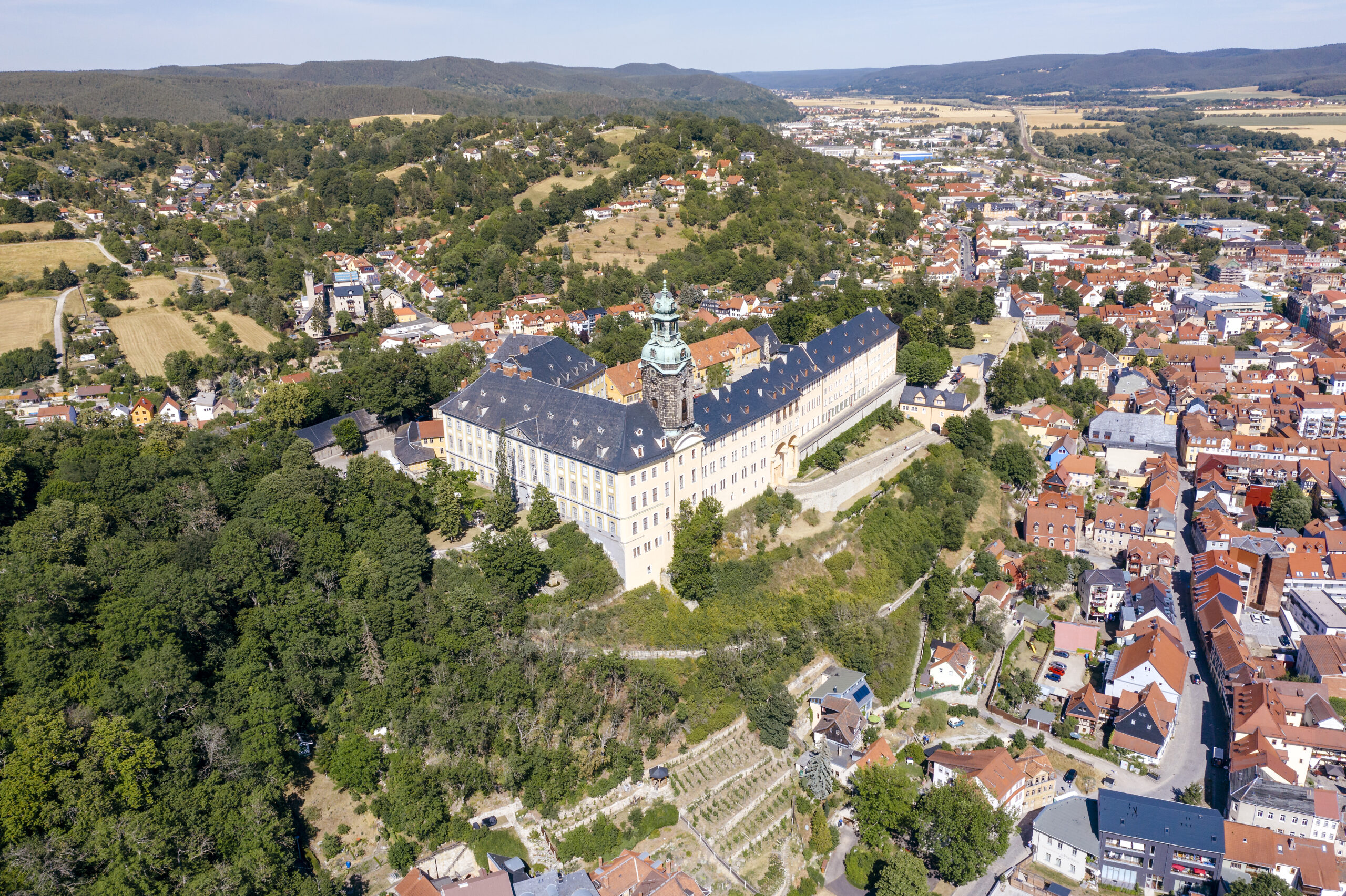
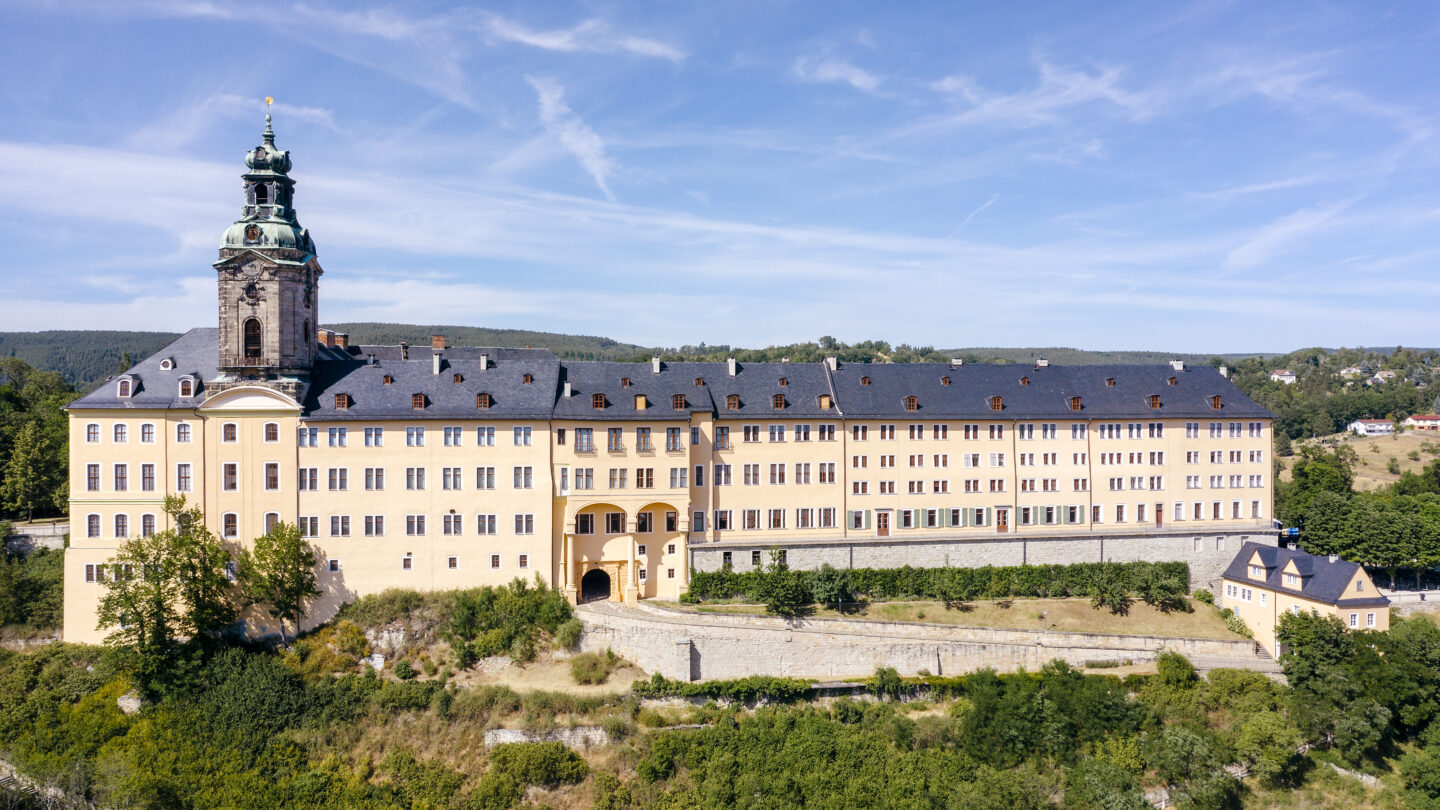
Garden culture held great importance, and the princes themselves devoted attention to this art. This was true of Ludwig Friedrich II of Schwarzburg‑Rudolstadt, from whom design drawings for the terraced garden of Heidecksburg Palace have even been preserved. The palace courtyard, also referred to as the Upper Terrace, is bounded to the east by a balustrade. From here, both garden terraces can be viewed, along with a panorama of the surrounding hill ranges. The Middle Garden Terrace with its Cannon House, and the Lower Garden Terrace (the former palace garden) with its Sound Hall, are each reached by double‑flight ramps and staircases.
At a glance
Address
Thuringian State Museum Heidecksburg: Rococo en Miniature, Palace Rooms, Natural History Museum Schloßbezirk 1
07407 Rudolstadt
T: 0 36 72 – 42 9010 Email Website
Opening hours
Thuringian State Museum, Heidecksburg Rococo en Miniature, Palace Rooms, Natural History Museum
Tue – Sun 10 am – 5 pm
Park/Garden
all year round, until dusk
The Sound Hall on the Lower Terrace
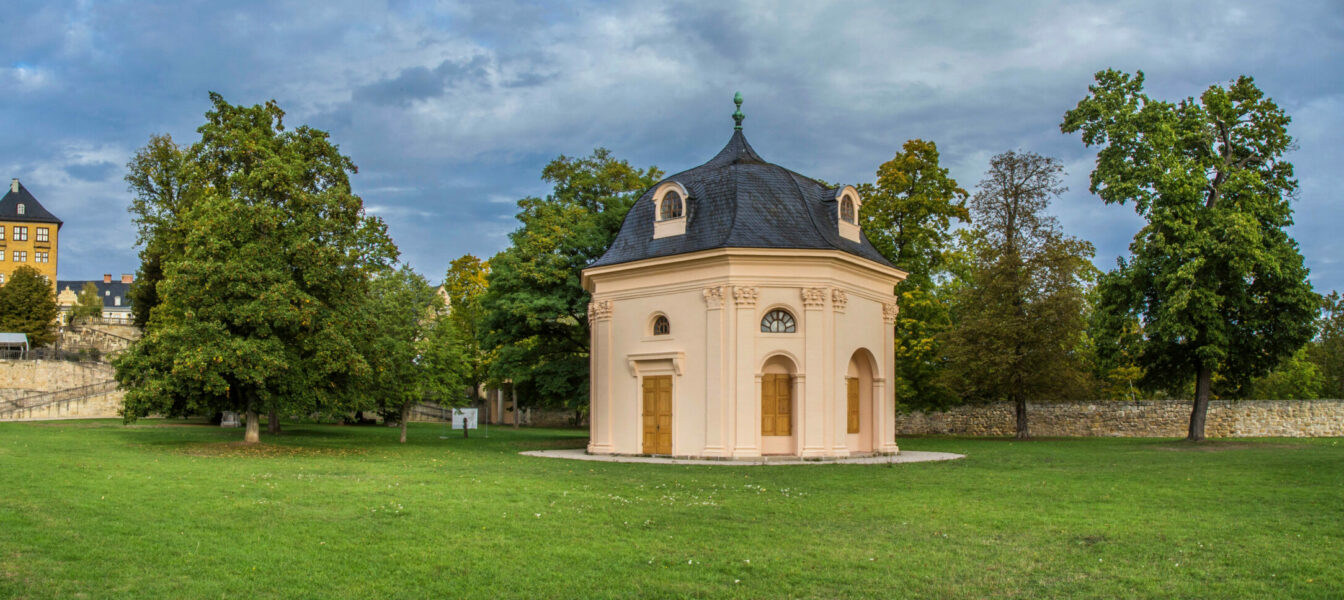
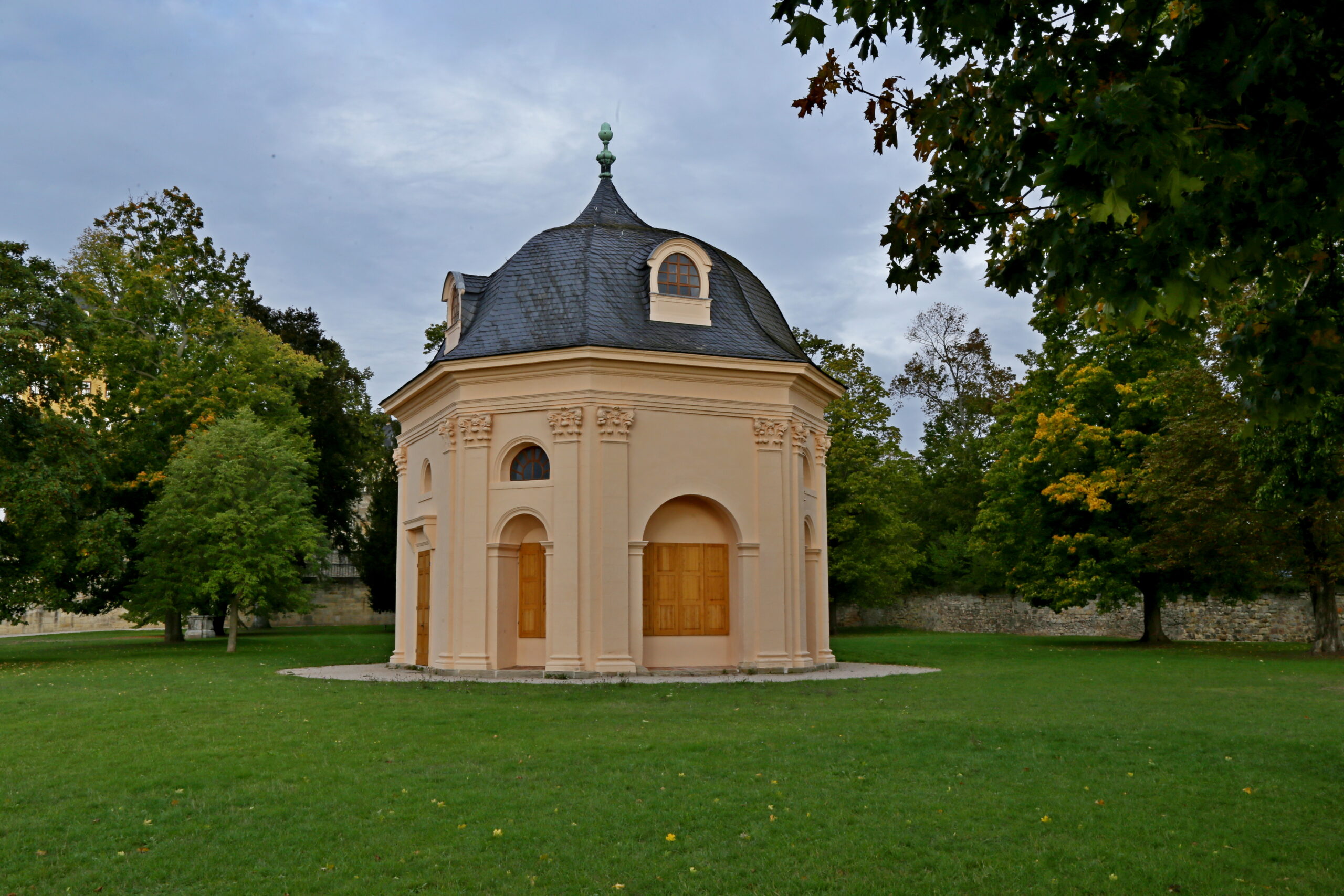
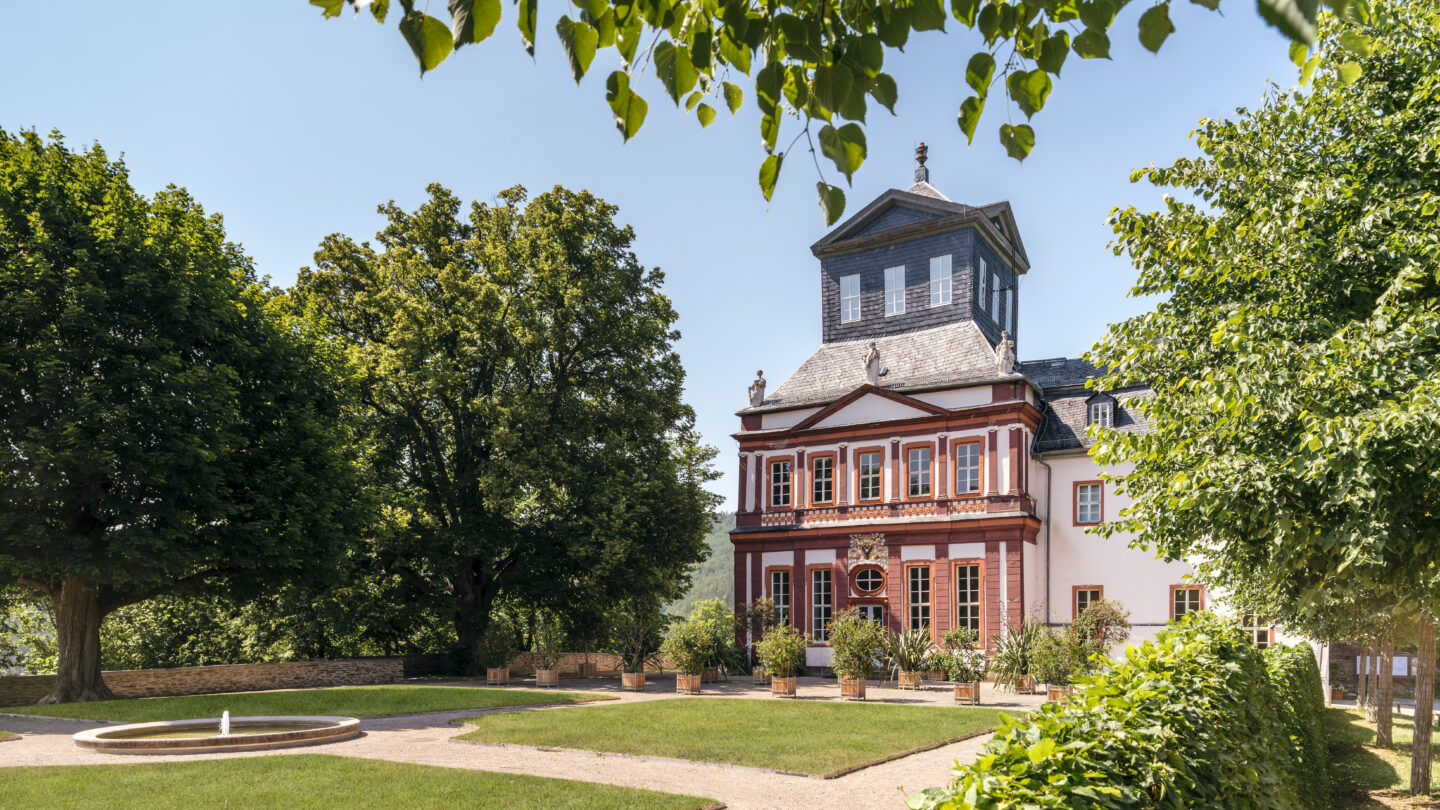
This building is a rarity in its dual function as a garden pavilion and a resonating chamber. Originally constructed in the 17th century as a garden house at the intersection of the path axes on the lower palace terrace, it thus occupied a central position in the garden layout. Beneath the slate dome of the octagonal pavilion lies a sound hall – the last surviving example of its kind in Thuringia. Through an opening, the vaulted space is connected to the ground‑floor garden hall. Musicians once played above, while the courtly audience listened below. During the Baroque period, sound halls were widespread, offering the court an opportunity to hear music without seeing the performers. The Sound Hall dates from around 1730, when the already decades‑old building was remodelled. Around 1800, as part of the transformation of the garden into a landscape park, further changes were made to the building in the spirit of a unified Neo-classical redesign.
The ochre exterior paintwork is based on findings from the early 19th century. Since summer 2020, with the completion of restoration and renovation, the building has once again been fully accessible.
On the middle terrace there used to be a riding arena.