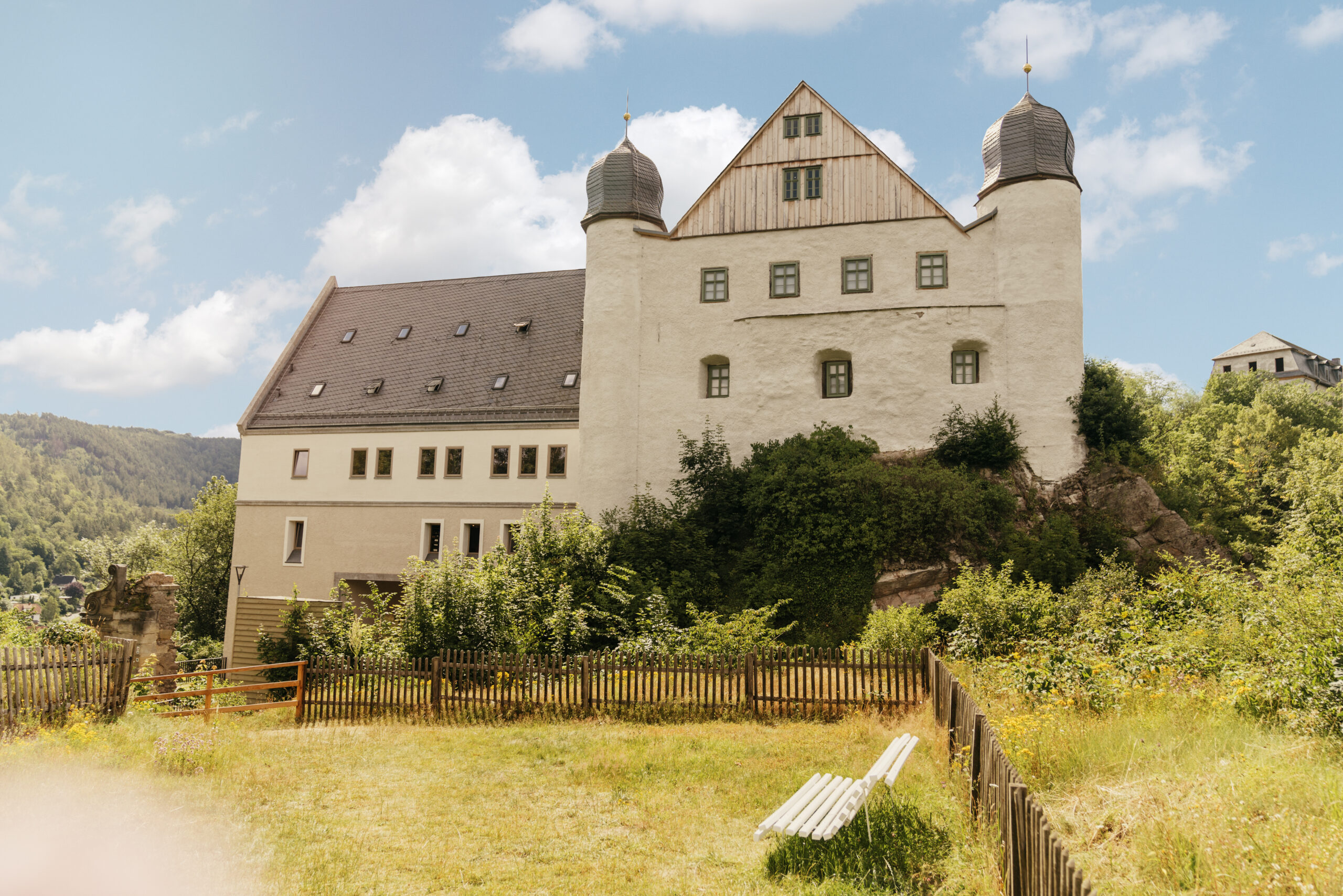
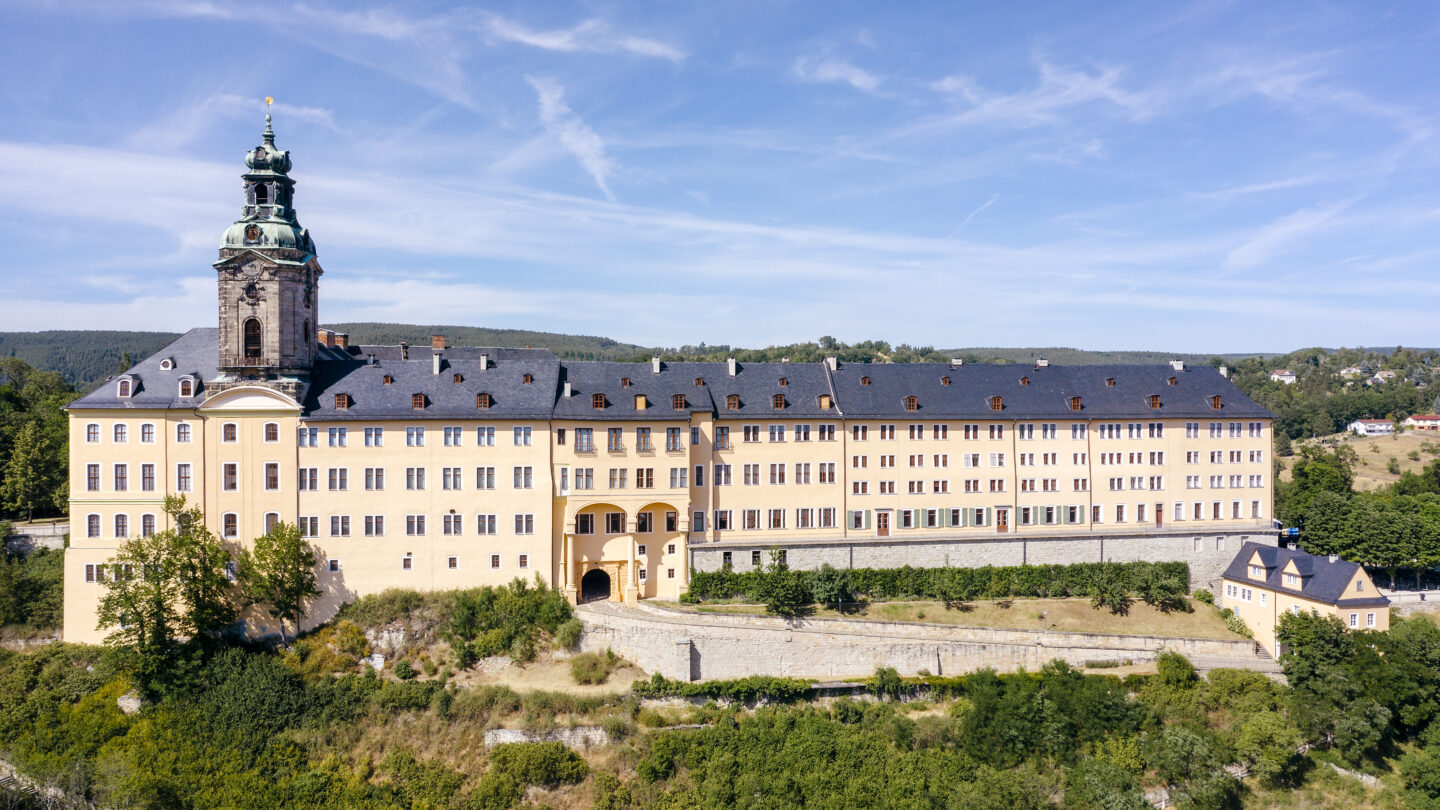
Historical eras and milestones – from the monarchy to the dawn of democracy and the rise of National Socialism – continue to shape Schwarzburg Castle to this day. This makes the castle complex a place of remembrance for German history. It was the ancestral seat of one of the oldest noble families in Thuringia, which was able to hold its own against the dominant Ernestines and ruled two principalities of its own until 1918. Originally built as a medieval castle in the first half of the 12th century at the latest, the complex was expanded into a fortress in the 17th century.
Following the Schwarzburg family’s elevation from the rank of count to that of Imperial Prince in 1710, the family seat – which had been used as a hunting lodge and summer residence – became a dynastic seat of honour.
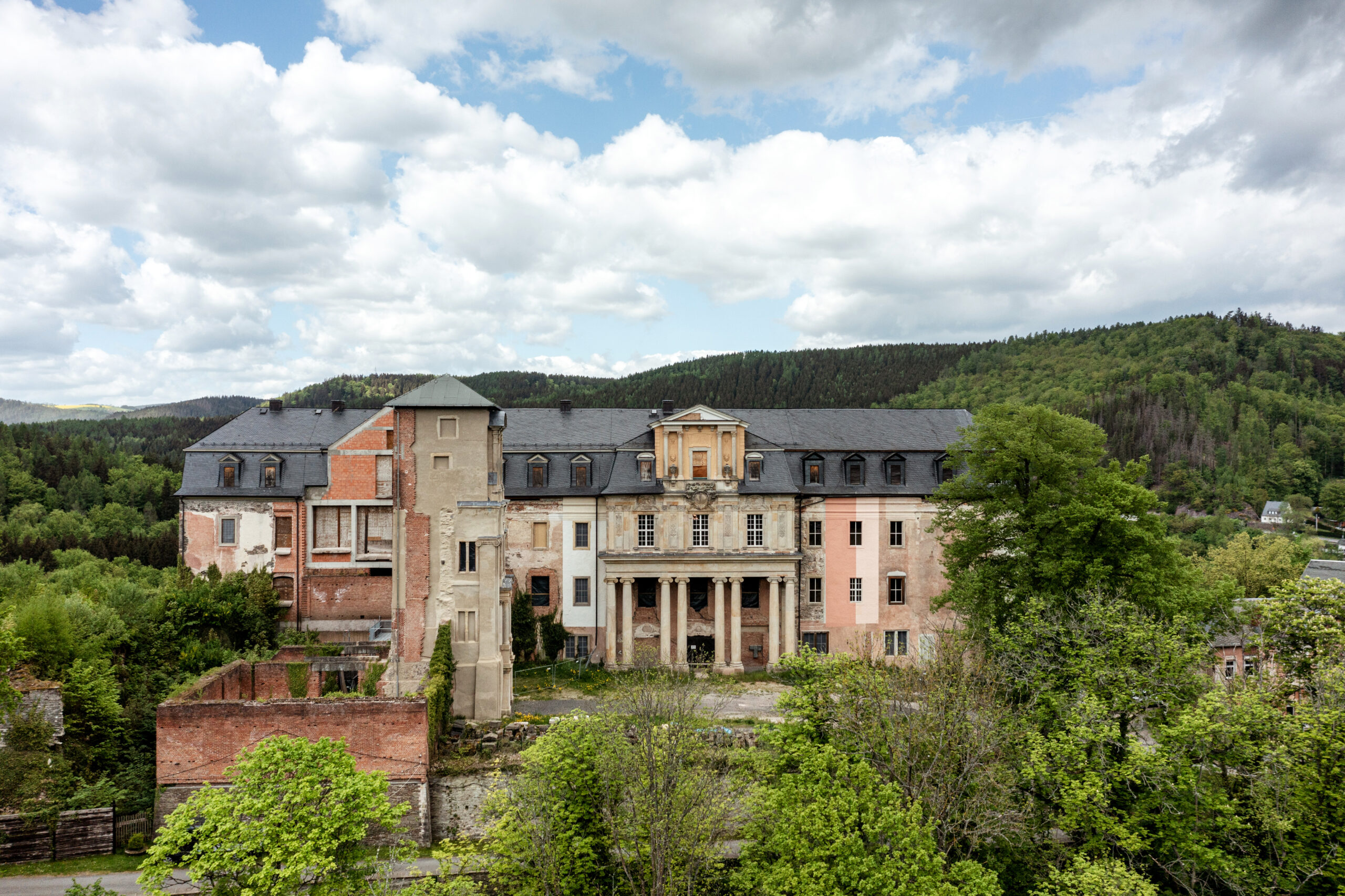
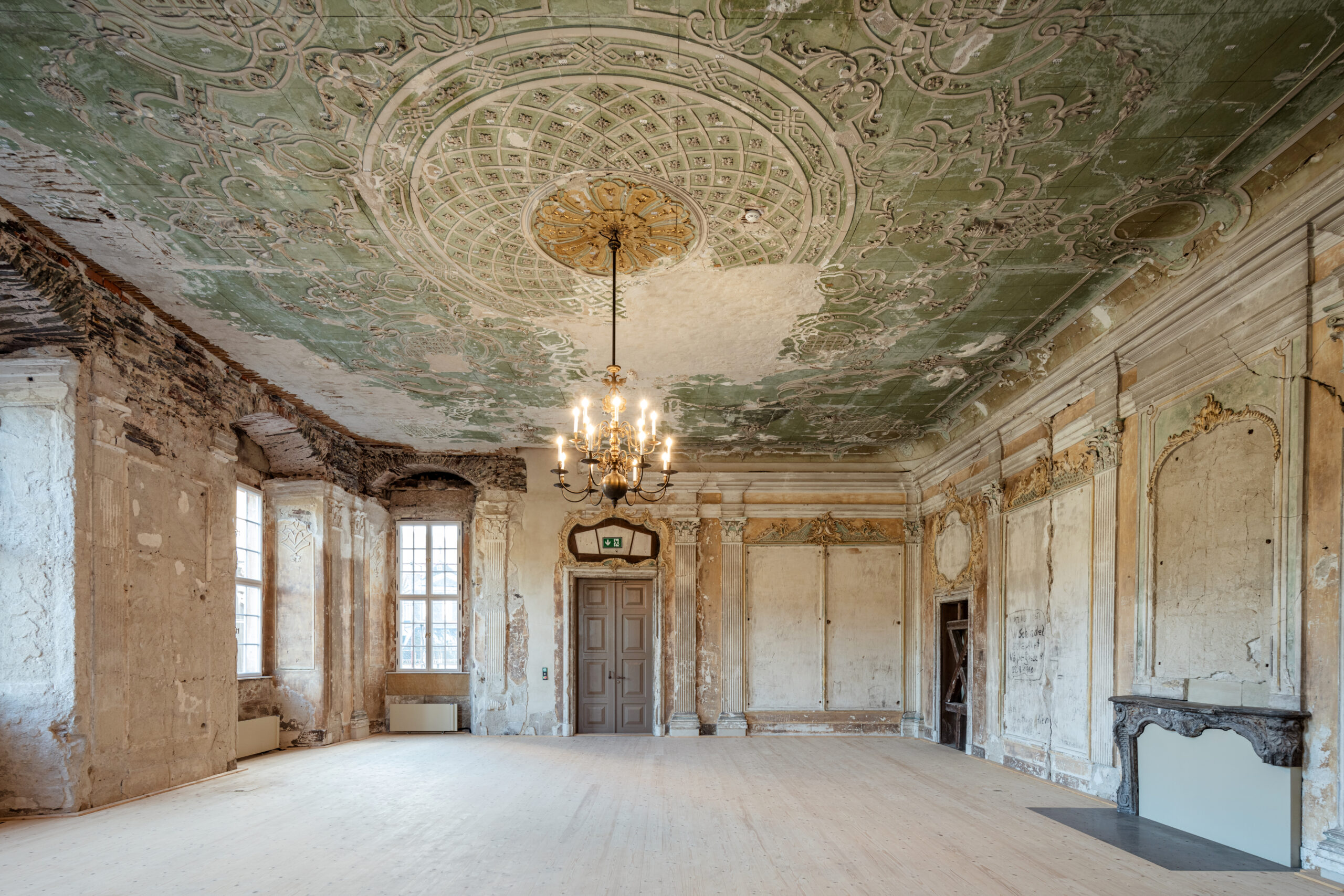
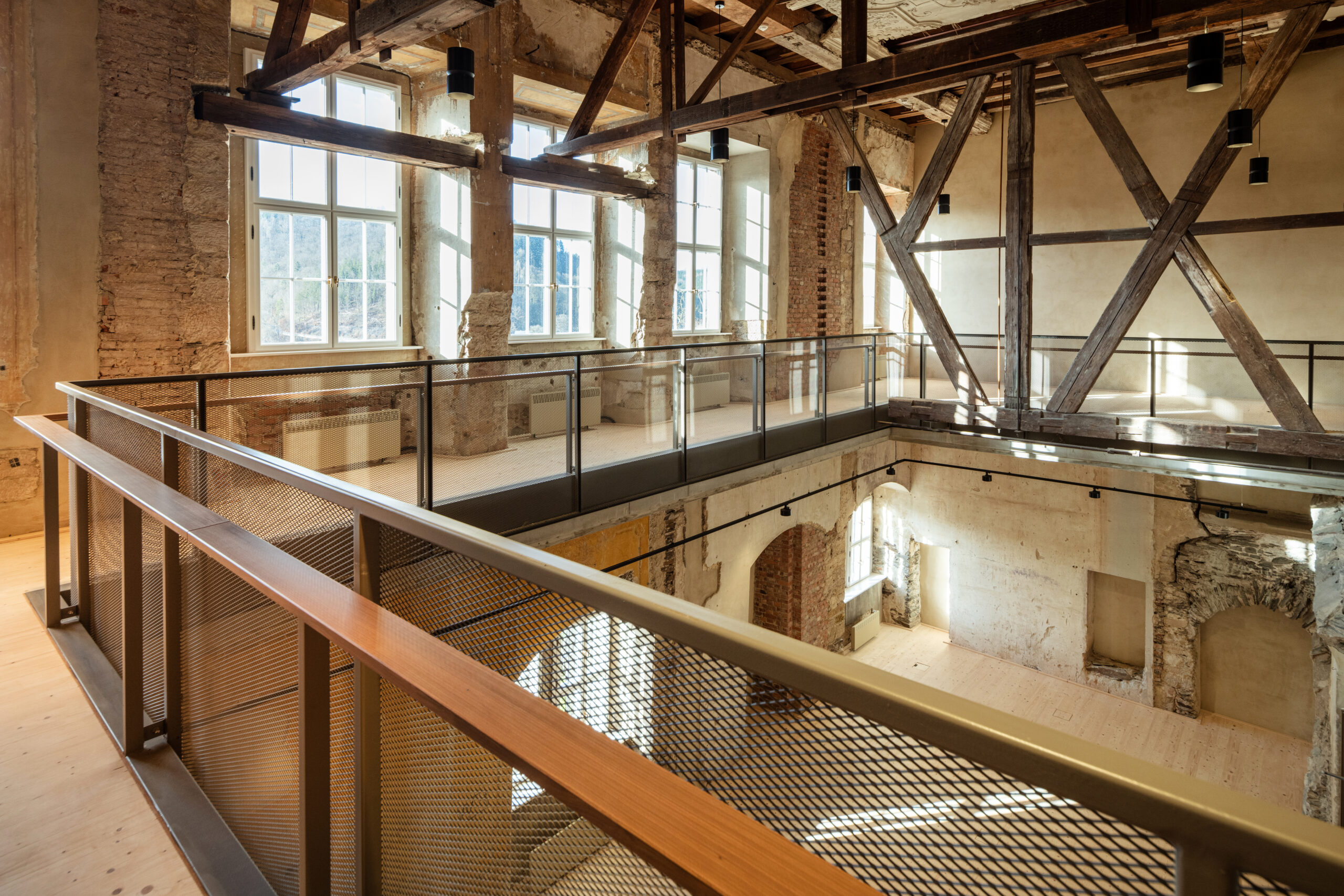
Following the end of the monarchy, the last princely couple were granted the right to reside at Schwarzburg Castle, whilst, in 1919, the first President of the Reich, Friedrich Ebert, signed the Weimar Constitution – Germany’s first democratic constitution – within sight of the castle. In 1940, the Nazis began converting the castle complex into a Reich guesthouse, a project that was halted two years later. The main castle building remained a derelict ruin for over 70 years, until the first two rooms were reopened in 2021. The ‘Princely Worlds of Experience’ welcome visitors in the Gatehouse and Armoury.
At a glance
Address
Princely Worlds of Discovery: Schwarzburg Palace, Armoury with Weapons Collection and Imperial Hall Schloßstraße 1a
07427 Schwarzburg
T: 03 67 30 – 39 96 30 Email Website
Friends’ Association
Friends’ Association of Schwarzburg Castle – A Place of Remembrance for Democracy e.V. Website
Opening hours
Princely Worlds of Discovery at Schwarzburg Palace Armoury with weapons collection and the Imperial Hall April to October
Tue – Sun 10 am – 5 pm
November to March
Tue – Sun 11 am – 5 pm
Closed on Mondays, except on public holidays
Park/Garden Open all year round
Schwarzburg Palace
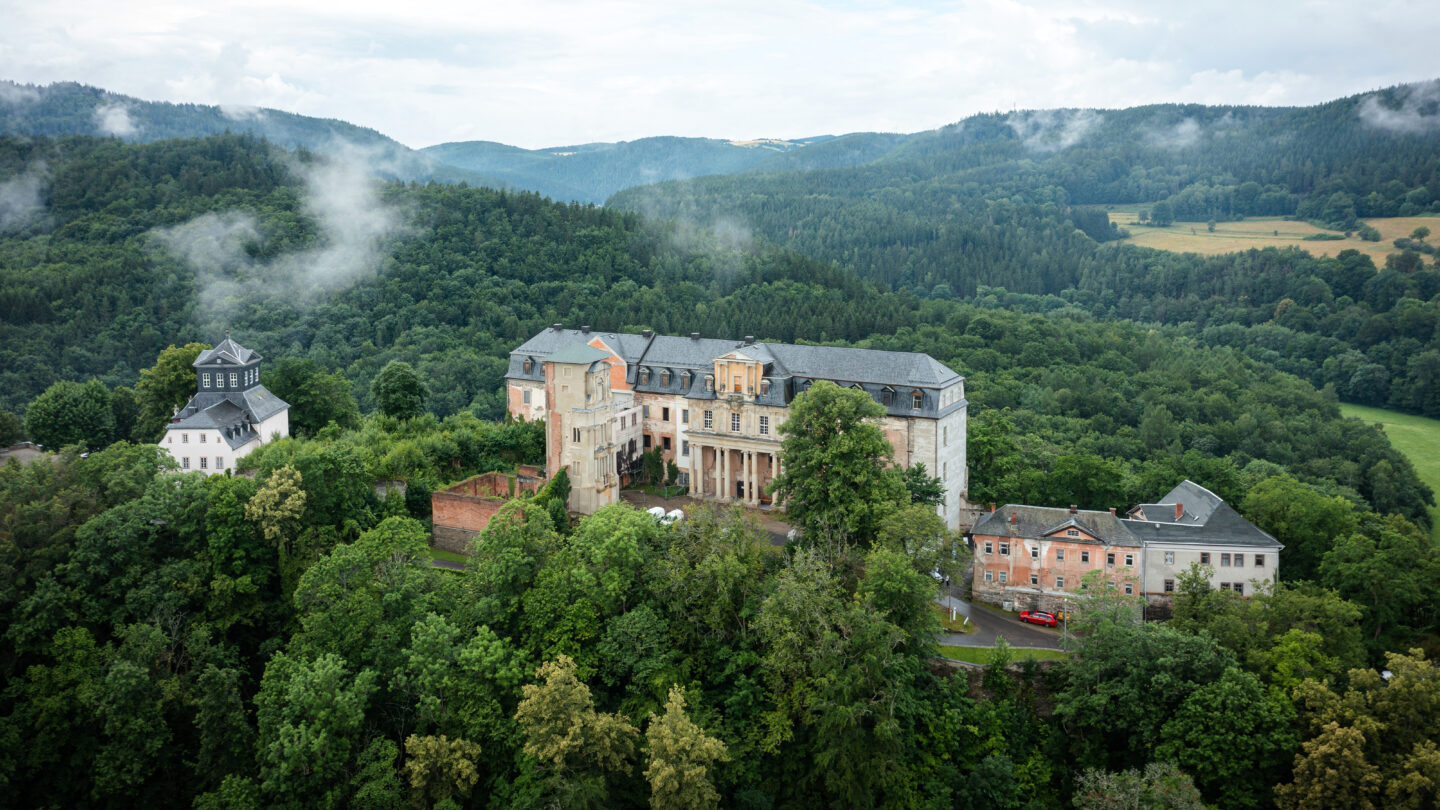
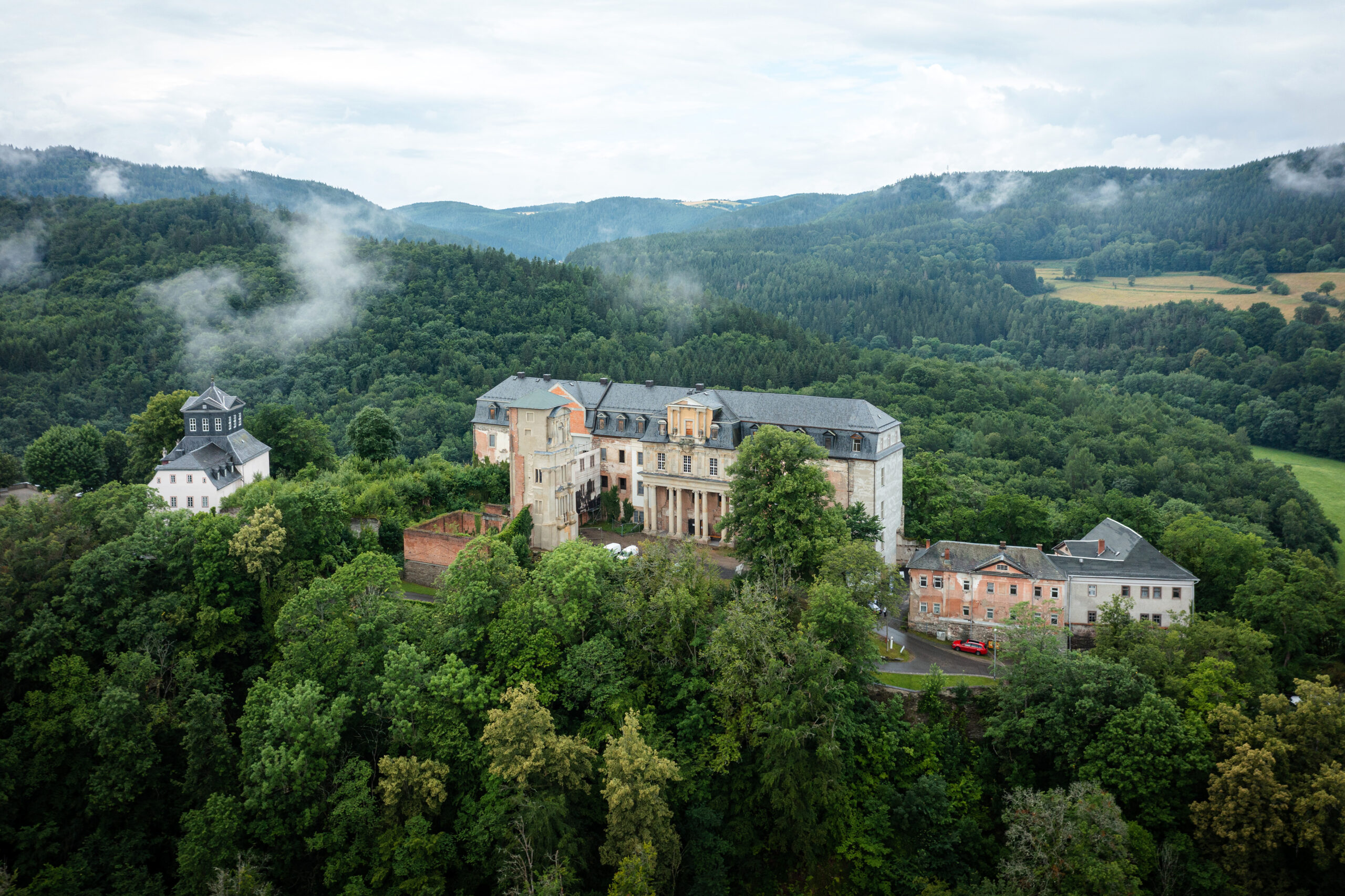
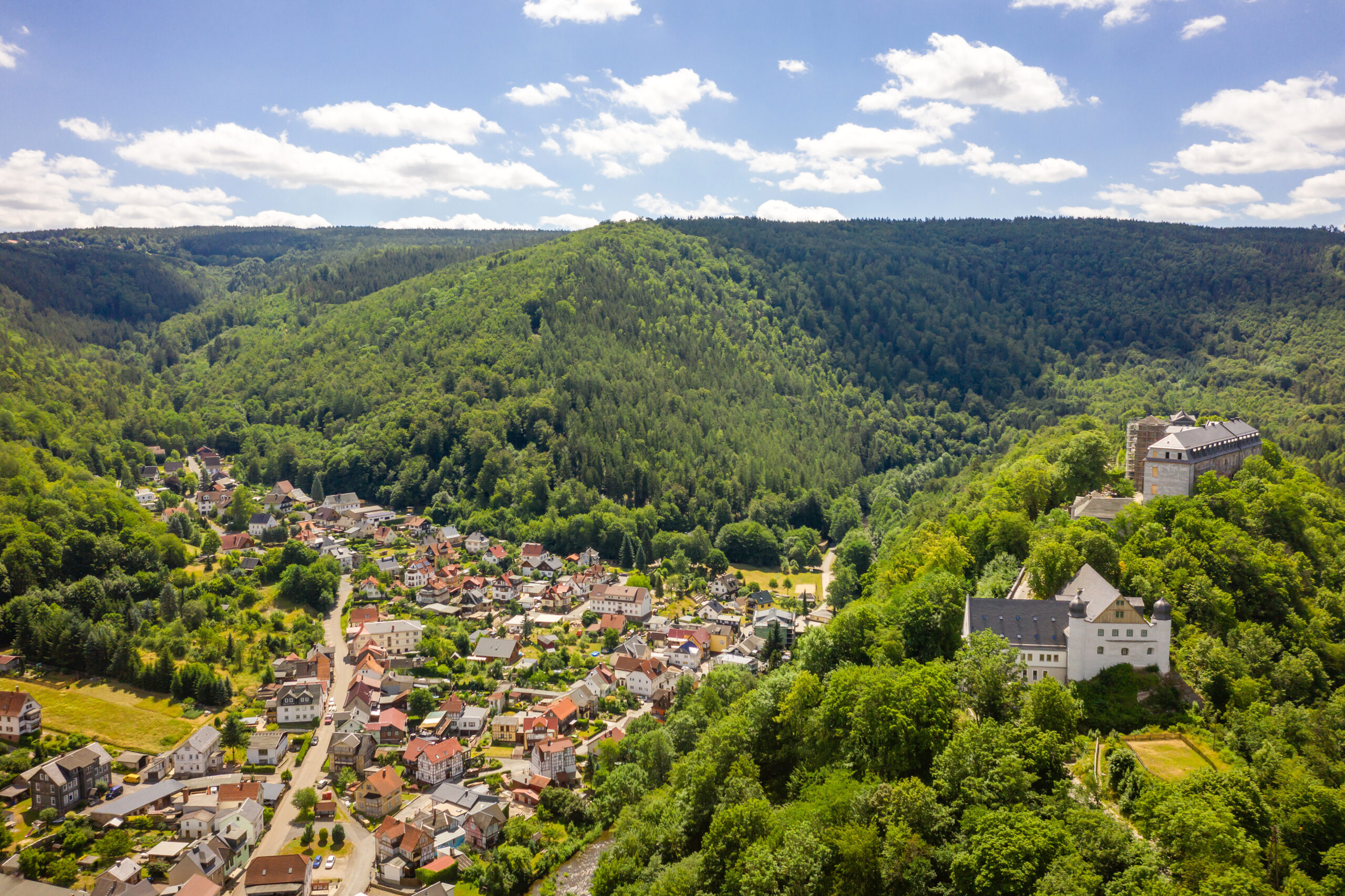
Perched on a rocky spur above the River Schwarza Valley stands Schwarzburg Palace. For centuries, this hilltop palace served as the ancestral seat of the eponymous counts. It came into the global spotlight in 1919 when Friedrich Ebert signed the Weimar Constitution in its immediate vicinity. The palace has endured turbulent times. Under the National Socialists, it was slated to be converted into a “Reich Guest House”, and as a result, it was heavily damaged. Since 2009, extensive work has been underway to make the palace accessible to visitors once more. A significant milestone was the reopening of the armoury with its unique collection of ceremonial weapons.
The Legionnaire and His Spear
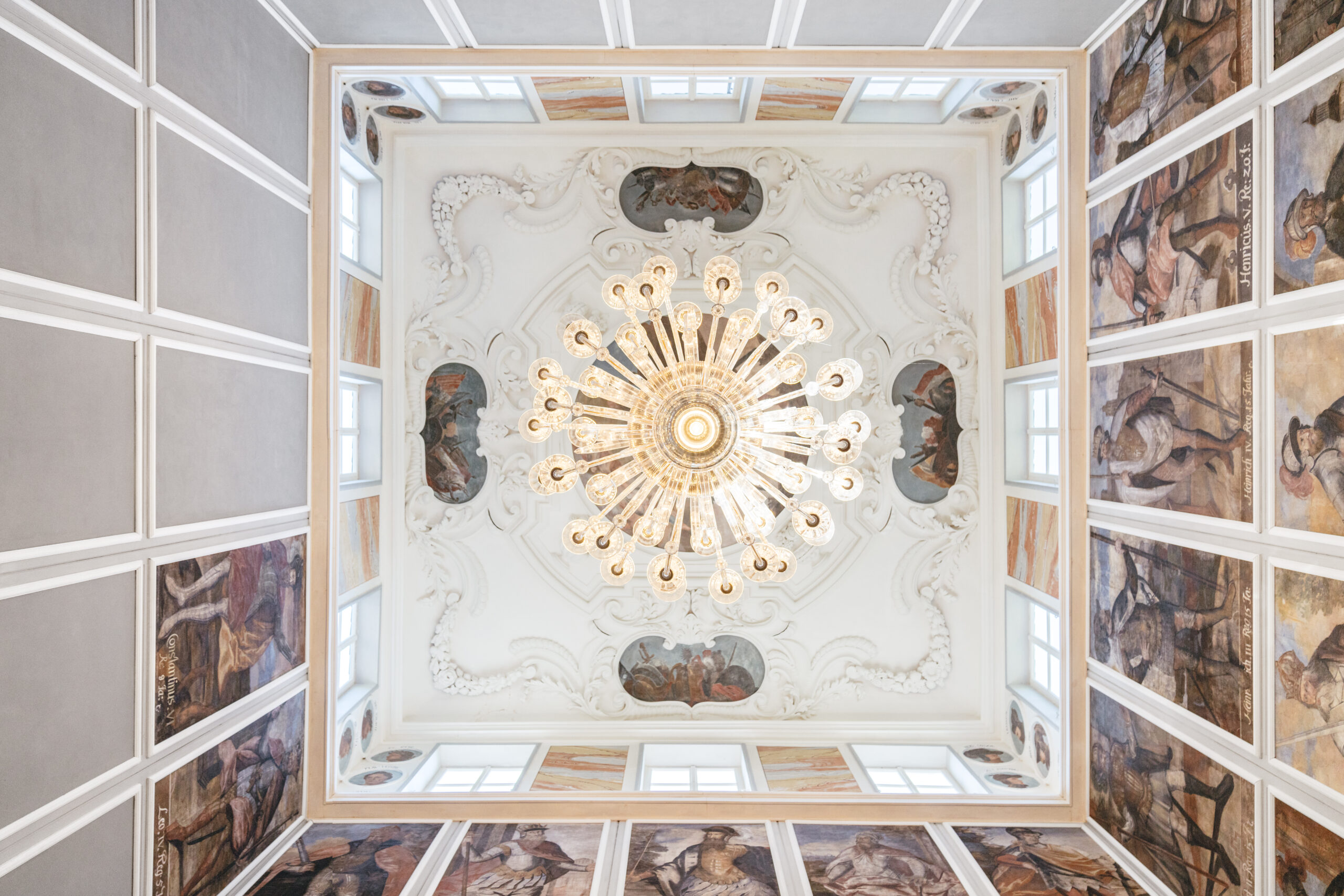
They belong to one of Thuringia’s oldest and most influential dynasties – the Counts and Princes of Schwarzburg. The founding legend explains why they chose the River Schwarza Valley as their ancestral seat. Depicted in a ceiling painting within the Kaisersaal (Emperor’s Hall) of Schwarzburg Palace is a Roman legionnaire thrusting his wooden spear into the ground. Though seemingly lifeless, the wood begins to sprout leaves and branches. For the legionnaire, this was a sign: here is where he wished to settle. Thus began the story of the Schwarzburg family. The hilltop palace was first documented in 1071. By 1453, sources describe an elaborate complex comprising several residential buildings, a hospital, a chapel, and various towers. Nevertheless, the site began losing importance during this time, as Arnstadt, Rudolstadt and Sondershausen rose to become the Schwarzburgs’ residential cities.
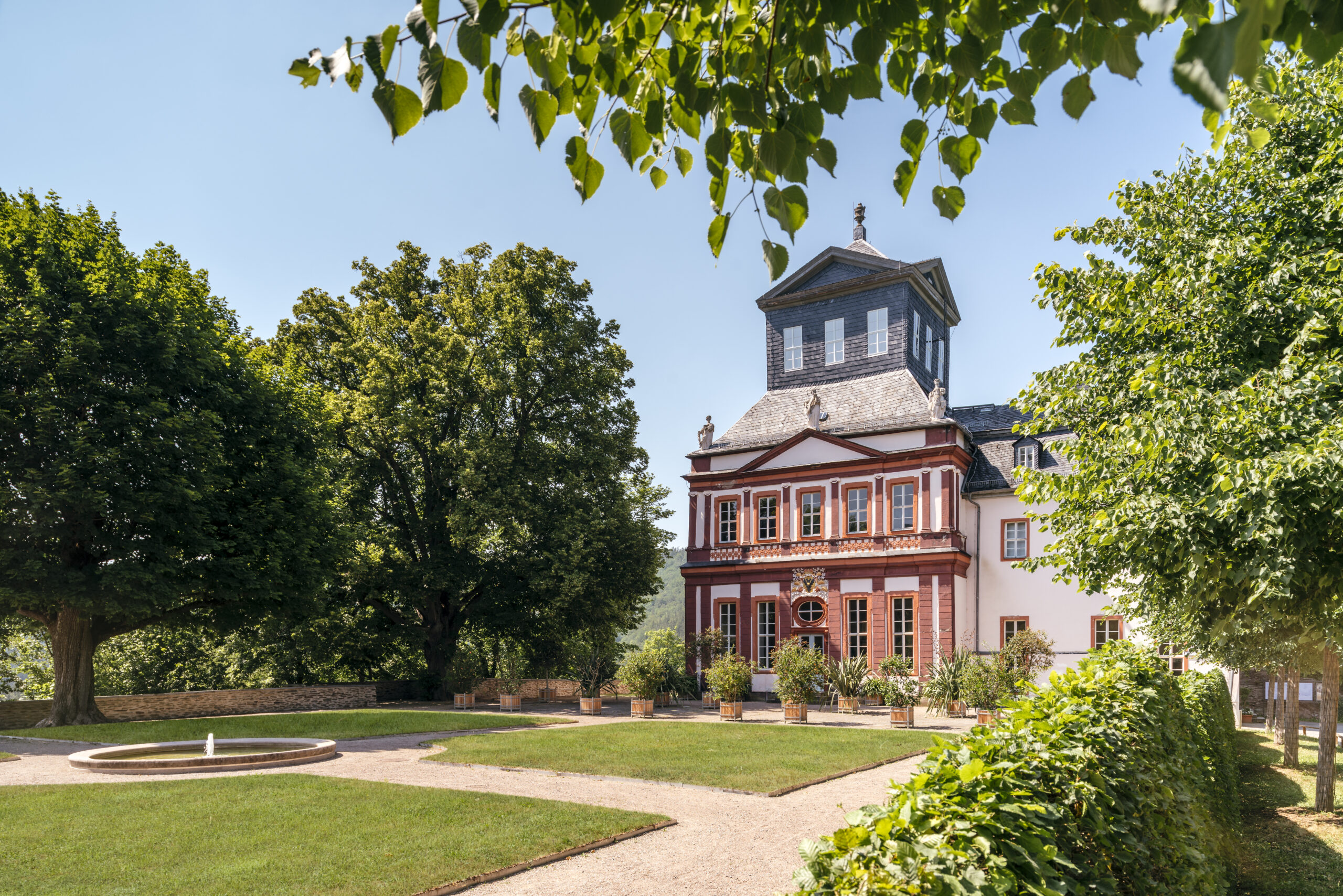
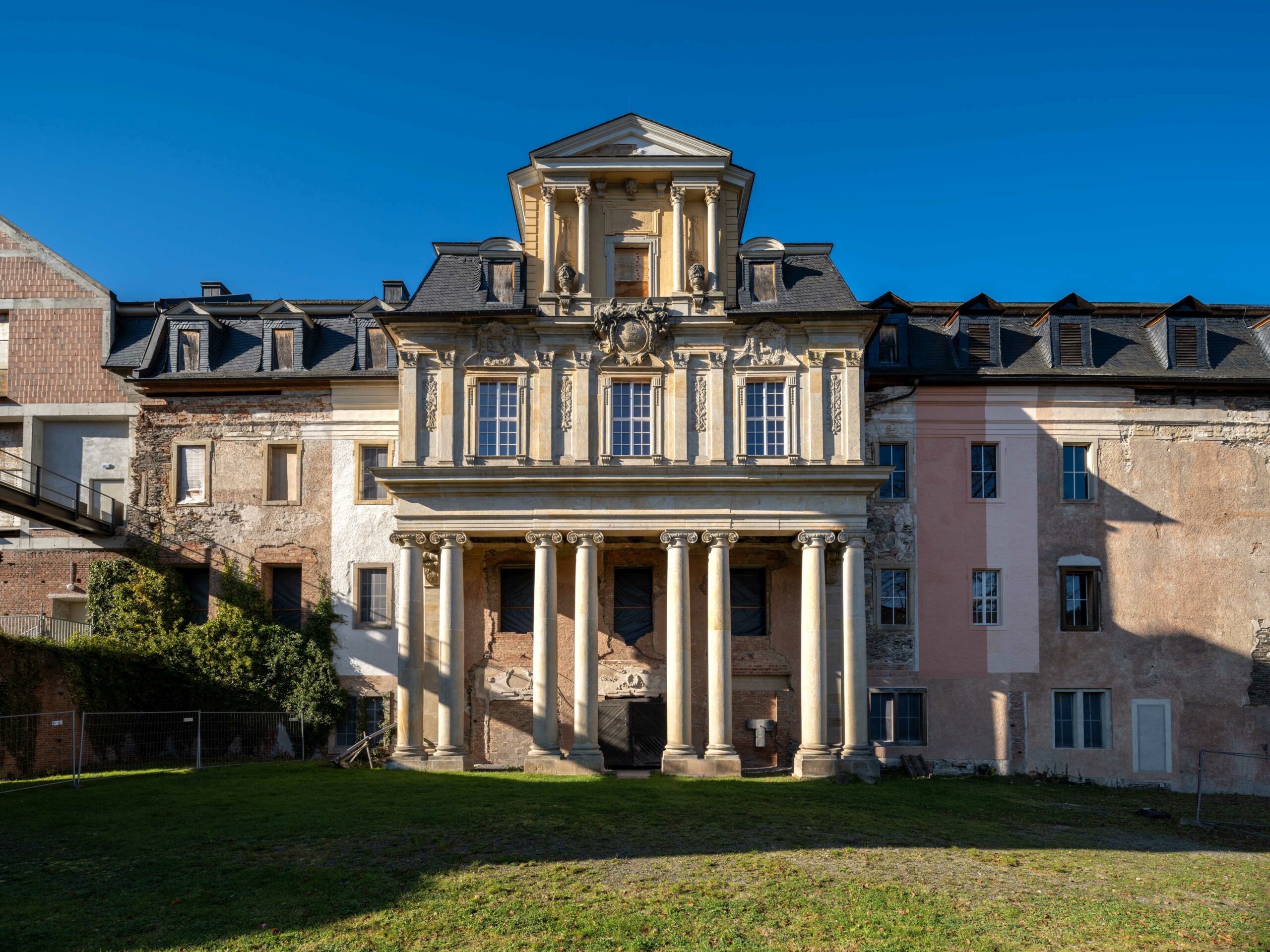
Still, they never fully abandoned their ancestral seat, particularly after the elevation of the Schwarzburg-Rudolstadt counts to Imperial Princes in 1710. Prince Ludwig Friedrich chose Schwarzburg Palace as the site of his investiture ceremony, reinstating the palace as a centre of courtly representation and prestige. The garden house, originally planned as an orangery, was completed and transformed into a temple honouring the princely lineage. This became today’s Kaisersaal building. A square lantern atop the structure bathes the hall below in a mystical light, further enhanced by life-size depictions of medieval emperors and kings.
A Palace with a Turbulent History
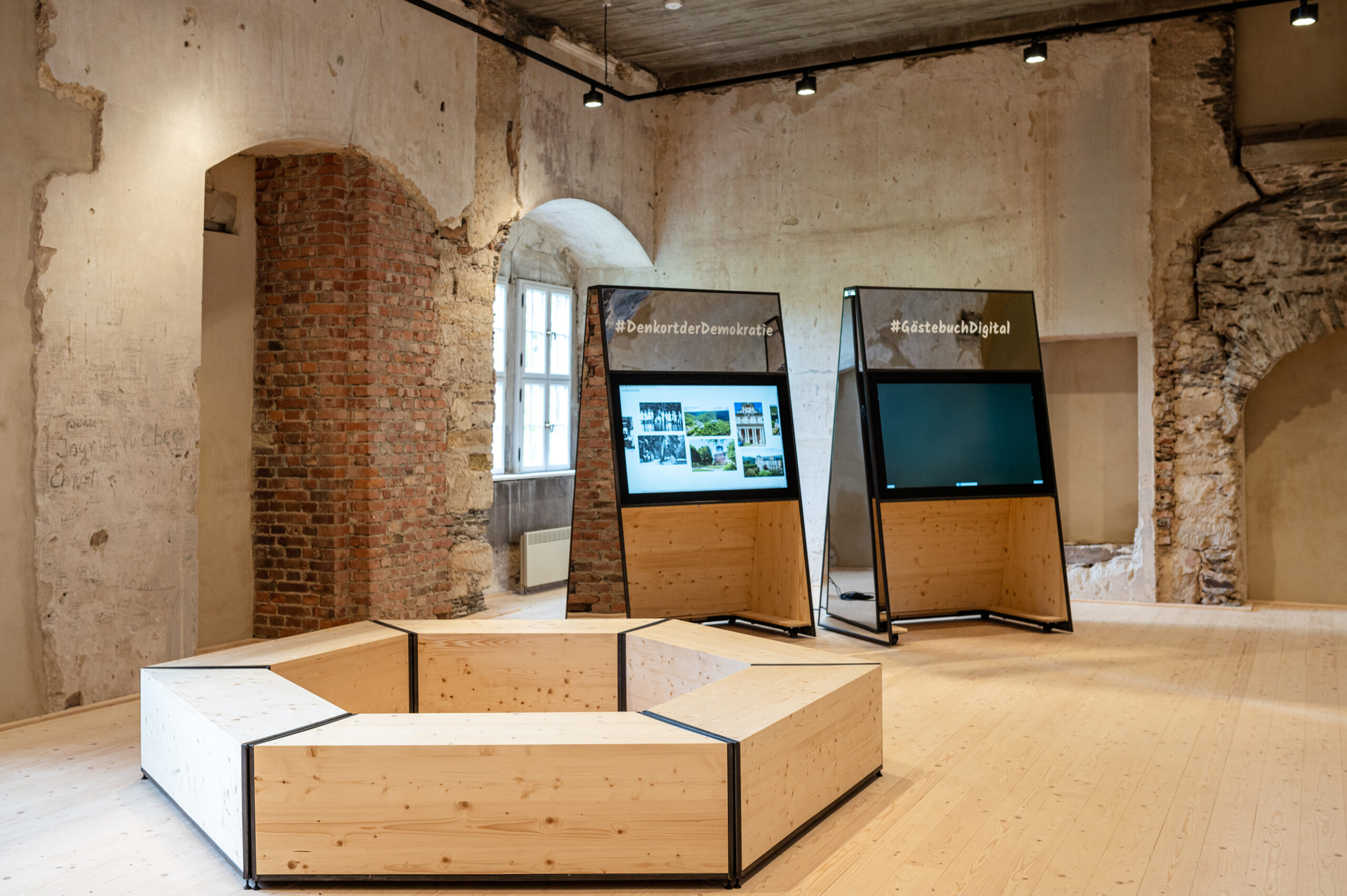
In 1726, a devastating fire broke out in the palace. The Kaisersaal building survived, but the main building was destroyed. The Schwarzburgs rebuilt their ancestral residence as a hunting and summer retreat, remaining there until June 1940. Princess Anna Luise of Schwarzburg-Rudolstadt later recalled the day of departure as a “terrible dream.” The National Socialists planned to convert the Baroque palace into a “Reich Guest House.” The gatehouse and church were demolished during the conversion; ceilings, walls, stuccowork and paintings in the main building were stripped away. Construction was halted in 1942 due to the war, and the palace was left heavily damaged. Since 2009, extensive efforts have been underway to safeguard the structure. Today, the partially restored main building houses two event rooms that promote learning, dialogue and reflection on democracy and society, serving both as an extracurricular learning site and a place of democratic reflection for civil society. Restoration efforts within these rooms aim to preserve traces of the princely palace décor alongside testimony to the brutal destruction of the 1940s.
A garden plan dating to around 1744 guided the redesign of the roughly 5,000-square-metre space in front of the Kaisersaal building. Lawns and a fountain, a miniature orangery harking back to its original purpose, and a “grove hall” invite visitors to linger and stroll.
Armoury
The armoury is the oldest building in the complex. Over centuries, it became home to one of Europe’s largest continuously preserved collections of court weaponry. At times, the collection was relocated to Heidecksburg Palace. Following comprehensive restoration, it has been fully on display at the armoury since March 2018.