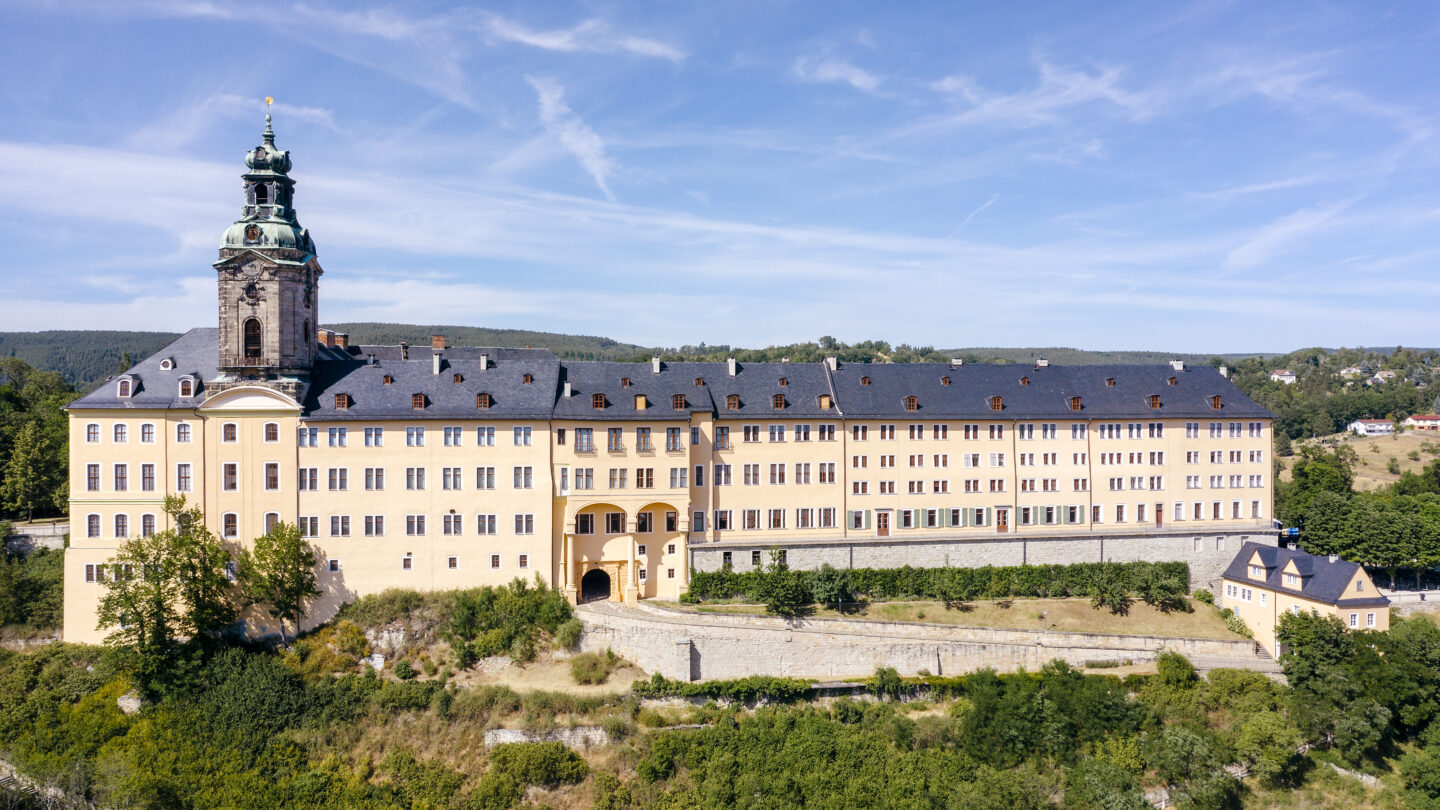
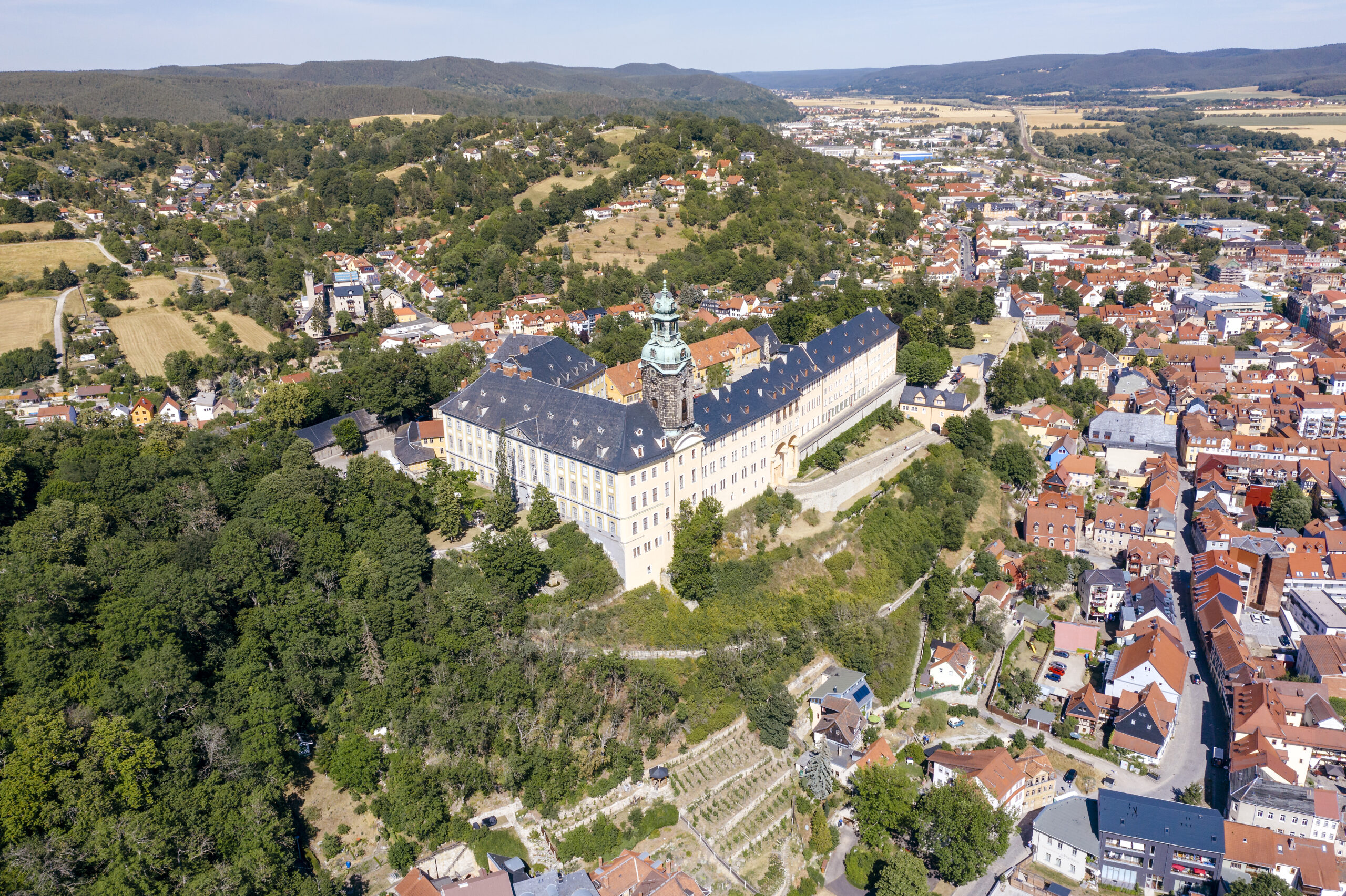
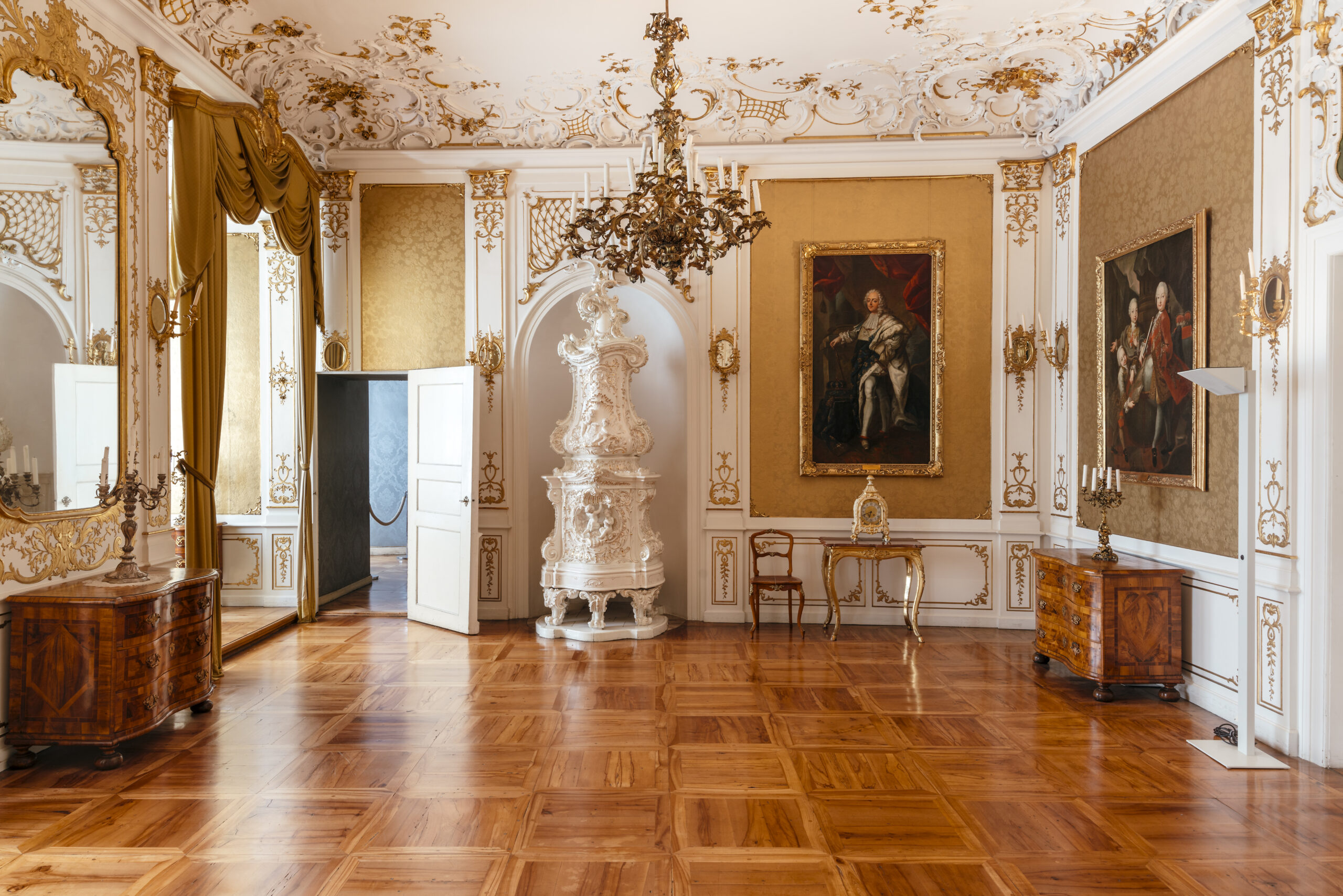
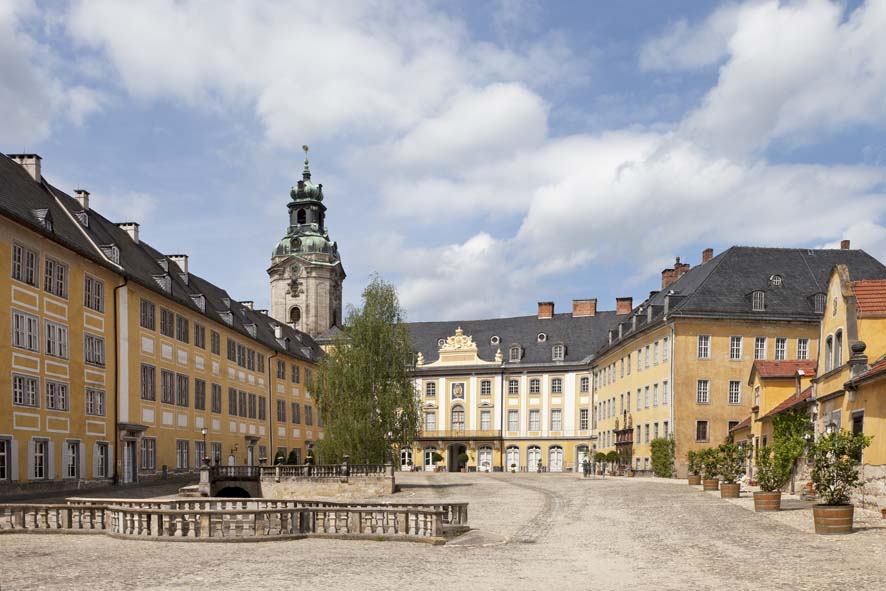
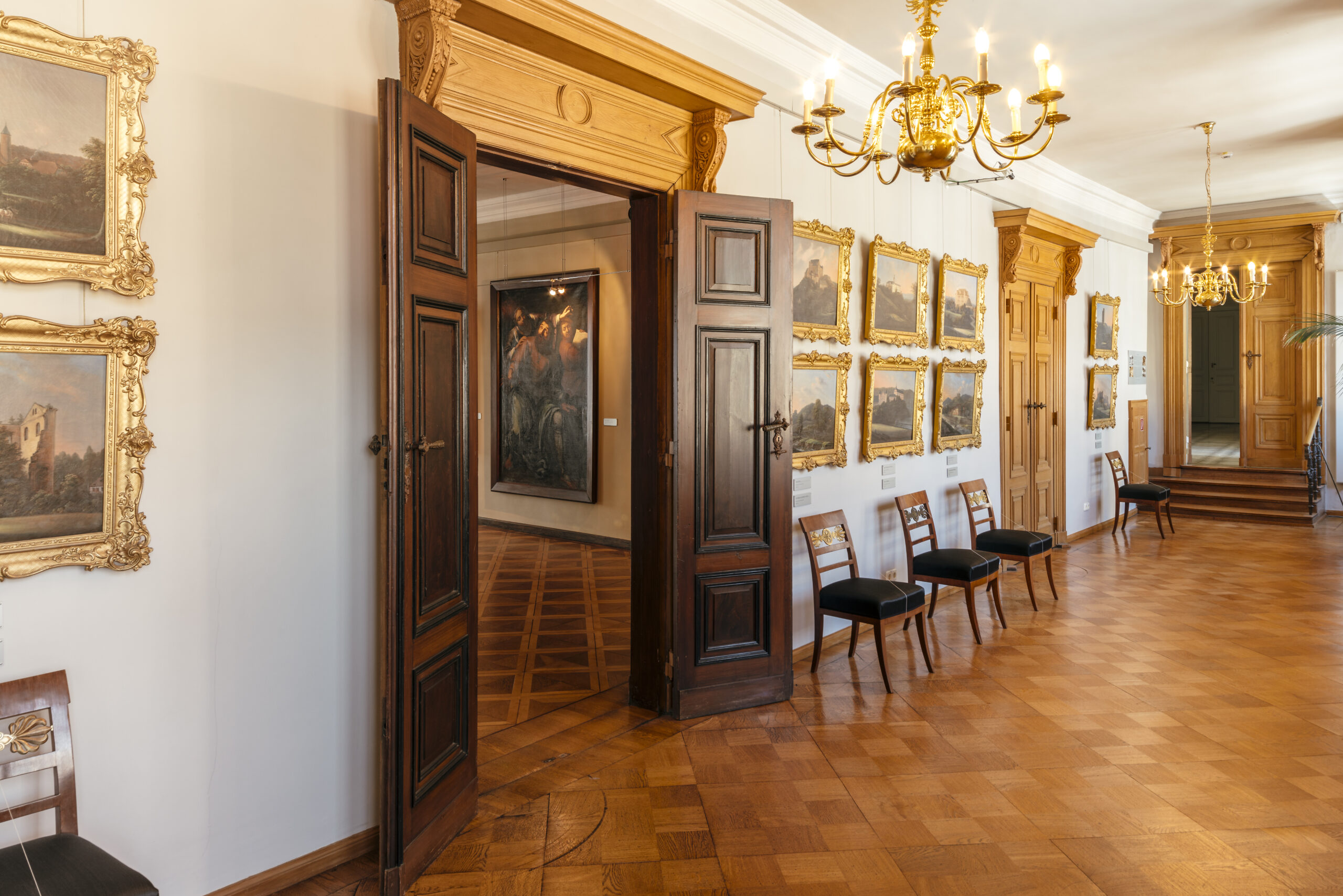
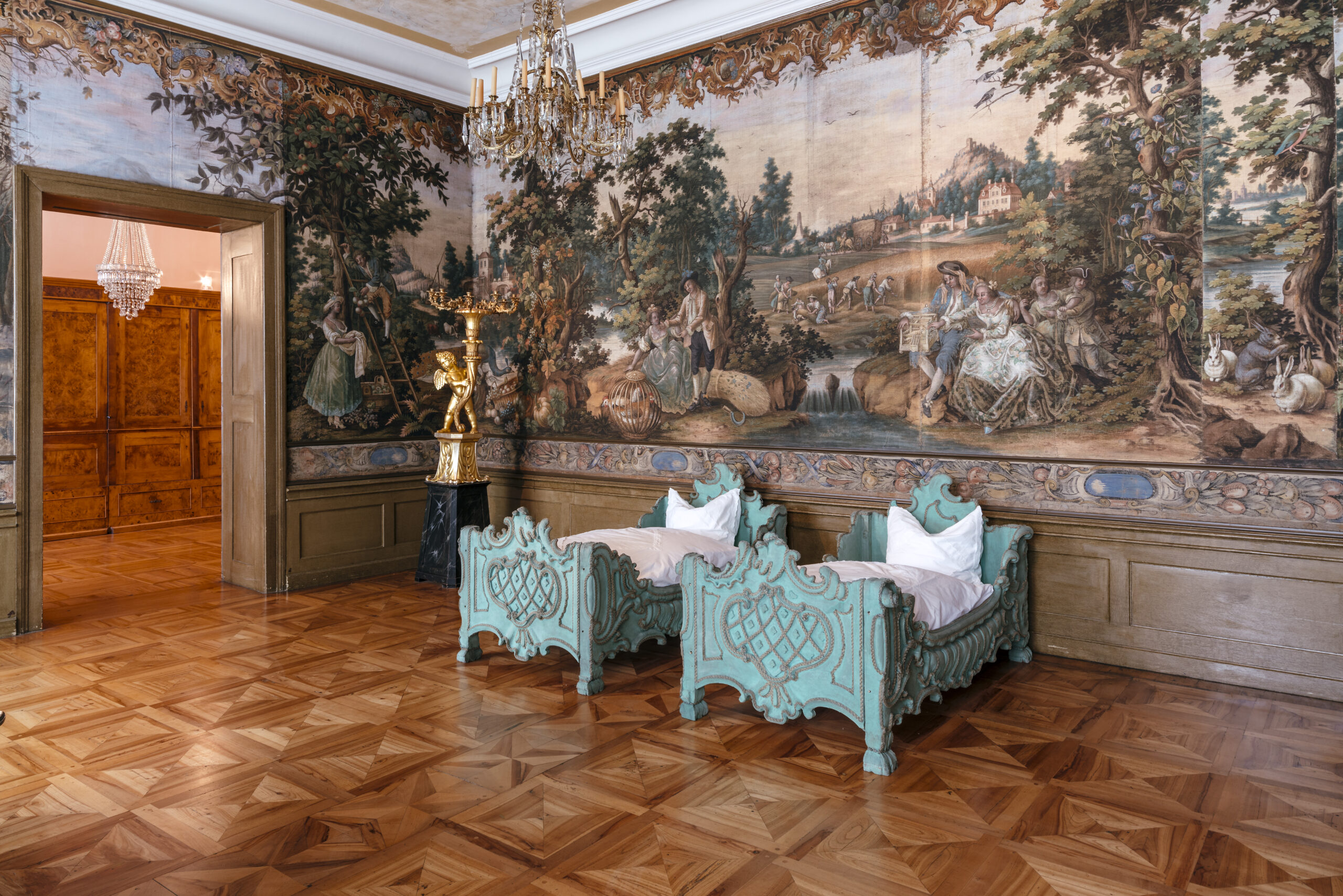
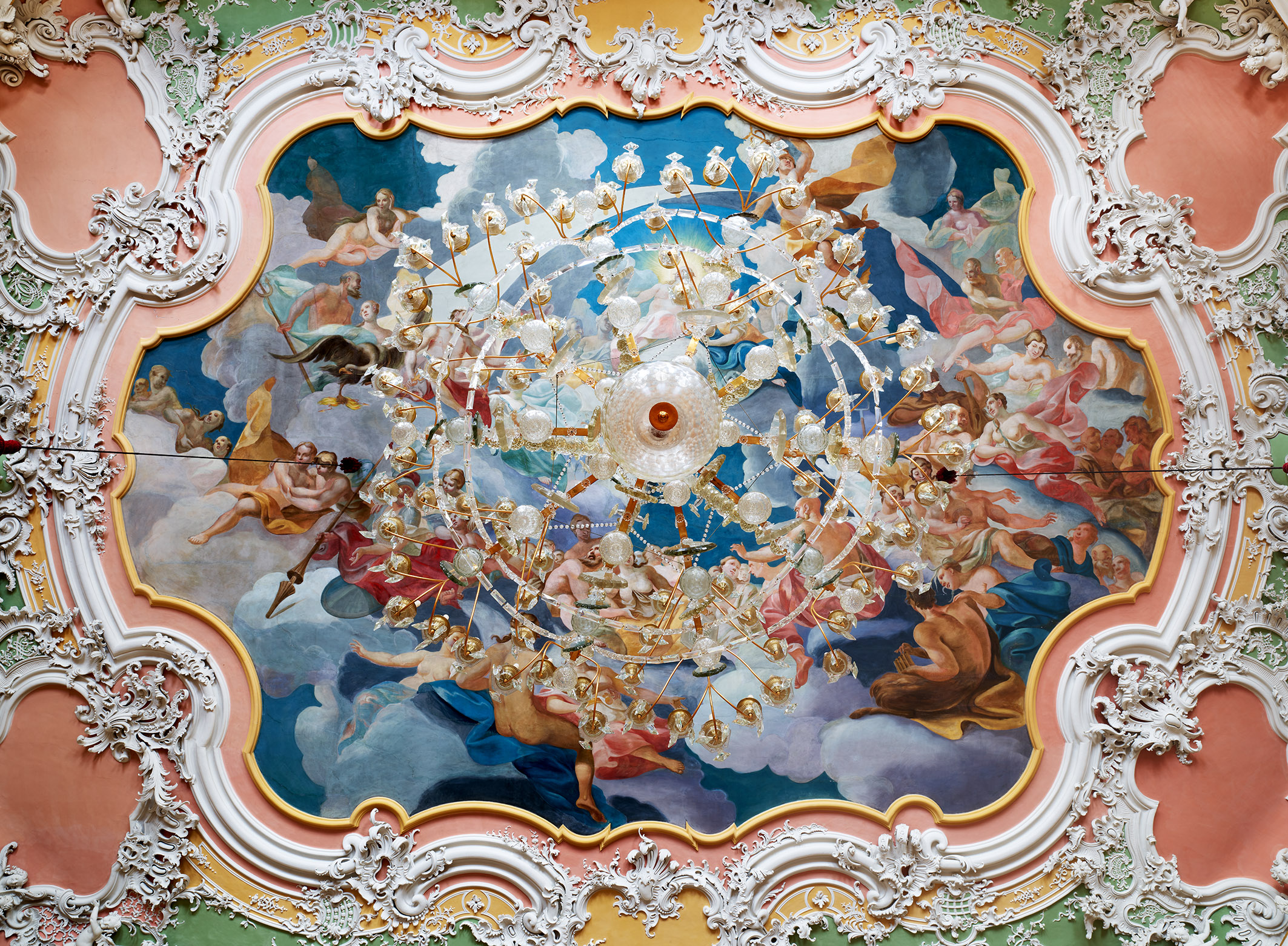
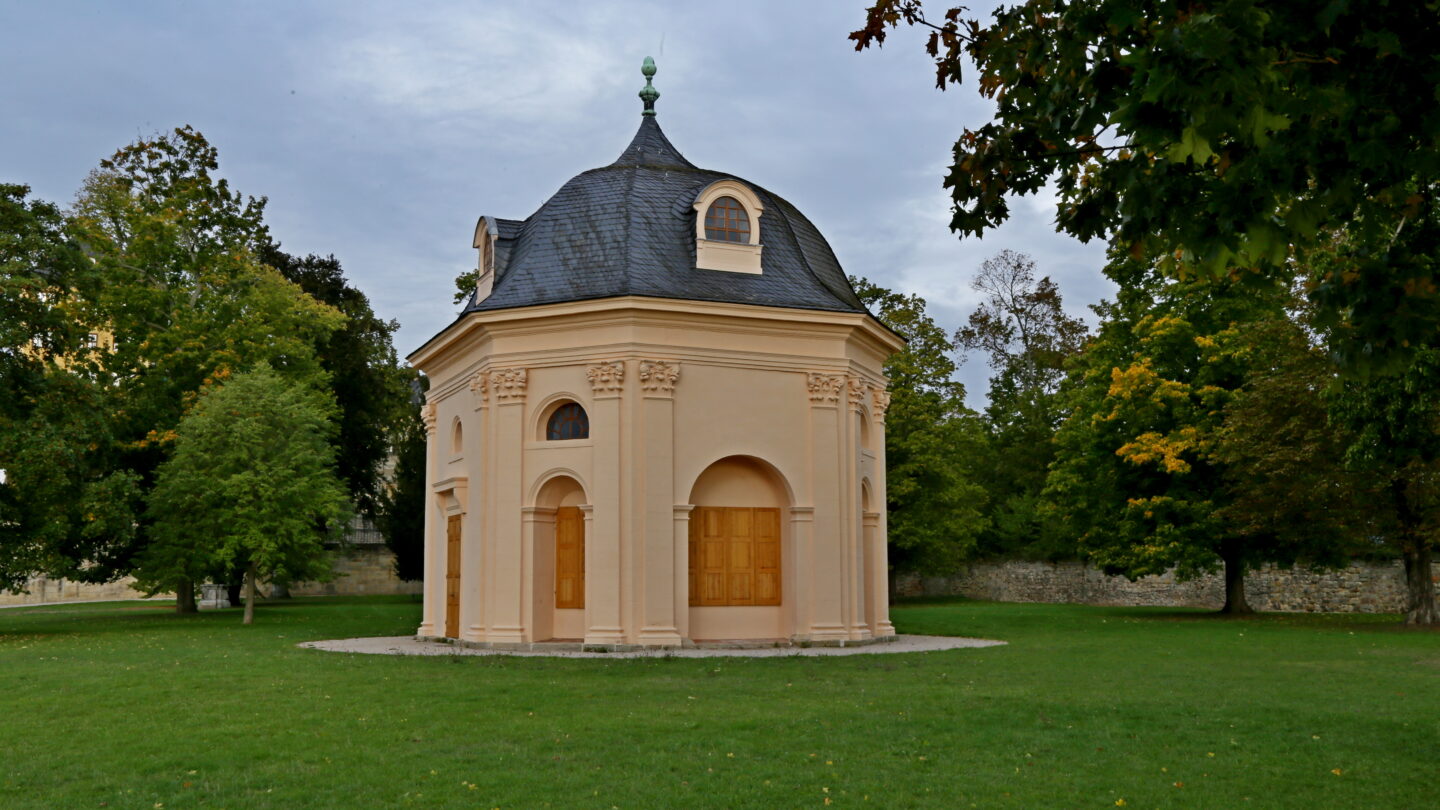
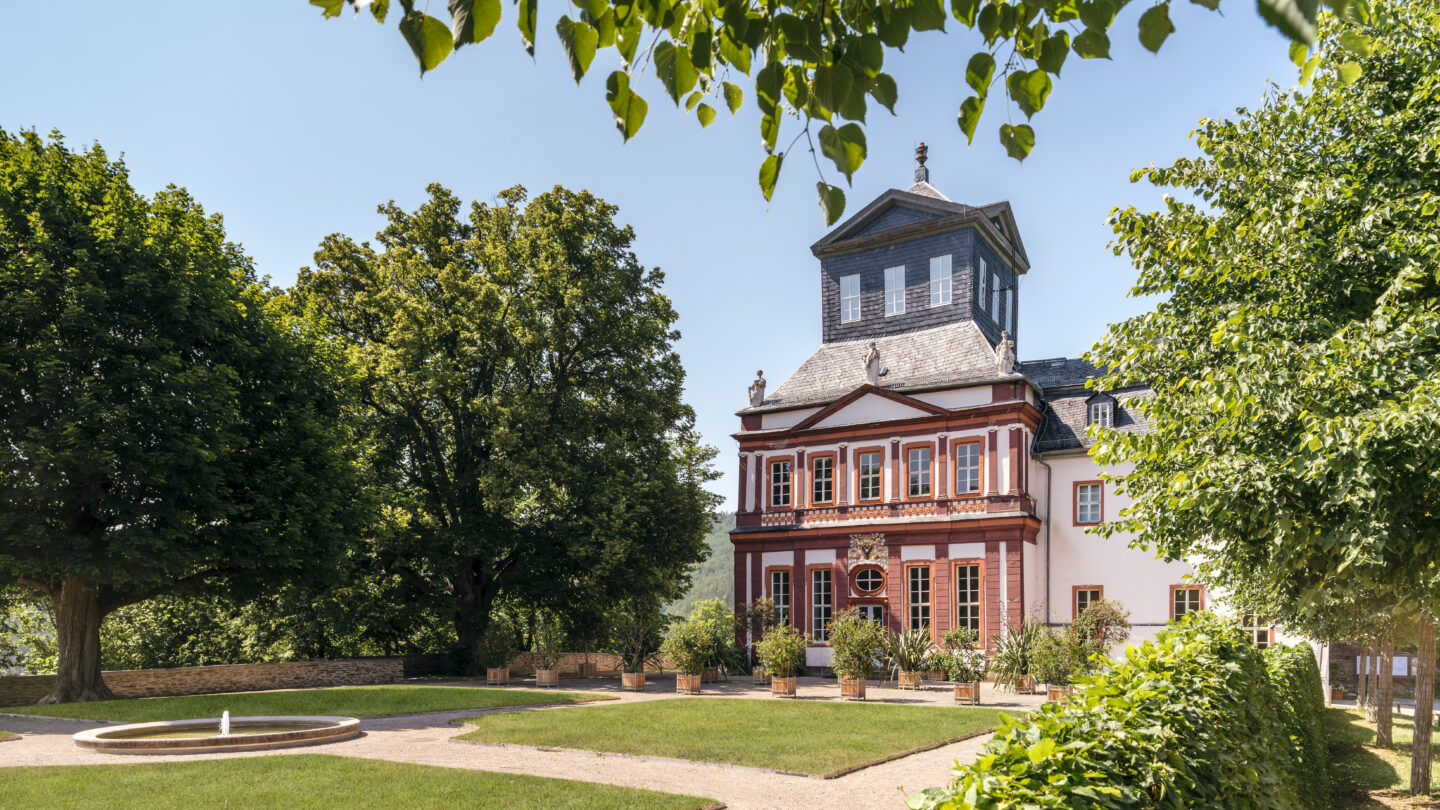
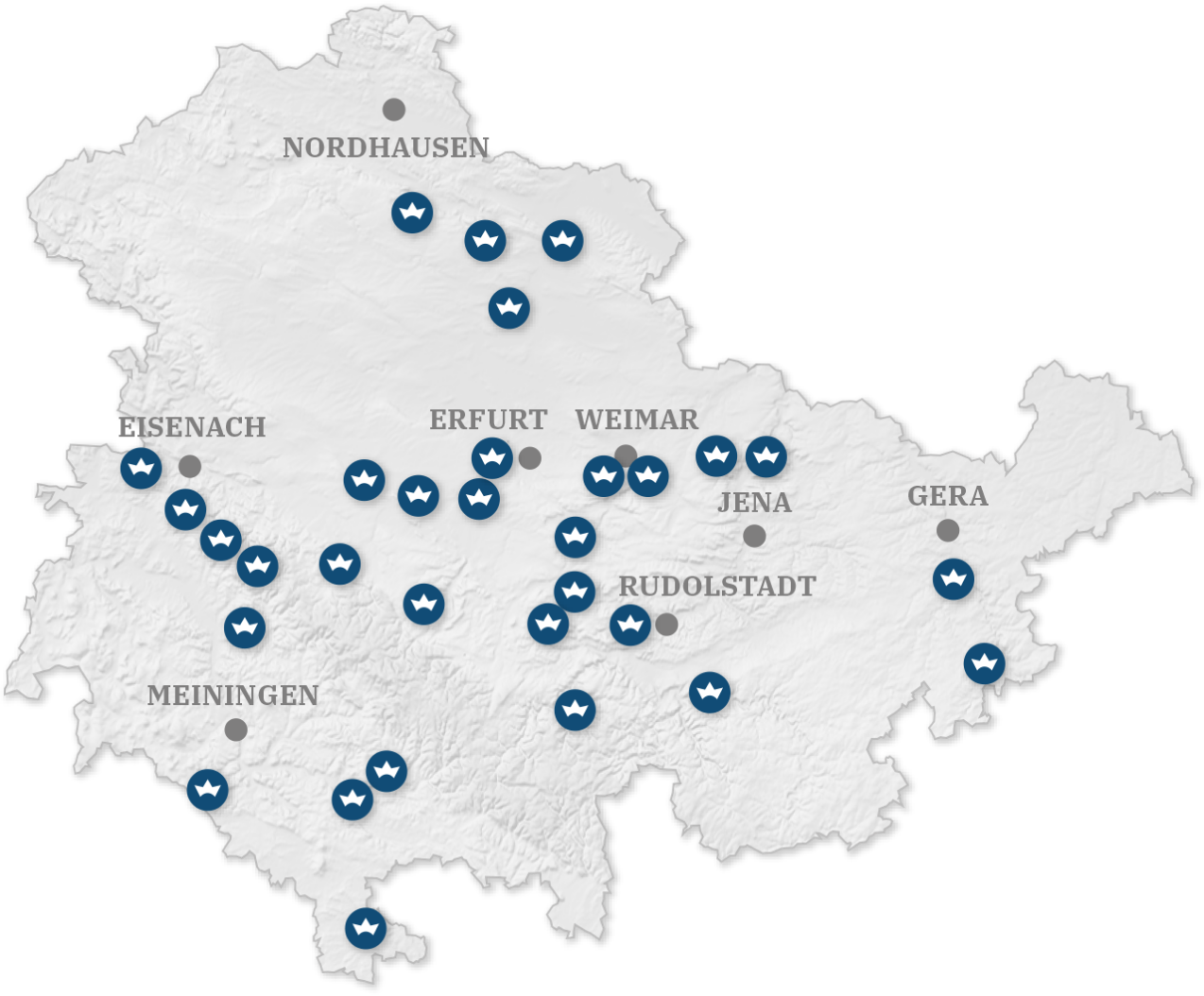
High above Rudolstadt rises Heidecksburg Palace, the former residence of the princes of Schwarzburg-Rudolstadt. Rococo en miniature et en gros – that could be the motto for this imposing palace. Rococo on a grand scale can be admired in the unique state apartments, while Rococo in a small scale is presented in the exhibition in the former court kitchen. There, miniature constructions bring to life the fantasy world of the kingdoms of Dyonia and Pelaria. The palace houses the Thuringian State Museum Heidecksburg Palace and the State Archives of Rudolstadt. It is also the seat of the Thuringian Palaces and Gardens Foundation.
At a glance
Address
Thuringian State Museum Heidecksburg: Rococo en Miniature, Palace Rooms, Natural History Museum Schloßbezirk 1
07407 Rudolstadt
T: 0 36 72 – 42 9010 Email Website
Opening hours
Thuringian State Museum, Heidecksburg Rococo en Miniature, palace rooms, Natural History Museum
Tue – Sun 10 am – 5 pm
Park/Garden
all year round, until dusk
Schiller’s Secret Beloved / Art and Culture
“This region will become dear to you; yesterday it brought me a feeling of calm in my soul that did me immense good.” With these words, Charlotte von Lengefeld tried to lure a certain Mr Schiller to Rudolstadt. After all, “Lollo,” as Friedrich Schiller called his future wife, was born and raised in Rudolstadt. The poet did indeed come – and not long afterwards enthused in a letter about the charming view of the town “which coils around the foot of a hill and which, from afar, is most advantageously announced by the princely palace planted upon the summit of the rock.” The view of the picturesque palace, rising around 60 metres above the town, can still be enjoyed unobstructed to this day. However, it was not only Schiller who visited Rudolstadt. Other famous figures such as Goethe, the two Humboldts, the “devil’s violinist” Niccolò Paganini, and the composer Franz Liszt also stayed in the residential town of Rudolstadt.
Befitting their Rank
From the second half of the 17th century, Rudolstadt experienced a remarkable blossoming. Above all, the later Prince Johann Friedrich (1721–1776) was a great patron of the sciences, art, and music. Under him, schooling and church life received significant impetus; trade in forest and ornamental glass, as well as the faience and porcelain manufactory, reached its peak. In 1710, the House of Schwarzburg-Rudolstadt was elevated to the rank of Imperial Princes – but at that time, Heidecksburg Palace was not yet a residence befitting their status. That changed from 1735 onwards, after a devastating conflagration destroyed large parts of the complex. The reigning prince seized the opportunity and had Heidecksburg Palace rebuilt as a residential palace, cleverly incorporating the old structures. The Saxon senior master builder Christoph Knöffel (1686–1752) was initially commissioned with the palace’s construction. However, financial difficulties and damage that arose during the building works led to his replacement. In his place came Gottfried Heinrich Krohne (1703–1756), active in neighbouring Weimar. To his credit are the approximately 40-metre-high Baroque Palace Tower and the much-admired 12-metre-high Rococo Hall, one of the most remarkable Rococo halls in Germany. The exquisite fittings of the hall were executed by renowned stucco artists, sculptors, and painters, making it a unique integrated work of art.
Rarities in the Palace Garden
To the east of the palace courtyard are two garden terraces connected by double flights of steps with ramps for horses. The riding hall, erected from 1610 onwards, has been restored in recent years and is now a popular event venue. The Palace Garden on the lowest terrace was once laid out in the Baroque style. Towards the end of the 18th century, it was transformed into a sentimental-romantic landscape garden. A particular rarity is the Baroque sound house, later remodelled, with one of the few surviving sound halls.