Address
Upper and Lower Sachsenburg
Burgstraße | Sachsenburg
06578 Oldisleben
Friends’ Association
Sachsenburgenverein e.V.
Website
Opening hours
Upper and Lower Sachsenburg
both castle ruins are freely accessible all year round

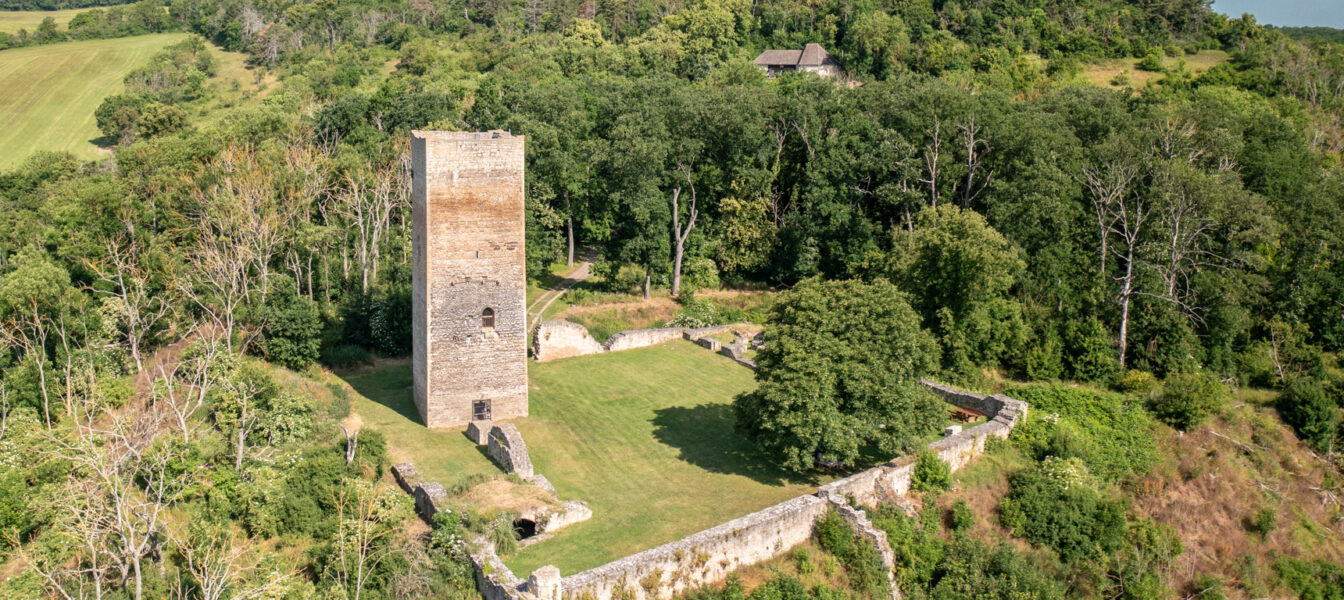
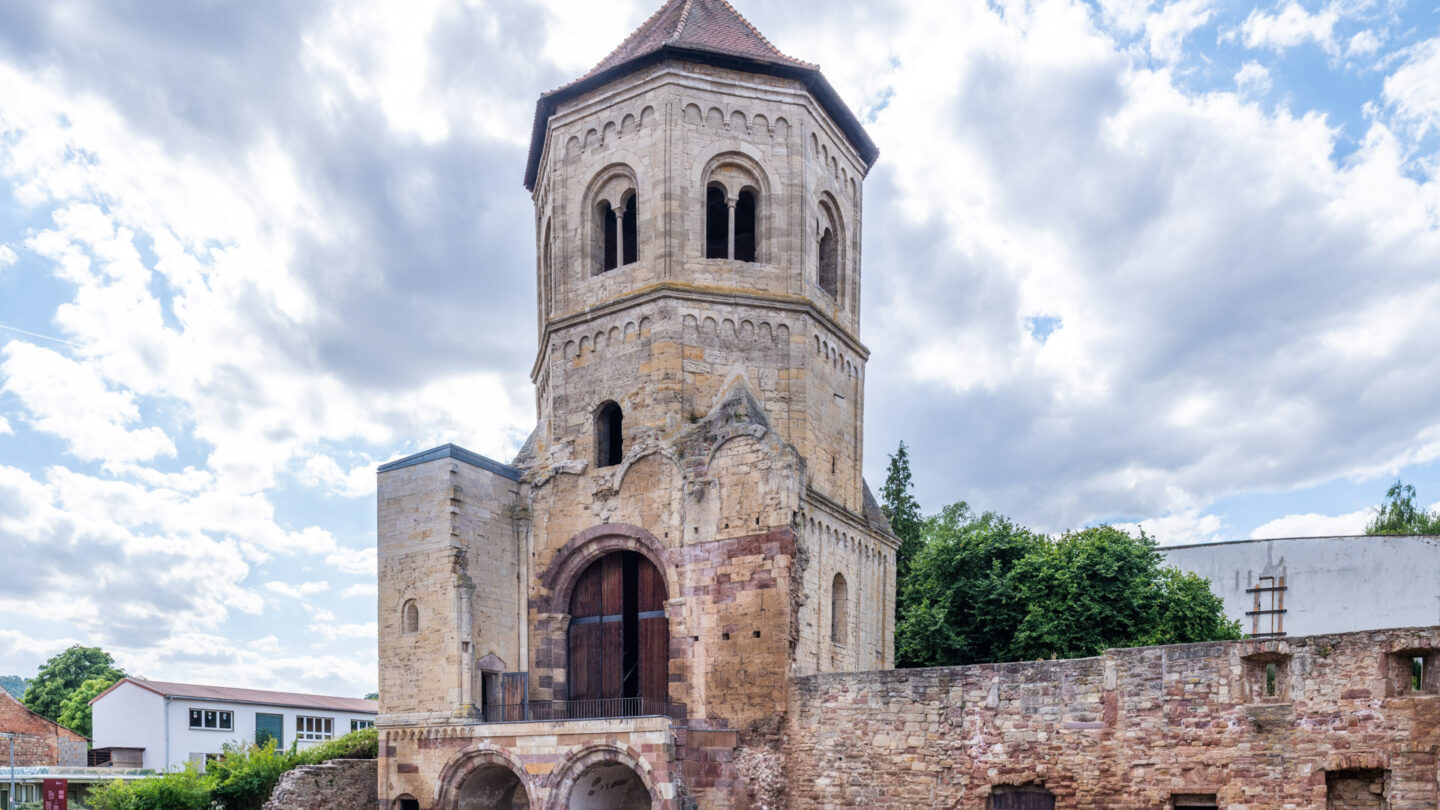
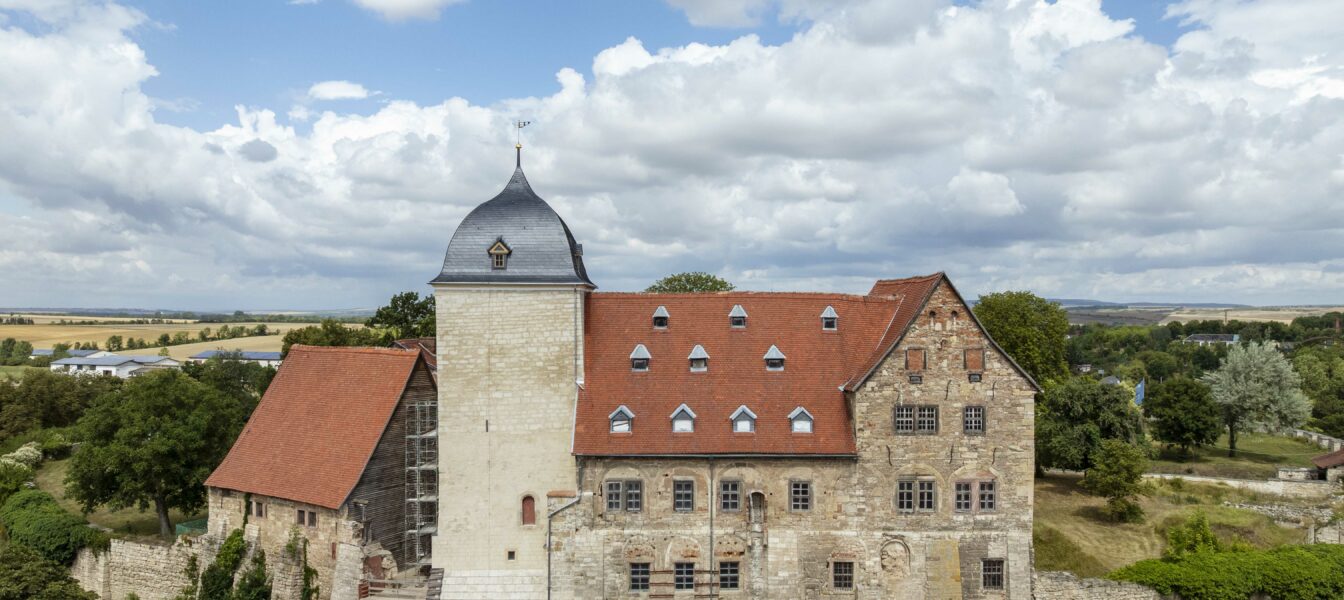
Anyone who has ever driven through the Thüringer Pforte may well have spotted them – the Upper and Lower Sachsenburg. Like two sentinels, the two fortifications rise up on the so-called Wächterberg. They were built in the 13th century, just 500 metres apart. Both castles have had an eventful history. The keep towers are particularly striking, still rising proudly above the treetops.
Upper and Lower Sachsenburg
Burgstraße | Sachsenburg
06578 Oldisleben
Friends’ Association
Sachsenburgenverein e.V.
Website
Upper and Lower Sachsenburg
both castle ruins are freely accessible all year round
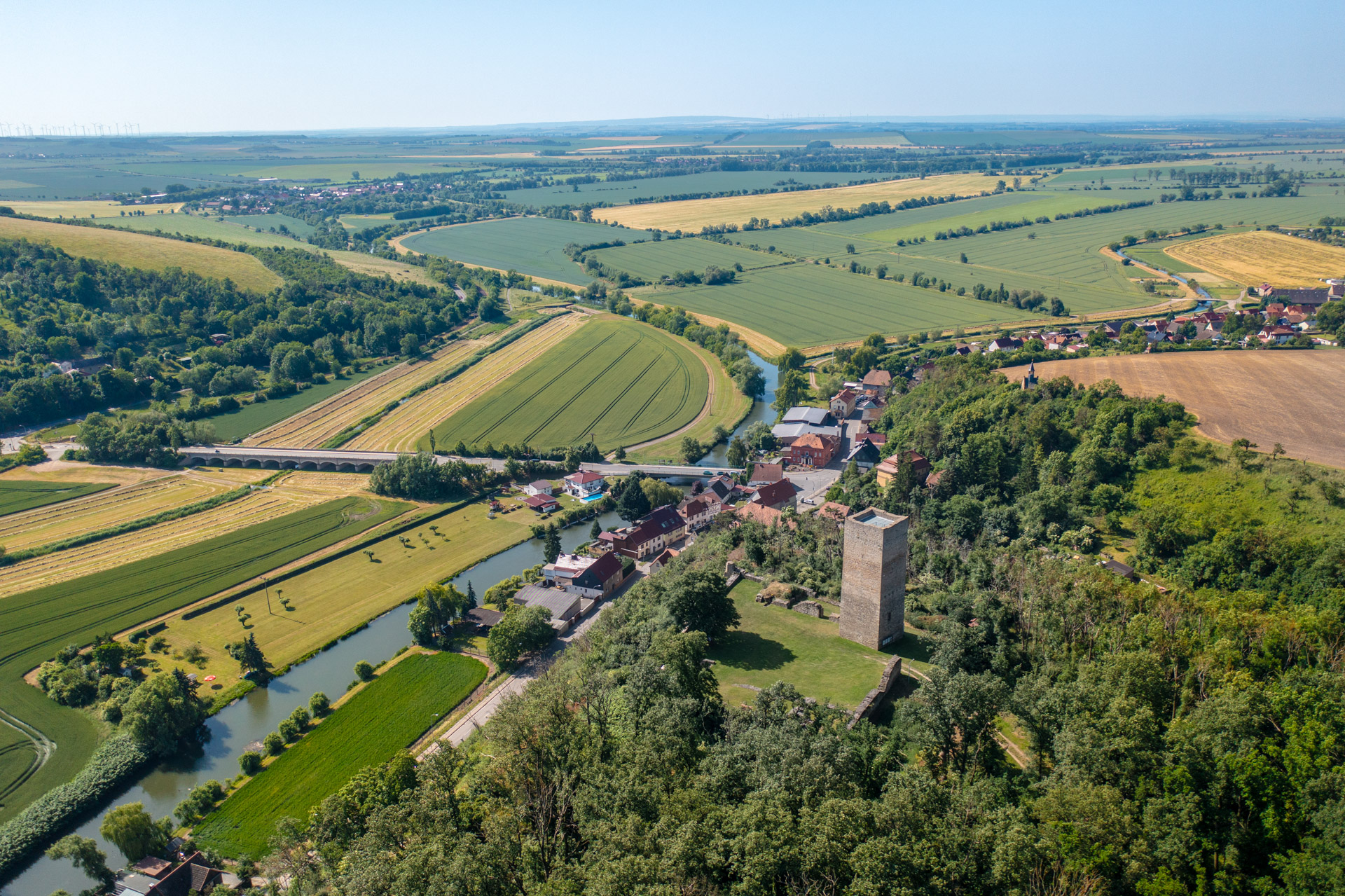
The region was already inhabited as far back as the Neolithic period. Later, in the Middle Ages, an important trade route ran through the valley. It is also here that the River Unstrut cuts through the Hainleite and Schmücke ridges – thereby opening up the route from the southern Harz Mountains into the Thuringian Basin. This route was ‘guarded’ by the Upper and Lower Sachsenburg castles – the sentinels of the Thuringian Gate. The castle ruins stand on a strategically important point – the so-called Wächterberg, a rocky outcrop of the Hainleite. The castles have had an eventful history, marked by an unusually high number of changes of ownership. The castles initially belonged to the Landgraves of Thuringia. After their line died out, they were taken over by the Counts of Anhalt and later by the House of Wettin. The two complexes were probably built between 1250 and 1350 – and are situated just 500 metres apart. Even from a distance, one can see the two keep towers rising out of the wooded area. From the mid-15th century onwards, the castles served different purposes.
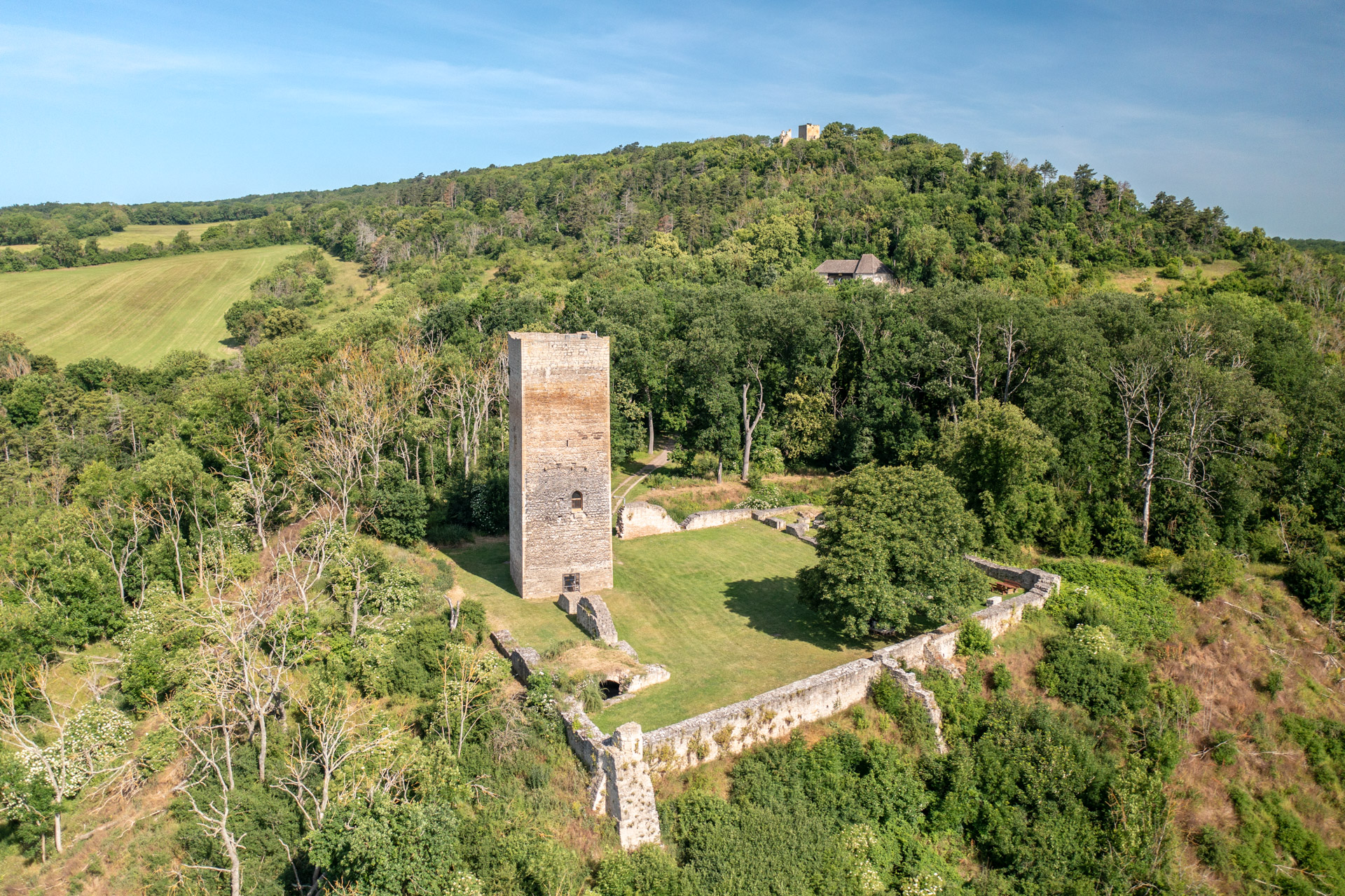
Untere Sachsenburg is also known as Hakenburg. Around 1590, the House of Wettin established an administrative residence at the castle and expanded it into a three-winged complex resembling a palace. In 1799, however, the administrative residence had to be abandoned due to its dilapidated condition. The castle fell into disrepair and was authorised for demolition. In 1945, parts of the complex were blown up by the Wehrmacht so that the material could be used to construct a tank barrier in the valley, thereby halting the advance of the Allied troops. Its current appearance therefore reflects not so much the history of the complex as the result of systematic destruction in the past. The main feature preserved within the secured ruins is the 22-metre-high keep.
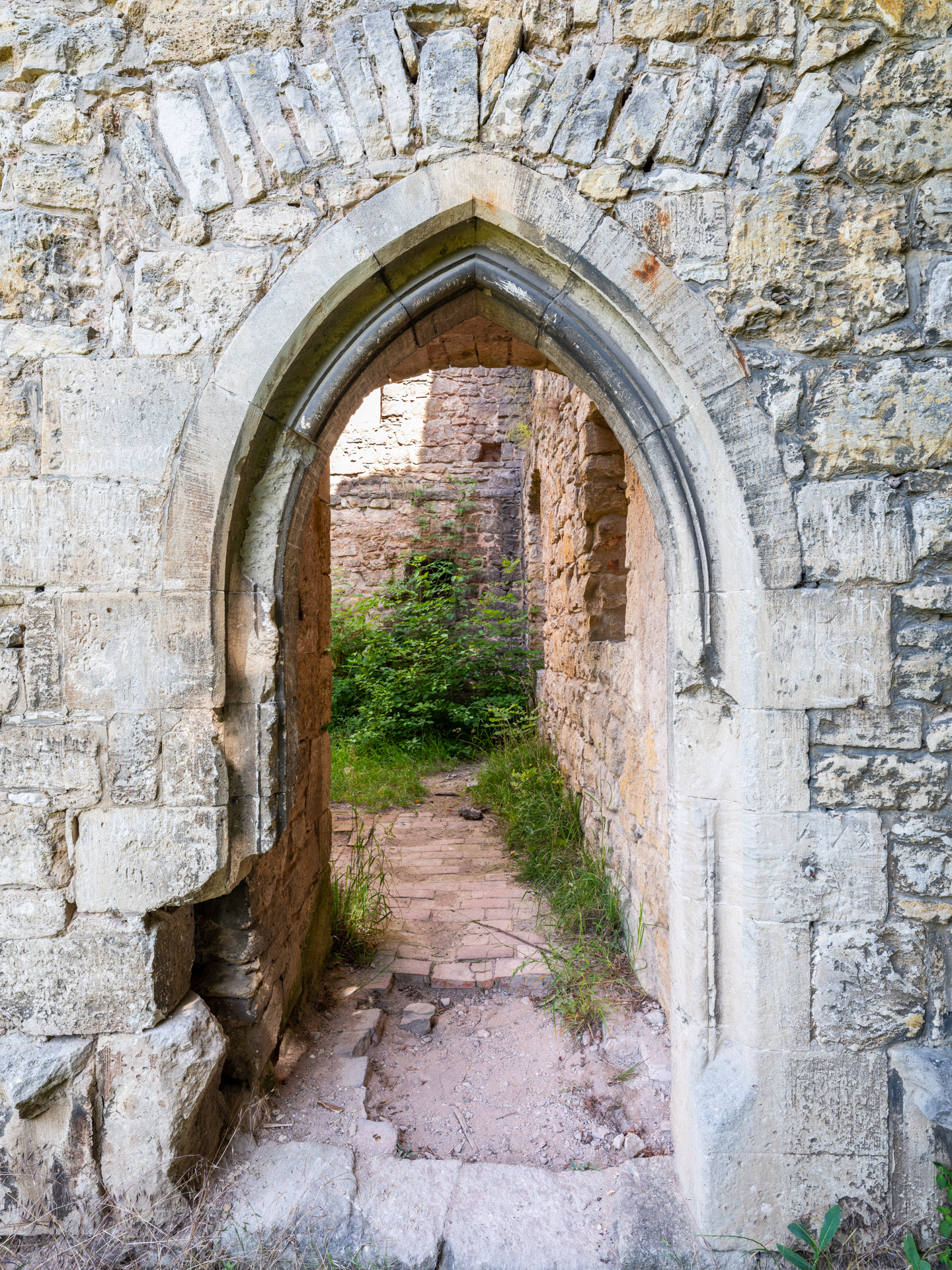
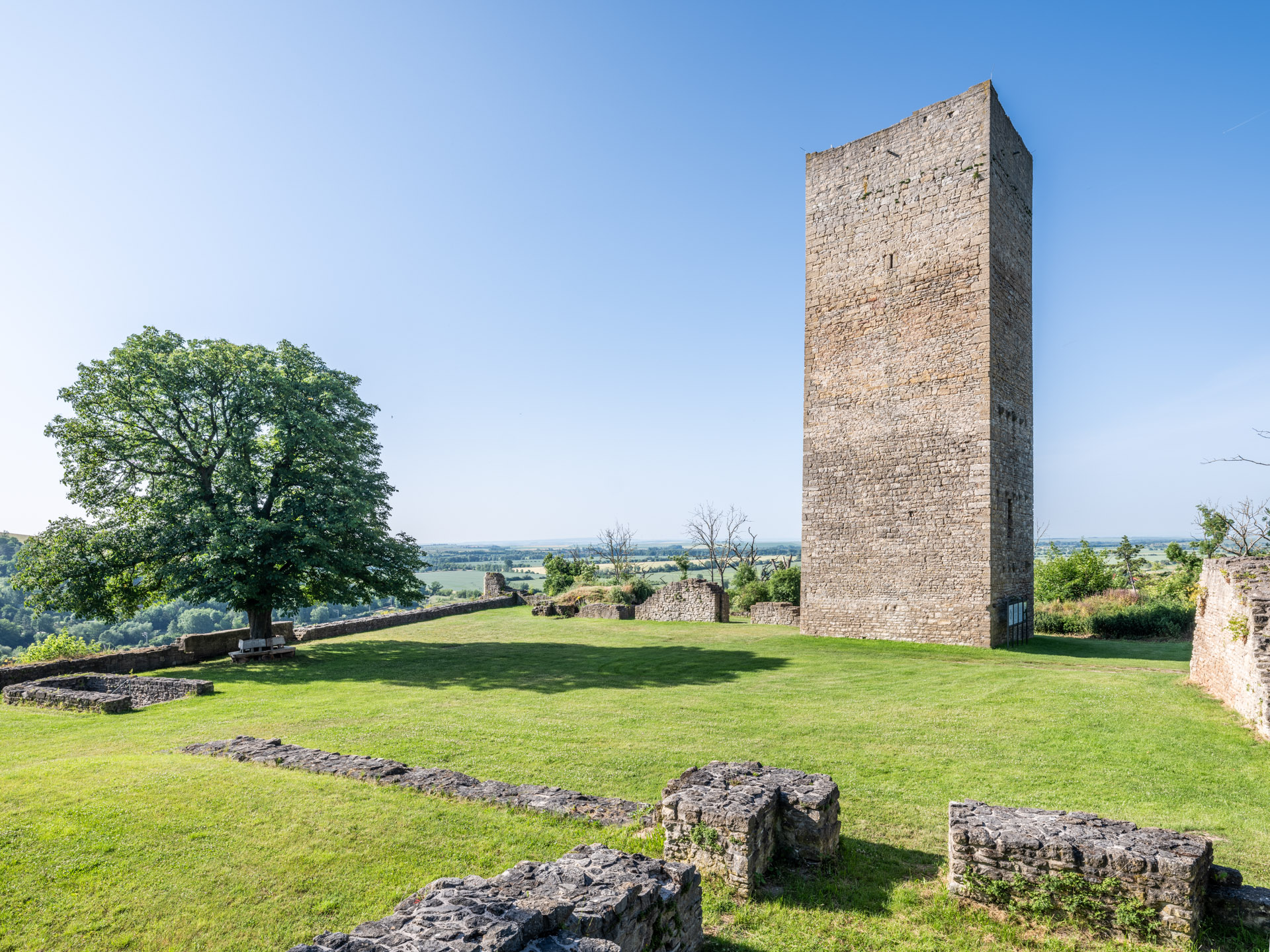
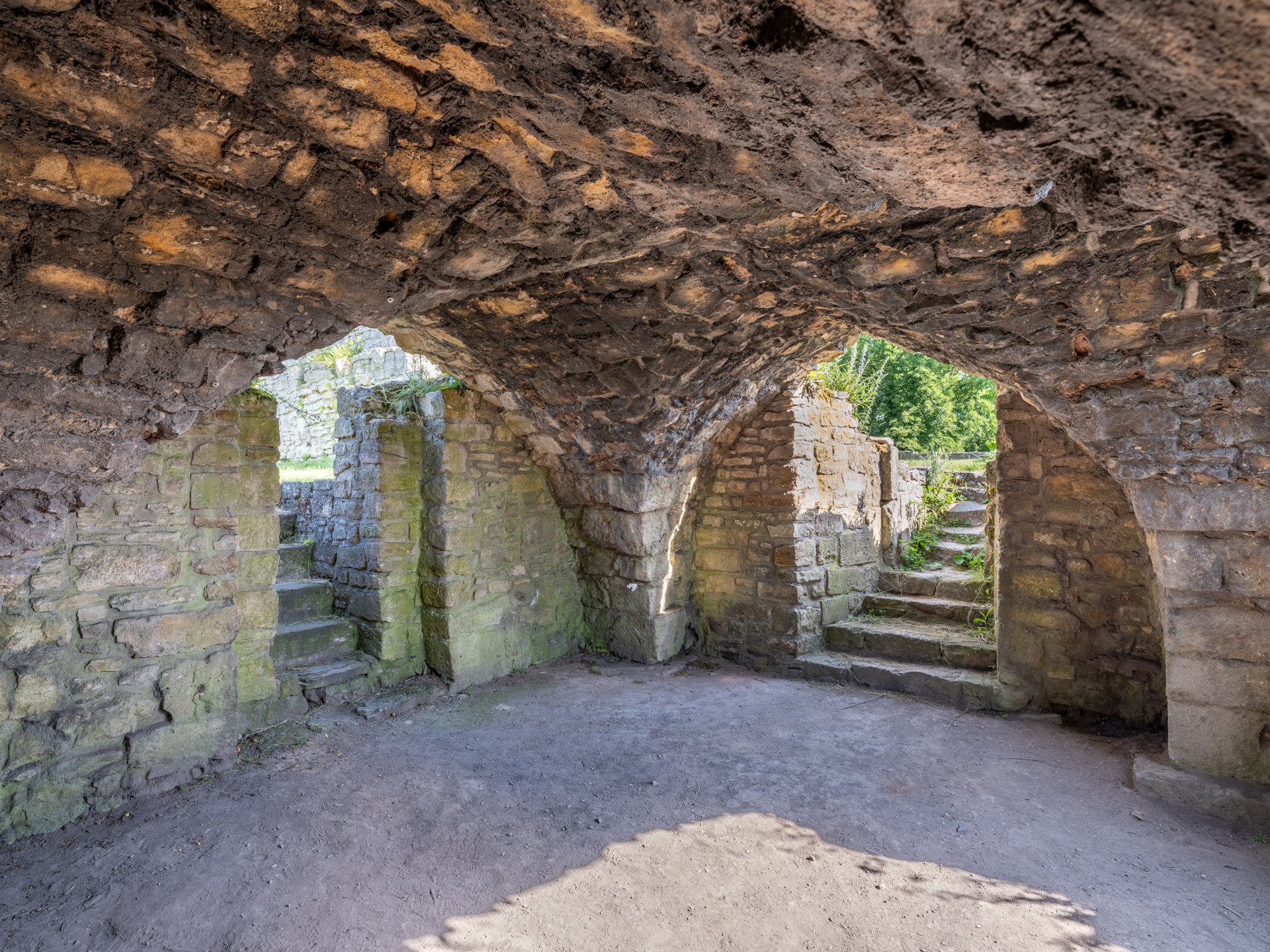
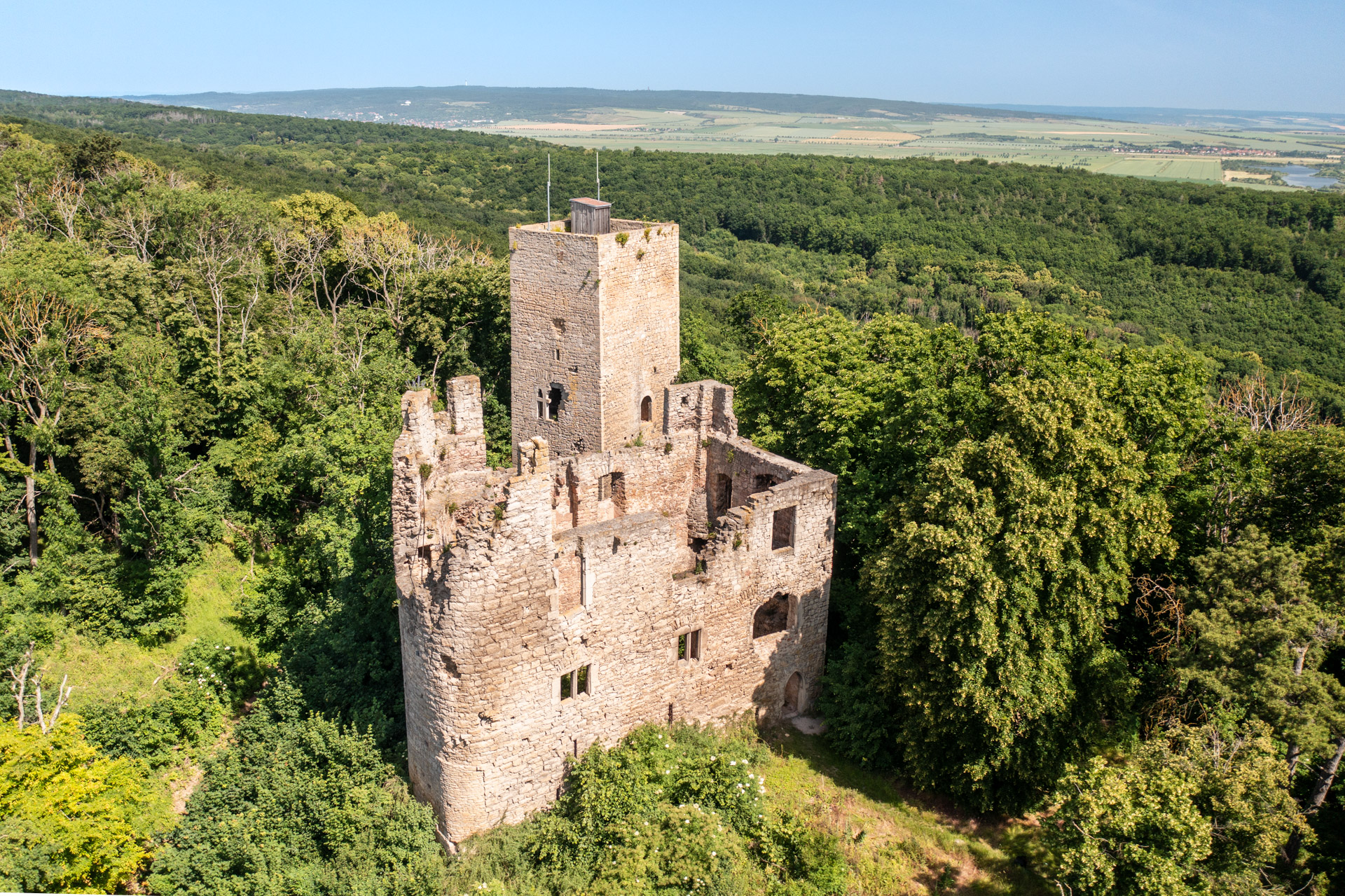
The Obere Sachsenburg also changed hands numerous times. Although the complex survived the Thirty Years’ War unscathed, by 1700 the Obere Sachsenburg was already in ruins. In the wake of the general fascination with castles in the 19th century, a restaurant for day-trippers was opened there. Of the former castle, the main features that have survived are the outer walls of the three-storey residential building and the square keep, which is still around 20 metres high. The west side of the tower was also the castle’s main point of attack; nevertheless, the walls of the keep are remarkably thin, measuring just 1.40 metres.
Weißensee Castle Administration | Göllingen | Sachsenburg
Runneburg 1
99631 Weißensee
Tel: 03 63 74 – 3 62 00
Email