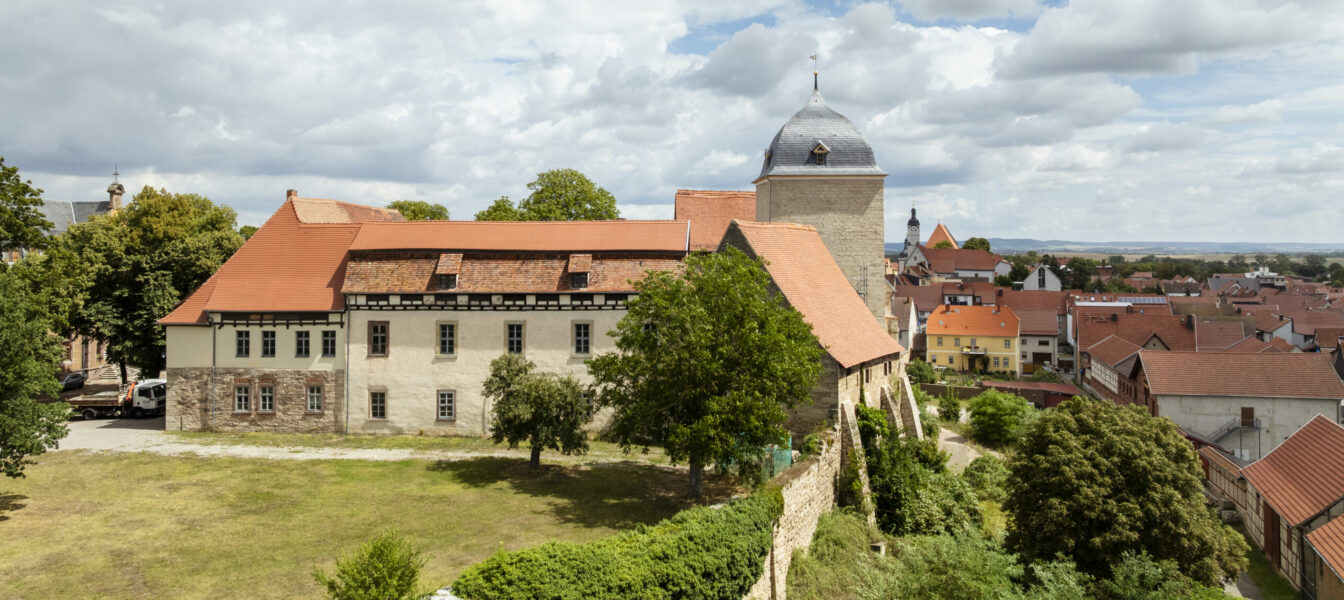
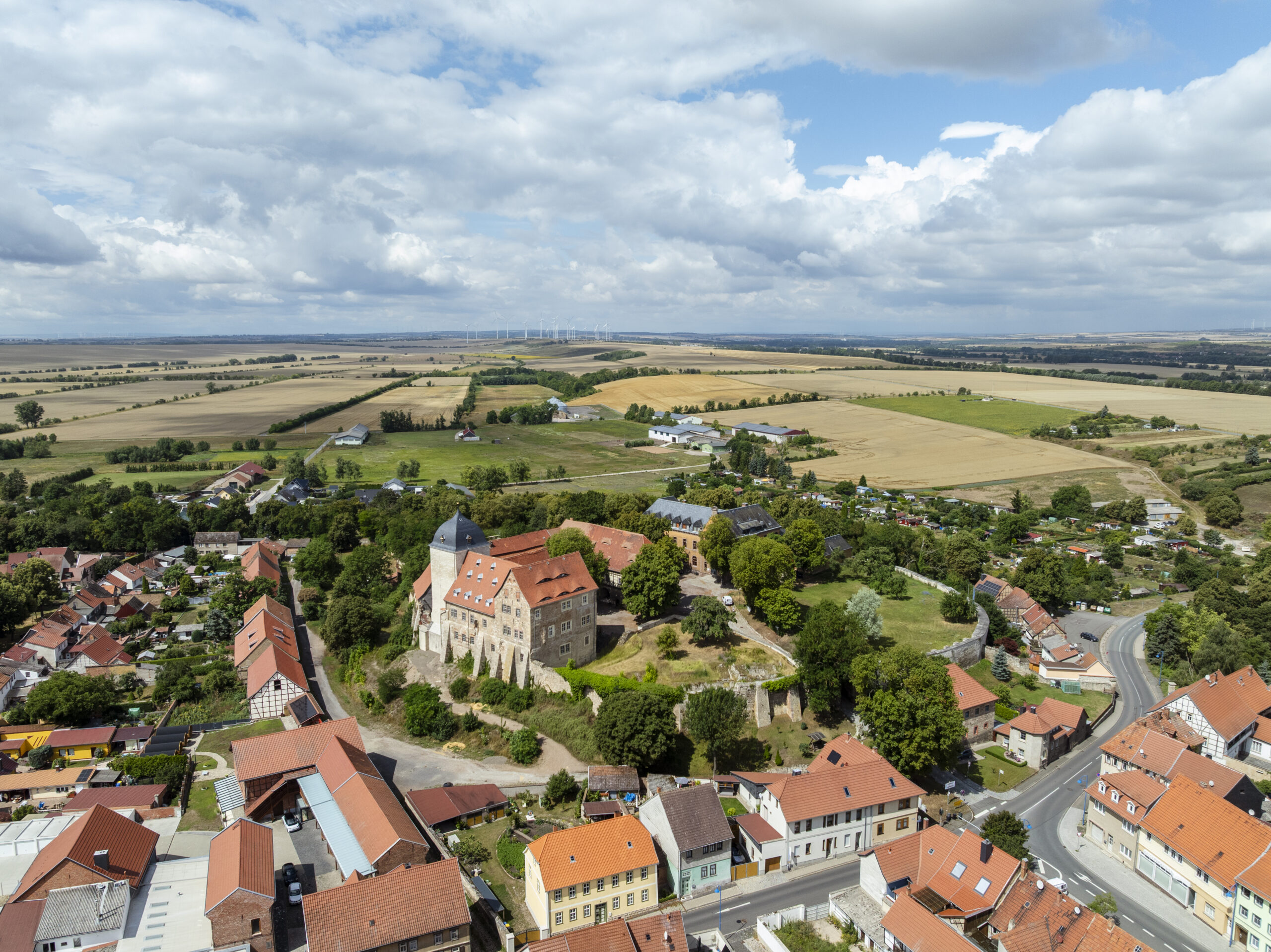
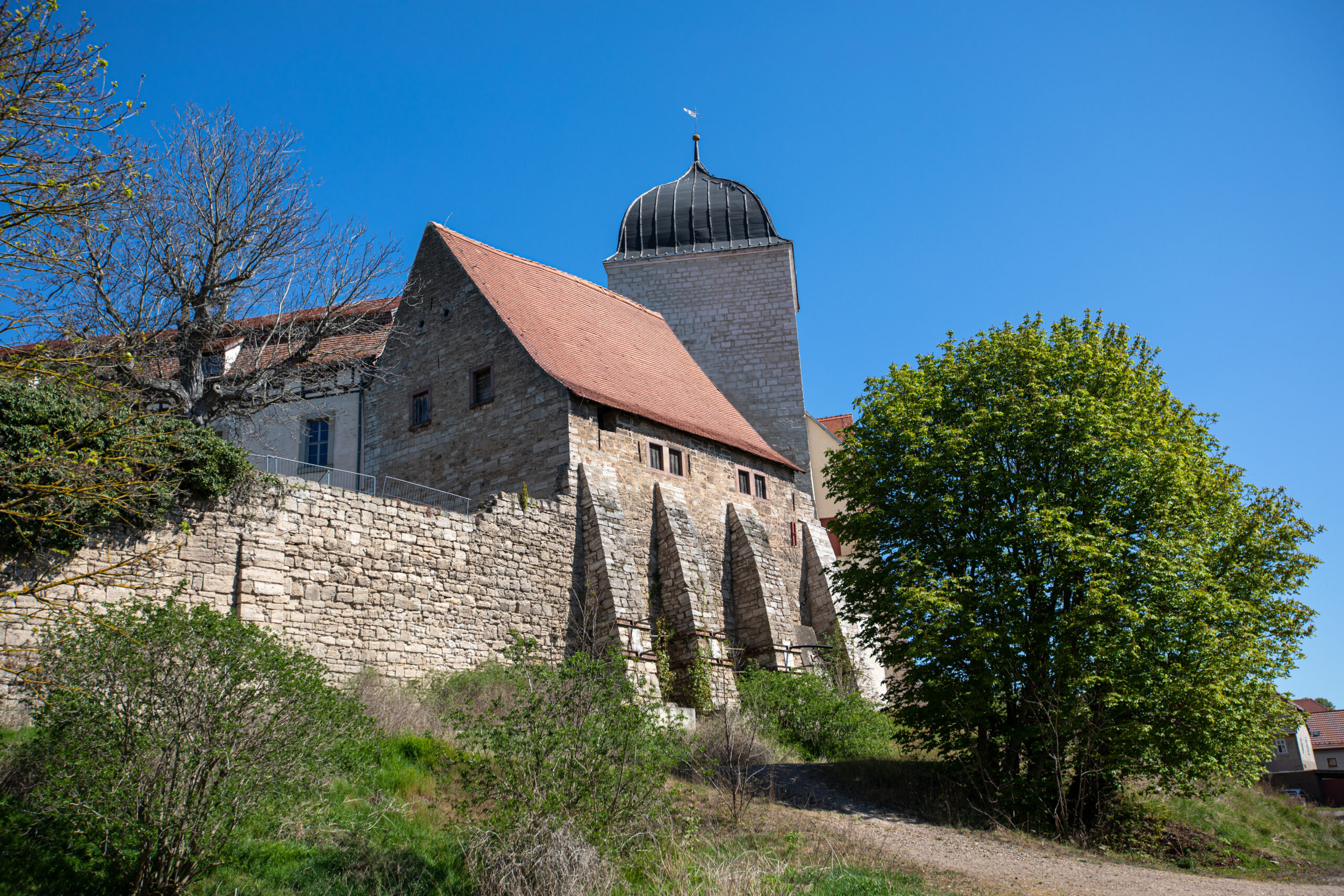
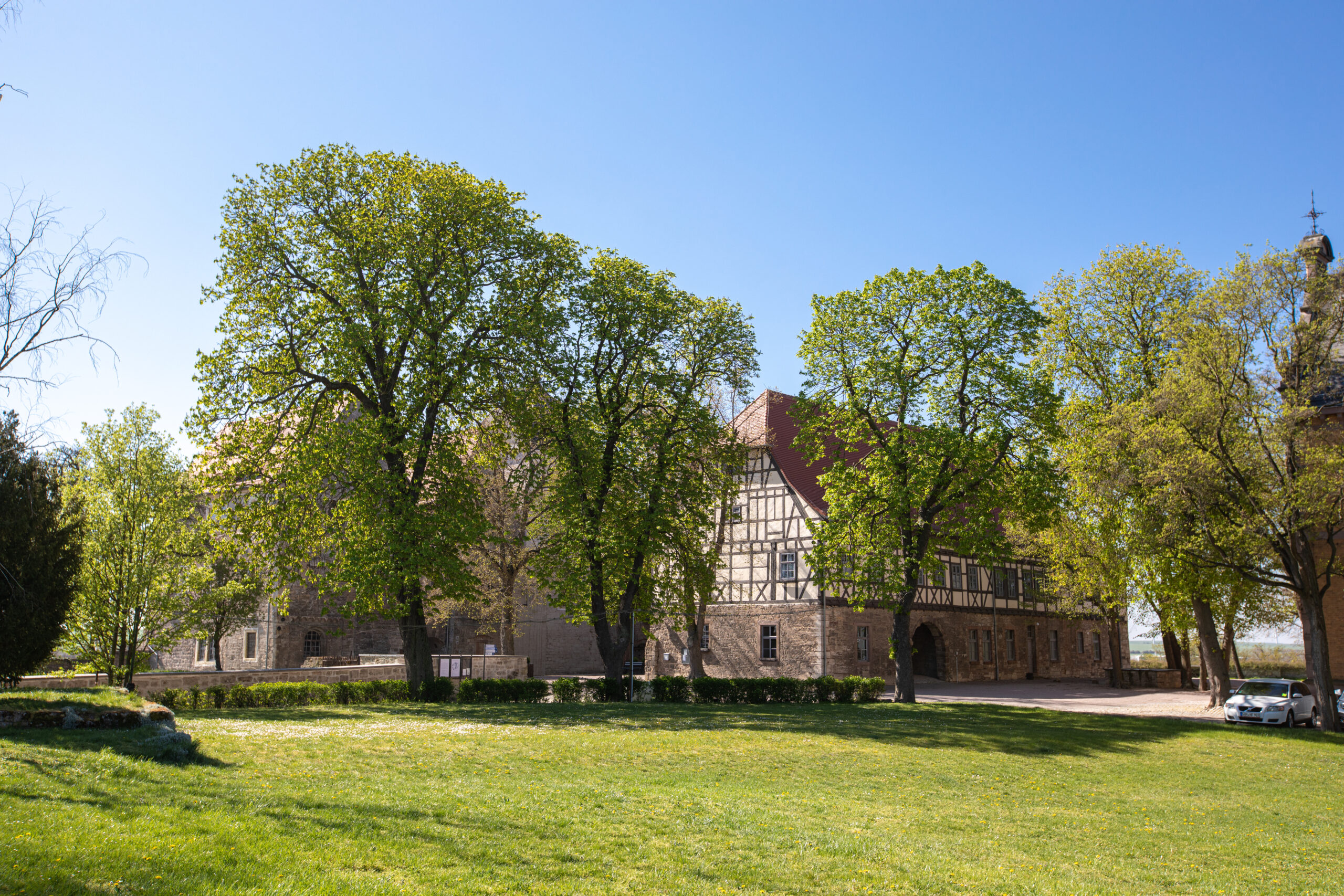
Proudly rising above the small town of Weißensee is the castle of the same name. The fortification was built by Landgravine Jutta around the year 1170 and today ranks among the most significant examples of Romanesque architecture in Germany. Hardly any other complex has preserved so much original substance from the High Middle Ages. A small exhibition is now housed within the castle.
At a glance
Castle tours
At present, guided tours of the castle are only available by prior arrangement with the castle administration. We thank you for your understanding. The castle grounds are open to visitors during the day.
Weißensee Castle Guided tours of the castle are currently only available by prior arrangement with the castle administration. We thank you for your understanding. The castle grounds are open to visitors during the day.
Castle grounds
The castle grounds are freely accessible.
Indoor exhibition
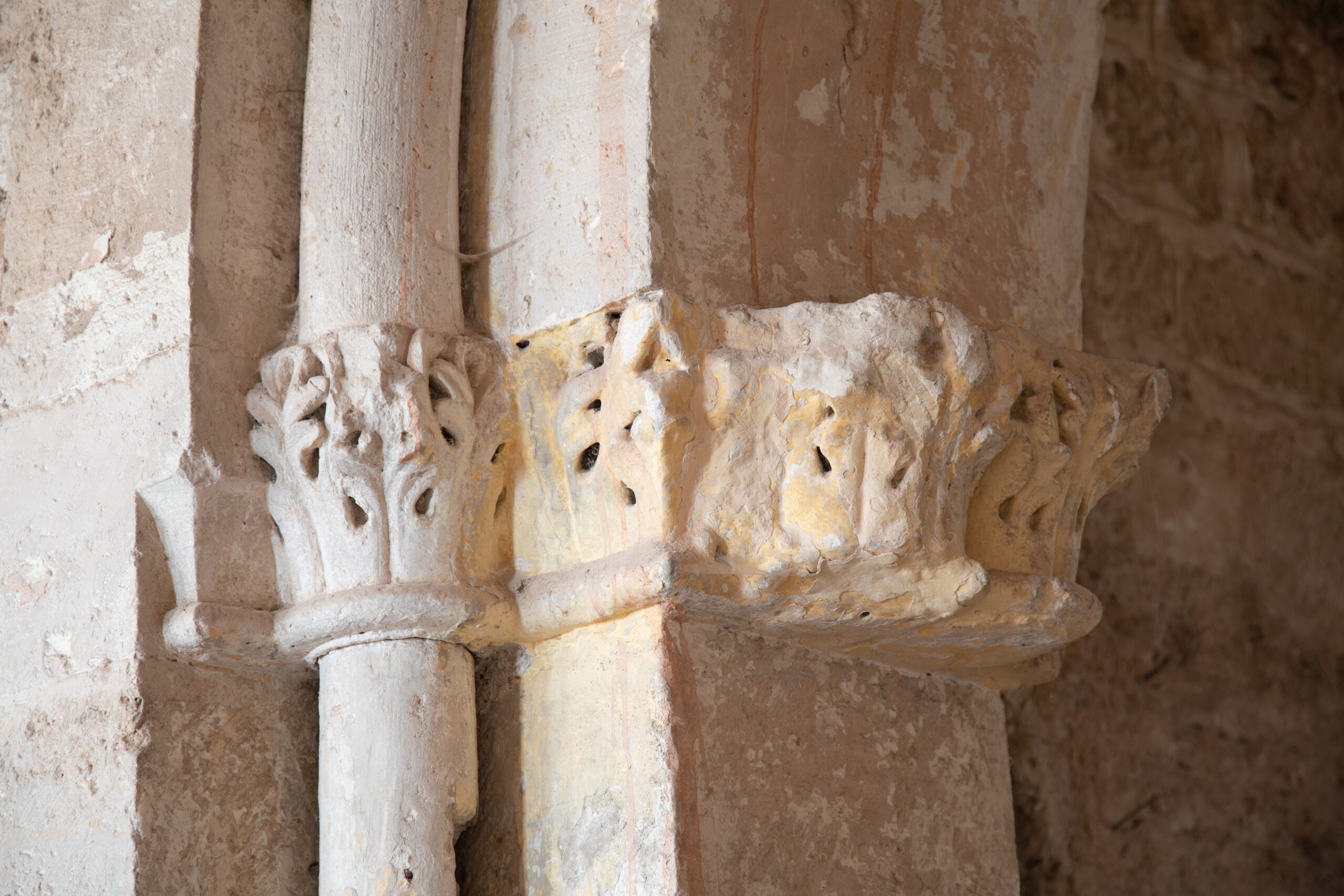
The interior of the castle transports visitors back to the complex’s heyday, the late 12th century / early 13th century. The largely preserved appearance of the medieval castle, with its finely crafted Romanesque architectural ornamentation, still bears witness today to the highest standards of craftsmanship. The centrepiece of the tour is a column dating from the castle’s construction period, featuring a vine-scroll capital of exceptional quality.
The castle’s interior can only be viewed as part of a guided tour. The rooms that are open to the public already give an impression of the quality of this building, which is to be restored, as evidenced by their window and door jambs, the capitals and the extremely rare stone-built air heating system, amongst other features.
A Castle Built by a Landgravine
Intended as a “hostel” halfway between the border fortress of Wartburg Castle and Neuenburg Castle near Freyburg (in present‑day Saxony‑Anhalt), and situated exactly at the centre of the landgraviate’s sphere of power – that was the plan of Landgravine Jutta (1133–1191). However, her planned castle lay within the territory of the Counts of Beichlingen, who complained to Emperor Friedrich I Barbarossa. Jutta’s husband, the Thuringian Landgrave Ludwig, feigned outrage at his wife’s independent action, and the emperor publicly forbade further construction. Yet Jutta was also Barbarossa’s half‑sister – and with his tacit consent, the works continued. Thus, Weißensee Castle arose around the year 1170 and swiftly became an important stronghold in the landgraviate’s territorial policy.
In the disputes between the Staufers and the Welfs over succession to the throne of the Holy Roman Empire, the castle was to play a central role. The most important battles and sieges took place before Weißensee Castle, for example in 1180. In the so‑called Battle of Weißensee, Jutta’s sons Ludwig and Hermann fell into the captivity of Henry the Lion. From then on, Jutta governed the landgraviate.
Hunting Lodge, District Administration, and School
Over its long history, Weißensee Castle was never destroyed, but it was modernised several times and adapted to the needs of its successive lords. Although converted into a palace between 1554 and 1581, it retained the appearance of a robust fortress. In later years, the Dukes of Saxe‑Weißenfels used it as a hunting lodge; it then served as the seat of the district administration and later as a primary school.
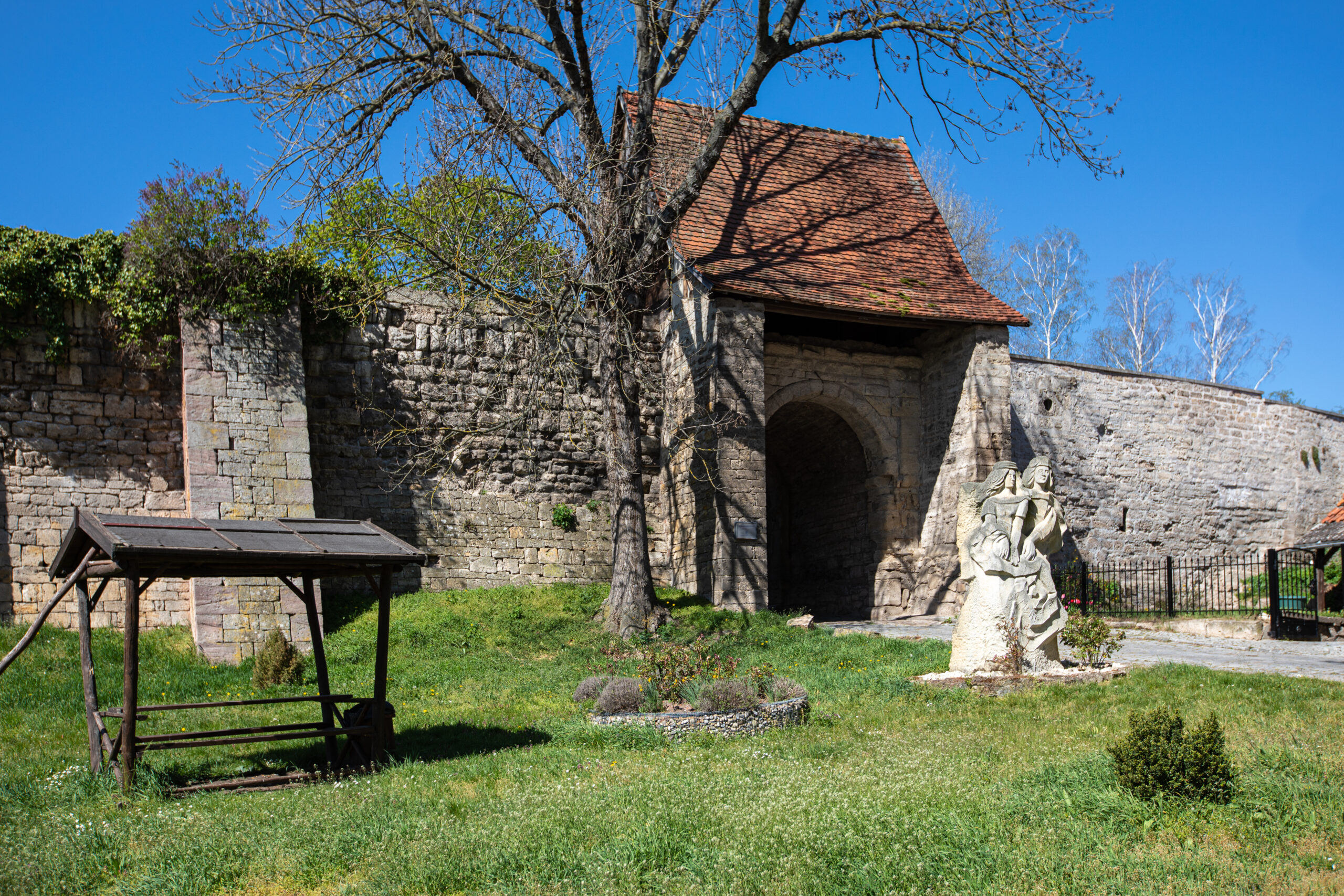
Today, Weißensee Castle stands on a small plateau above the town of the same name and counts among the largest Romanesque castle complexes in Germany. The site is encircled by an oval curtain wall up to seven metres high.
Medieval Architecture
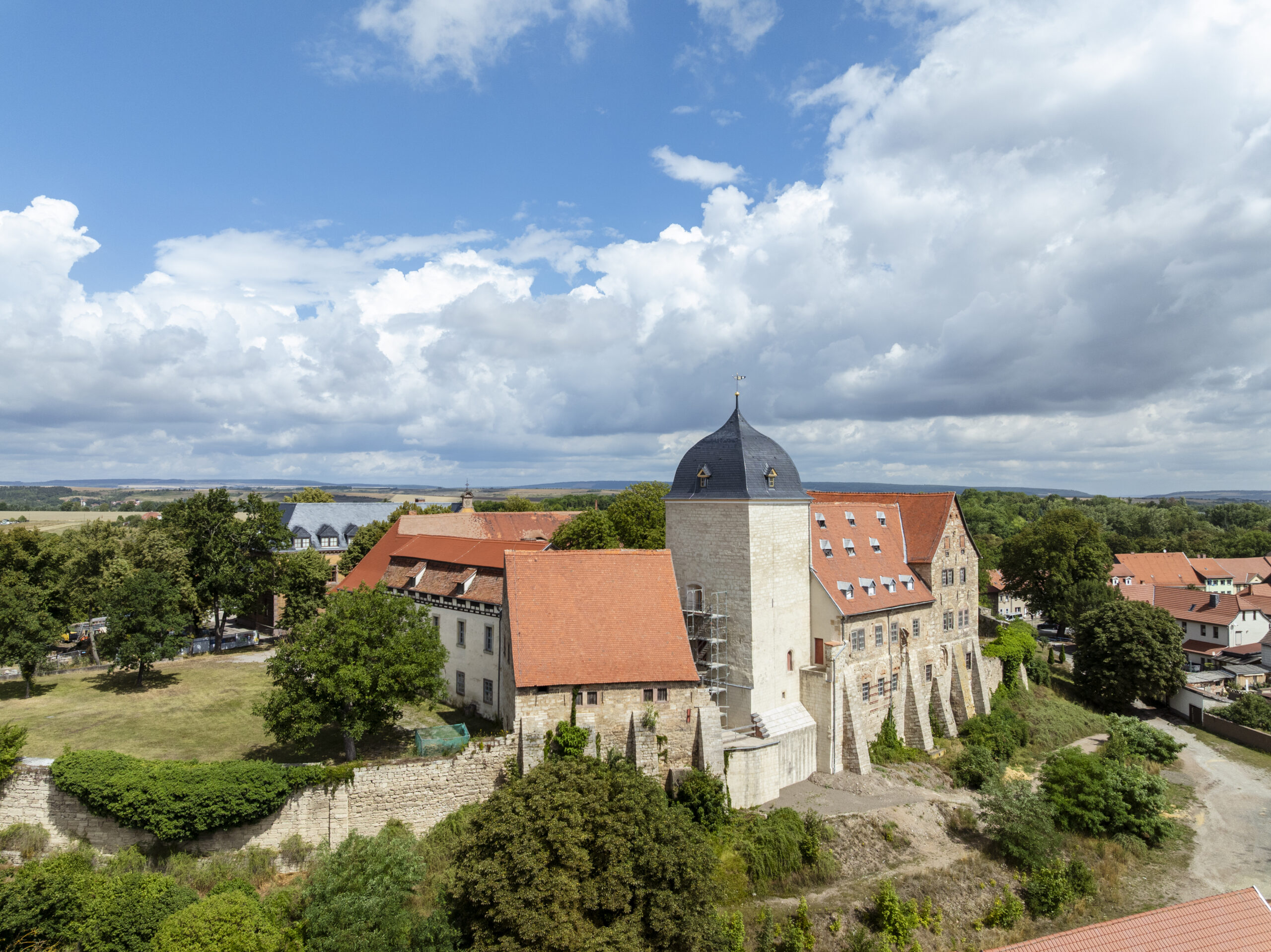
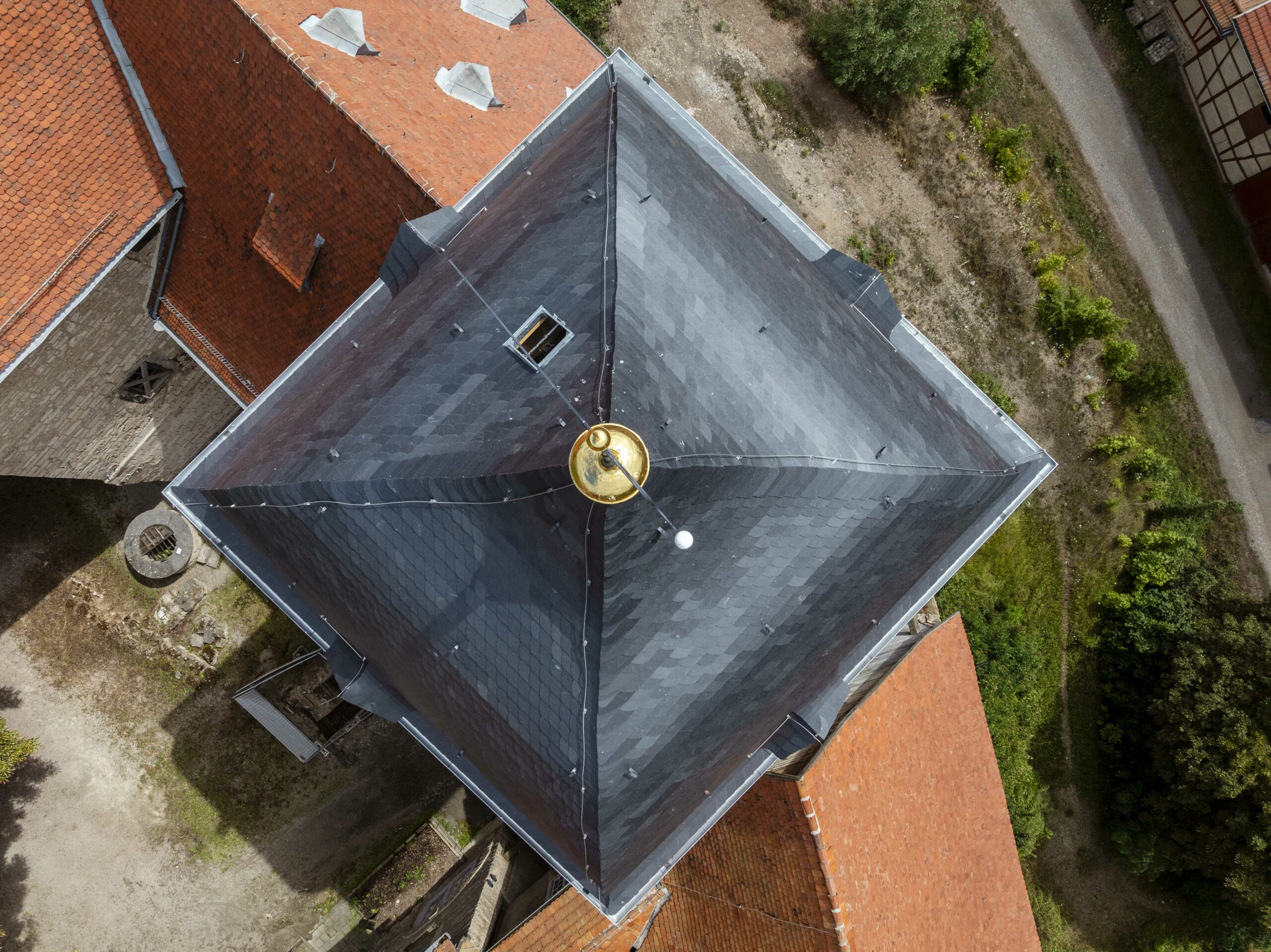
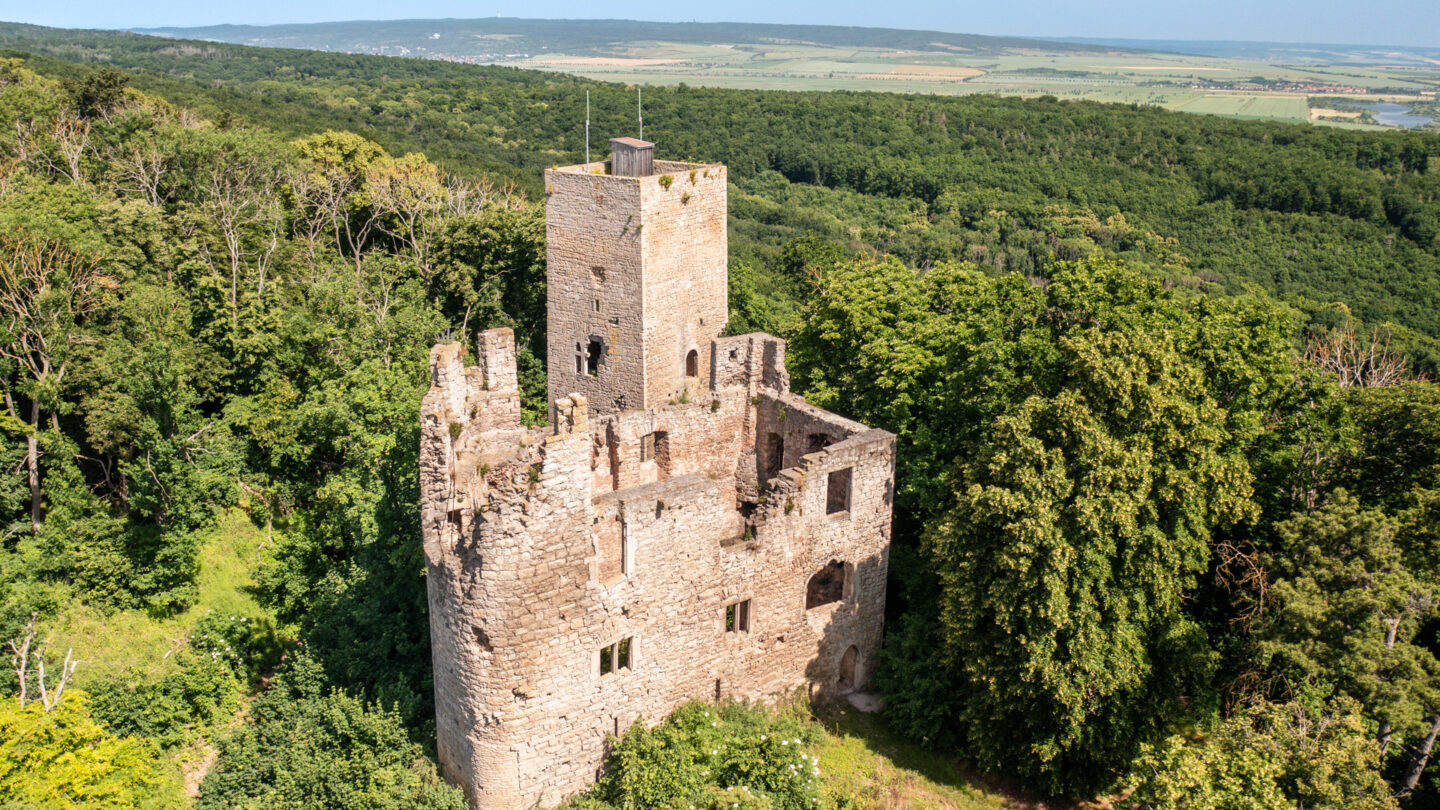
Highlights of the medieval architecture include the palas (great hall) and its five‑storey palas tower. Conceived as a single entity, they were completed in the late 12th century. The palas contains remarkable examples of medieval stone‑carving, including a “branch column” with a capital decorated with vine tendrils.
Since 1996, the complex has been extensively secured and restored by the Thuringian Palaces and Gardens Foundation. In particular, the restoration of the palas tower posed a special challenge, as the structure was extremely unstable and large sections of the decayed masonry in the lower shaft had to be replaced.