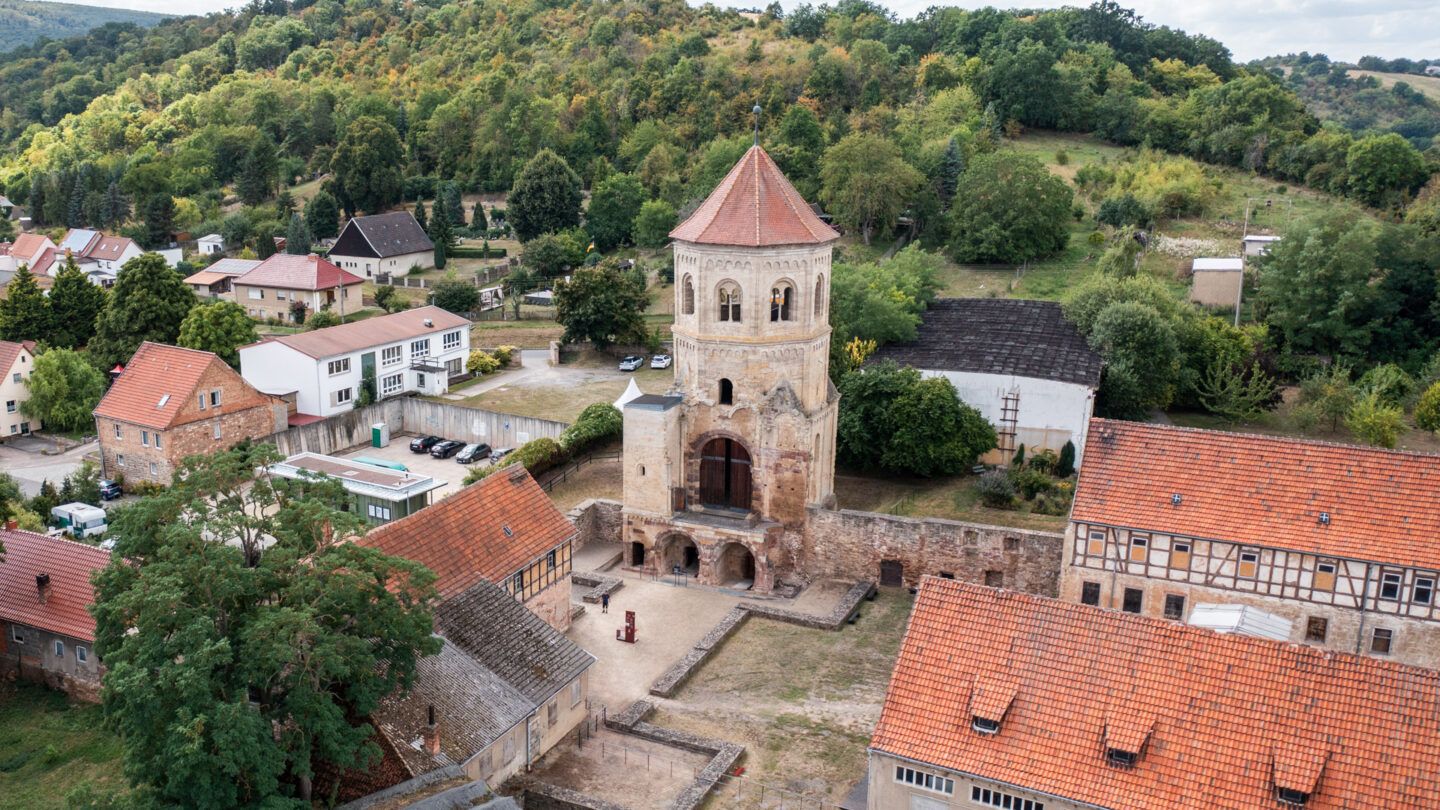
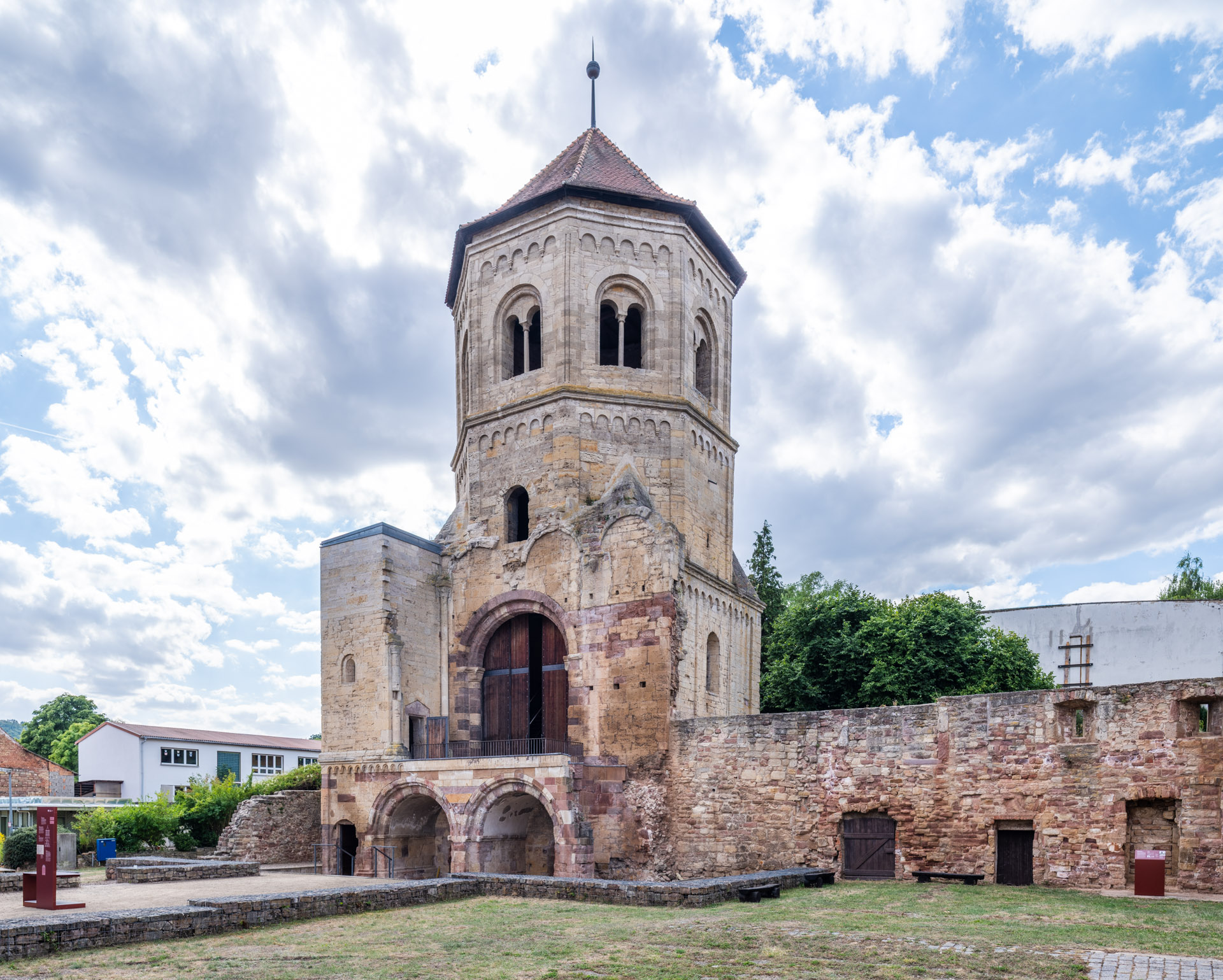
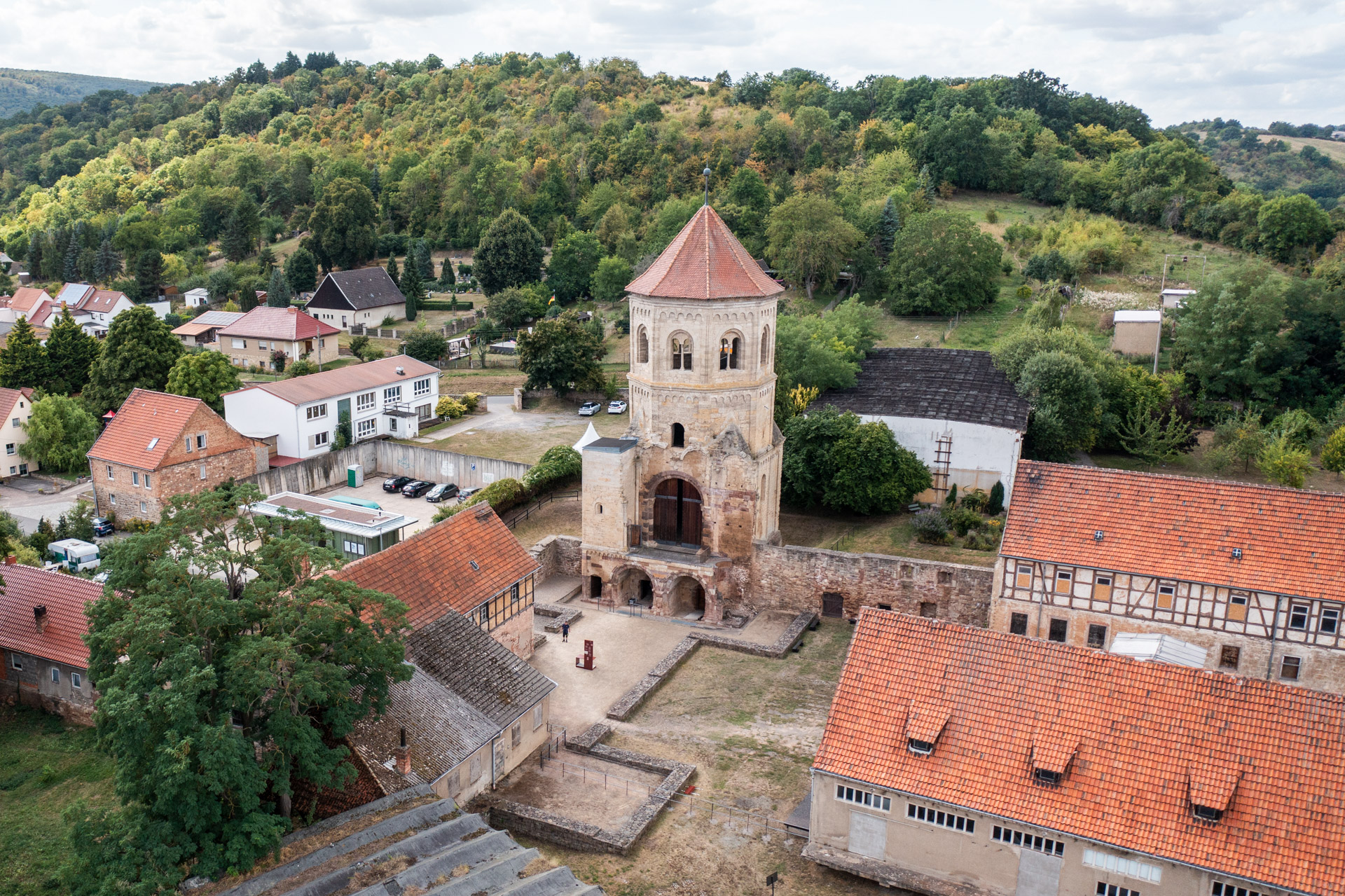
It is among the oldest monasteries in Thuringia, and its most important patron is still venerated as a saint in some regions. The St Wigbert Monastery in Göllingen, near Bad Frankenhausen, can look back on more than a thousand years of history – and above all, a very eventful one. After secularisation, it was used as a state domain, and following the Second World War as a canning factory. Of the former monastery, the most prominent surviving feature is the striking west tower with its Romanesque crypt.
At a glance
Address
Monastery complex with exhibition and visitor centre
Klosterstraße 4
99707 Kyffhäuserland, Göllingen
T: 03 46 71 – 55 46 90
Friends’ Association Society of Friends of the St Wigbert Monastery Ruins in Göllingen e.V. Website
Opening hours
Monastery complex with exhibition Visitor Centre
April to October
daily except Wednesdays, 10 am – 5 pm
November to March: only the outdoor grounds are accessible
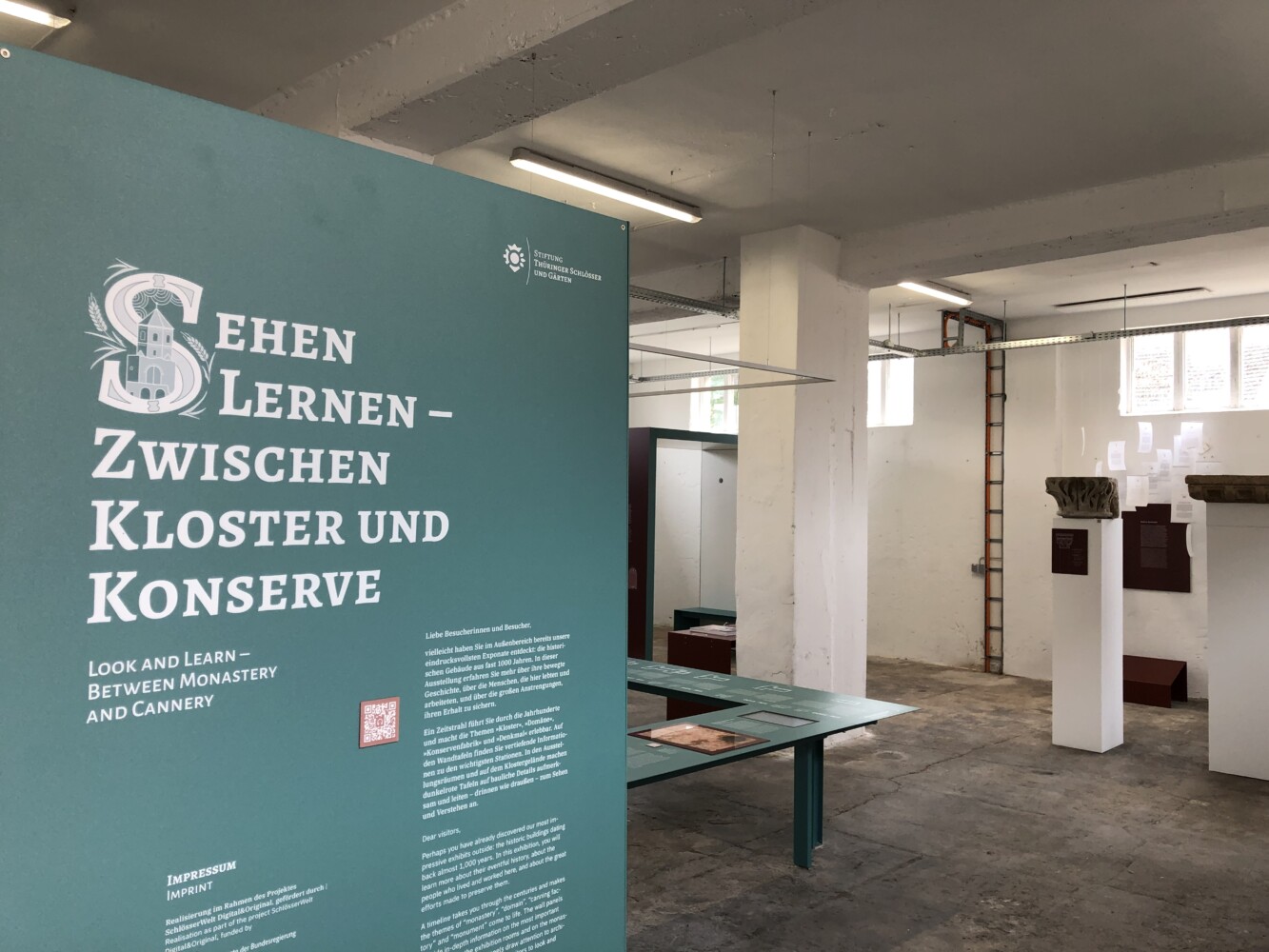
Exhibition: ‘Learning to See – Between Monastery and Preserved Food’
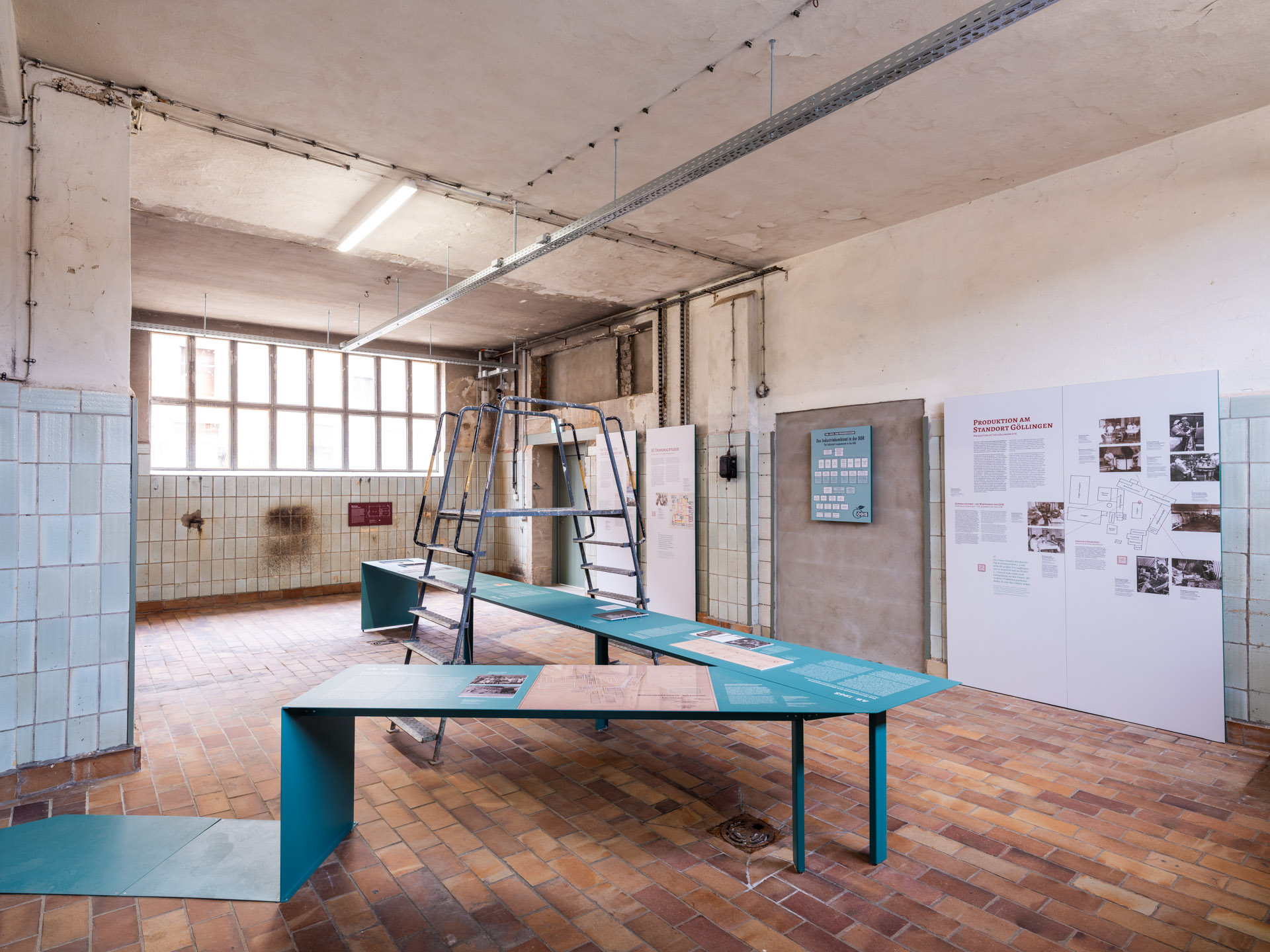
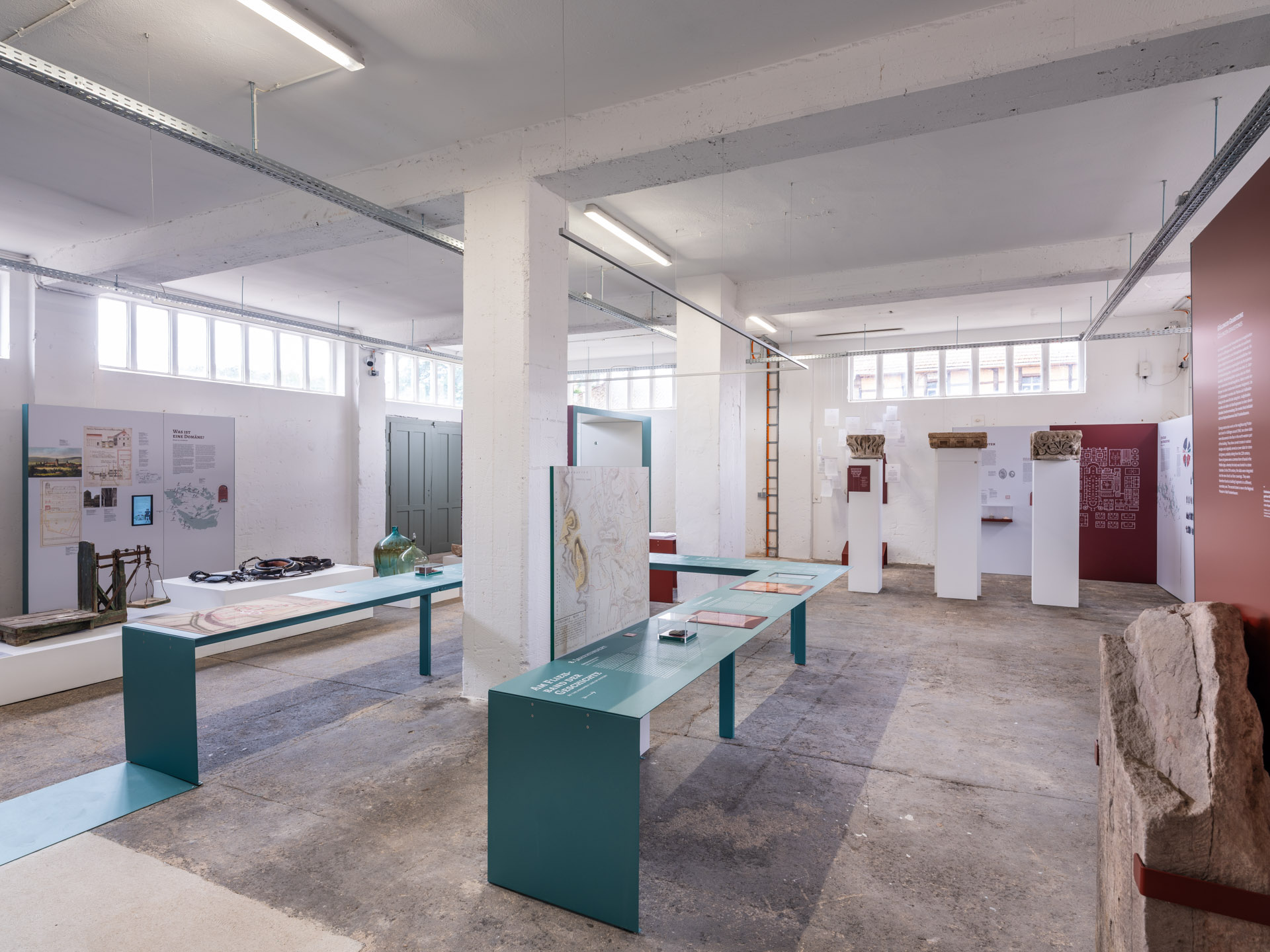
The Thuringian Castles and Gardens Foundation (STSG) has opened a new permanent exhibition at Göllingen Monastery. The multimedia exhibition offers insights into some 1,000 years of the monastery’s history, from the Middle Ages to the present day; traces of this history can still be seen at the historic site today and form the focus of the exhibition. In addition, a reception pavilion, built using sustainable construction methods, has been erected to provide the necessary infrastructure.
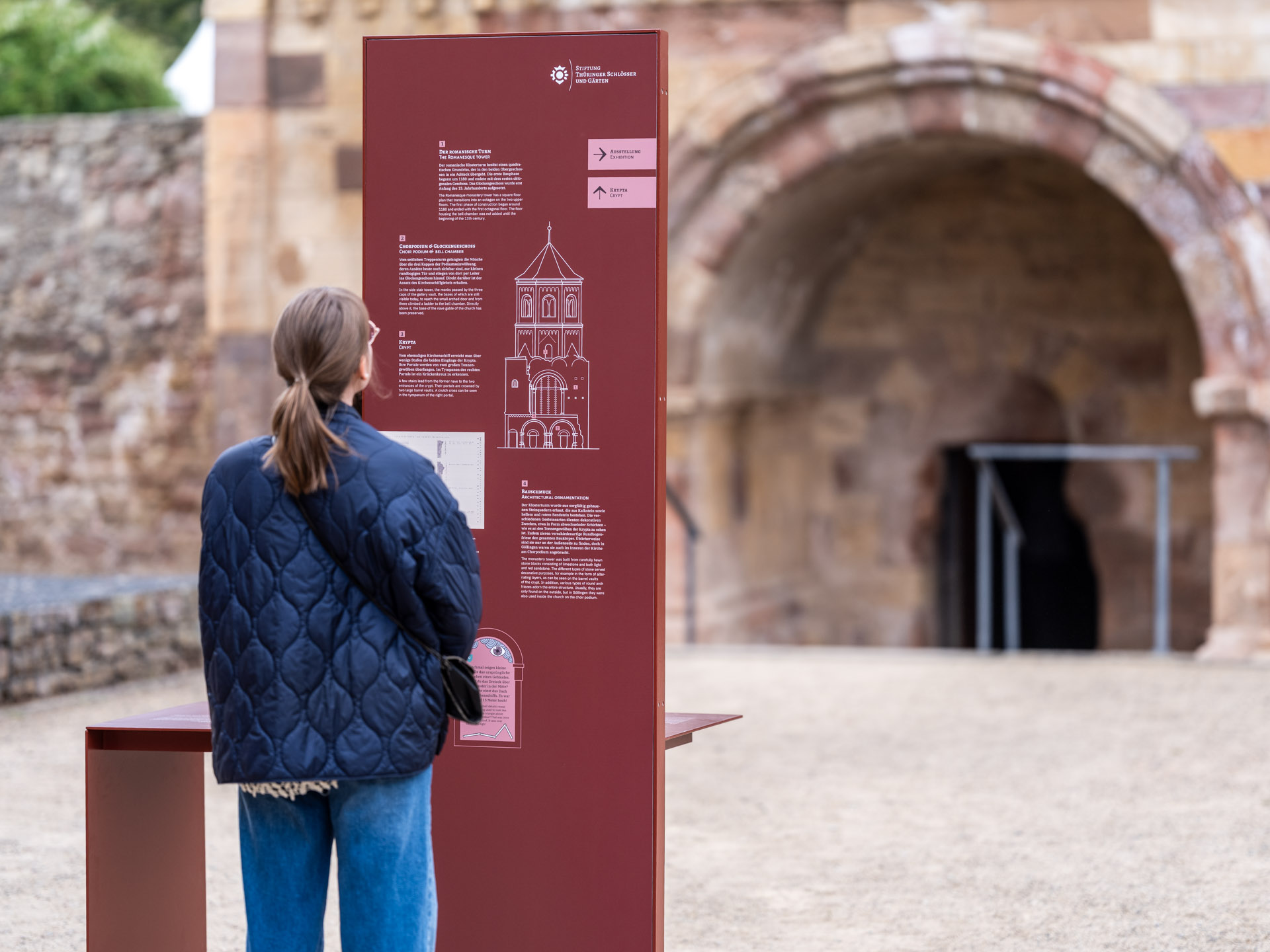
The space where fine preserves were once stored now houses the new permanent exhibition within the monastery complex. From the interactive timeline to the ‘Storehouse of Legends’, visitors are guided through the monastery’s history, spanning various eras. Time and again, attention is drawn to the traces of time that are still visible on the building itself. Outside, the tour continues with information boards and signposts.
A multimedia guide also offers interactive elements and further layers of detail, including videos and interviews. Children’s stations keep the little ones entertained and guide them playfully through the exhibition.
It is said to have happened on Christmas Day in the year 1005: a nobleman renounced worldly life, entered the Benedictine Order, and endowed his property to the monastery at Göllingen. The deed of gift records: “Let it be known to all the faithful in Christ that a certain nobleman by the name of Gunther, by right of his own inheritance (…) has granted the estates of Thürungen, Günserode, Ichtershausen, and Eschenbergen, with serfs and all appurtenances, to St Wigbert at the altar in the place called Göllingen, for the maintenance of the brethren of that place…”
At that time, Göllingen belonged to the Abbey of Hersfeld and, like its mother house, was dedicated to St Wigbert. Gunther, the former Count of Käfernburg‑Schwarzburg, governed the convent for one year, then withdrew into the solitude of the forests, living as a hermit in the Bavarian‑Bohemian borderlands. There he is venerated to this day as a saint, and entered history as Gunther of Thuringia. The deed of 1005 is the earliest documentary mention of Göllingen Monastery, placing it among the oldest in Thuringia. The site itself is recorded as early as around 775 as a possession of Hersfeld Abbey, though whether a monastery already existed then is uncertain.
Traces of Monastic Life
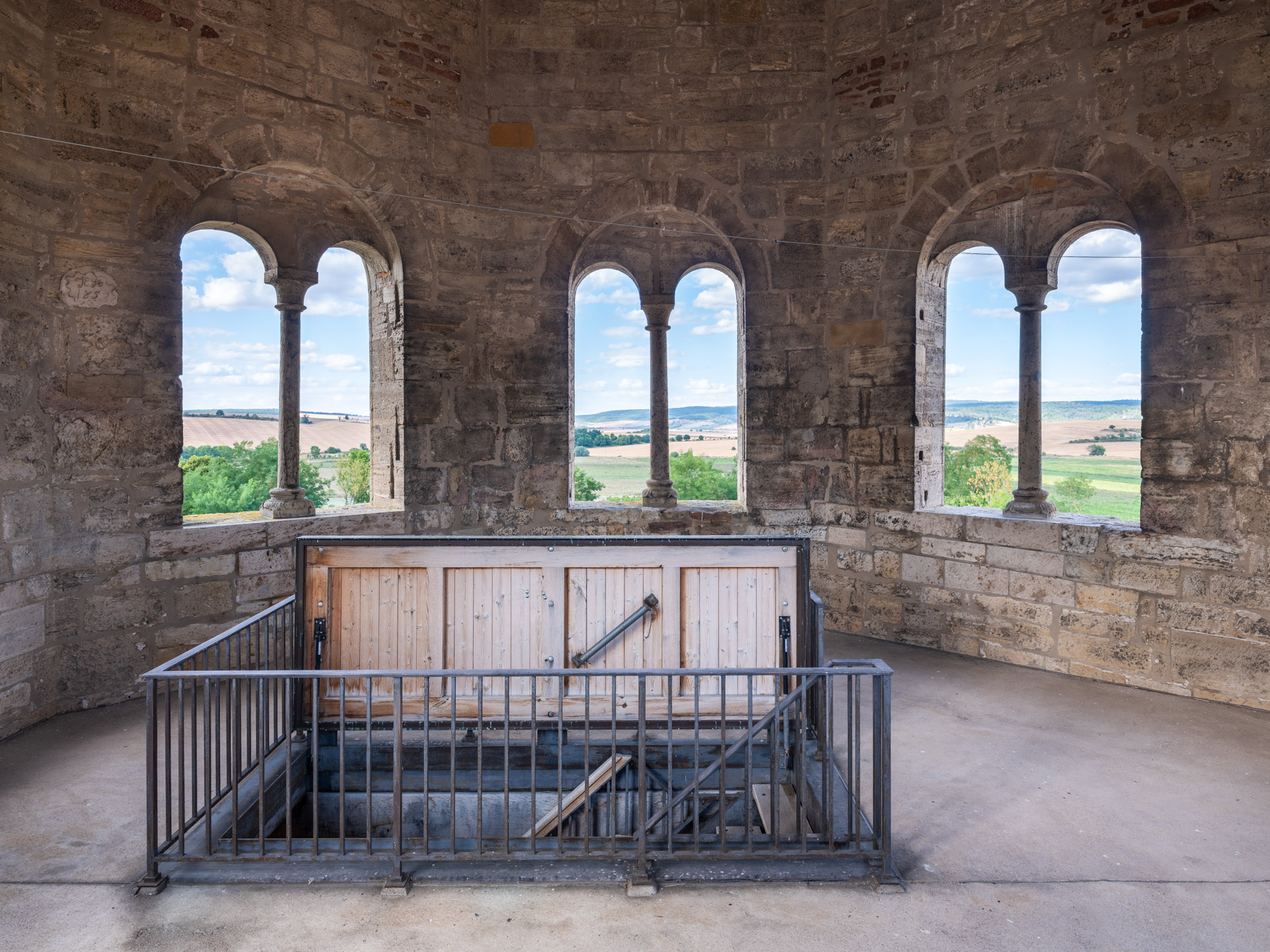
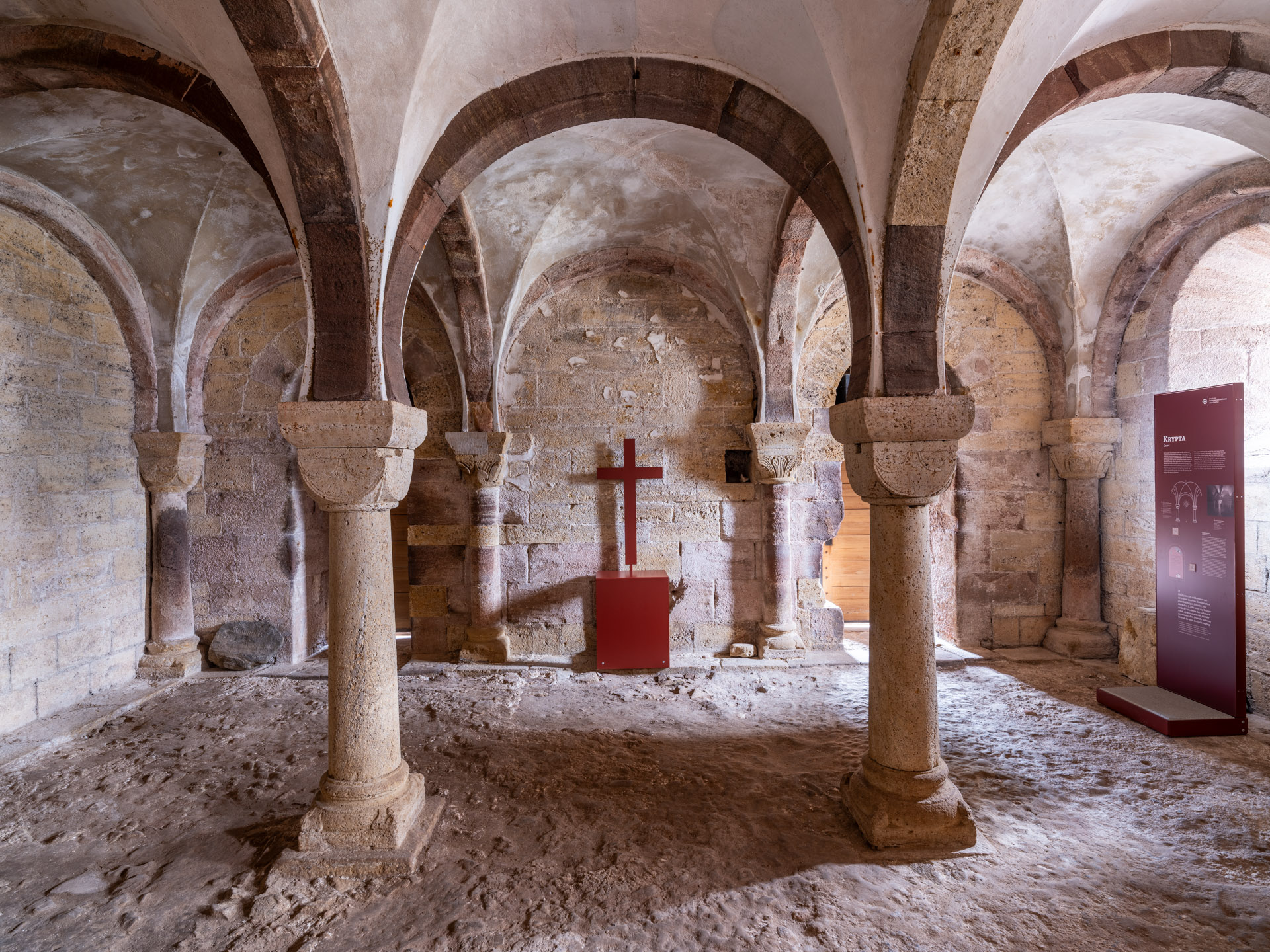
Only remnants of the once‑extensive complex survive today. Of the monastery church, the eastern apse and the west tower remain. With few written records, the construction history had to be reconstructed from the surviving fabric. A first stone church was probably erected in the late 10th century. Around 1170 came the first major remodelling, which produced the so‑called choir podium and the two lower storeys of the present west tower. A few years later, this podium‑like structure was built up into a tower and topped with two octagonal storeys. The west tower also houses the important crypt of the former monastery church, ingeniously built into the rising ground so as to be invisible from the west. The room’s sophisticated architecture and elaborate decoration testify to the monastery’s wealth.
From Domain to Canning Factory
During the Peasants’ War in 1525, the monastery complex was plundered and partly destroyed. Göllingen Monastery emerged from the Reformation largely unscathed, but in 1606 secularisation followed and the site was converted into a domain. The crypt was used as a storeroom; most of the nave disappeared, and the monastery brewery was turned into a stable. After the Second World War, the site served as a canning factory. Many buildings were demolished or altered, workshops, storage facilities, and farm buildings erected. Following the end of production in 1990, the construction history of the monastery church was investigated in detail.