A Journey through the Ages and a Home for the Arts
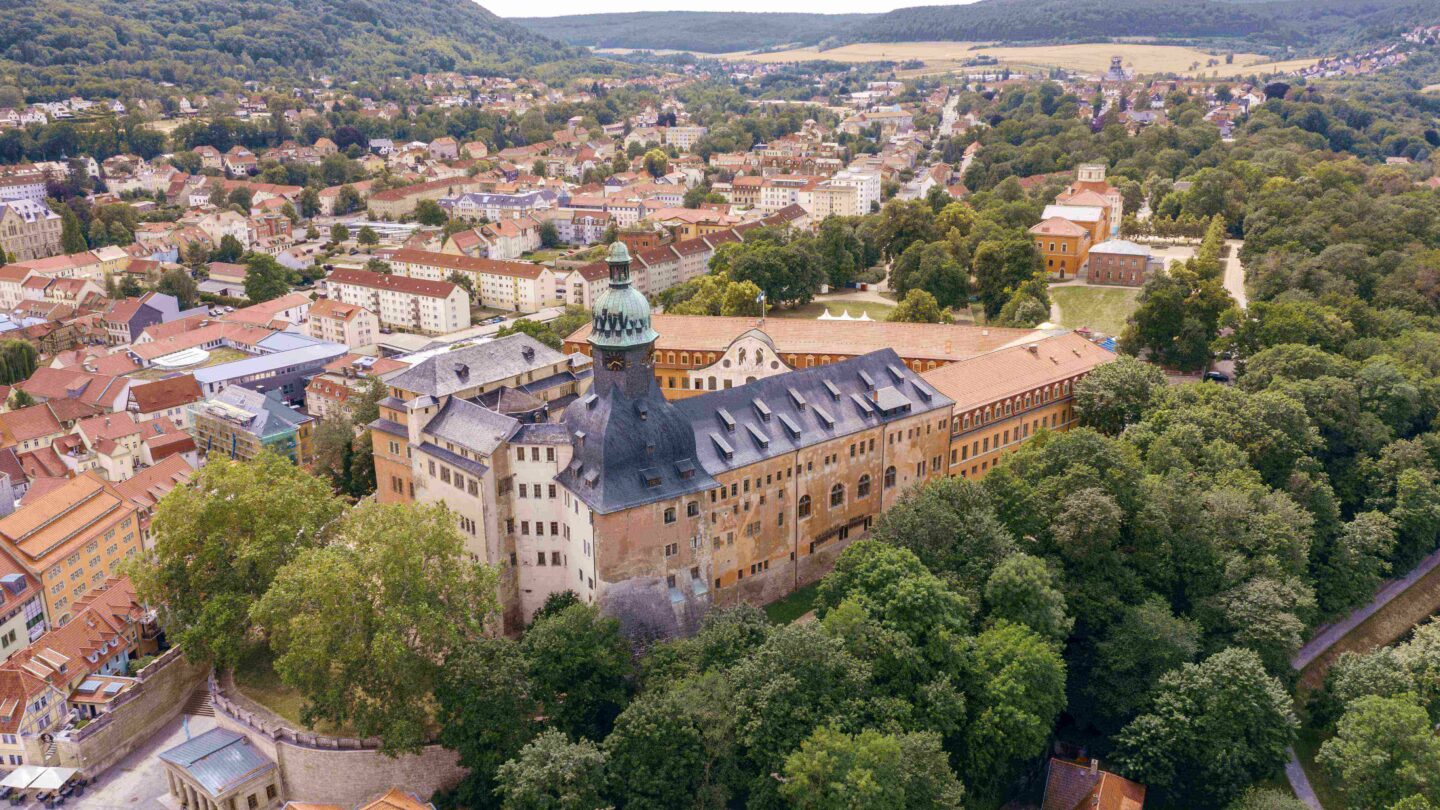
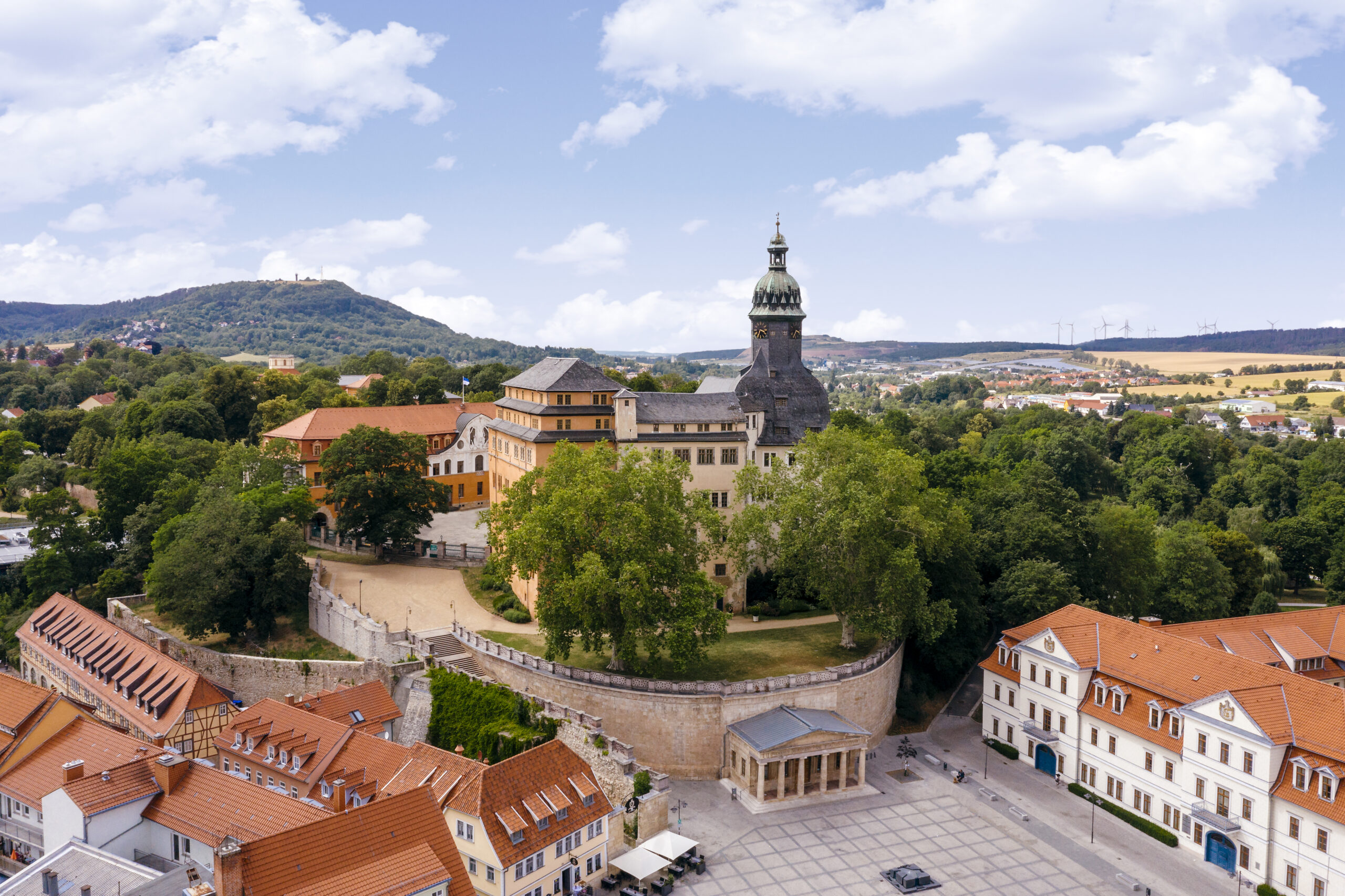
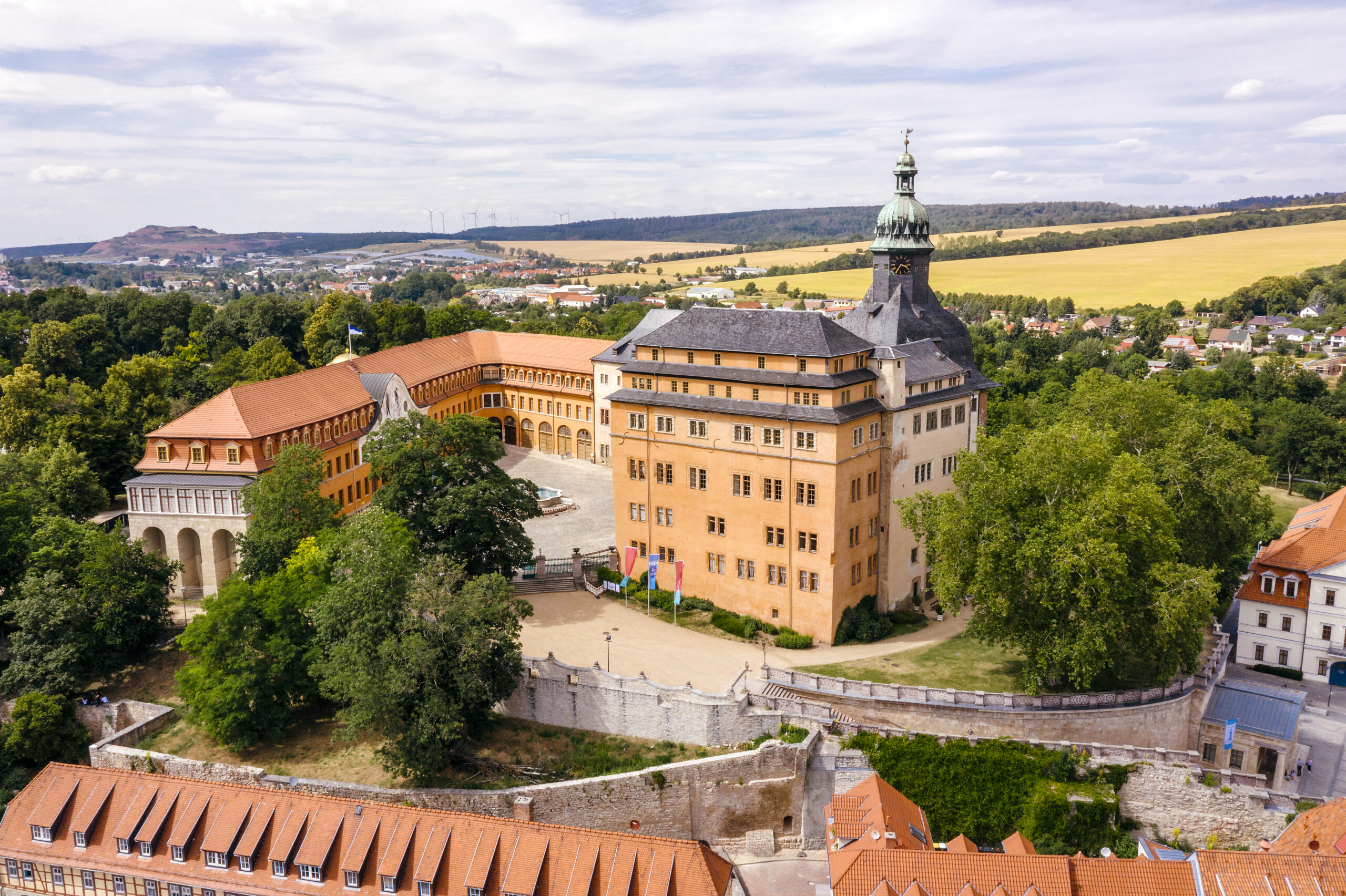
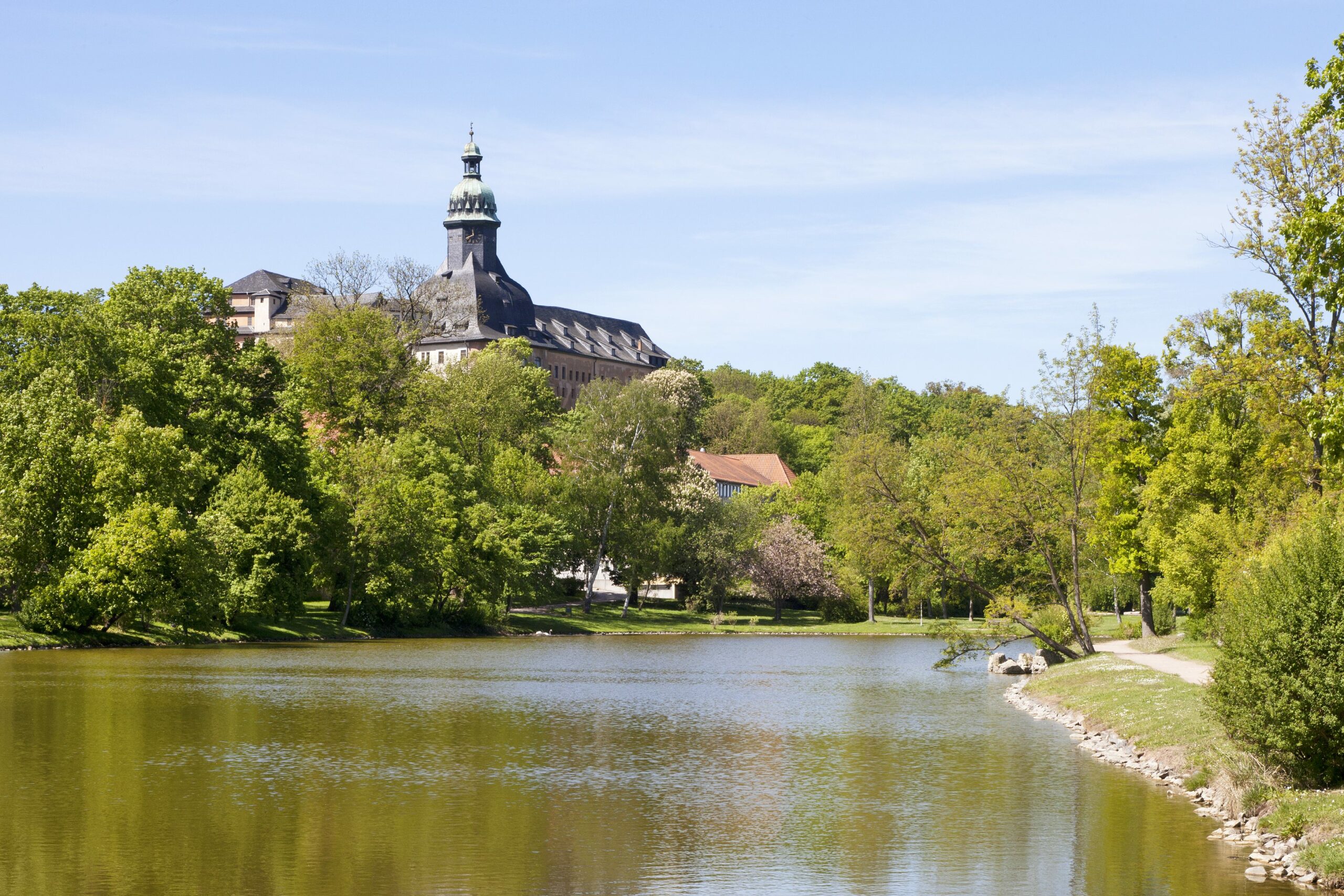
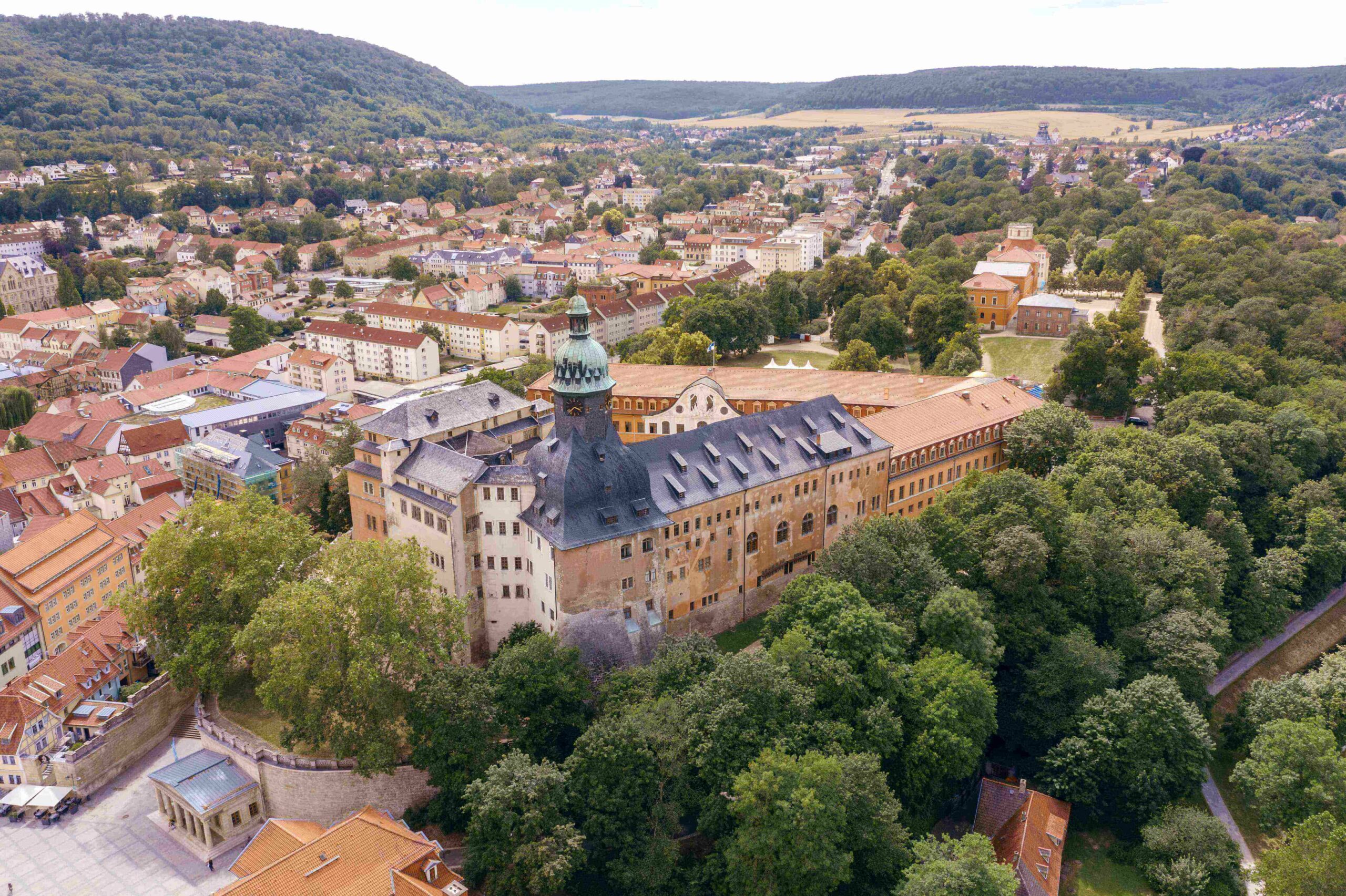
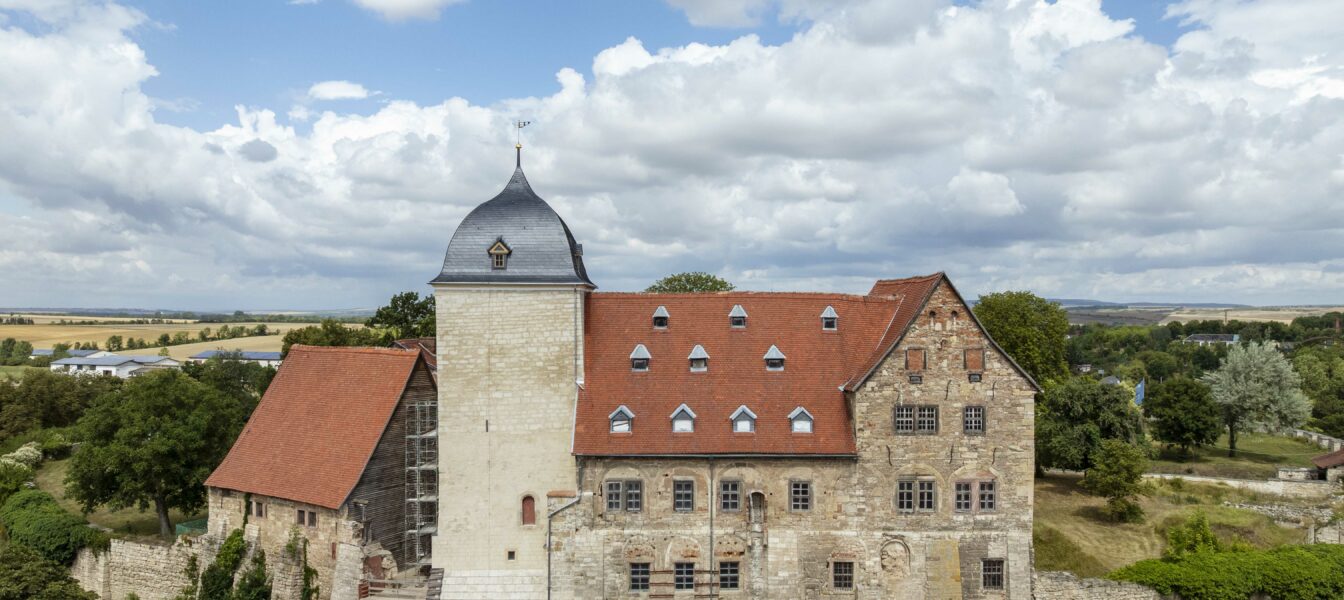
In terms of architectural and art history, Sondershausen Palace is one of Thuringia’s most significant residential complexes. For over 600 years, it served as the seat of government for the Counts and Princes of Schwarzburg-Sondershausen. The palace tower, dating from the 13th century, was incorporated into the Renaissance palace, the construction of which began in 1534. By the 17th century, a three-winged palace complex, remodelled in the Baroque style, had been completed.
To the west of the palace building, the Octagonal House was constructed in the Pleasure Garden by 1710. Under Prince Christian Günther III (reigned 1758–1794), construction of the West Wing and the New North Wing began in 1764. This gave the residential palace its final architectural character as an irregular four-winged complex.
In the mid-19th century, parts of the palace complex, such as the west wing and the stables, were redesigned in the Neoclassical style. At the same time, the pleasure garden, the Lohplatz and the Lohpark area to the north of the Schlossberg were also redesigned. In 1914–15, a two-storey gallery was built, linking the tower, the east and south wings and the new stair tower.
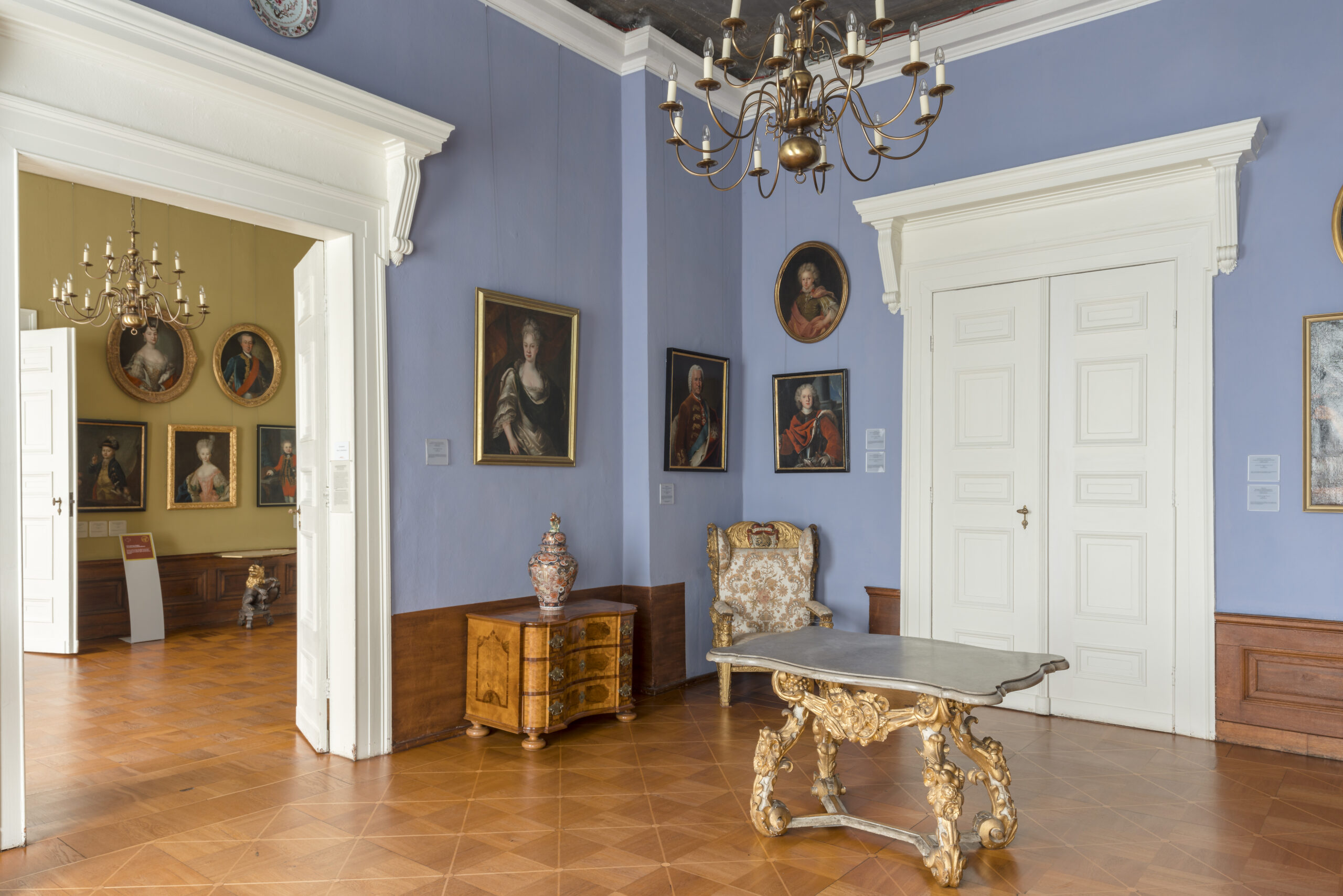
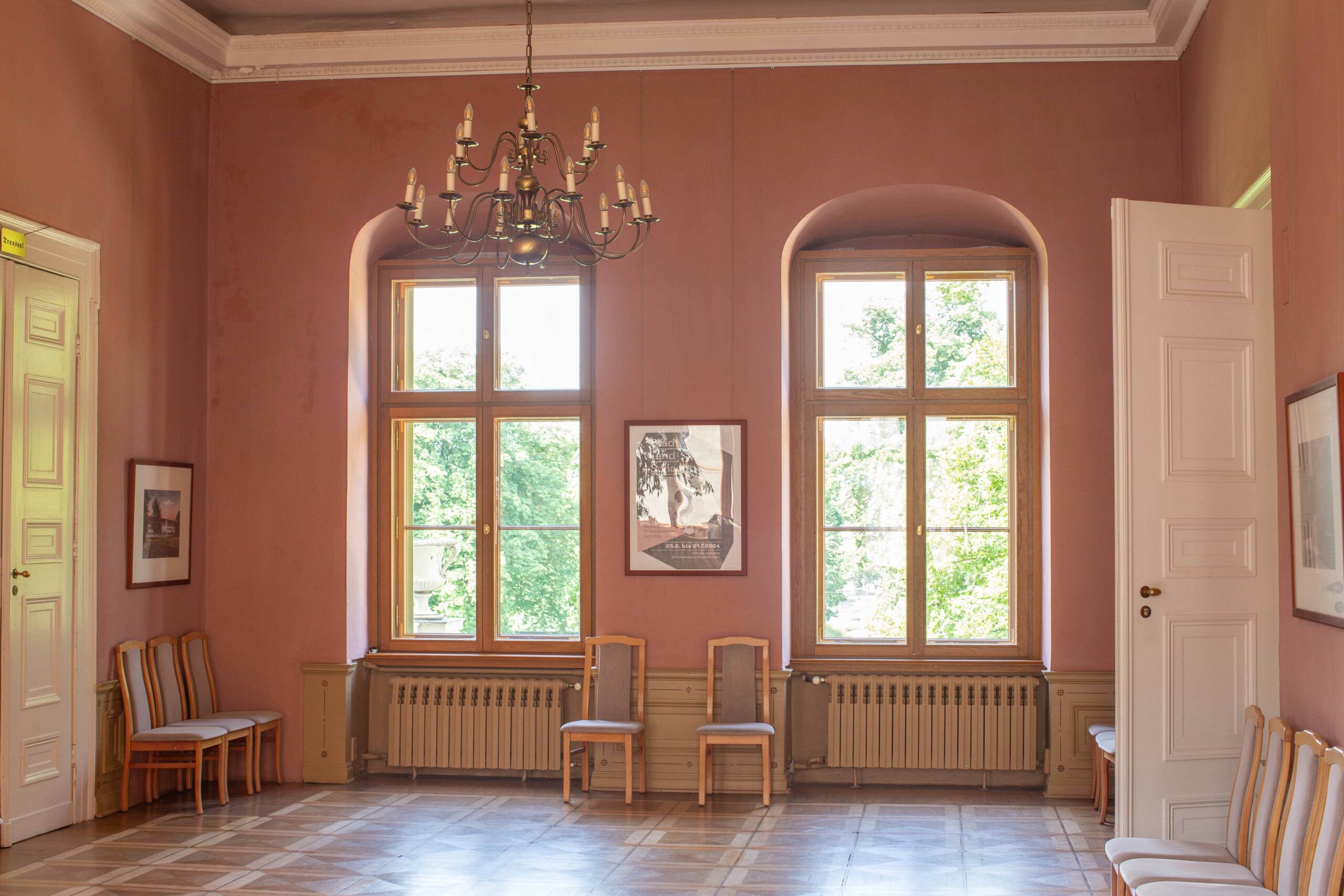
The palace is home to the Sondershausen Palace Museum and the Carl Schroeder Conservatoire. The museum tour covers part of the interior. The stables building is used by the Thuringian State Music Academy in Sondershausen.
Friends’ Association
Thuringian Palace Festival, Sondershausen Website
Opening hours
Palace Museum with Art Collections all year round, Tue–Sun 10 am–5 pm
One Palace, Many Stylistic Eras
For around 560 years, the Counts and Princes of Schwarzburg ruled this small town near the Kyffhäuser mountain range. Unsurprisingly, the palace reflects the full span of that lengthy history. First documented in 1125, Sondershausen later passed to the Counts of Hohnstein and then to the Counts of Schwarzburg, the oldest noble family of free status in Thuringia. They expanded the medieval fortress into a prestigious residence, continually adapting it over the centuries to suit the evolving needs of the ruling elite. A major turning point came in 1697 when the counts were elevated to Imperial Princes. The Palace was remodelled accordingly to reflect their new status. Today, Sondershausen Palace presents itself as an irregular four-wing complex where various architectural styles blend in a unique way. For this reason, it is considered one of Thuringia’s most significant palace complexes in terms of architectural and art history. Despite centuries of change, one element remains constant – the Palace Tower. Originally part of a medieval residential tower, it was incorporated into later constructions as a symbol of tradition and authority.
Precious Objects of Courtly Presentation
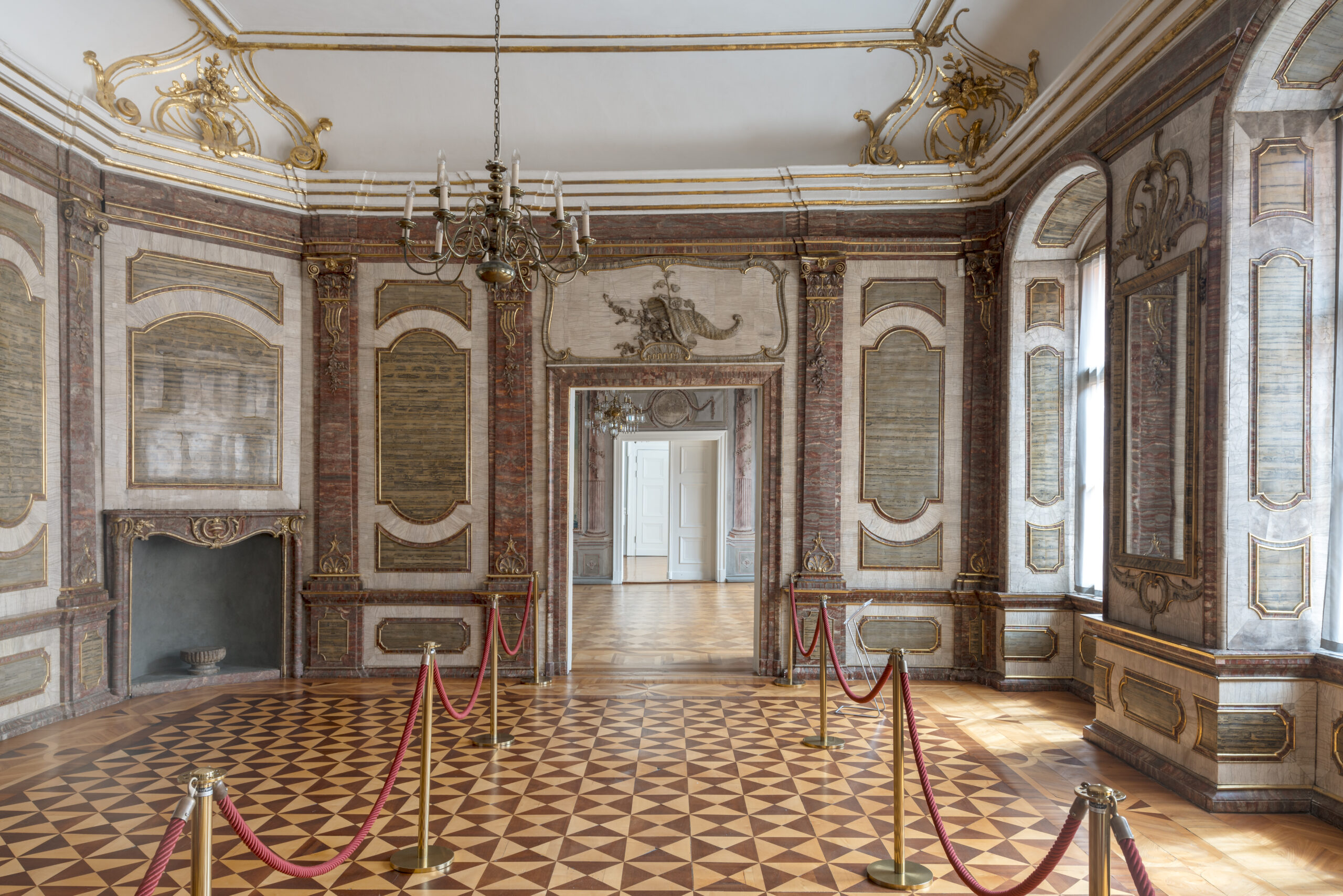
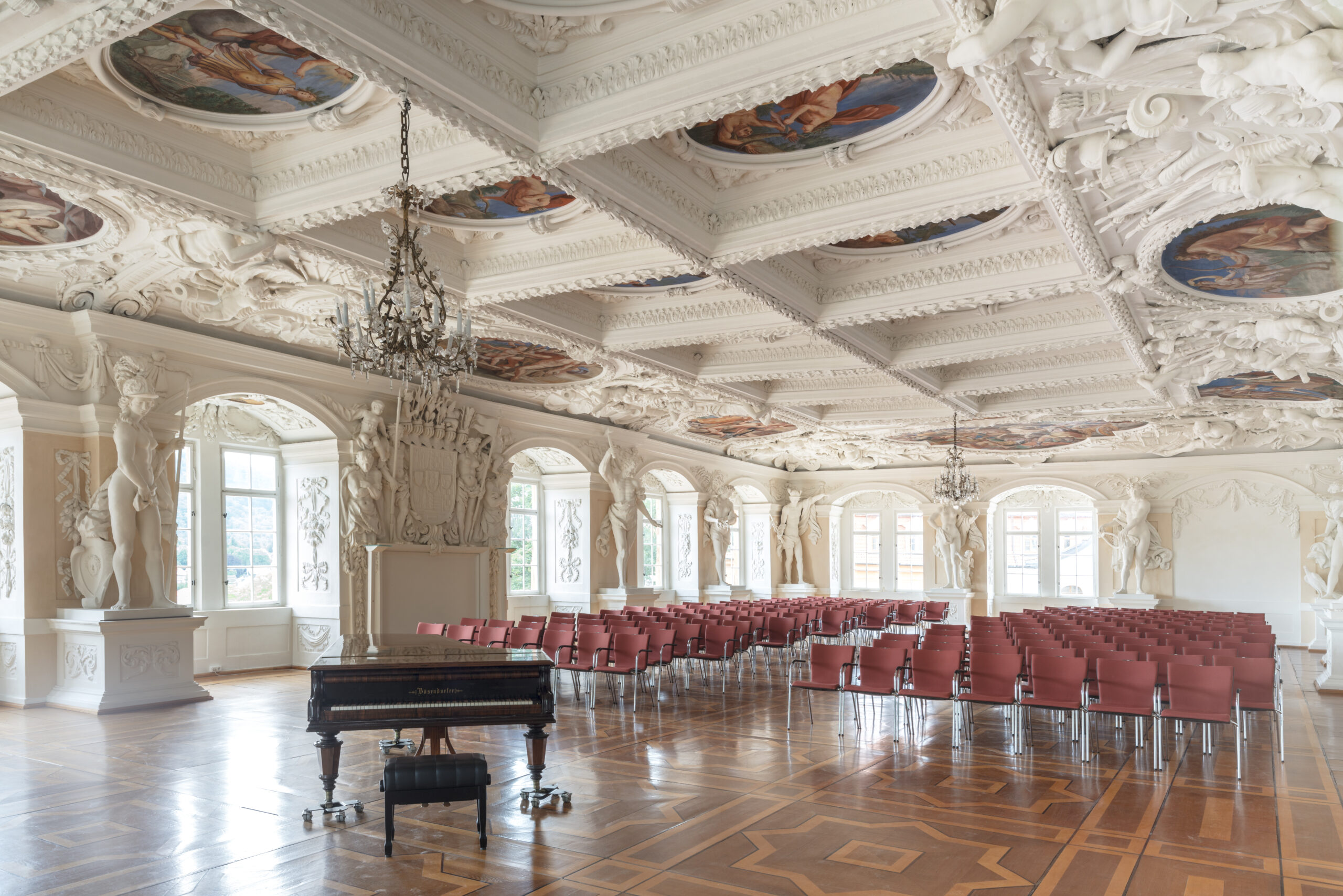
Sondershausen Palace’s significance lies above all in its exceptional works of interior art. One of the earliest is the so-called “Vault by the Spiral Staircase,” adorned with lavish stucco decorations dating from 1616. These flourishing motifs include scenes from Ovid’s Metamorphoses. The monumental Giants’ Hall was built in 1695 to mark the elevation to Imperial status and is a standout example of Baroque interior design. Its name comes from the 16 oversized statues of classical deities. Although the “Blue Hall” was added about a century later as another banqueting venue, the Giants’ Hall has remained unchanged in form and decor. The so-called Stone Room was honoured with the title “Thuringian Amber Room.” It features limestone tiles sourced from the region, hand-polished to produce a refined, lustrous finish. The concept is said to have originated with Prince Christian Günther himself, who practised as a stone polisher.
Musical Heritage in the Octagon House and Riding Hall
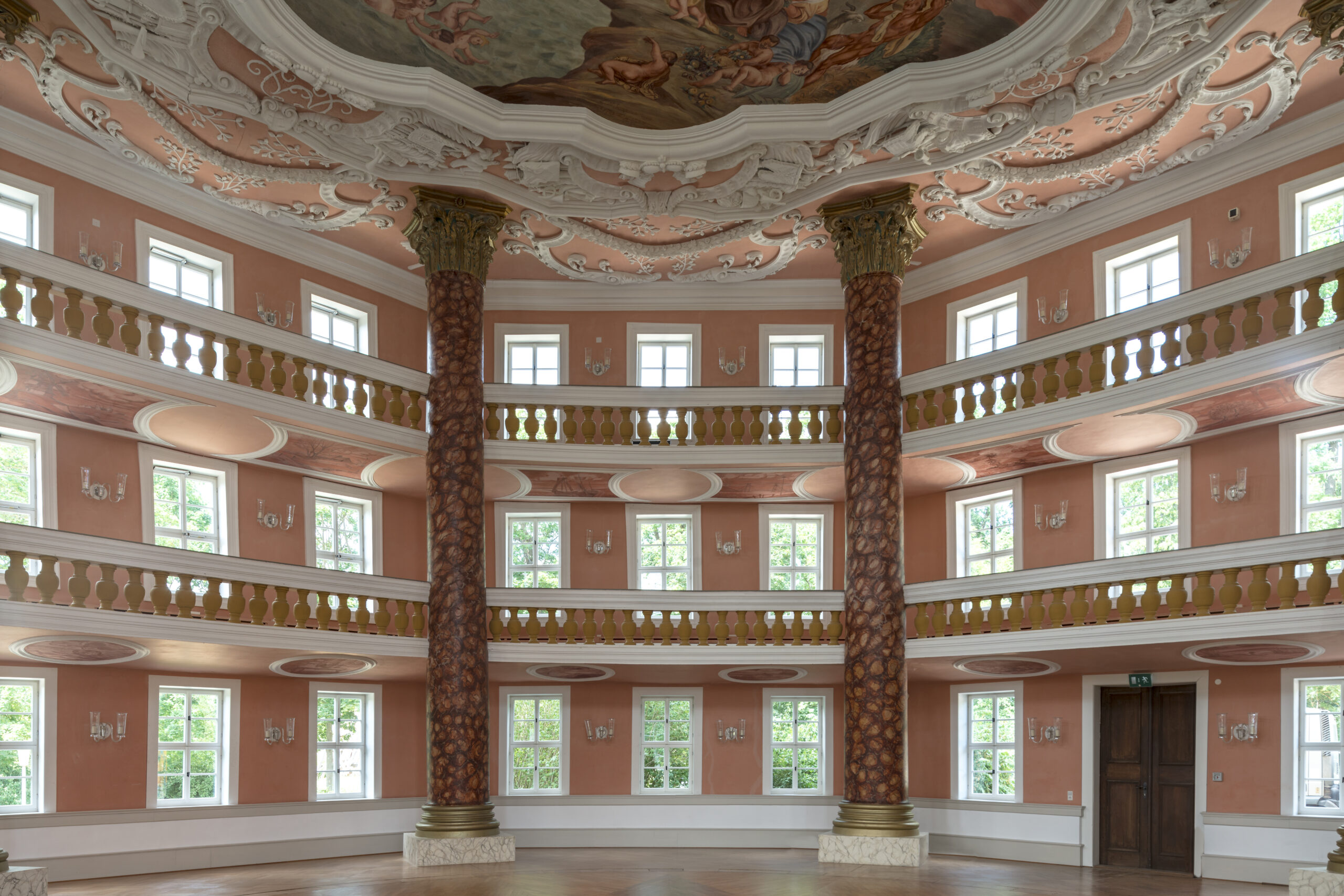
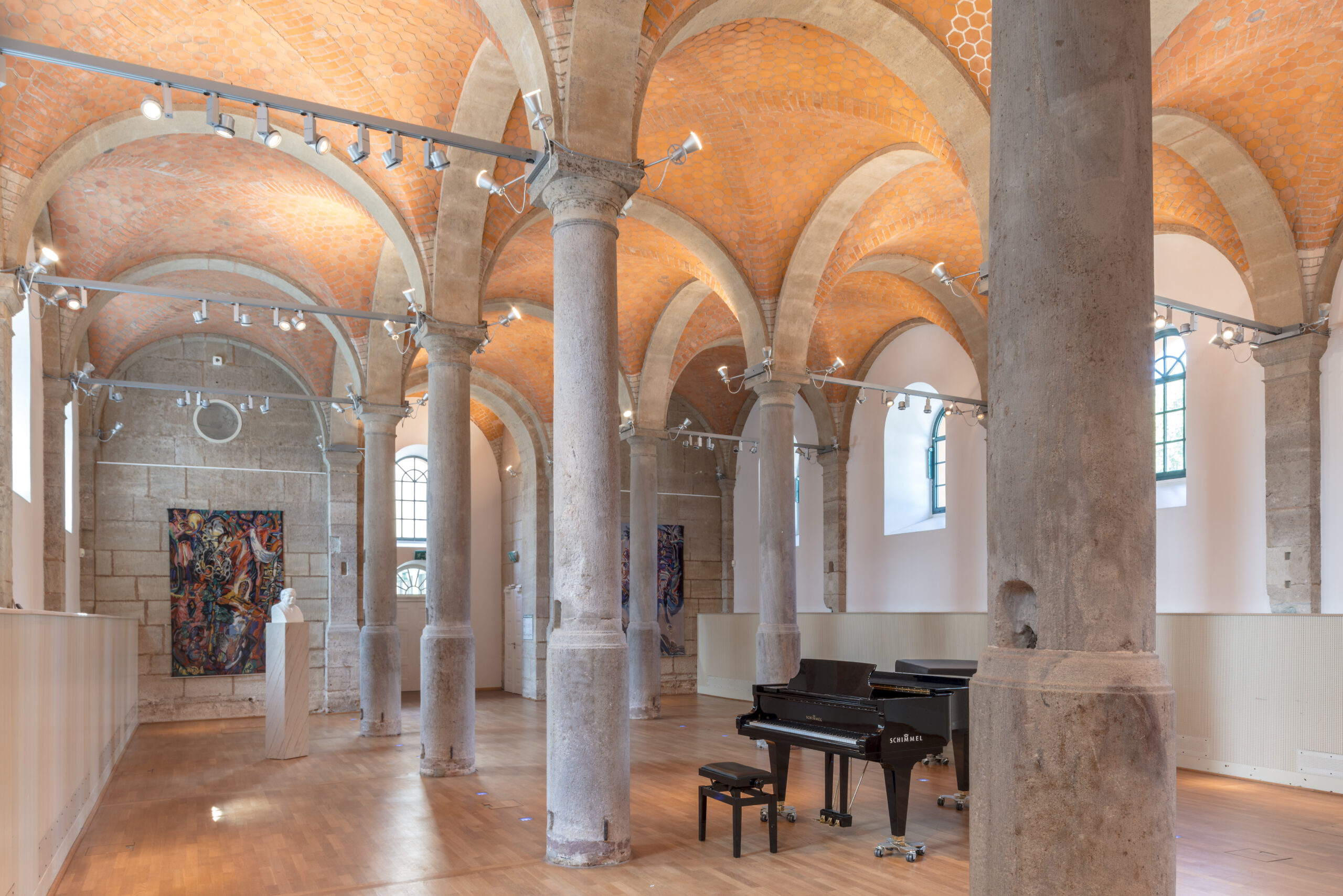
Around 1700, initial palace gardens were laid out in the mid-16th century as well as expanded and redesigned later. Notable among the surviving buildings is the ensemble of the Octagon House and Riding Hall. The Octagon House frequently hosts cultural events and celebrates Sondershausen’s long musical tradition, which Franz Liszt once described as “a great miracle locked inside a small town.” Today, the Riding Hall houses the Thuringian State Academy of Music, an institution with both national and international acclaim.
Palace Park
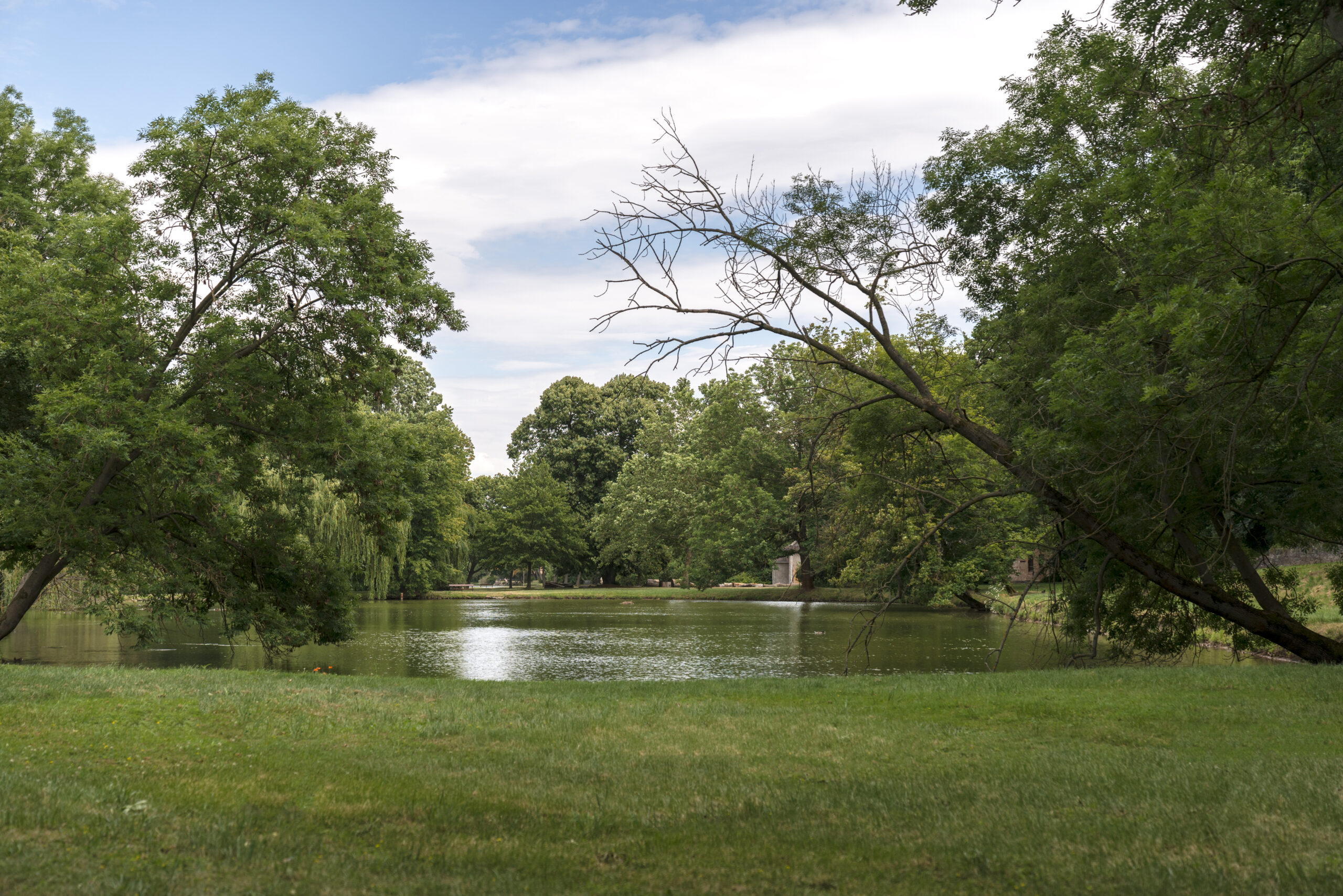
A garden has been documented here since 1533. At the end of the 17th century, the Baroque design of the pleasure garden began, which included the large orangery and the octagon house – a building used for carousel riding. The present‑day park, covering around 30 hectares, was shaped in large part by the garden designers Ekart and Petzold. The creation of an extensive landscape garden along the River Wipper, with two park lakes, the flower garden at the Prince’s Palace, and winding paths, was begun in 1836 under court gardener Ekart. His son, Tobias Ekart, continued the work with the idea of a public garden as part of a broader beautification of the region. In 1850, Carl Eduard Petzold was commissioned to redesign the immediate surroundings of the palace. To allow for a more spacious pleasure garden, all forcing and greenhouses in the orangery garden were dismantled, and a new court nursery was established at the Jägerhaus (Hunting Lodge) to replace them.
The park was heavily damaged during the Second World War. It is currently being restored in the spirit of the work of Ekart and Petzold.