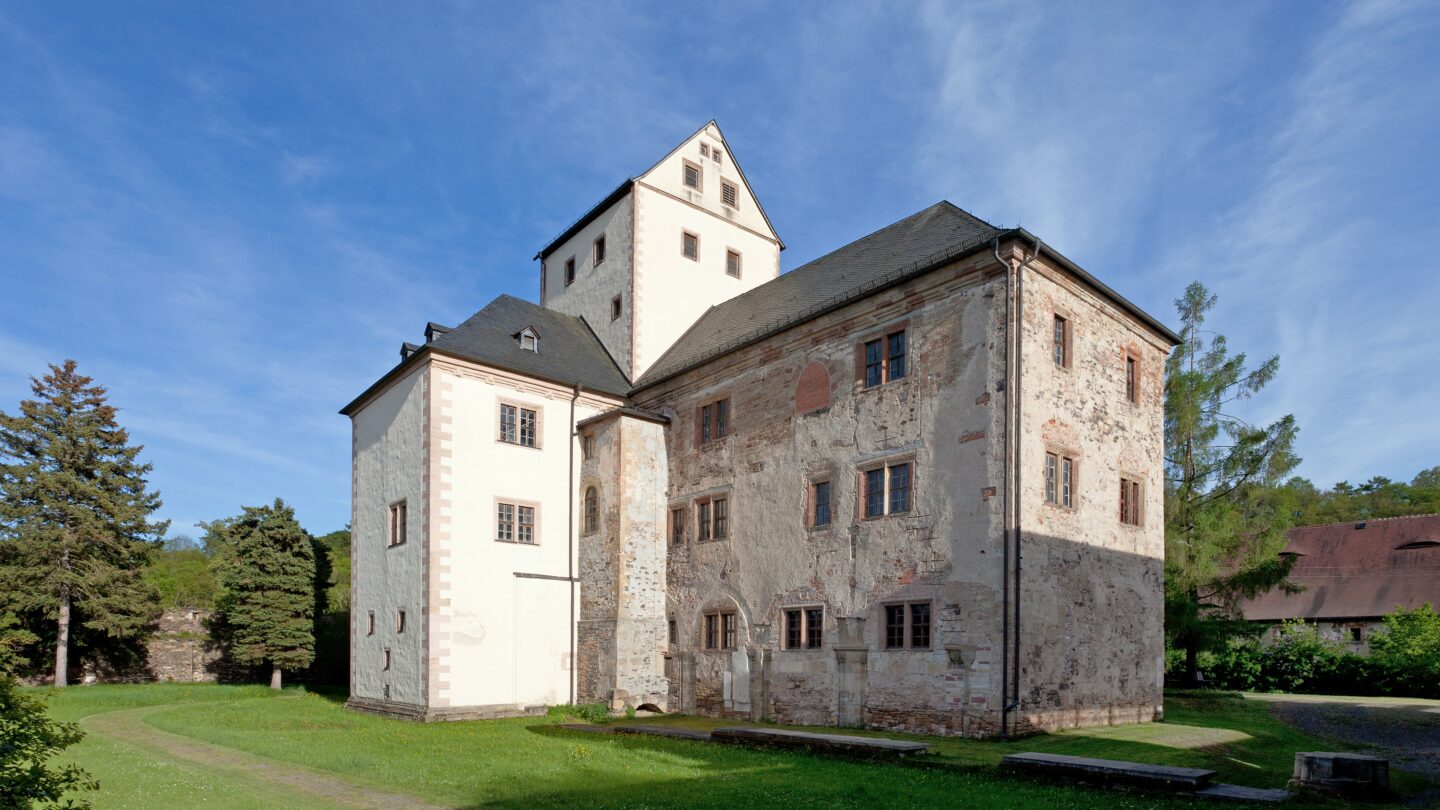
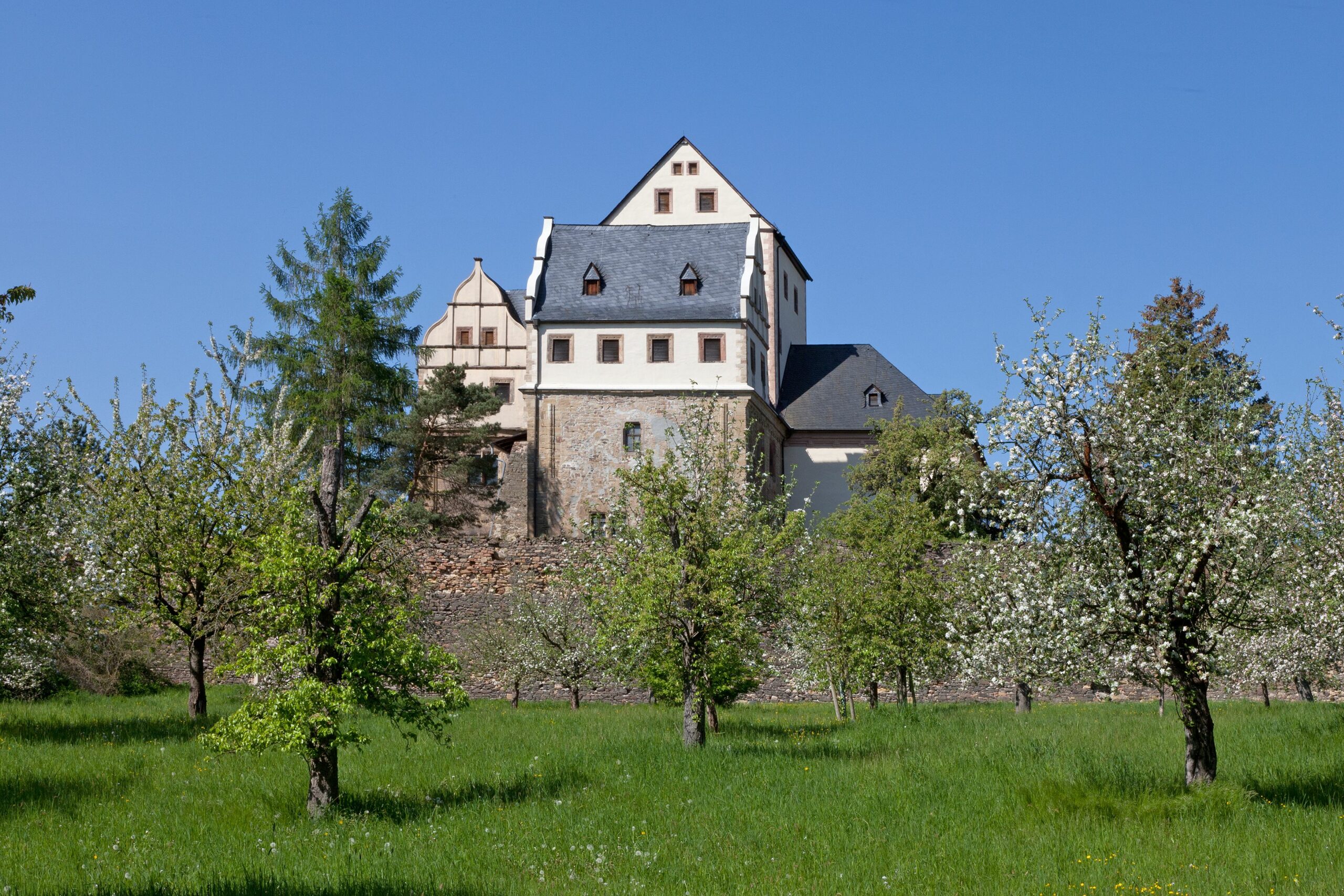
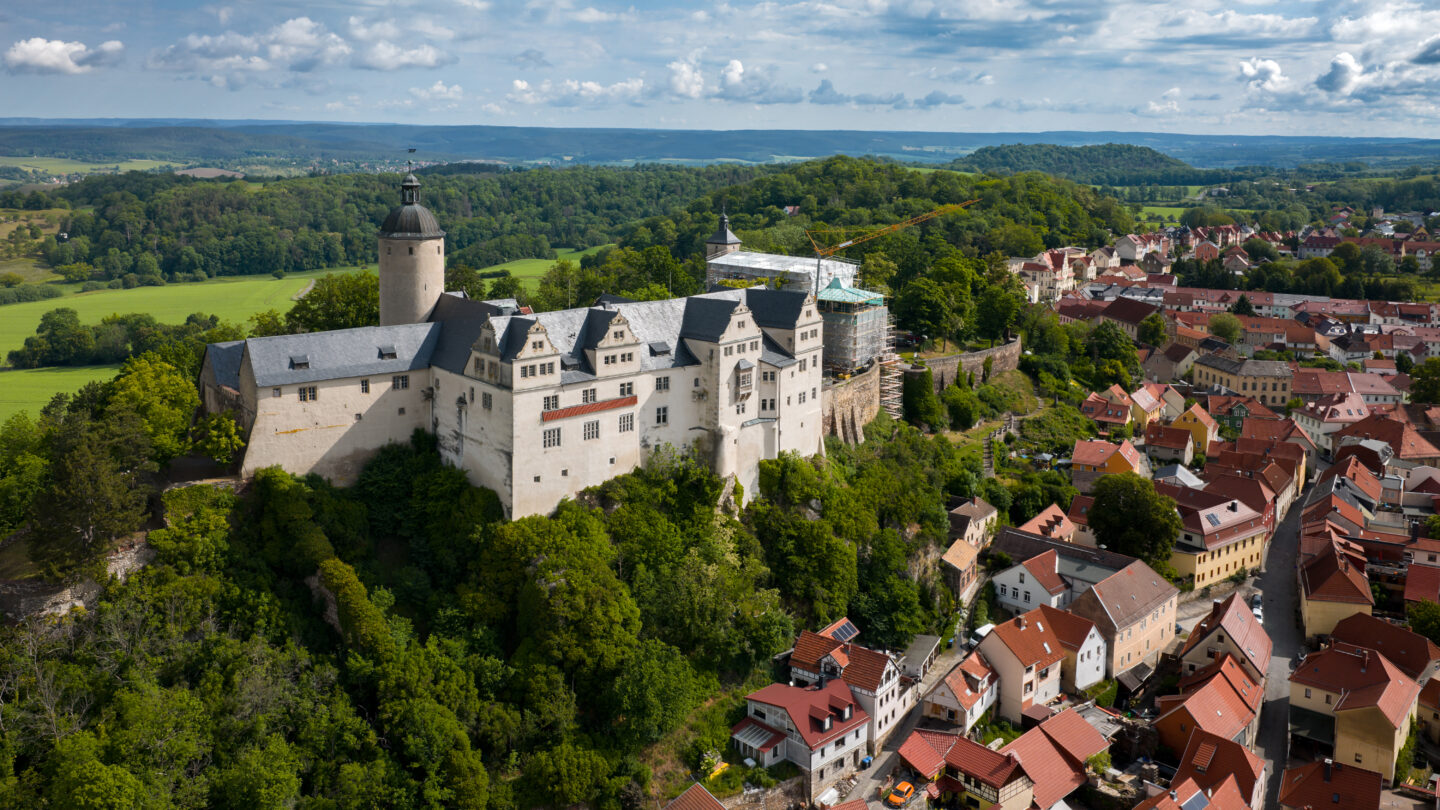
Mildenfurth Castle, near Weida, is a curiosity among Thuringia’s architectural monuments. Originally founded in 1193 by Heinrich II, Bailiff of Weida, as a Premonstratensian monastery, the monastery’s three‑aisled basilica was transformed into a Renaissance palace in the 16th century. In the immediate vicinity stands the Kunstspeicher (Art Storage), which houses works by the renowned sculptor Volkmar Kühn. Visitors approaching from Wünschendorf can also cross a historic wooden bridge on their way to the castle.
At a glance
Address
Mildenfurth Monastery and Castle
Am Kloster Mildenfurth 2
07980 Berga-Wünschendorf
Tel: +49173 – 340 99 85 Email
Opening hours
Viewings by arrangement
Next public guided tours in 2026:
5 July | 11 July | 19 July | 23 August | 29 August
at 2.00 pm and 3.30 pm on each date
on 8 August and 9 August at 2.00 pm on each day
Beginnings as a Monastery
That the present‑day Mildenfurth Castle was once a Romanesque monastic church can now be discerned only from a few surviving remnants. The monastery was founded in 1193 by Heinrich II, Bailiff of Weida, and his wife Berta. Mildenfurth Castle was intended as their proprietary monastery and burial place, and was one of the few Premonstratensian houses in Thuringia. The first monks came from the Mother House of Our Lady in Magdeburg. The convent developed into a spiritual and cultural centre of the region. Through rafting, silver mining, and agriculture it acquired economic influence and wealth.
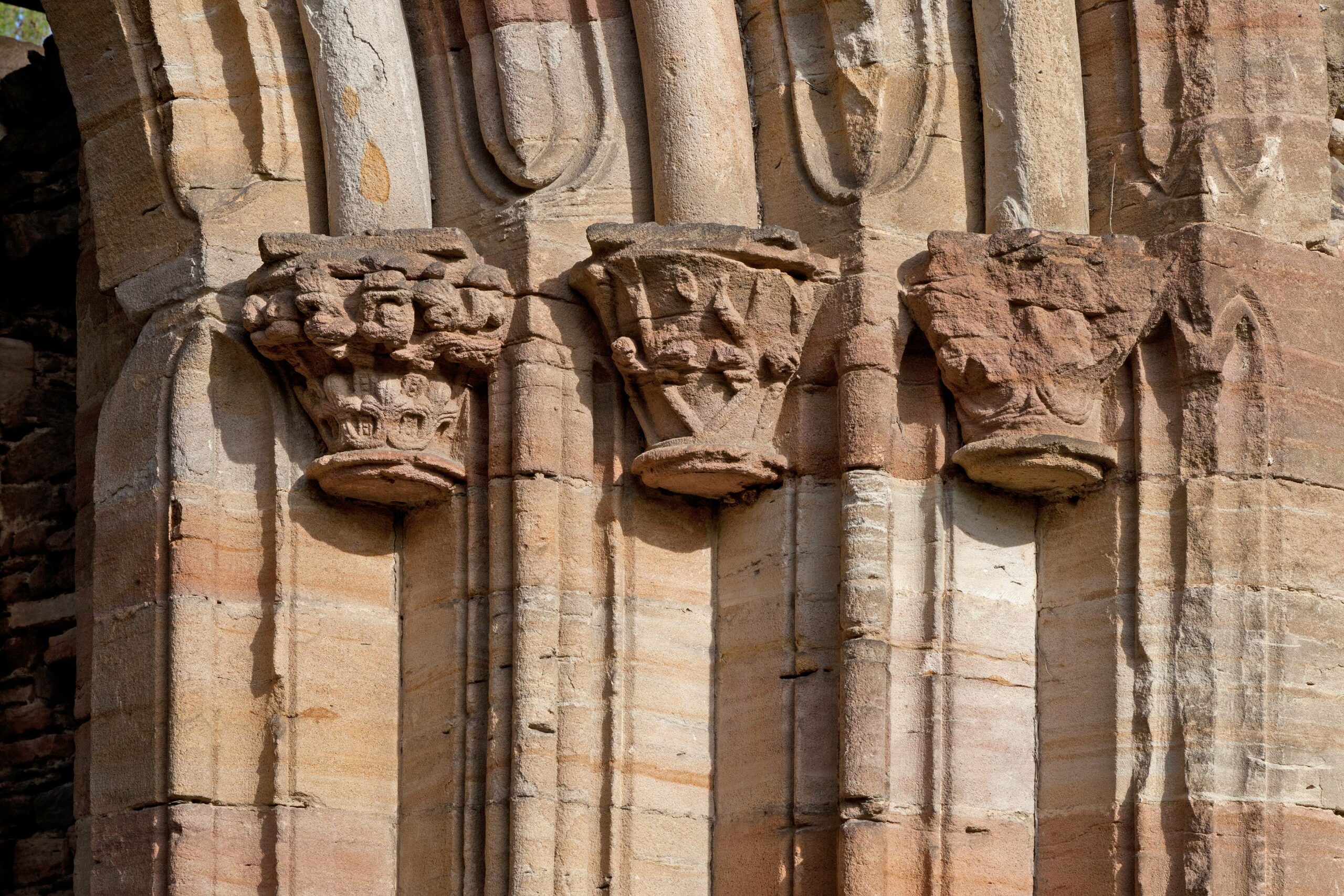
The three‑aisled basilica was probably erected between 1200 and 1230 on a cruciform ground plan. Its architecture reflected the transition from Romanesque to Gothic. The sculpture of the late‑Romanesque church was associated with the Rhineland building lodges that were also active at Wartburg Castle and in Naumburg.
After the Bailiffs of Weida steadily lost influence in the 15th century and additionally fell into financial difficulties, they were compelled to cede their ancestral seat, together with Mildenfurth Monastery, to the Wettin dynasty. In 1529, the convent was dissolved and shortly thereafter sold to Matthes von Wallenrod, who then had the monastic church converted into a Renaissance Castle.
Conversion into a Castle
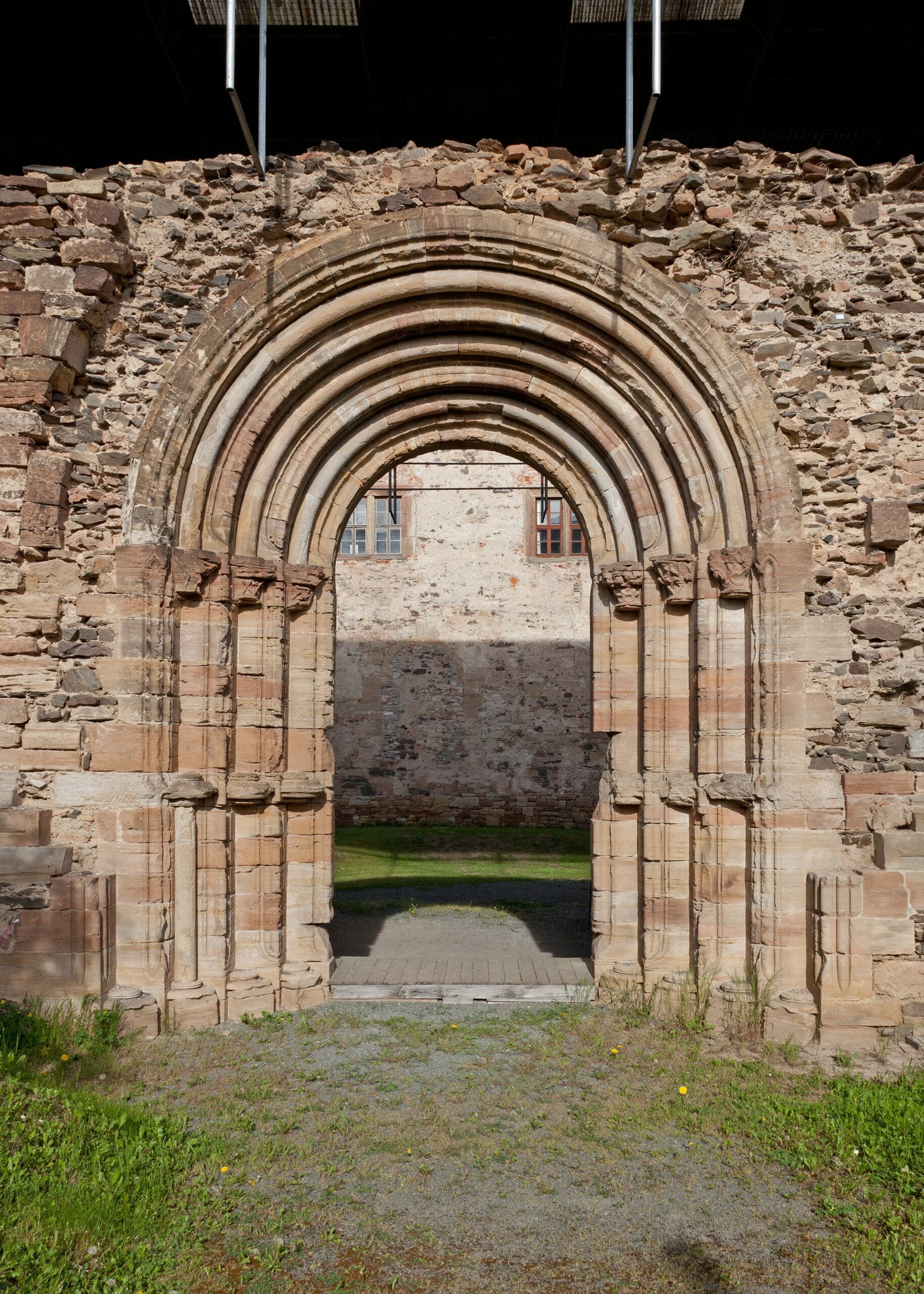
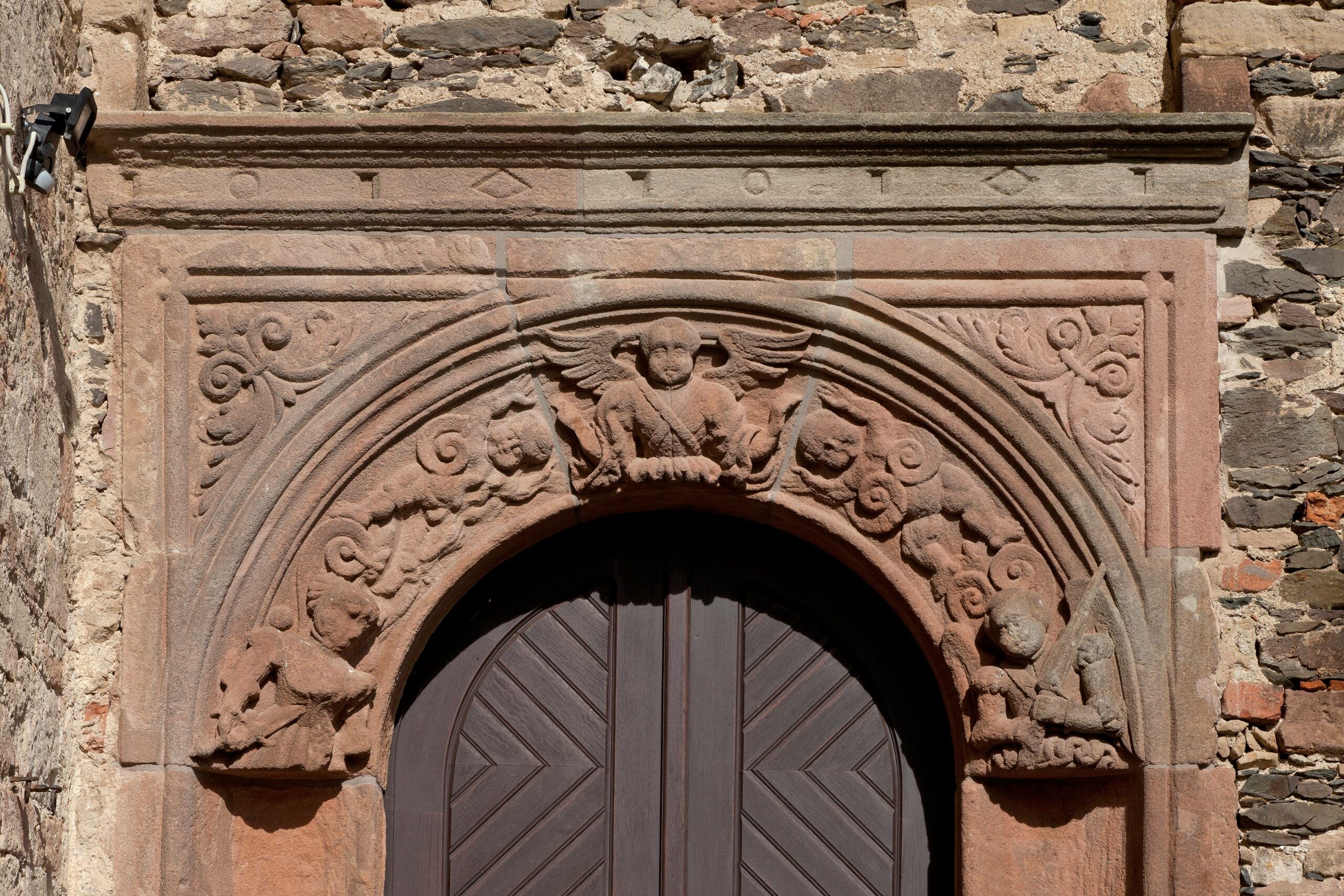
Matthes von Wallenrod may be regarded either as the destroyer of the old monastic church or as the creator of something entirely new. In the service of the Electorate of Saxony, he was adviser to Elector Johann Friedrich I the Magnanimous (1503–1554) and captain of Coburg Fortress – and, therefore, his palace also displays architectural affinities with Saxony. The new lord had the western part of the nave and all the aisles demolished. The church portal was partly dismantled, and the former west portal was repurposed as the castle gate. A central block was created, marked by towers, with its four wings arranged around the former crossing of the monastic church. The palace was also enclosed by a six‑metre‑high wall with loopholes, a wall‑walk, and round corner towers. The seamless way in which the remains of the medieval monastery merge with the Renaissance Palace is what gives Mildenfurth Castle its special charm.
Sculptures by Volkmar Kühn
Today, Mildenfurth Monastery and Castle form an ensemble with the neighbouring artists’ house. In 1968, the artist Volkmar Kühn settled in a former agricultural building next to the monastic church‑turned‑castle. For some thirty years, Kühn presented his ceramic and bronze sculptures in the castle’s open spaces and vaulted cellars. Since 2022, a significant part of his oeuvre has been brought together in the Kunstspeicher to the east, a former agricultural hall, alongside works by Marita Kühn‑Leihbecher. In front of the west portal, Kühn’s bronze sculpture Mildenfurther Kreuzmensch (“Mildenfurth Cross‑Man”) alludes to the site’s sacred origins.
Künstlerhaus: Am Kloster Mildenfurth 3 | 07570 Wünschendorf/Elster | Phone: 03 66 03 – 8 82 76