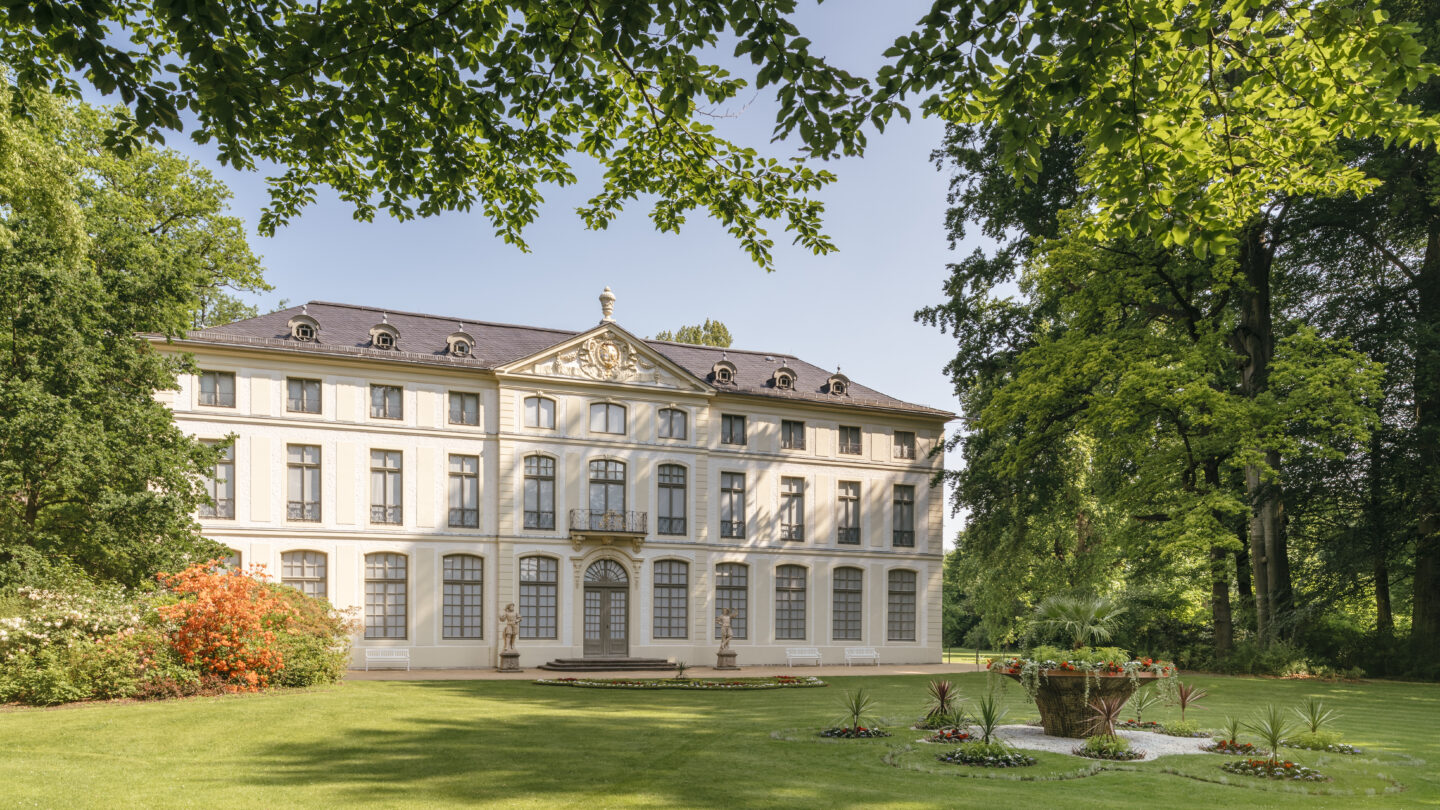
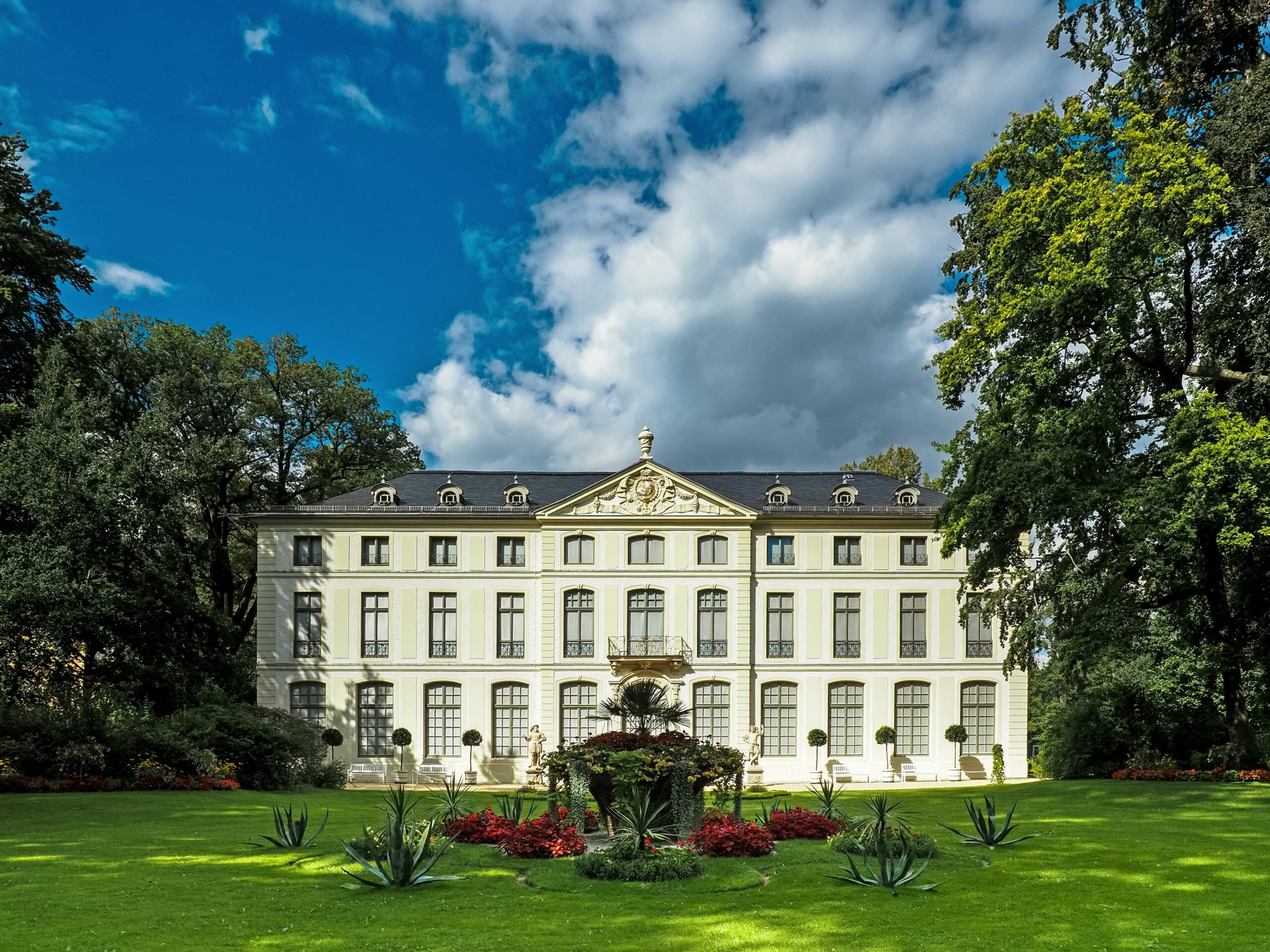
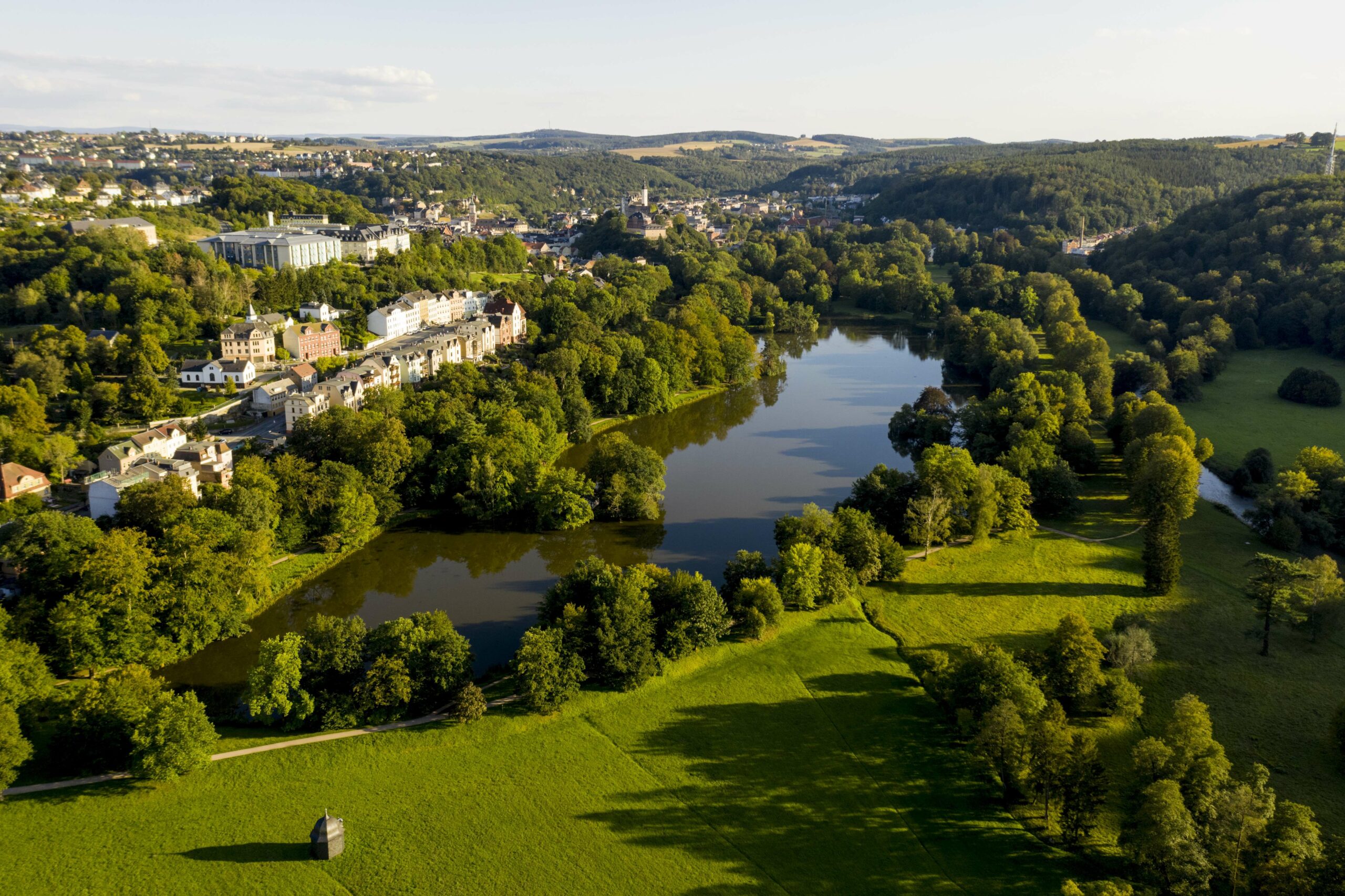
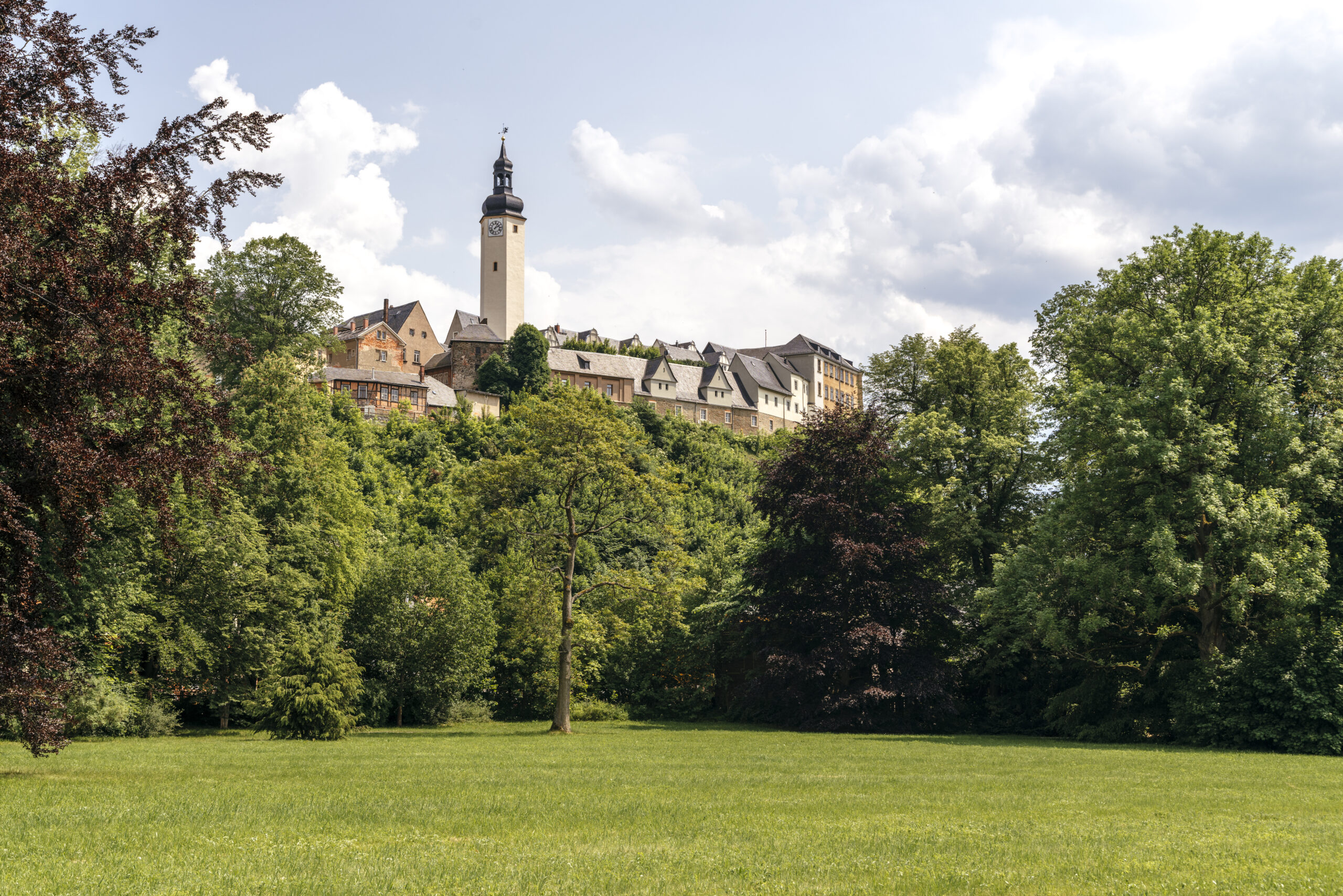
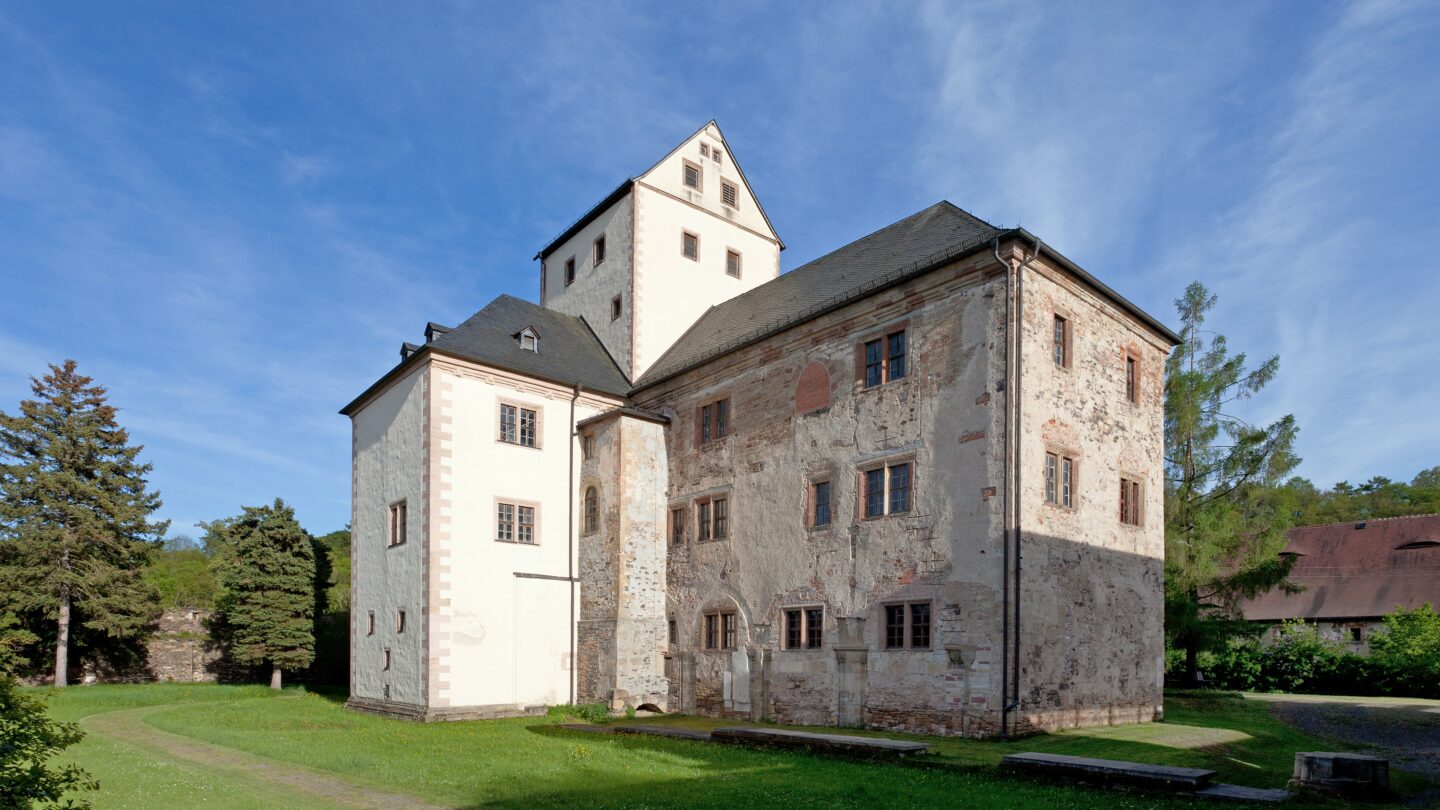
On the banks of the River White Elster lies the “Pearl of the Vogtland”. Above all, the Elder Line of the Counts of Reuss left their mark; in 1778, they were elevated to the rank of princes. Their early Neo-classical summer palace, together with the expansive landscape garden, forms a unique integrated work of art. The gable inscription “maison de belle retraite” (House of Beautiful Retreat) reveals the palace as a princely retreat. Today it houses the State Books and Copperplate Engravings Collection, Greiz, with the “Satiricum”.
At a glance
Address
Greiz Summer Palace
with the State Collection of Books and Engravings
Greiz Princely Park
07973 Greiz
Friends of Greiz Park Association (Freundeskreis Greizer Park e.V.) Website
Opening hours
State Collection of Books and Engravings with Satiricum April–September: Tue–Sun 10 am–5 pm
October–March: Tue–Sun 10 am–4 pm
Open on Easter Monday and Whit Monday
Closed on 24, 25 and 31 December and 1 January
Park/Garden
until dusk
The Reusses – A Dynasty with Three Lines
Erkenbert I (c. 1090–1163/1169), Lord of Weida, is considered the progenitor of the House of Reuss. His descendants served as imperial bailiffs. They had been enfeoffed with the Vogtland by Emperor Heinrich VI (1050–1106) – and, to honour the emperor, they thenceforth named their male descendants Heinrich. At some point the “Heinrich” clan themselves seemed to lose track, and so in 1664, the family council decided that the name should be specified by numerals. The two main lines each counted for themselves, as did the cadet branches. One of the outstanding figures of the Reusses was Heinrich XI, Prince Reuss, Elder Line. He loved the sciences and the arts, founded a court library, was passionate about garden design and had the summer palace built in Greiz. In 1778, he was elevated to the rank of Imperial Prince.
Neo-classicism at its Finest
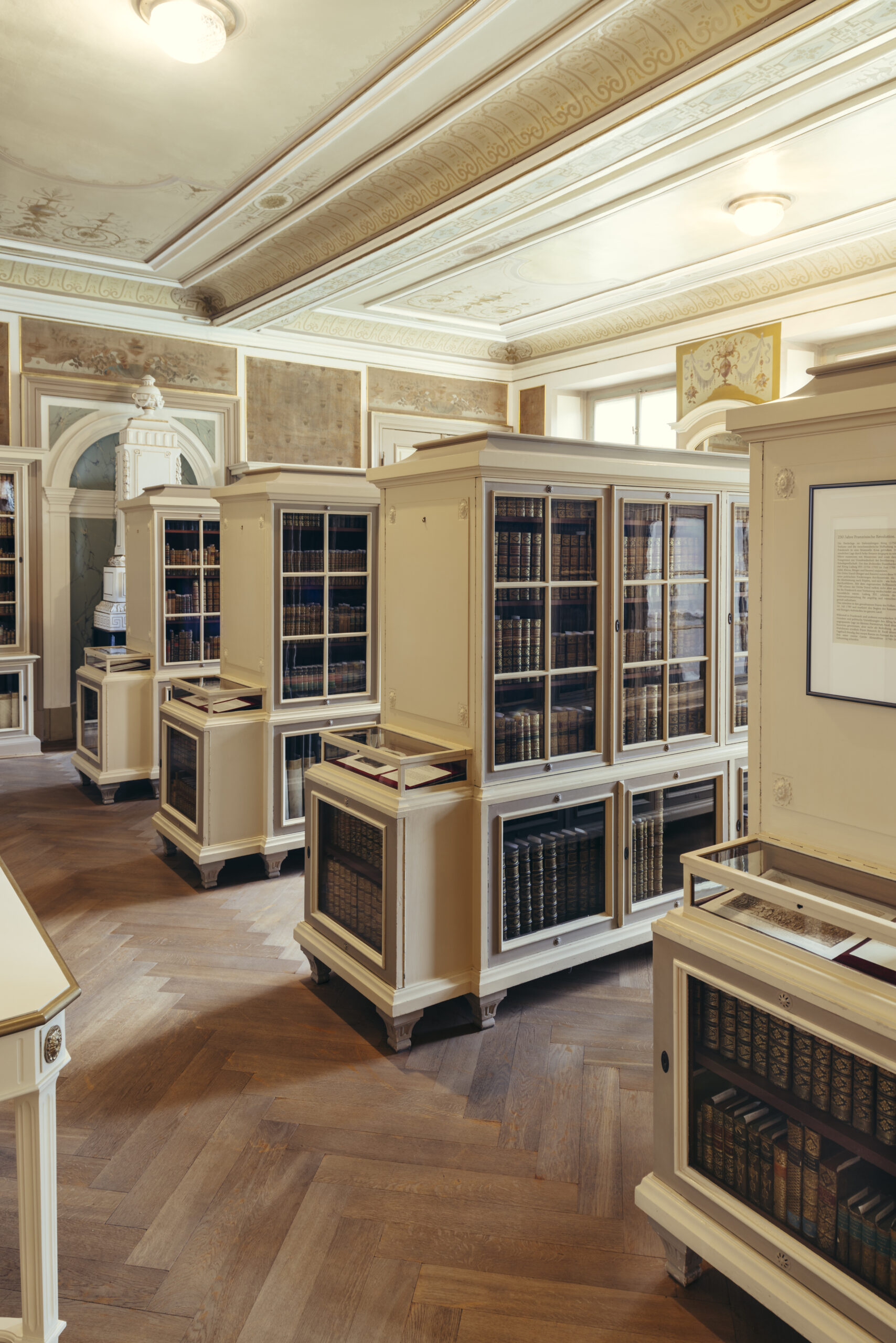
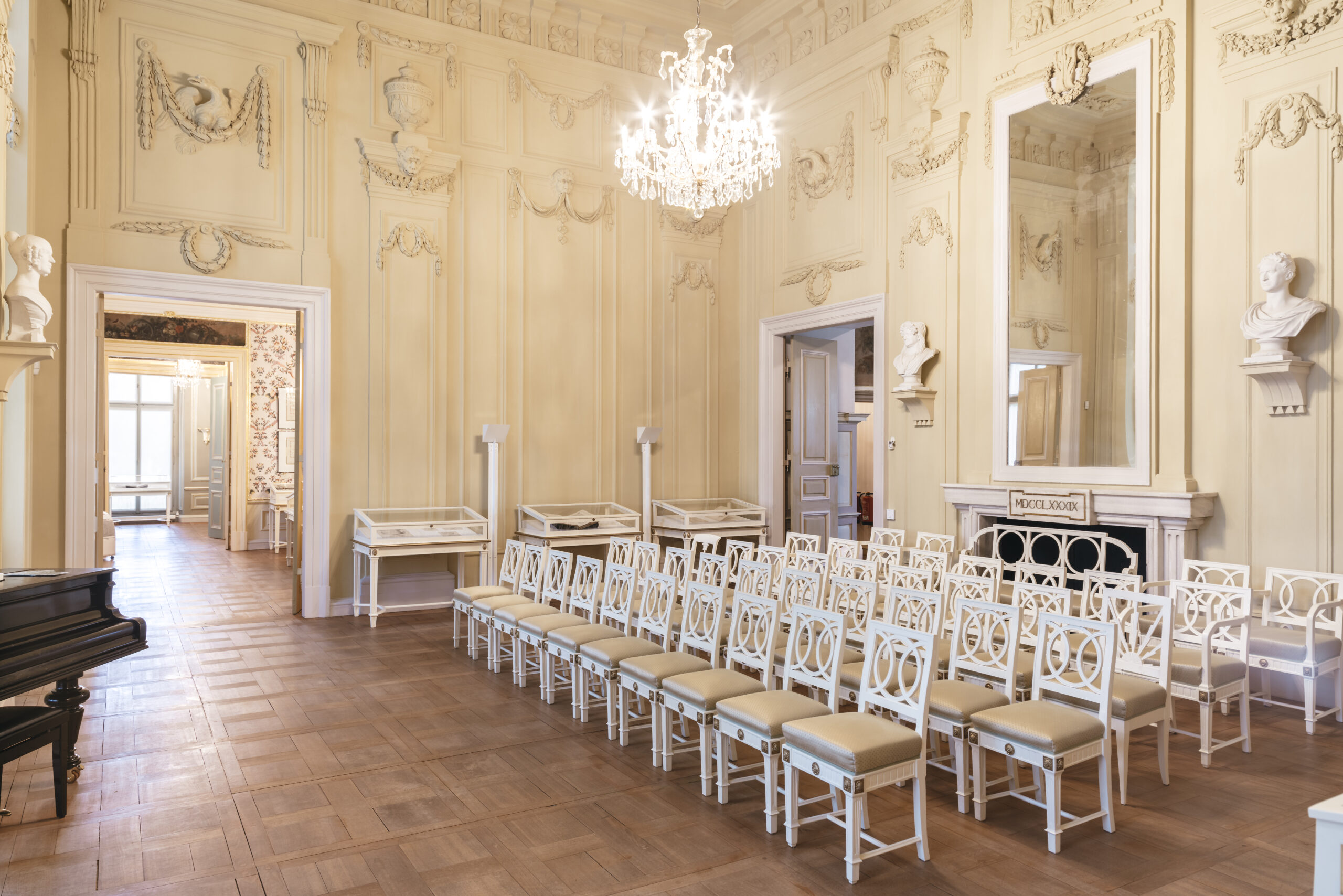
After the Untergreiz line of the House of Reuss had died out, its possessions fell to the County of Reuss-Obergreiz and thus to Heinrich XI of the Elder Line. He had a summer palace built in the pleasure garden in the River Elster floodplain, below the Palace Hill. It was to be the representative architectural symbol of the now reunited dominion. Today the Summer Palace is among the earliest Neo-classical buildings in central Germany. A predecessor building had previously stood on the site, whose individual functions – orangery, staterooms and living quarters – were taken up. After 14 years, the work concluded with the completion of the Garden Hall on the ground floor. Owing to its imposing proportions and distinguished Neo-classical stucco decoration, the room ranks among Thuringia’s most sophisticated interior artworks. Today the Summer Palace houses the State Books and Copperplate Engravings Collection, Greiz, with more than about 1,000 prints, several thousand historical maps, and caricatures from the 18th and 19th centuries. In 1975, the contemporary caricature collection “SATIRICUM” was established as the national caricature collection of the GDR and as an independent department of the museum. As a matter of policy, artistically sophisticated works by caricaturists and press cartoonists of the GDR were acquired. Today the special collection, with approx. 10,000 sheets, constitutes an outstanding satirical pictorial repository of GDR contemporary history.
Princely Greiz Park
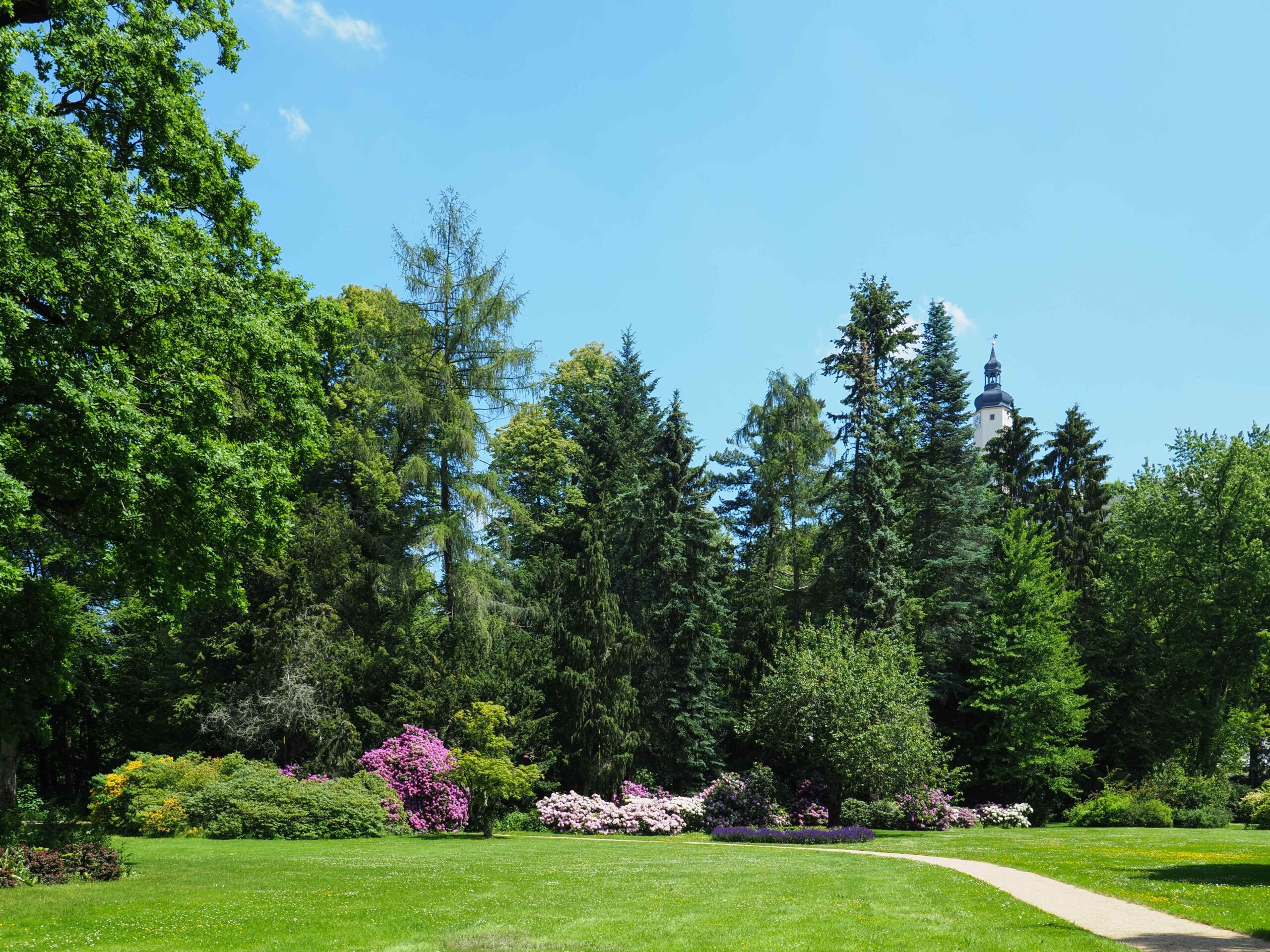
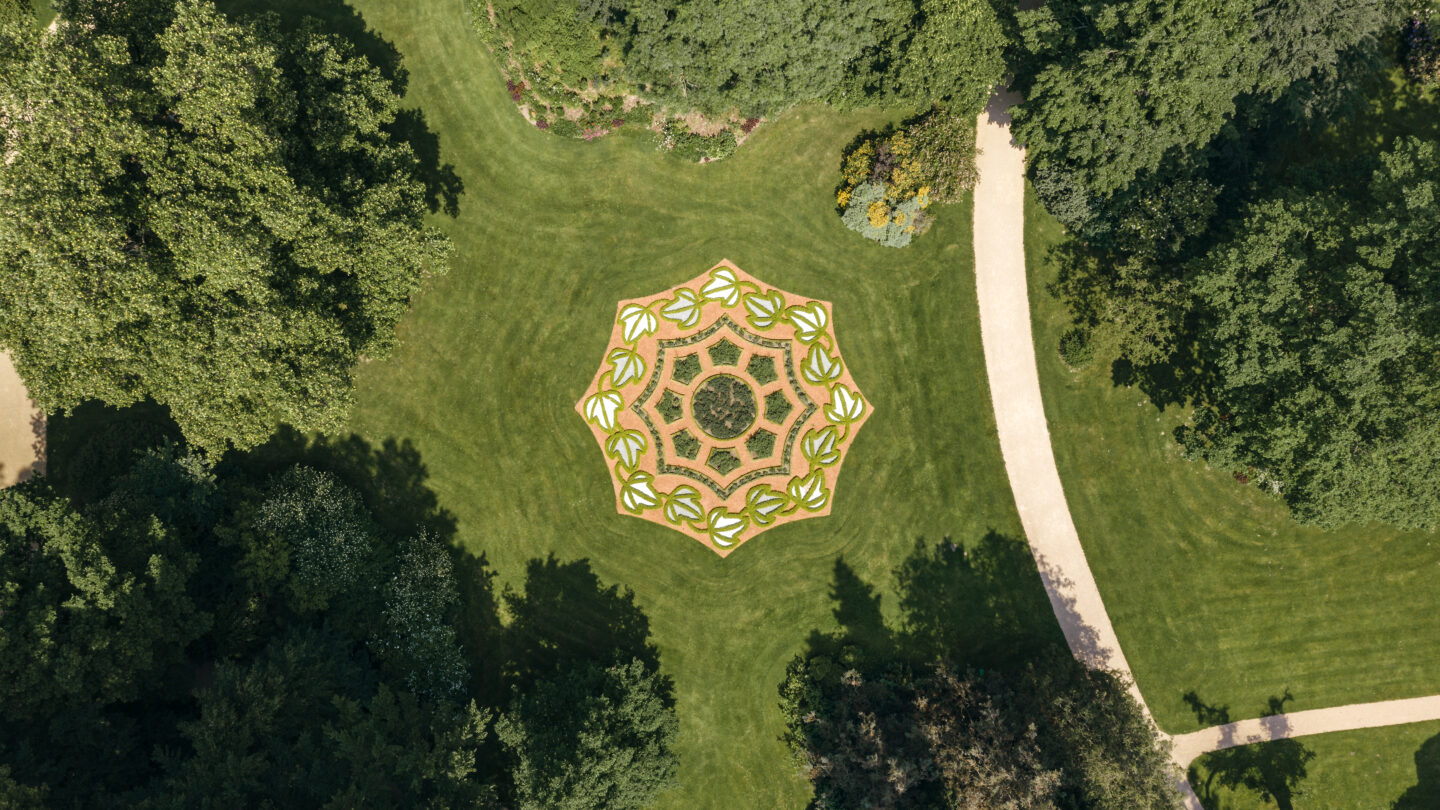
With the construction of the Summer Palace, the garden was also redesigned – among other things, the pinetum was created, a unique collection of native and exotic conifers. The railway route planned in 1873 would have destroyed the park, but the Reuss family protested. Negotiations were held and the route was relocated. In 1799, a flood destroyed the pleasure garden, which was redesigned and expanded between 1827 and 1830. The Muskau Garden director Carl Eduard Petzold was engaged. The park was to be redesigned according to his ideas. The concrete implementation was undertaken by Rudolph Reinecken, who did realise many of Petzold’s ideas, but introduced his own emphases in the layout of paths and in tree and shrub planting. Today the ensemble is regarded as an incomparable example of late Neo-classical garden art. Highlights, besides the pinetum, include the Binsenteich (Rushes Pond), around eight hectares in size, the Lime Avenue, and the Rotunda. The Pleasure Ground, restored after a flood in 2013, and the Flower Garden are appointed in the style of the late 19th century, with rich ornamental beds and potted plants. The garden also offers splendid views, for example across to the White Cross.