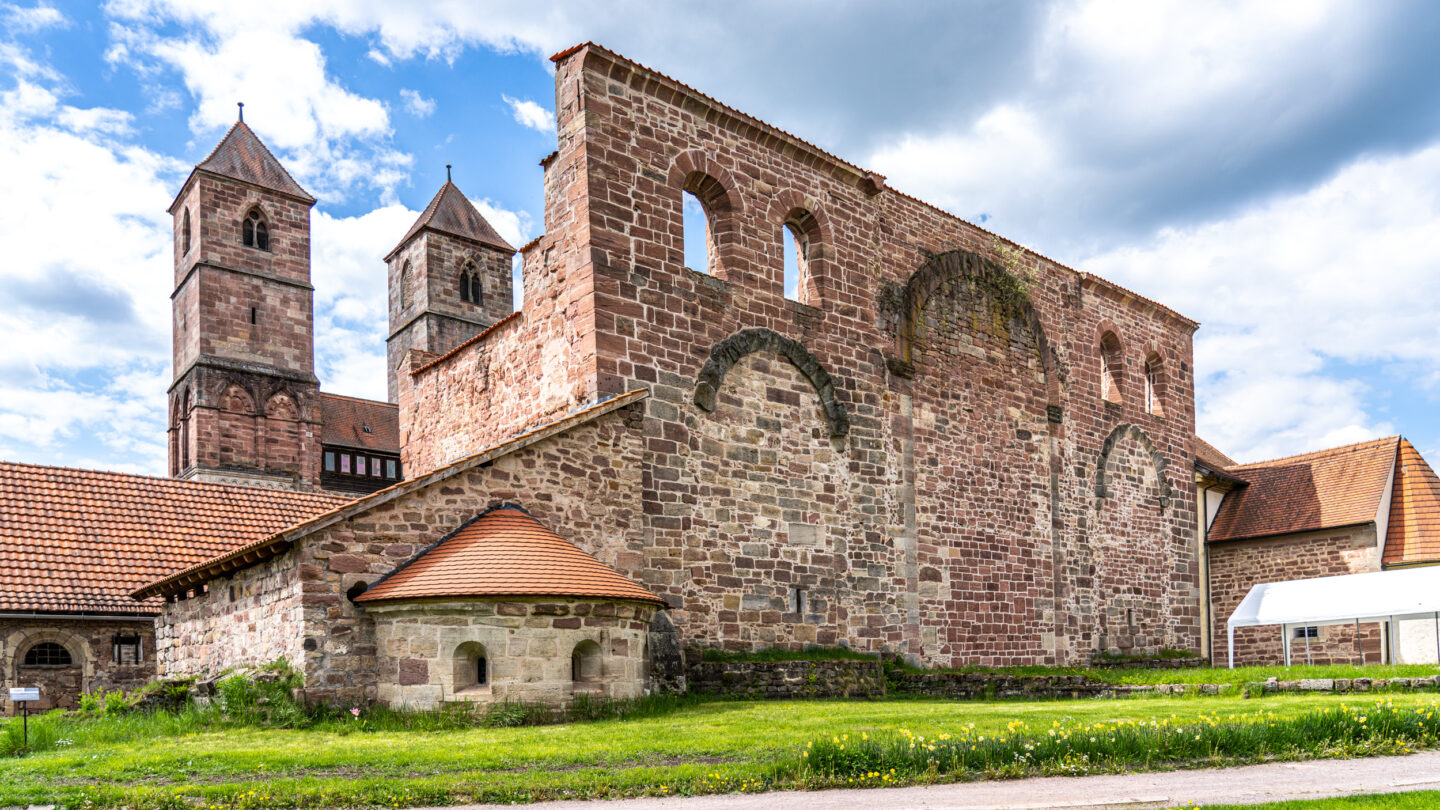
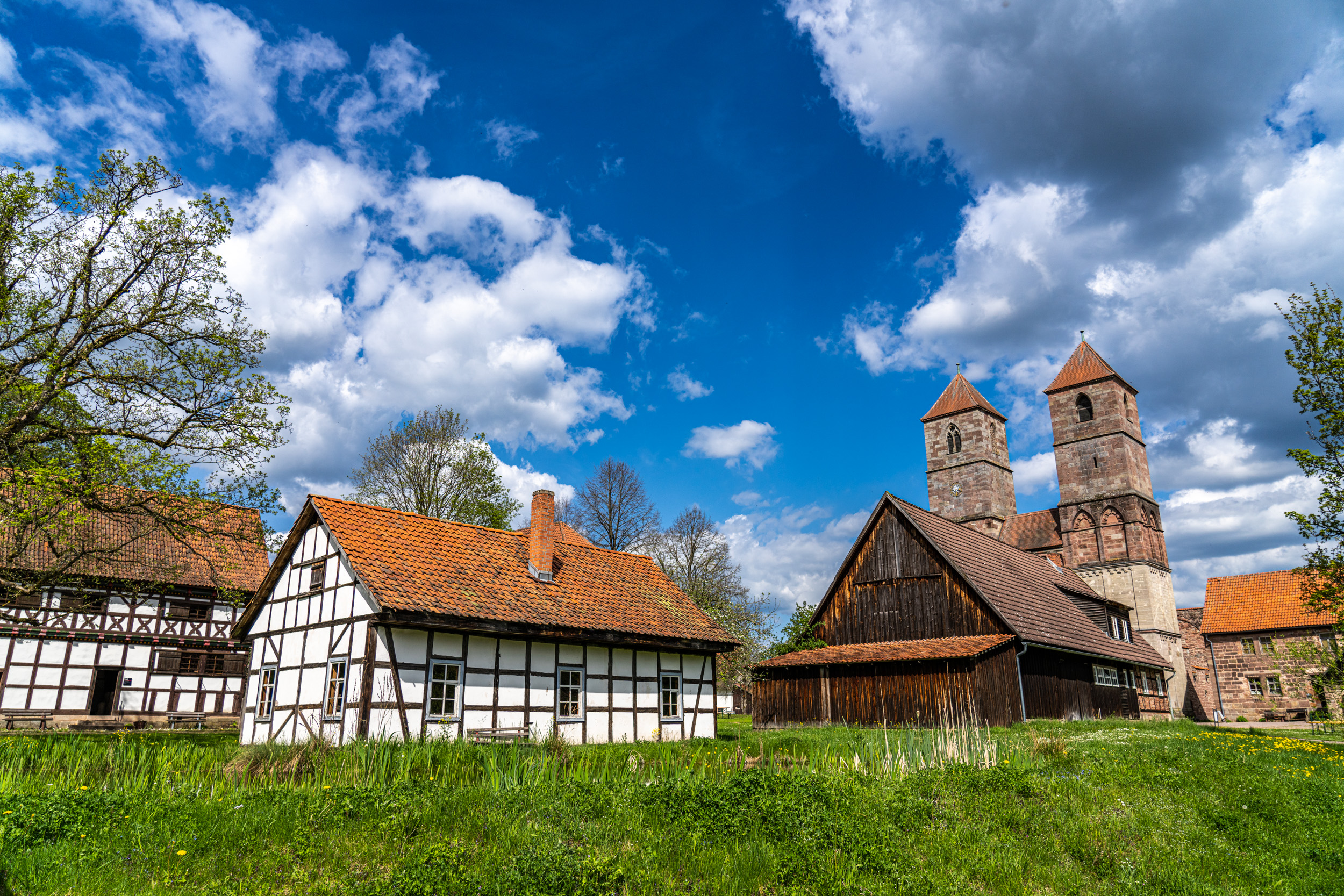
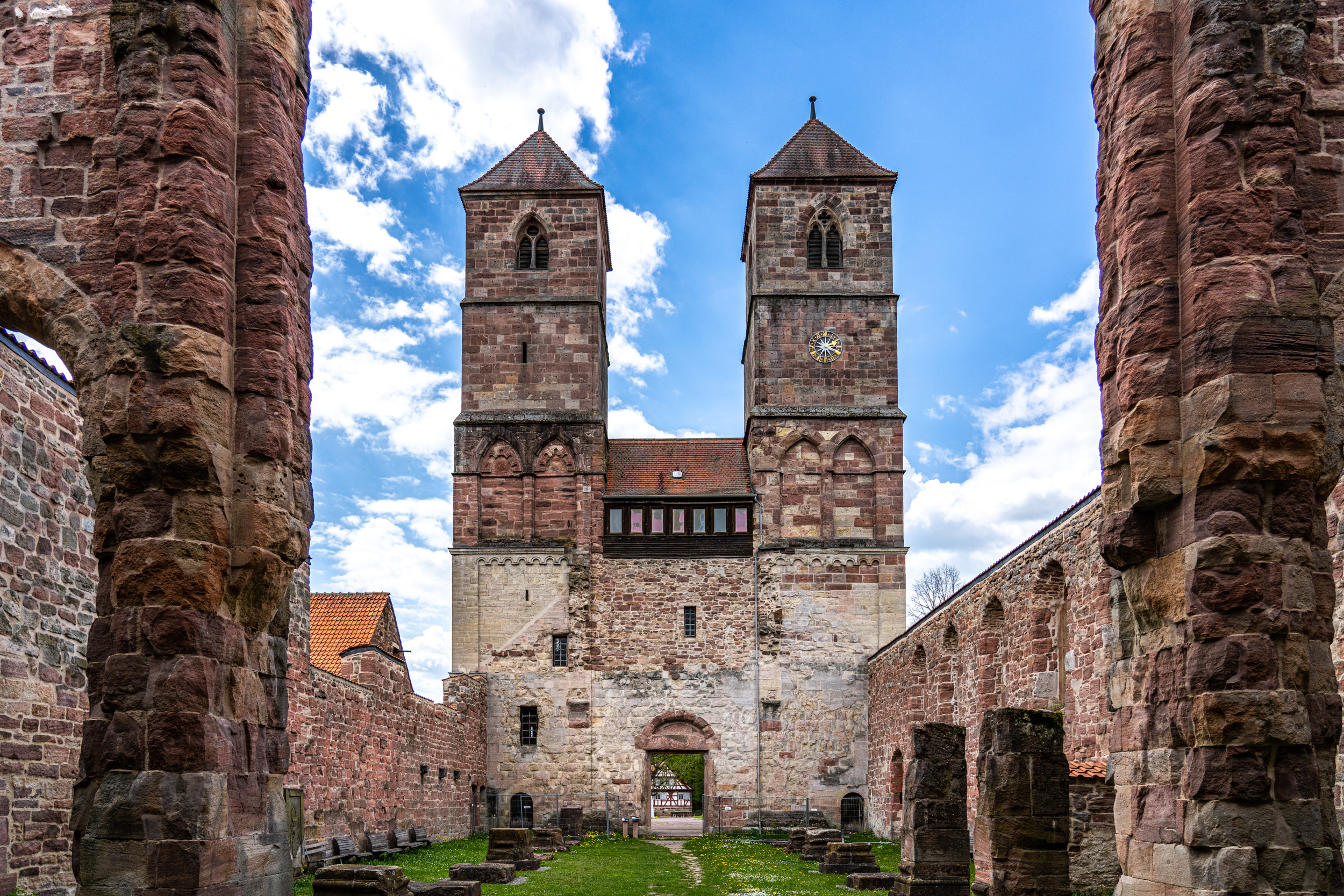
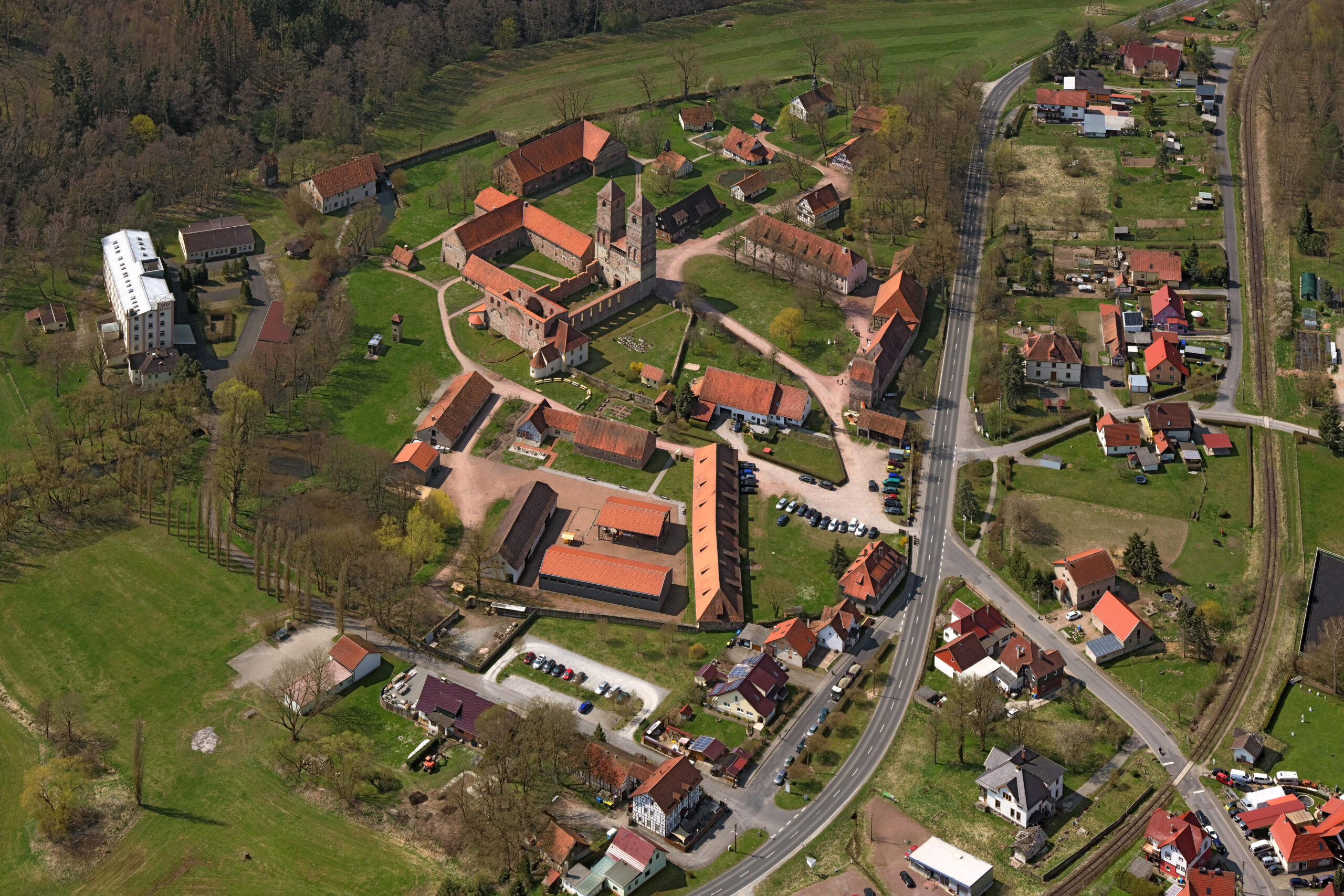
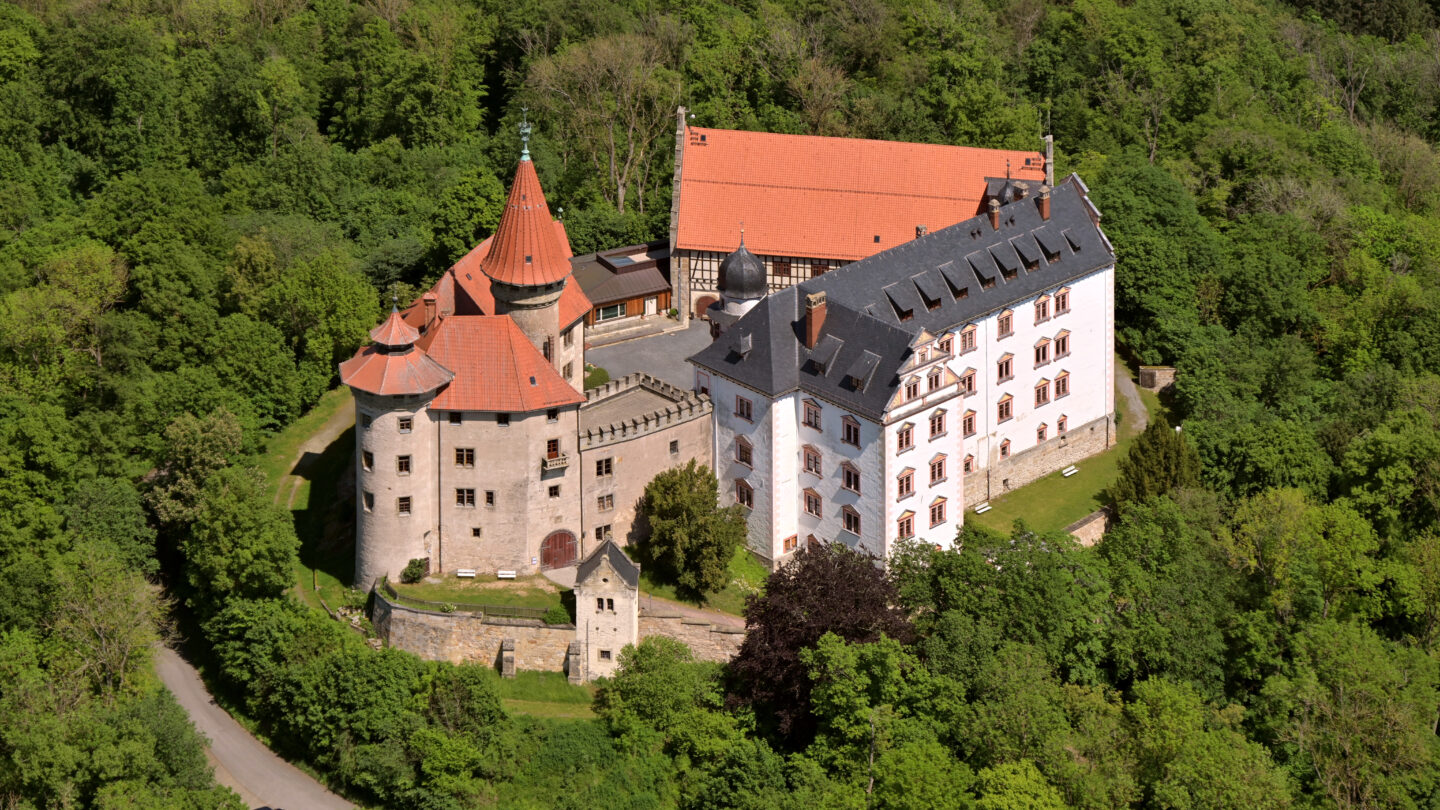
Architecturally, the former Premonstratensian monastery at Veßra ranks among Thuringia’s most significant Romanesque monuments. It was founded in 1131 by the Count of Henneberg. After the Reformation, the monastery was converted into a domain. The distinctive towers of the monastic church remain a prominent landmark, while the nave survives as an imposing ruin. Today, the site serves as a museum. Visitors may explore the monastic and domain buildings and, through an exhibition, gain a deeper understanding of the location’s history. Alongside its monastic heritage, the Henneberg Museum Veßra Monastery offers insights into the folklore and cultural history of the “Henneberg region”, presents fascinating exhibits relating to agricultural technology and farming, and addresses themes of sustainability.
Friends’ Association Hennebergisch-Fränkischer Geschichtsverein e.V. Website
Opening hours
Henneberg Museum, Veßra Monastery April to October 9 am – 6 pm
November to March 10 am – 5 pm
Closed on Mondays
Please check the museum’s website for opening hours on public holidays: Website
At the Transition from Romanesque to Gothic
At the confluence of the rivers Schleuse and Werra lies the former Premonstratensian monastery of Veßra. It is one of the few medieval monastic complexes in Thuringia in which both the church and the conventual and ancillary buildings have survived. The monastery was founded in 1131 by Count Gotebold I of Henneberg. At first, it housed both canons and lay brothers, as well as nuns. The latter, however, relocated in 1175 to the monastery in nearby Trostadt. Over the centuries, the monastery was repeatedly extended and altered. Yet large parts of the medieval complex remain – including the cloister and service buildings, the monastic gate, the approximately 800‑metre‑long surrounding wall, and the Henneberg Chapel, which once served as the burial place of the comital family of that name. Inside are remnants of late‑medieval frescoes depicting the Last Judgement – a theme often employed in funerary chapels. Today the chapel functions as the village church.
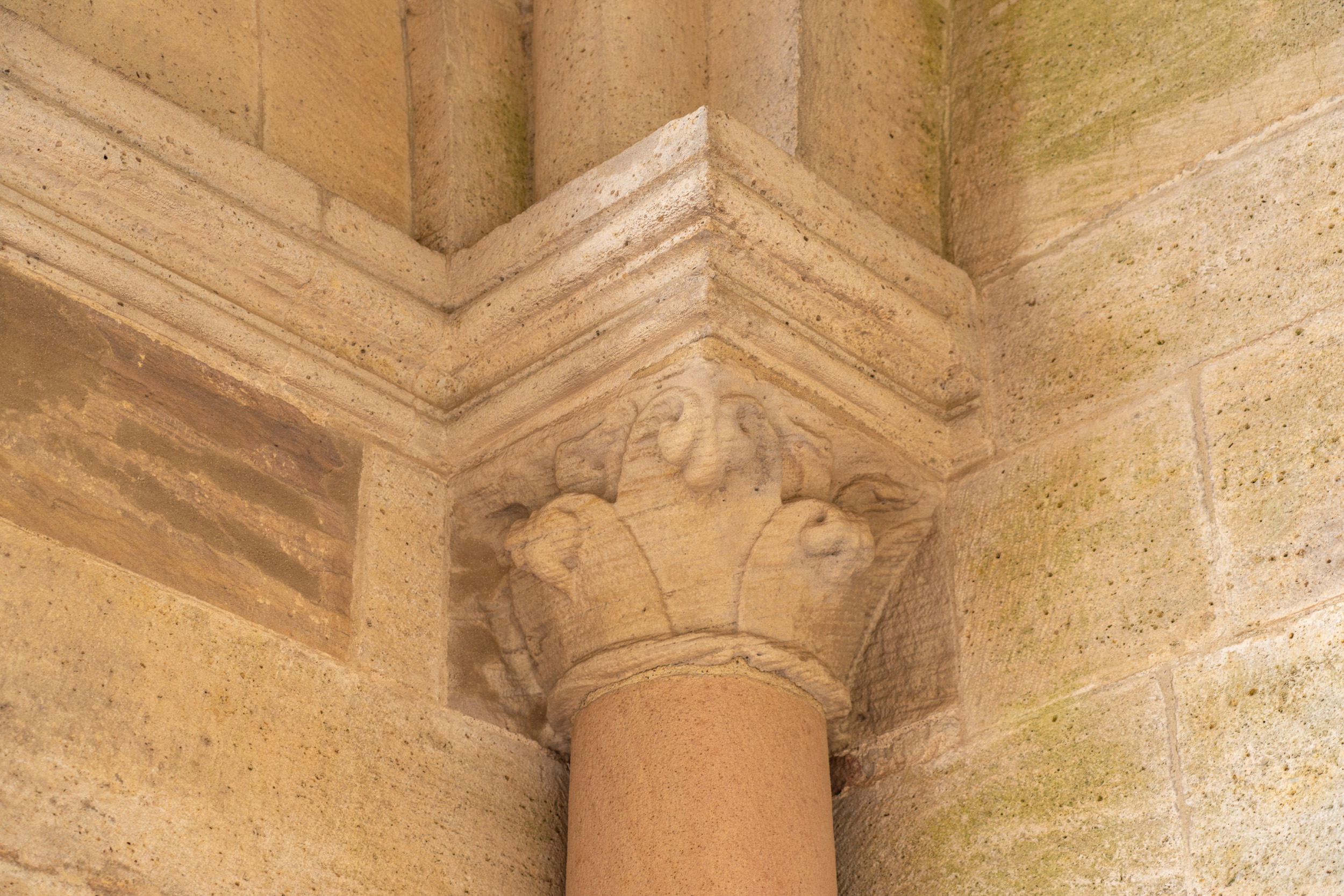
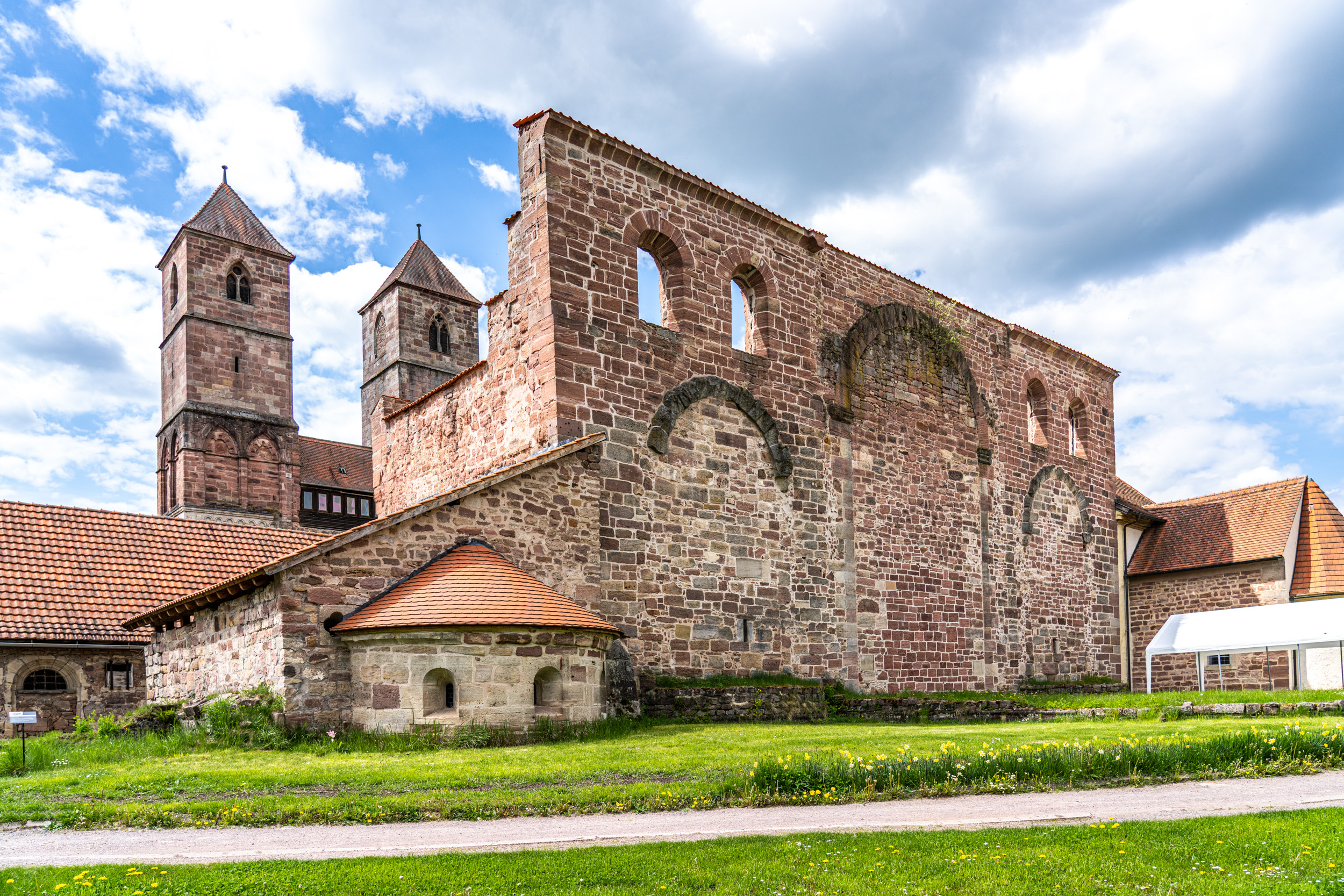
The monastic church of St Mary was built as a cruciform, three‑aisled pillar basilica and was consecrated in 1138, only a few years after the monastery’s foundation. Its two towers are visible from afar. From an architectural standpoint, they are especially notable, as they clearly illustrate the transition from Romanesque to Gothic. This shift can also be observed in the choice of materials: the lower storeys are built of grey shell limestone, while the upper storeys are constructed in red sandstone.
From Monastery to Domain
The monastic era at Veßra finally came to an end in the 16th century, when the Counts of Henneberg, in whose territory it lay, embraced Lutheranism. In accordance with the maxim cuius regio, eius religio (whose realm, his/her religion), the canons followed suit; yet this did not prevent secularisation. In 1573, Veßra was transformed into a domain. The former monastic buildings were subsequently altered or demolished, a small village developed alongside the monastic court, and the once magnificent church was repurposed as a granary. To this end, the choir and apses were demolished.
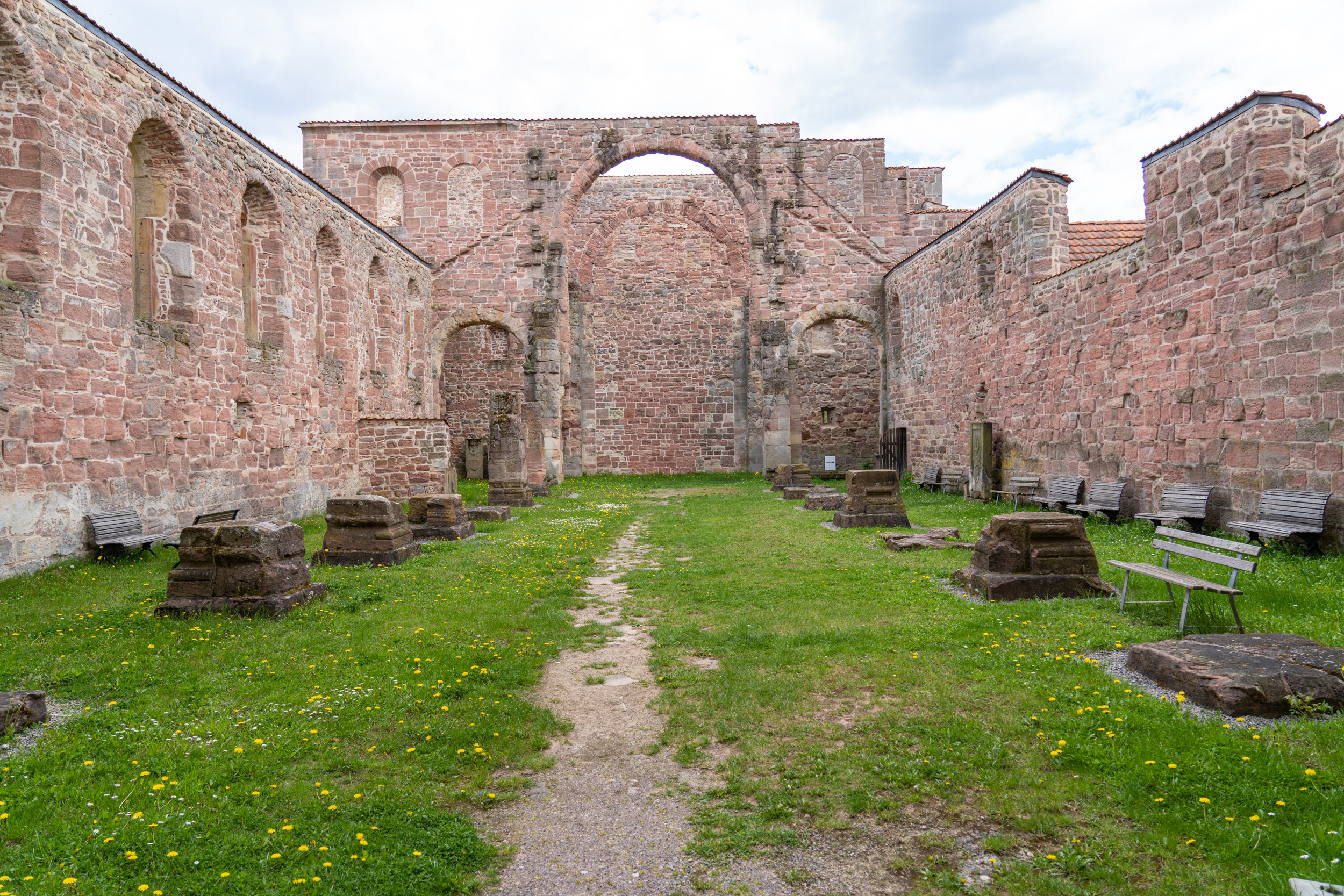
In 1833, the architect Karl Friedrich Schinkel visited the domain and advocated for the church’s restoration – but without success. In 1939, during threshing work, a fire broke out that largely destroyed the church. Although it now survives only as a ruin, the former place of worship remains no less imposing.