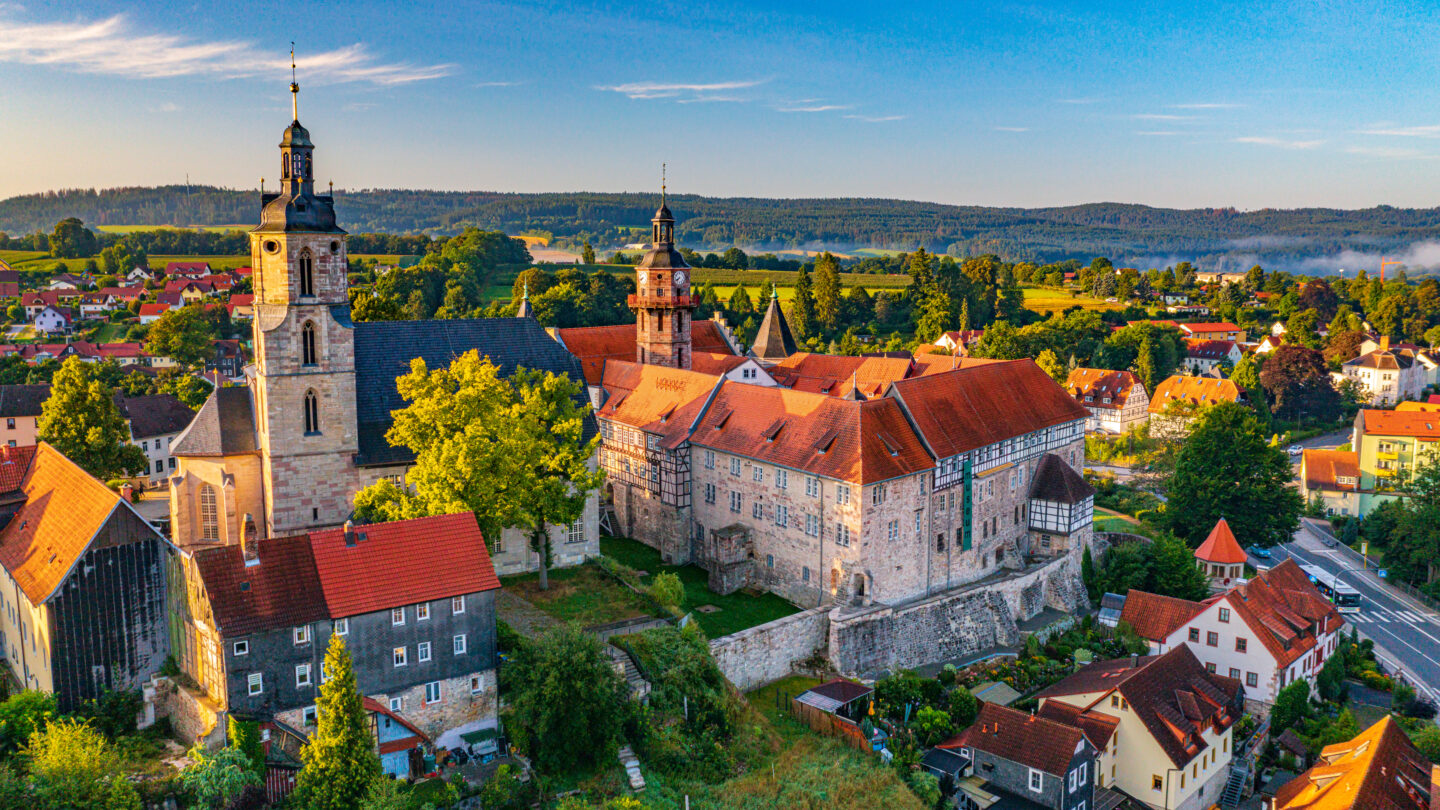
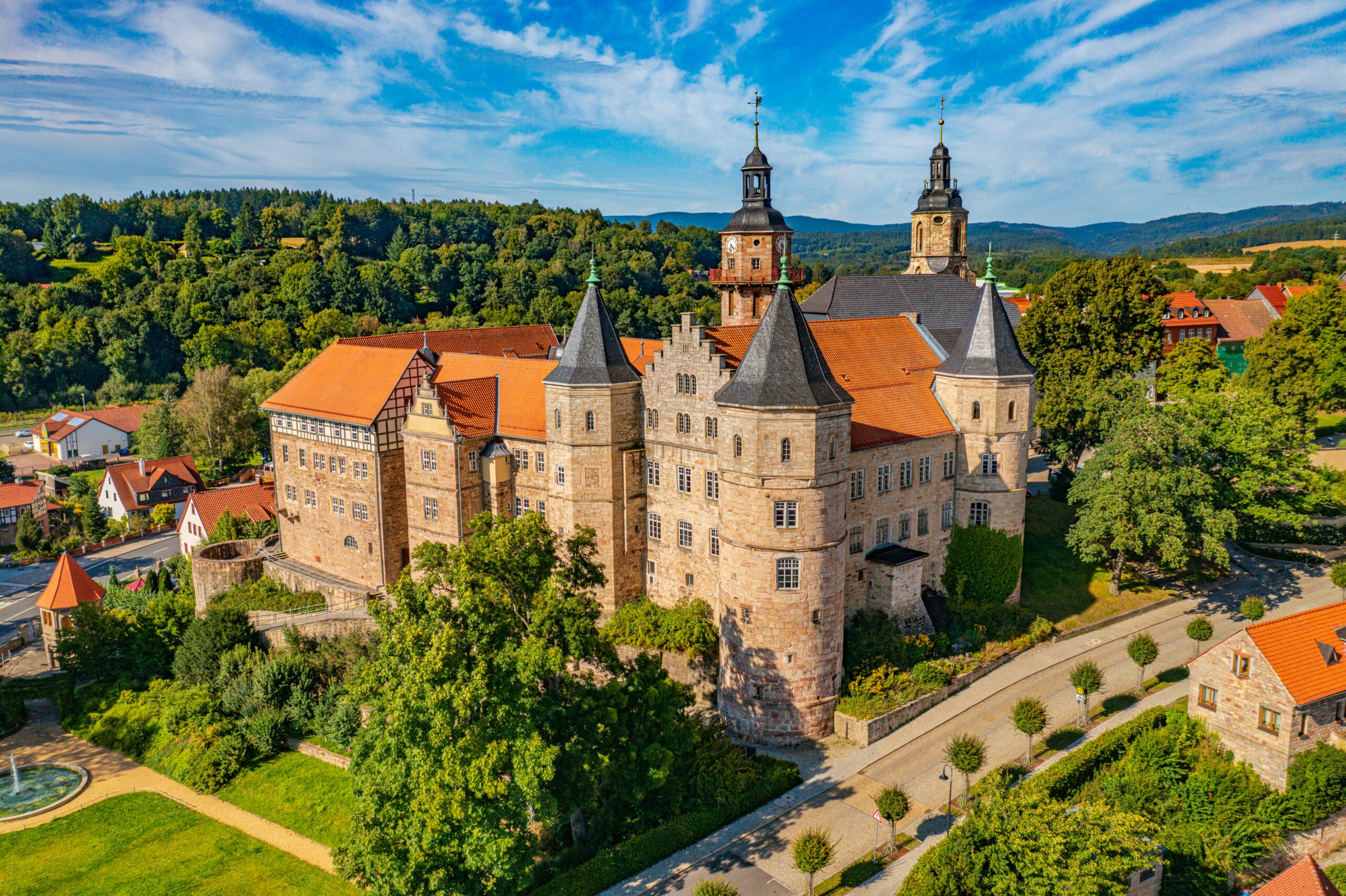
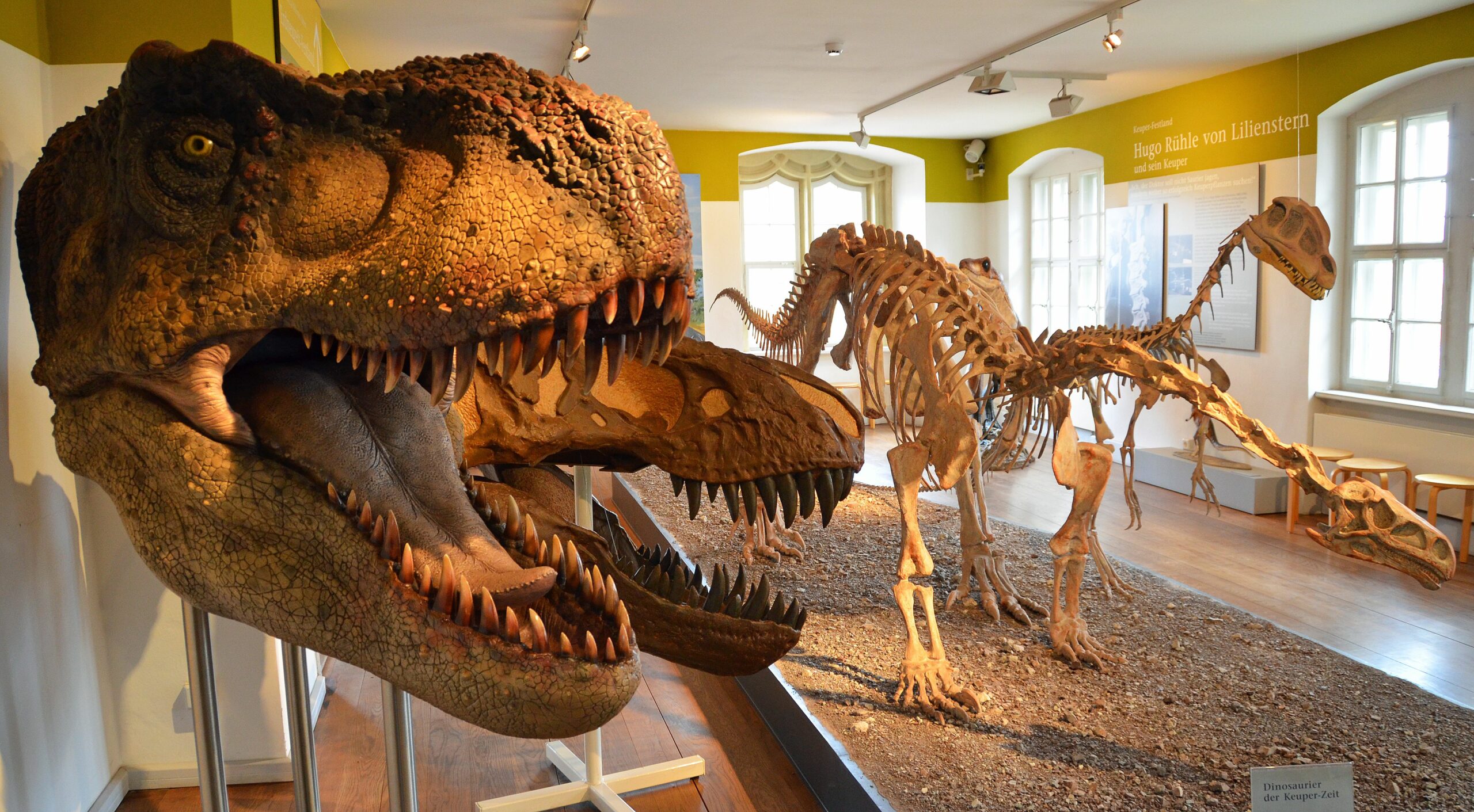
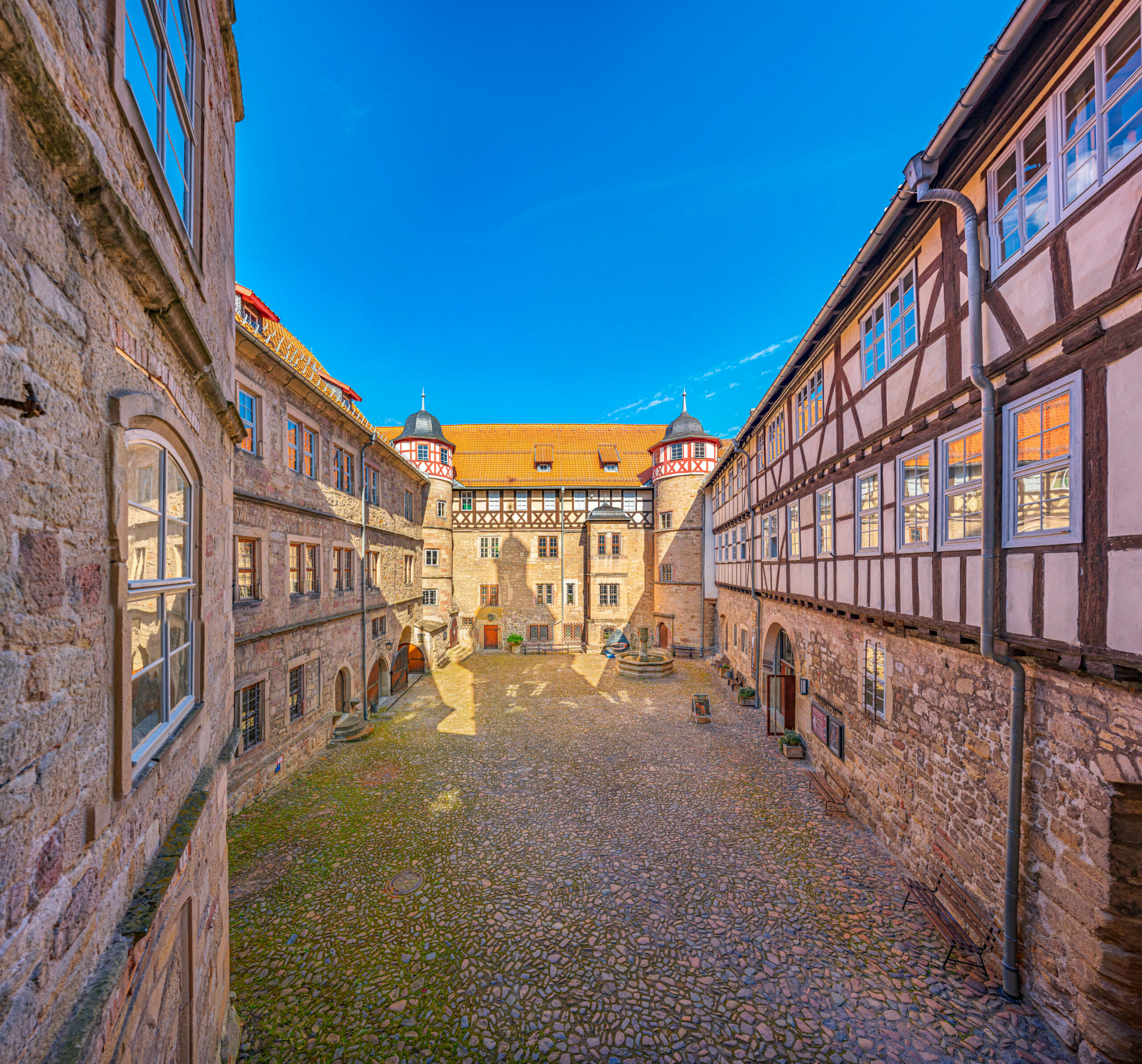
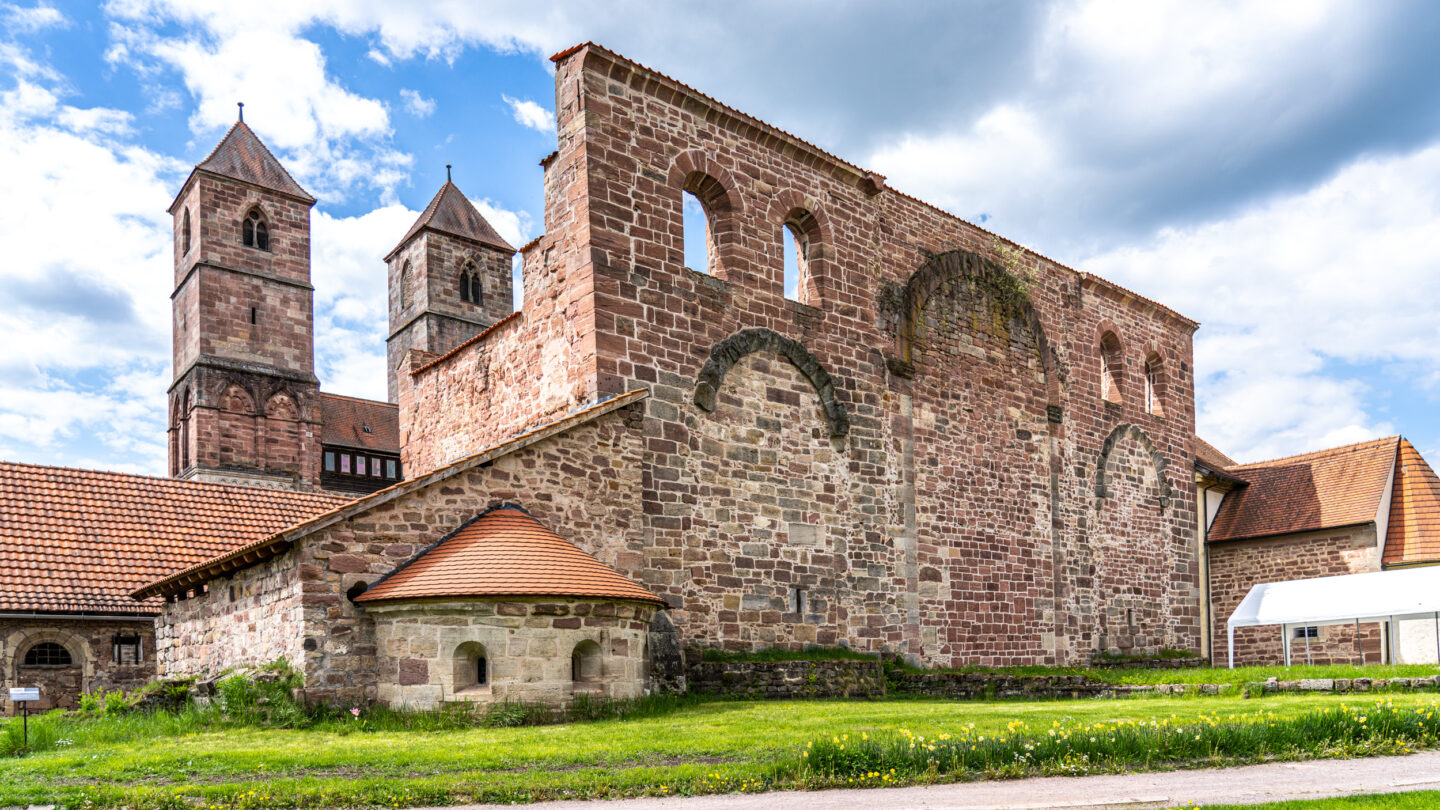
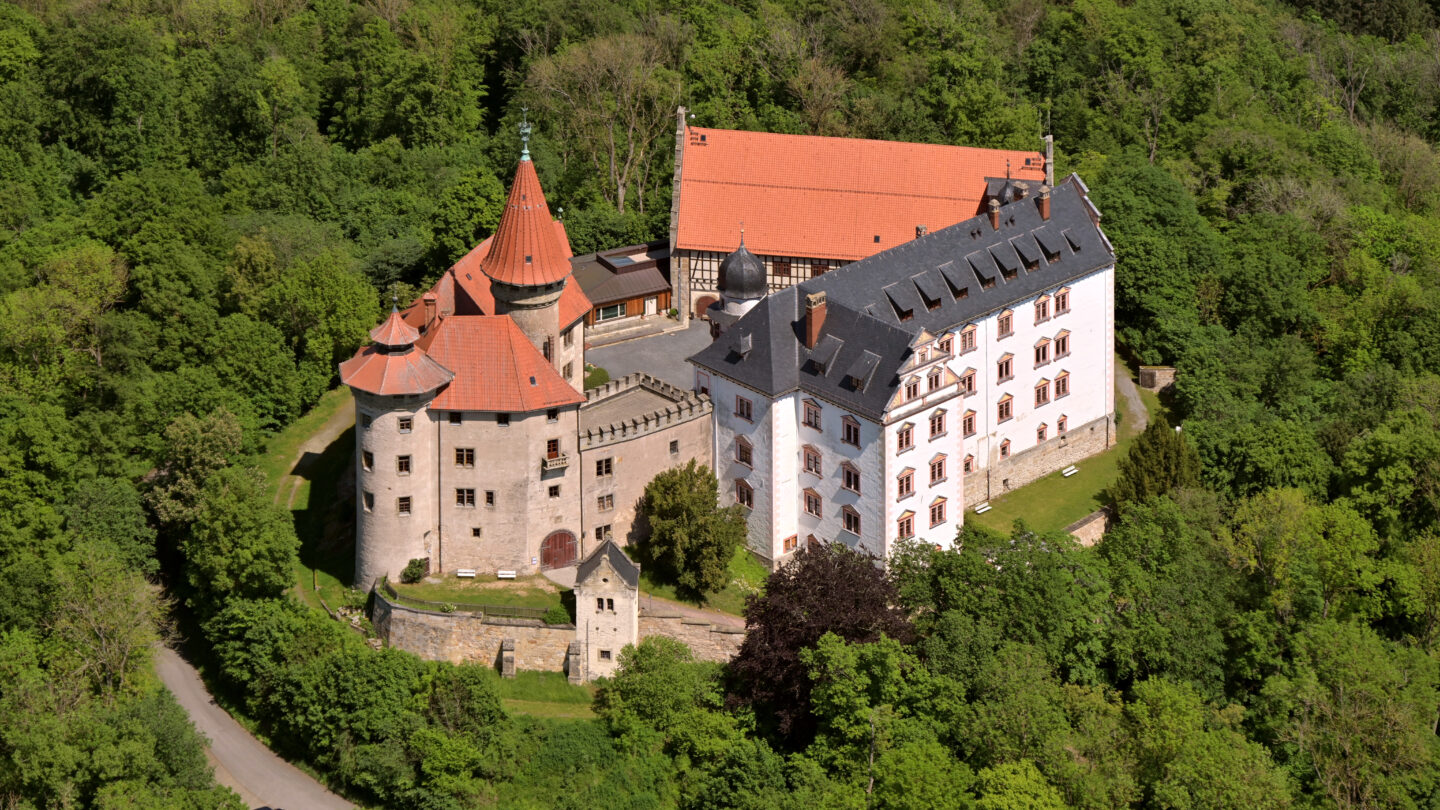
Bertholdsburg Palace stands in a strategically favourable position at the end of a ridge along the once-important trade route from Erfurt to Nuremberg. It is the oldest of the surviving former residential castles in Thuringia. The castle was founded by the Counts of Henneberg, one of the oldest countly families in Franconia. In the early 13th century, the Hennebergs moved their main seat to Schleusingen. Berthold VII was granted the title of prince in 1310 and carried out extensive work to expand the castle. The castle was continuously extended and modernised right up until the 16th century. The once heavily fortified castle complex was converted into a Renaissance palace. Consequently, the four-winged complex comprises structures dating from different periods. With the extinction of the Henneberg family in 1583, the county passed to the Wettin dynasty, and in 1815 to Prussia. As a result, Bertholdsburg Castle lost its status as a residence. Today, the castle houses the Natural History Museum.
Natural History Museum
Tue–Fri 9 am–5 pm
Sat/Sun, public holidays 10 am–6 pm
Last admission 1 hour before closing time
Closed on 24 December
25, 26 and 31 December: 1 pm – 6 pm
1 January: 1 pm – 6 pm
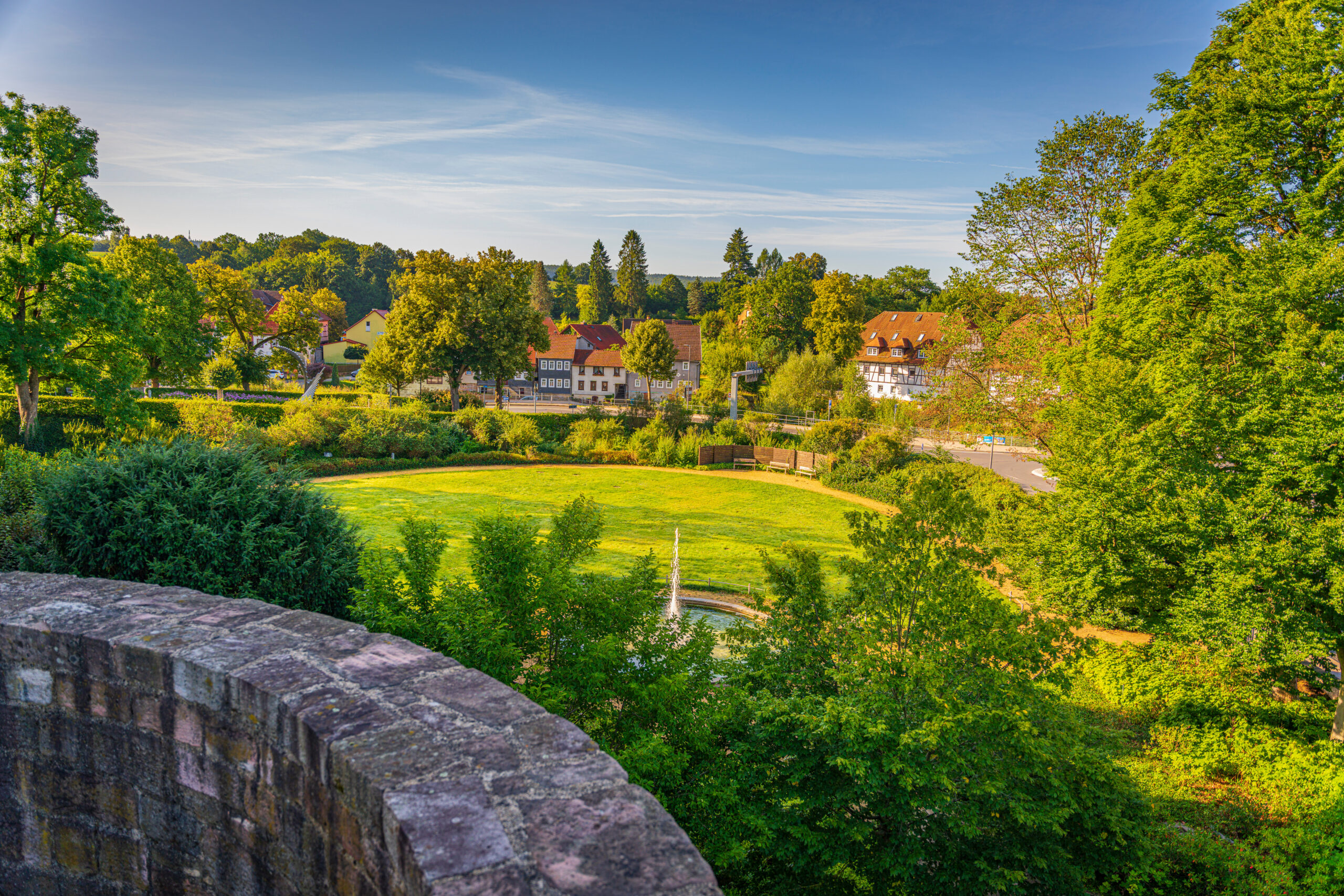
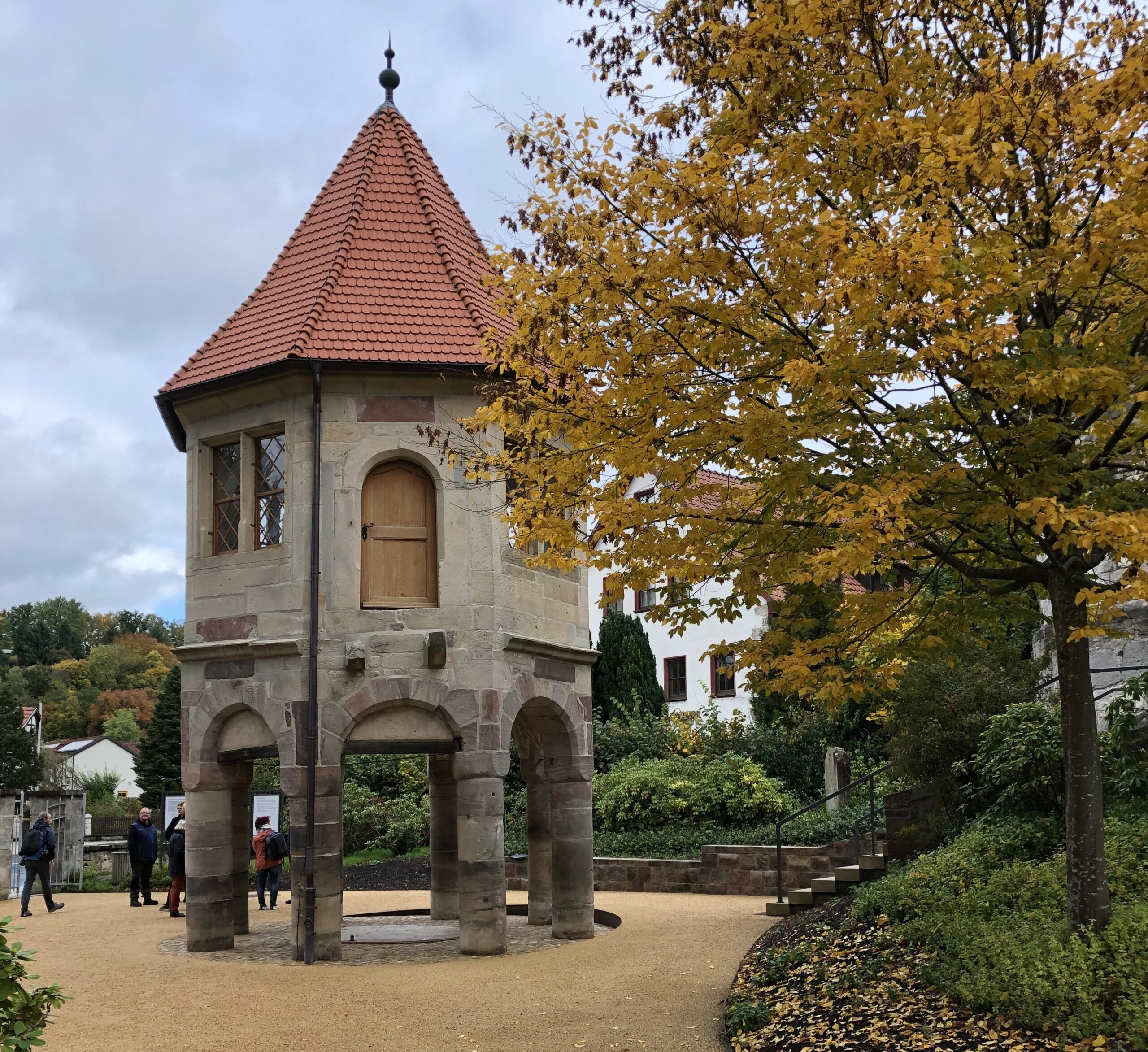
Park/Garden Open all year round
Mon – Fri 8 am – 5 pm
Sat/Sun, public holidays 10 am – 6 pm
From Castle to Renaissance Palace
Whichever direction you approach Schleusingen from, one building cannot be missed – the striking Bertholdsburg Palace. The residence was established by the Counts of Henneberg, one of the oldest noble families of Franconia. Originally, their ancestral seat was on the Henneberg near the town of Meiningen. Around 1230, however, they moved their seat to Schleusingen, which lay conveniently on the important trade and military road from Nuremberg to Erfurt.
The construction of the new palace was probably made possible by a rich dowry, which came about through the marriage of Count Poppo VII to the daughter of the Landgrave of Hesse. The palace presumably owed its later name to Count Berthold VII (c. 1272–1340). He bore the gracious epithet “the Wise,” was an important political figure of his time, and served several kings and emperors as an adviser, as well as guardian to the son of Emperor Ludwig IV of Bavaria (c. 1282–1347).
Individual building elements of the 13th-century palace can still be seen today. Conversions and extensions in the 15th and 16th centuries ensured that the appearance of the complex was constantly changing. Although the noble family was already in decline at this time, the medieval fortification was expanded into a four-wing Renaissance Palace.
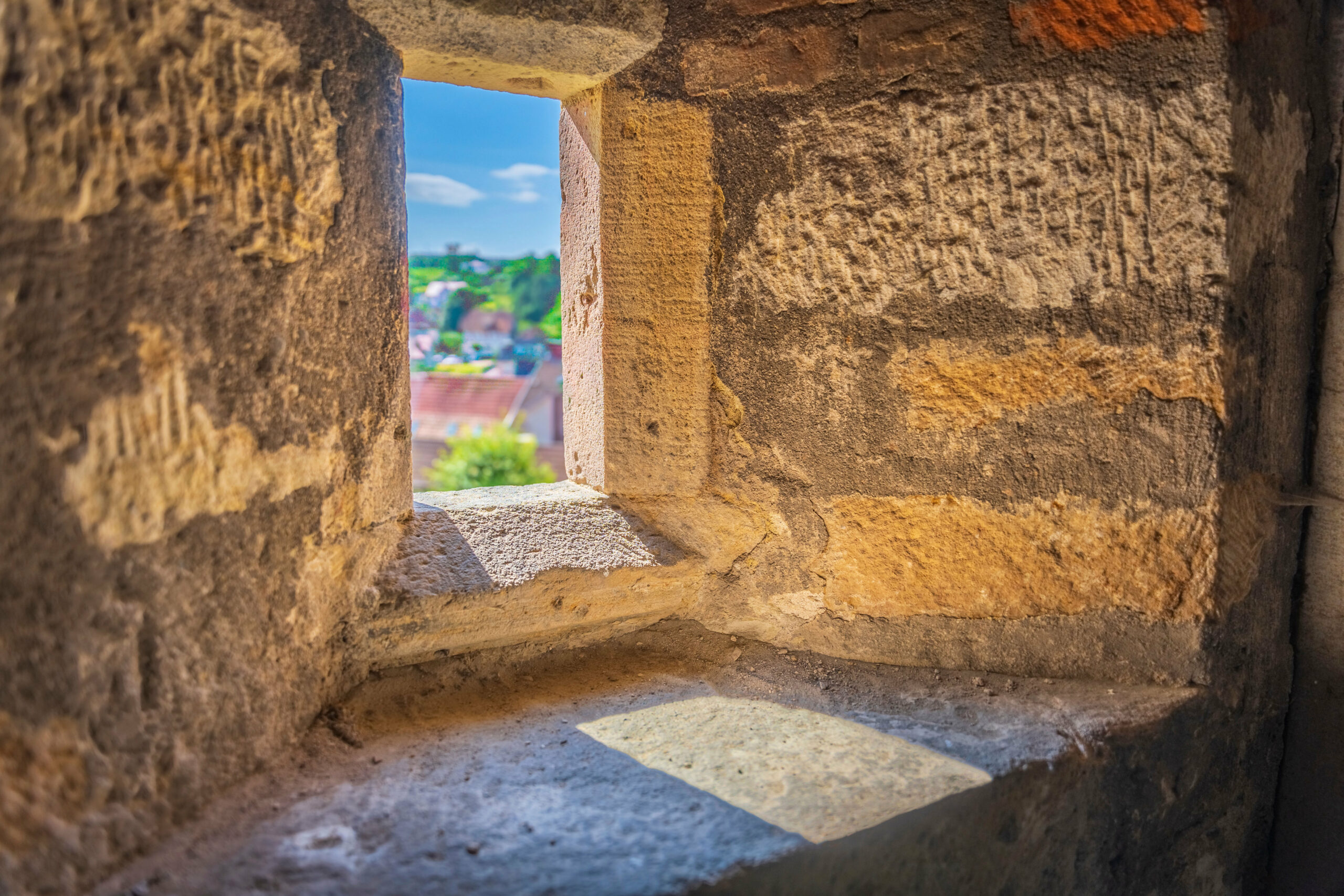
The mostly three-storey buildings were raised by an additional timber-framed upper storey, and the palace towers were heightened. Bertholdsburg Palace has largely retained this appearance to the present day. Of the original nine towers, however, only seven remain. Their names – such as Court Tower, Maiden’s Tower, Witches’ Tower, or Chapel Tower – refer to their former or occasional functions. The main tower is integrated into the museum’s operations as a viewing tower. After the death of the last Henneberg count in 1583, almost all possessions fell to the Wettins and later to Prussia, whereupon Schleusingen lost its status as a residence. As the Saxon and Prussian lords of the palace no longer resided in Schleusingen, they showed no interest in redesigning the complex, and thus the palace remained in its original Renaissance style.
Hercules in Large Format
The most significant surviving interiors are located on the first floor of the north wing. There, visitors will find, among other things, a hall with a floral stuccoed ceiling and a vaulted room with yellow and black secco (dry) paintings dating from around 1600. Large-format scenes depict the deeds of the ancient hero Hercules. It is one of the largest secular painting cycles in central Germany. Today, the palace houses the Natural History Museum, which presents three permanent exhibitions to its visitors – on regional history, geology, and natural history, including important collections of fossils and minerals.