Address
Gosseler Straße 8
999330 Geratal Rural Municipality, Liebenstein district
Liebenstein/Thuringia Castle Association (e.V.)
Website
Opening hours
Open to the public all year round
Guided tours available on request

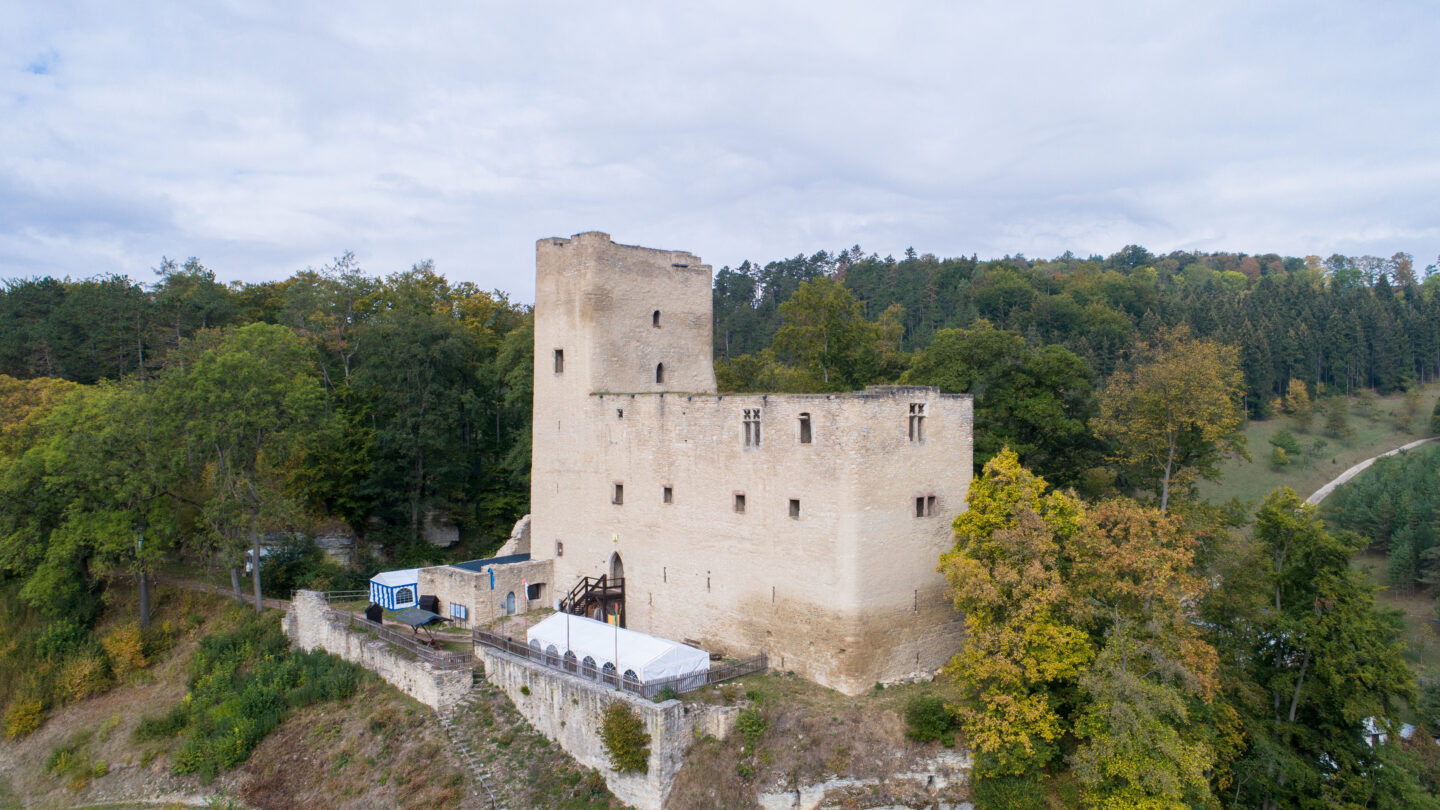
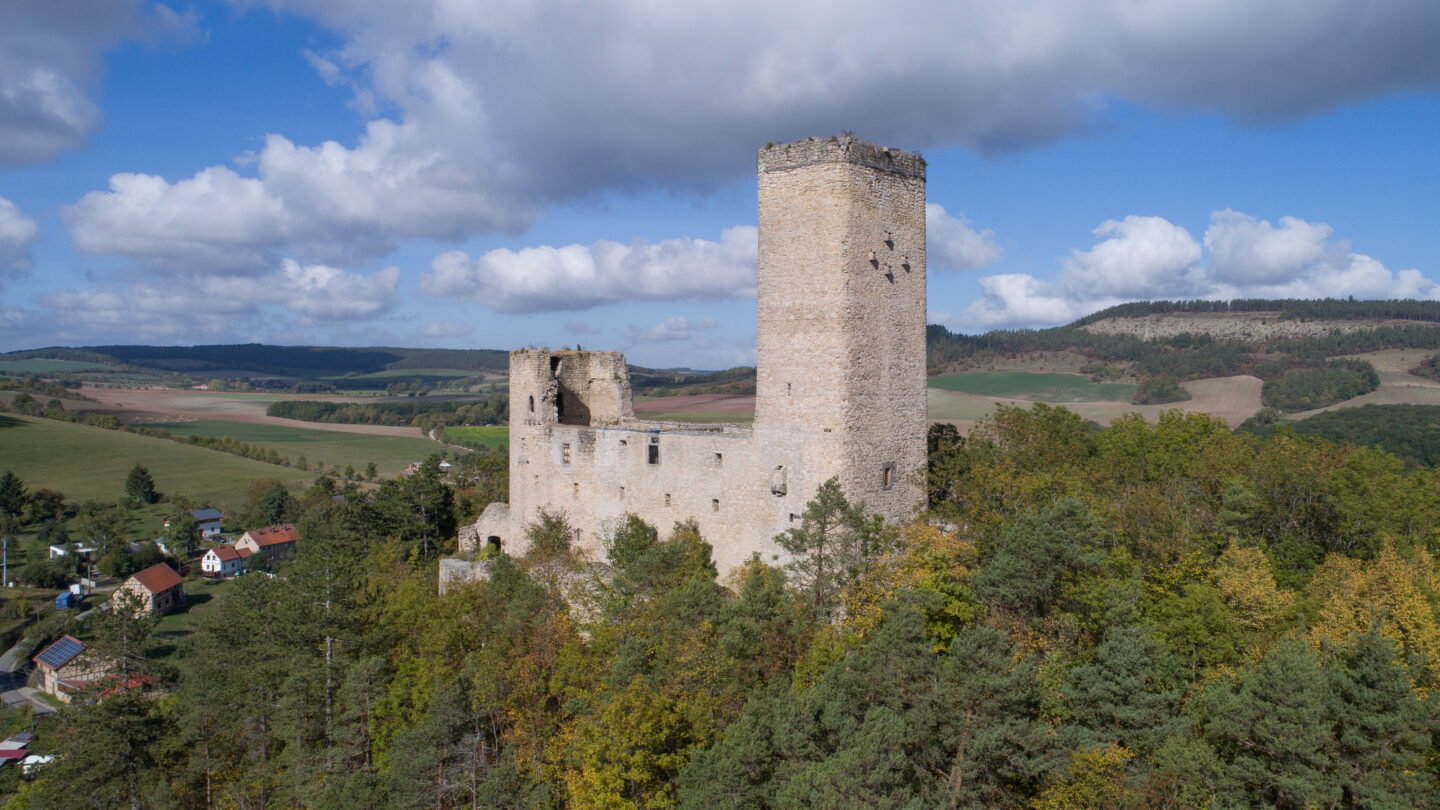
Numerous myths and legends surround the ruins of Liebenstein Castle in the Ilm district. Stories are told of a child walled up inside and of enchanted walls. The complex was built by the Counts of Schwarzburg, who used it to guard the trade route leading up to the passes of the Thuringian Forest. The Liebenstein castle ruins, situated above the village of the same name, are characterised by their strikingly compact shape and rounded corners. Today, the castle is open to the public and is used, amongst other things, for various events.
Gosseler Straße 8
999330 Geratal Rural Municipality, Liebenstein district
Liebenstein/Thuringia Castle Association (e.V.)
Website
Open to the public all year round
Guided tours available on request
If the legend is to be believed, a child was walled up during the construction of Liebenstein Castle. The writer Ludwig Bechstein recorded this gruesome story in his book of Thuringian legends. In it, one reads of a mother who sold her child – and of a lord of the castle who followed pagan beliefs and believed that the sacrificed child would bring protection and safety. When the last stone had been laid, the mother was overcome with horror. She realised what she had done and threw herself off the cliff into the valley. ‘Now she roams the old ruins as a wretched ghost, listening to her child’s whimpering, and trying to dig it out of the wall with her fingernails. Some say that the child can be heard wailing only once every seven years, and that the masons who walled it in were turned into owls, which screech even more pitifully than the child, and which must fly round the ruins for as long as a single stone of them still stands upon another.”
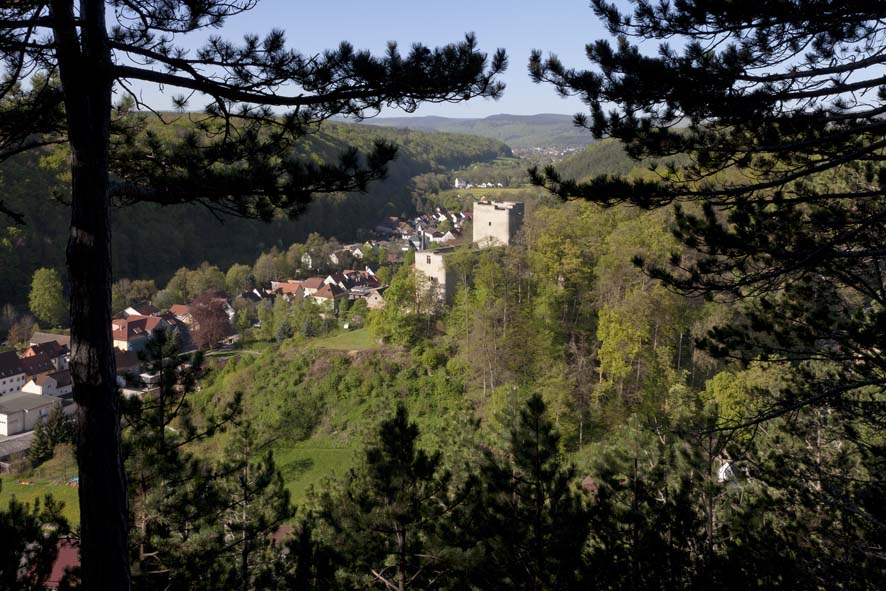
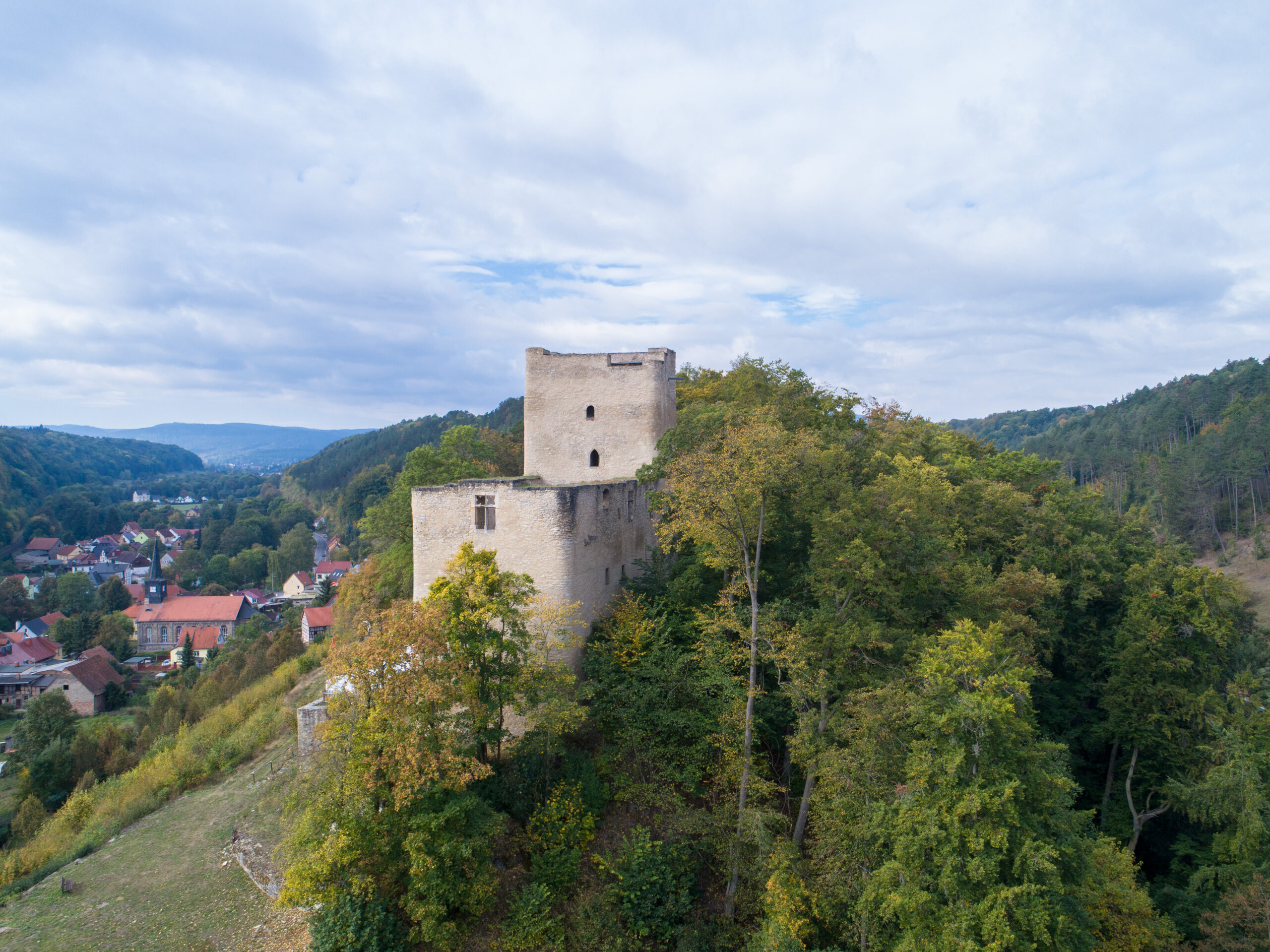
The tale of the child walled up is just one of many legends surrounding Liebenstein Castle. Whether or not one chooses to believe these stories, it is certain that the castle was first mentioned in a document in 1282. Particularly striking is the similarity to the ruins of Ehrenstein Castle, some 25 kilometres away. Both structures are characterised by their particularly compact shape and their rounded corners. In both cases, the Counts of Schwarzburg were responsible for their construction, led presumably by Count Günther XXI (1304–1349). The castle was intended to protect the important trade route leading up to the mountain passes of the Thuringian Forest. However, it also played an important role in the Thuringian Counts’ War (1342–1346), when the Counts of Schwarzburg joined forces with the Counts of Weimar-Orlamünde, the Counts of Hohnstein and the bailiffs of Gera and Plauen to prevent the Wettin dynasty from establishing hegemony. Their plan failed, however, and the Wettins were subsequently able to consolidate their supremacy in Thuringia once and for all.
The castle is still surrounded today by a moat 17 metres wide and 12 metres deep. This man-made moat was intended to provide protection against attackers. The surviving core structure of the castle consists of the three-storey residential building and the tower, which is around 28 metres high. Meanwhile, the farmyard belonging to the castle was situated down in the valley. This eventually developed into the village of Liebenstein. From 1434 onwards, Liebenstein Castle was owned by the Lords of Witzleben for 400 years. In the mid-16th century, the new owners had the fortified castle converted into a residential palace. However, as early as the 17th century, the complex began to fall into disrepair. The Dukes of Saxe-Gotha used Liebenstein as a judicial office for a time. However, in 1859, this had to be relocated down to the village due to the imminent risk of collapse. Around ten years later, the castle was finally sold for demolition. Almost the only buildings to have survived are those commissioned by Günther XXI. Worth reading: Castle ruins