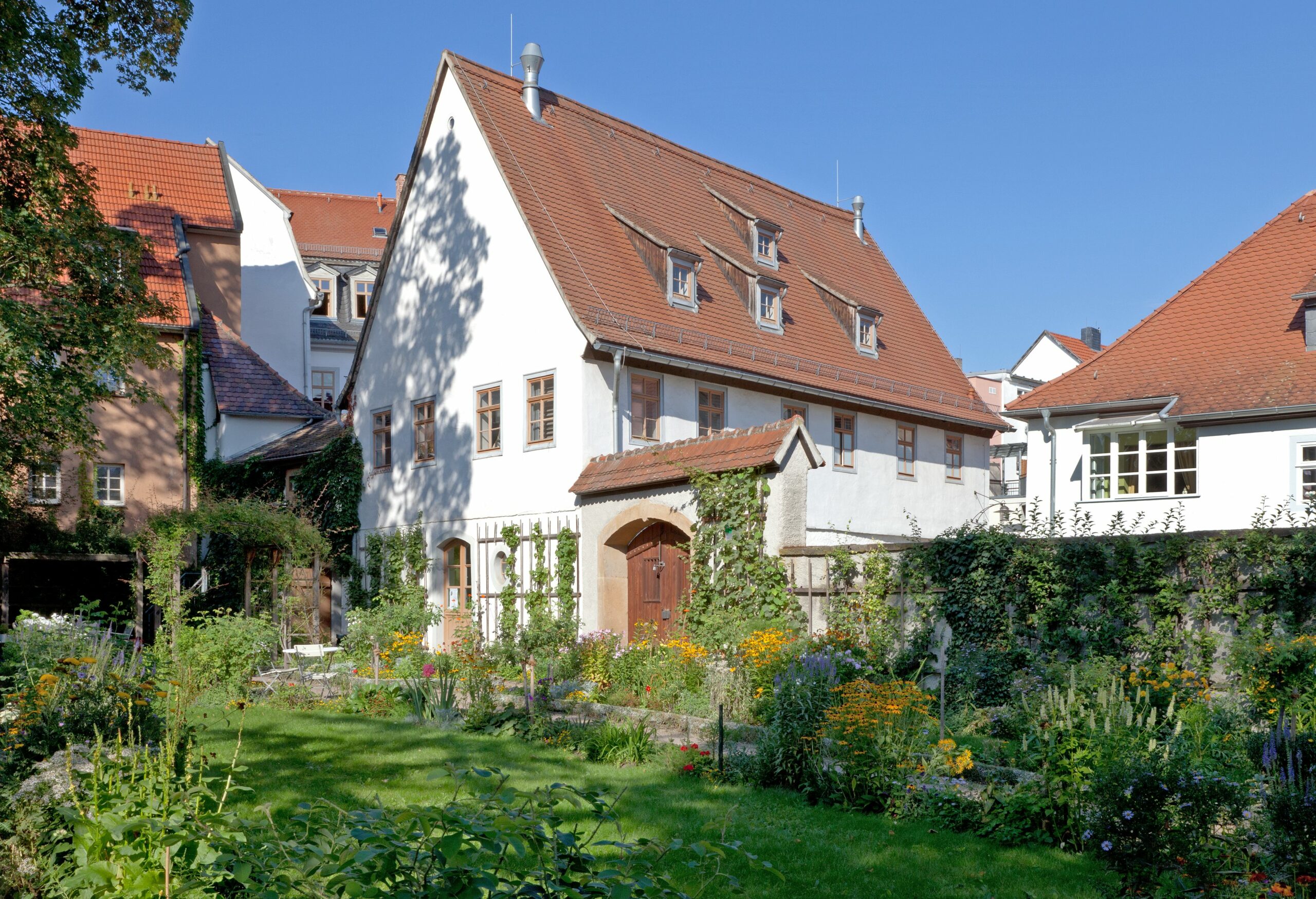
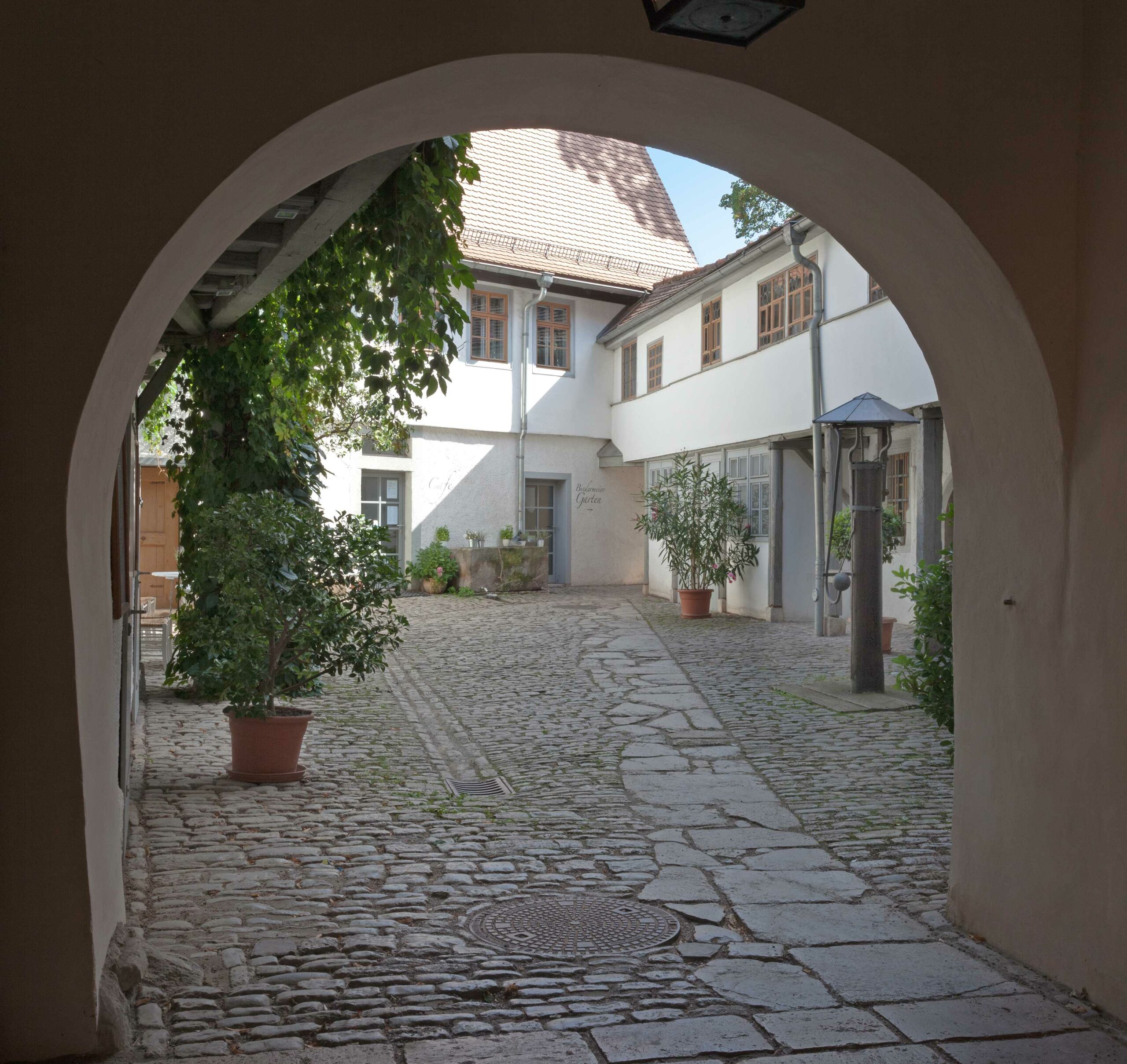
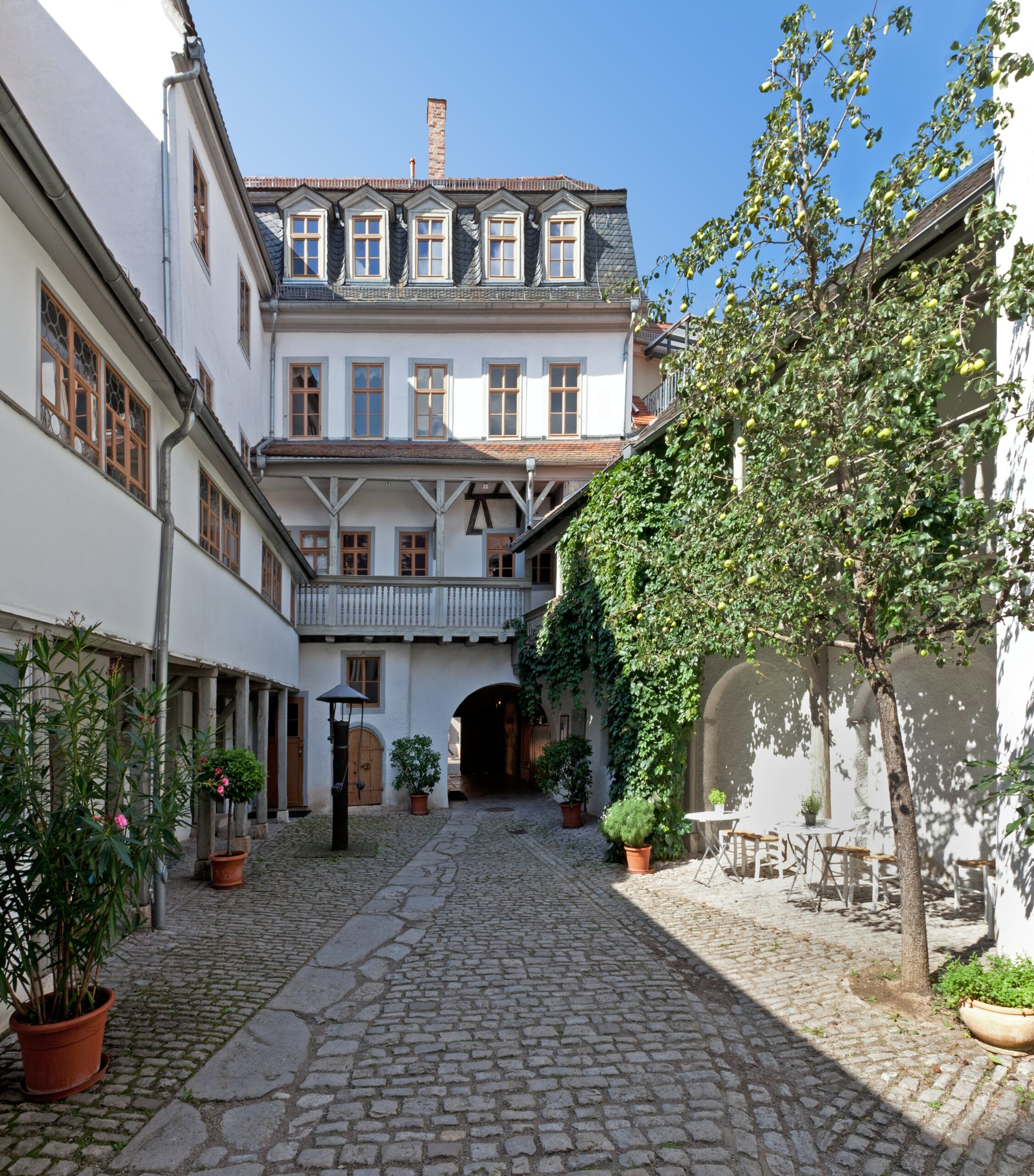
A stone’s throw from the Herderkirche, behind a simple facade, lies a light-filled courtyard leading onto one of Weimar’s most charming city gardens. In Goethe’s day, this complex was one of the most important meeting places for Weimar society. The brothers Franz and Carl Kirms were in the ducal service and maintained close ties with the court, as well as with artists, scholars and townspeople. Even throughout the 19th century, the house remained largely unchanged, serving as a private memorial to this golden age. The extensive collection of original artefacts creates a unique atmosphere. A museum since 1917, the Kirms-Krackow House is now a popular hidden gem for strollers and culture lovers, as well as a sought-after venue.
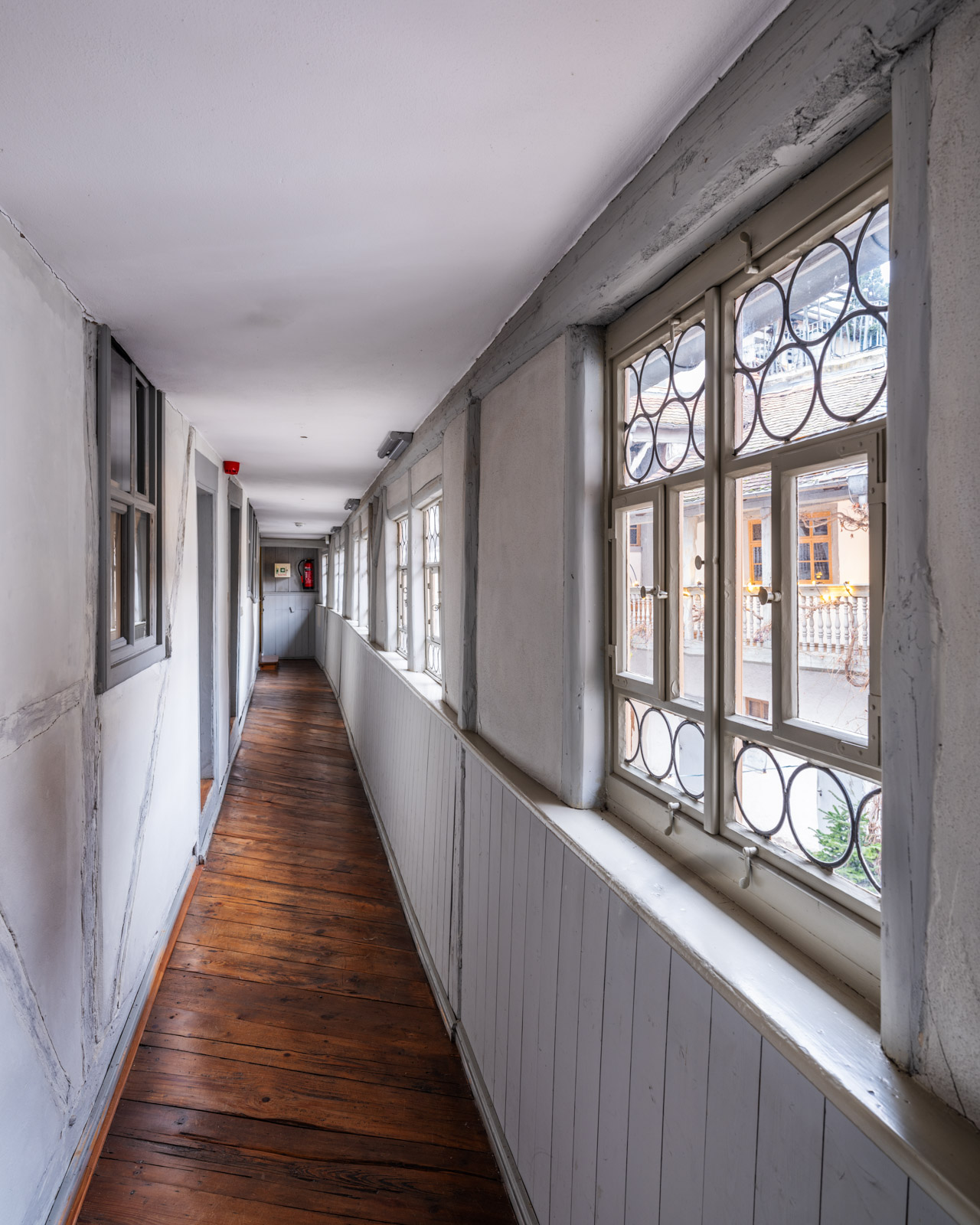
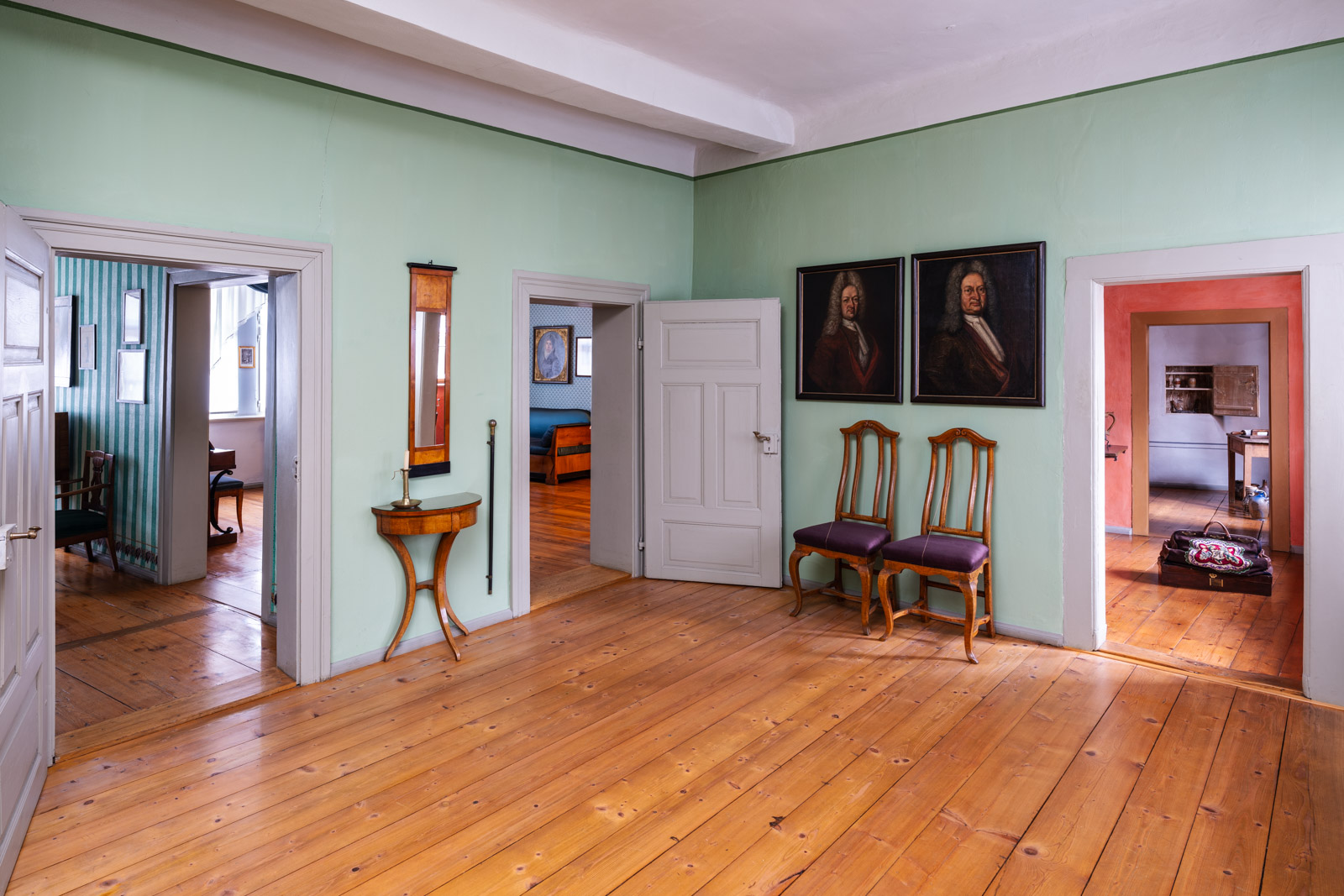
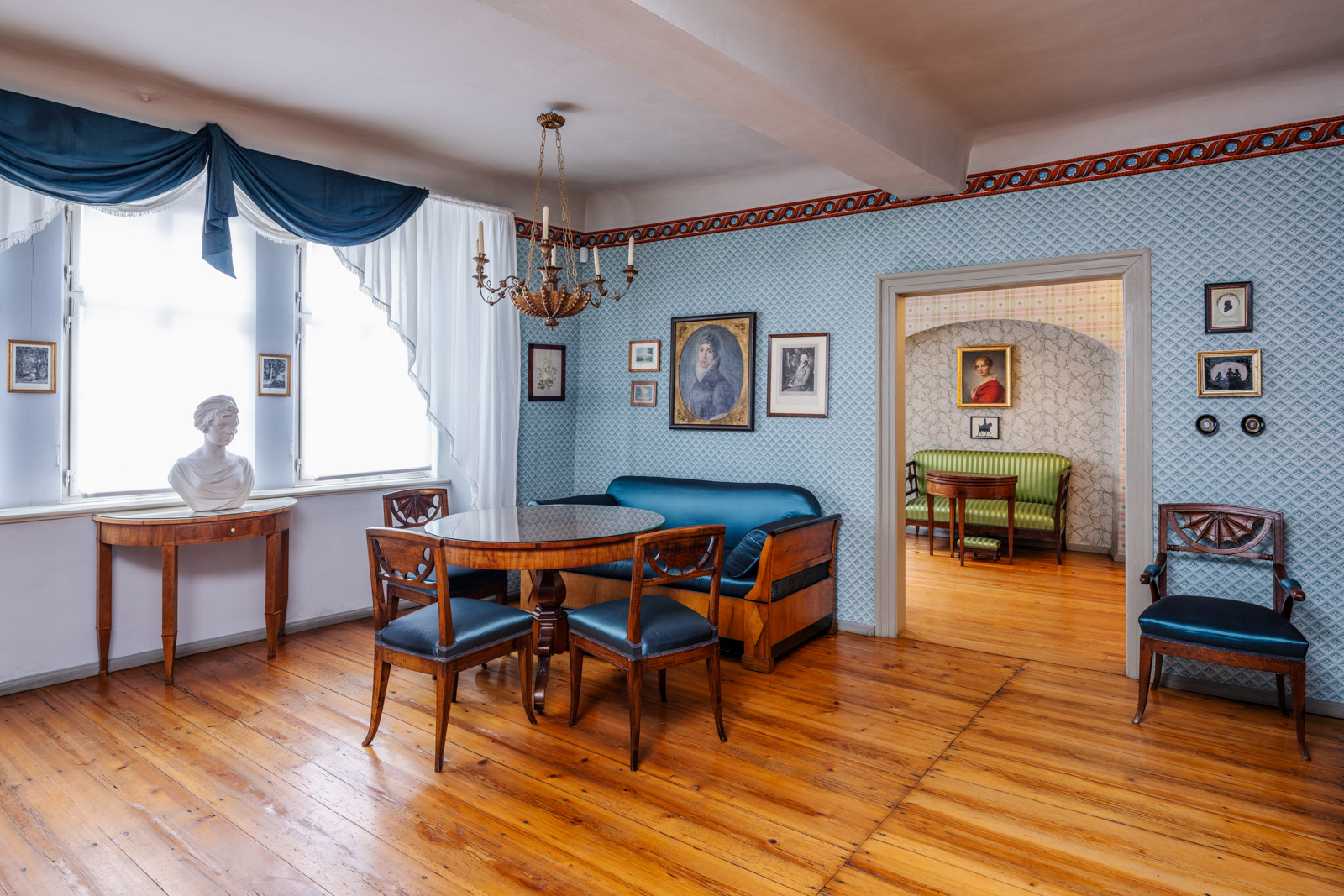
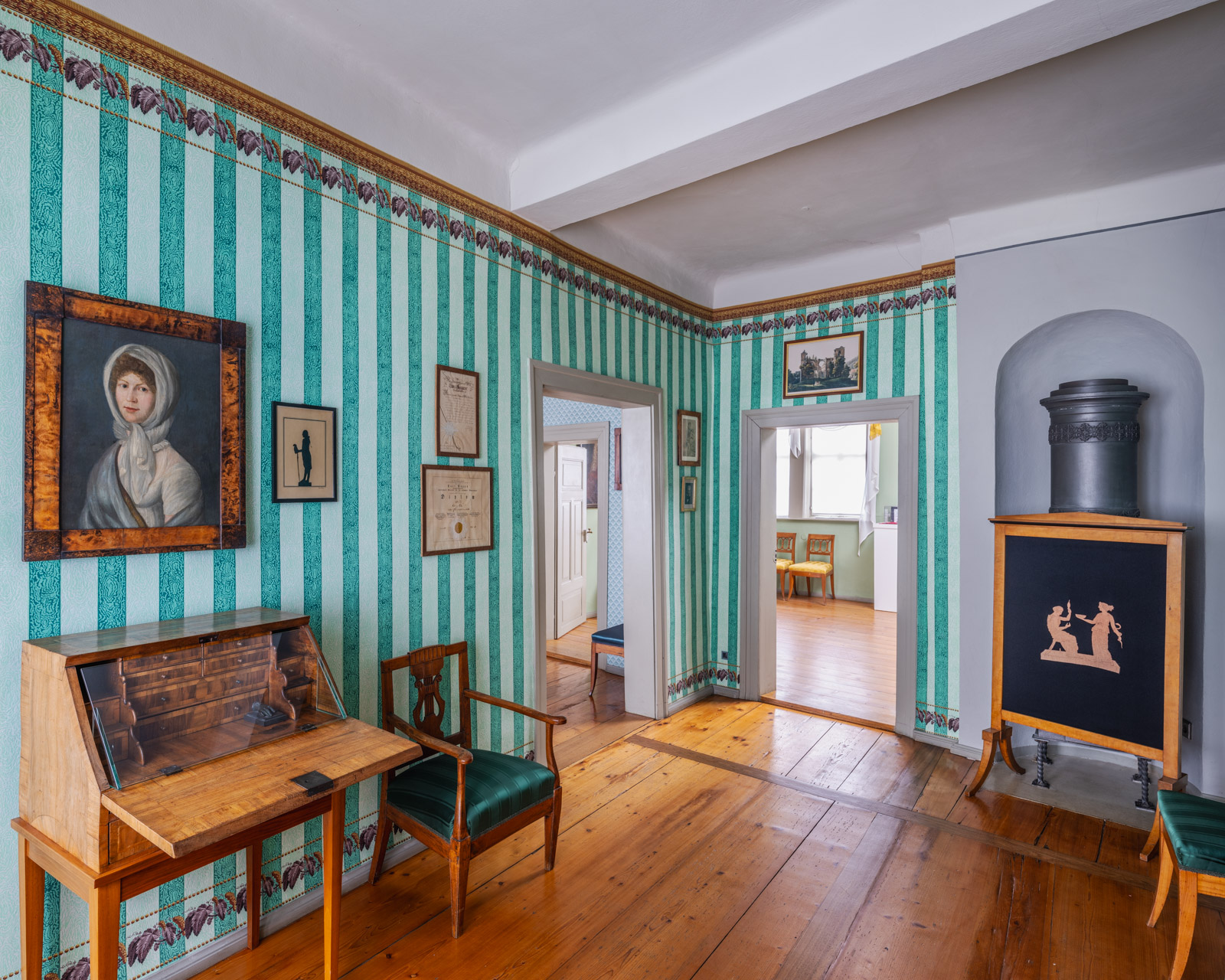
One floor of this largely authentically preserved property is open to the public as a museum. A complete set of period furnishings brings the domestic culture of the early 19th century to life. Temporary exhibitions focus on everyday life in the middle-class circles associated with the Weimar court.
One of the oldest houses in Weimar, it became home to the Kirms family in 1701 and was an important meeting place for artists, musicians, and scholars. Famous figures such as Franz Liszt, Johann Nepomuk Hummel, and Hans Christian Andersen were regular visitors to Jakobstraße. Today, visitors to the Kirms‑Krackow House step into the domestic culture of the educated bourgeoisie of the Goethe era – and are also given an intimate glimpse into the family life of the Kirms. A further gem in the heart of Weimar’s old town is the bourgeois flower garden.
The “Blumisten”
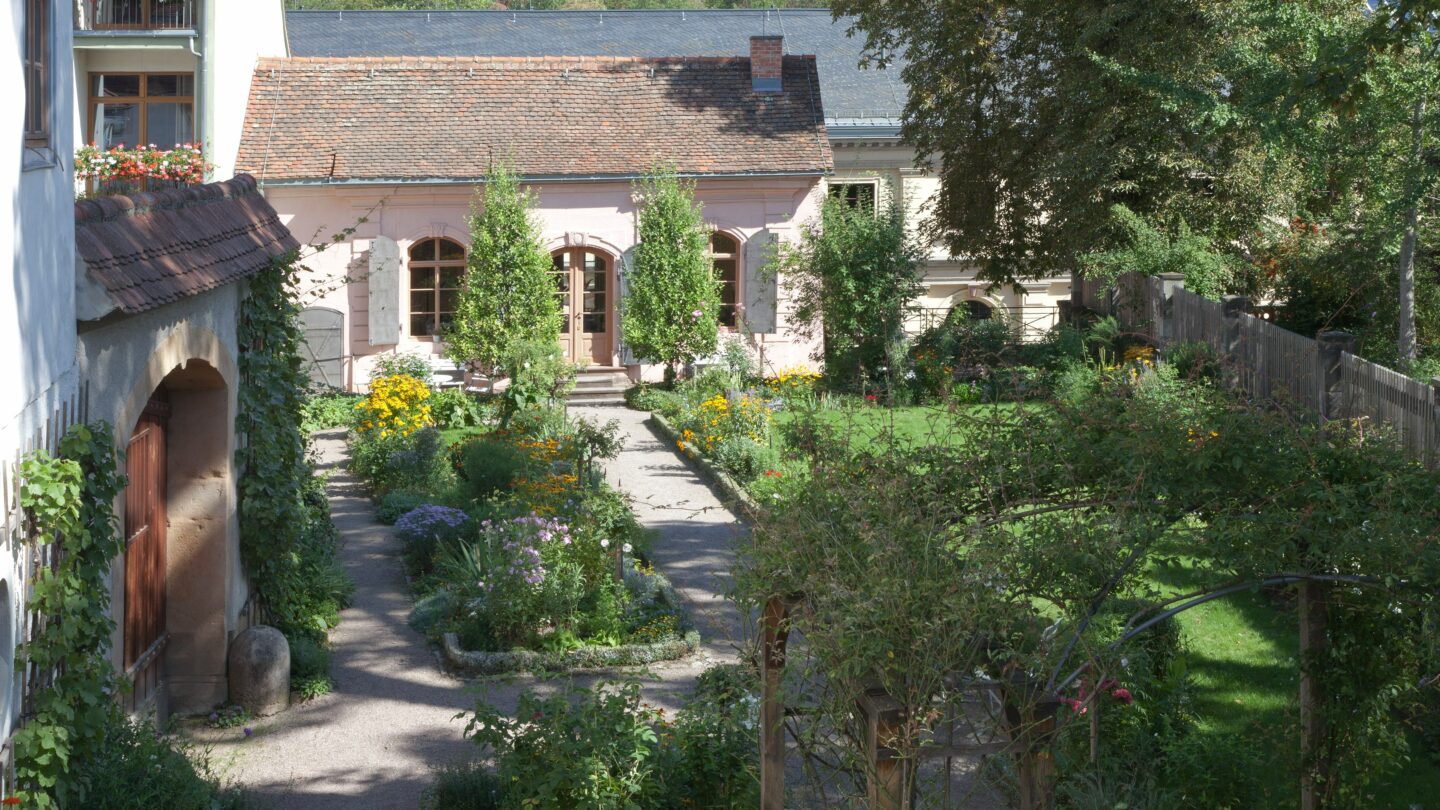
Visitors to the Kirms‑Krackow House should be sure to take a look into the house garden. The flower enthusiast Franz Kirms cultivated rare apple, almond, and mulberry trees there, as well as roses and unusual plants from around the world. Under his care, the garden took on its Biedermeier design, which is largely responsible for its current appearance, a period in which it also reached its artistic peak.
The garden was extended in the mid‑18th century and fitted with a late Baroque pavilion. The designs for the building, originally constructed with a roof terrace, probably came from the circle of ducal master builders Johann Adolph Richter and Gottfried Heinrich Krohne. Its artistic peak, with Biedermeier flowerbeds, espalier fruit, and many botanical rarities, was reached under Franz Kirms (1750–1826), a member of the Weimar Association of “Blumisten” (plant lovers).
Meeting Place of Weimar Society in the Circle of the Court
In terms of garden art, the Weimar court had kept abreast of the times since the 18th century. The citizens in its sphere of influence also displayed considerable horticultural ambition. One of the few surviving testimonies to this is the garden at the Kirms‑Krackow House. By the mid‑18th century, the Kirms family had expanded the property sufficiently to create a garden on the grounds. The Baroque garden pavilion could be used to host festivities or to shelter delicate plants. In the Goethe era, the Kirms‑Krackow House became an important meeting place for Weimar society connected to the court. People engaged with literature, art, and music – and with plants. Privy Councillor Franz Kirms was part of a well‑networked group of “Blumisten” (plant lovers), whose connections extended far beyond the city, exchanging their successes in flower cultivation both in journals and in personal conversation. The lovingly maintained Biedermeier garden shows how discerning bourgeois households combined the practical need for fruit and vegetable growing with aesthetic and representative aspirations.