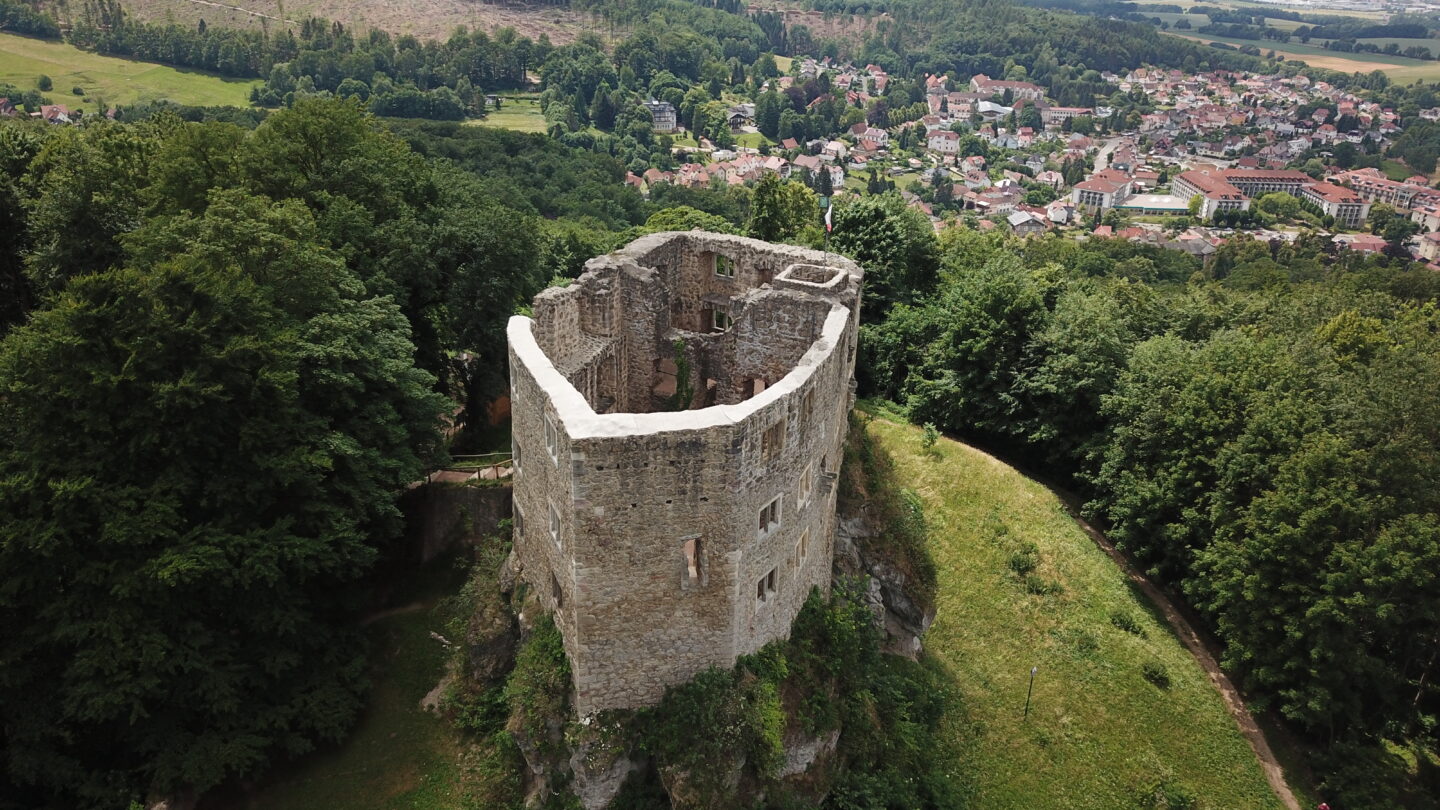
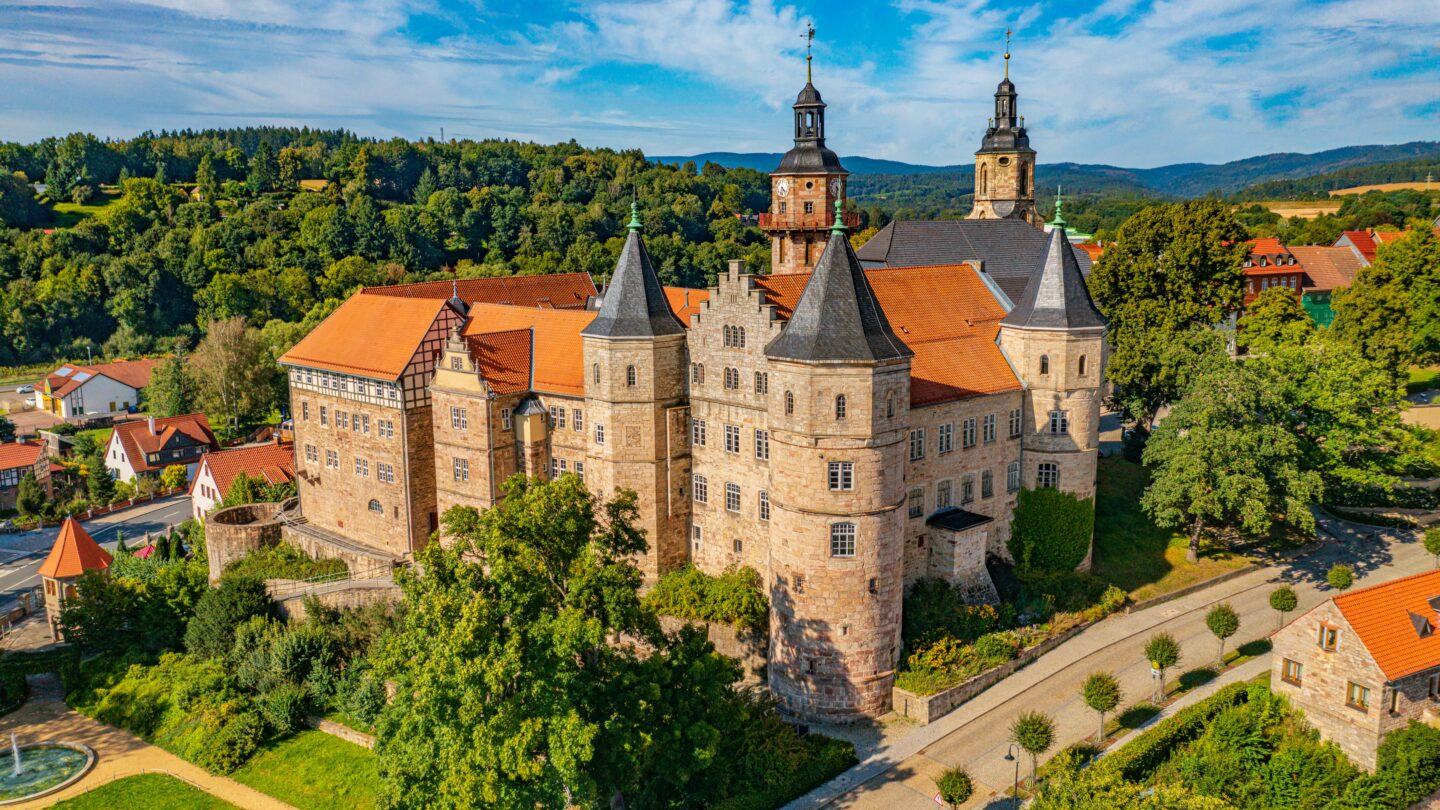
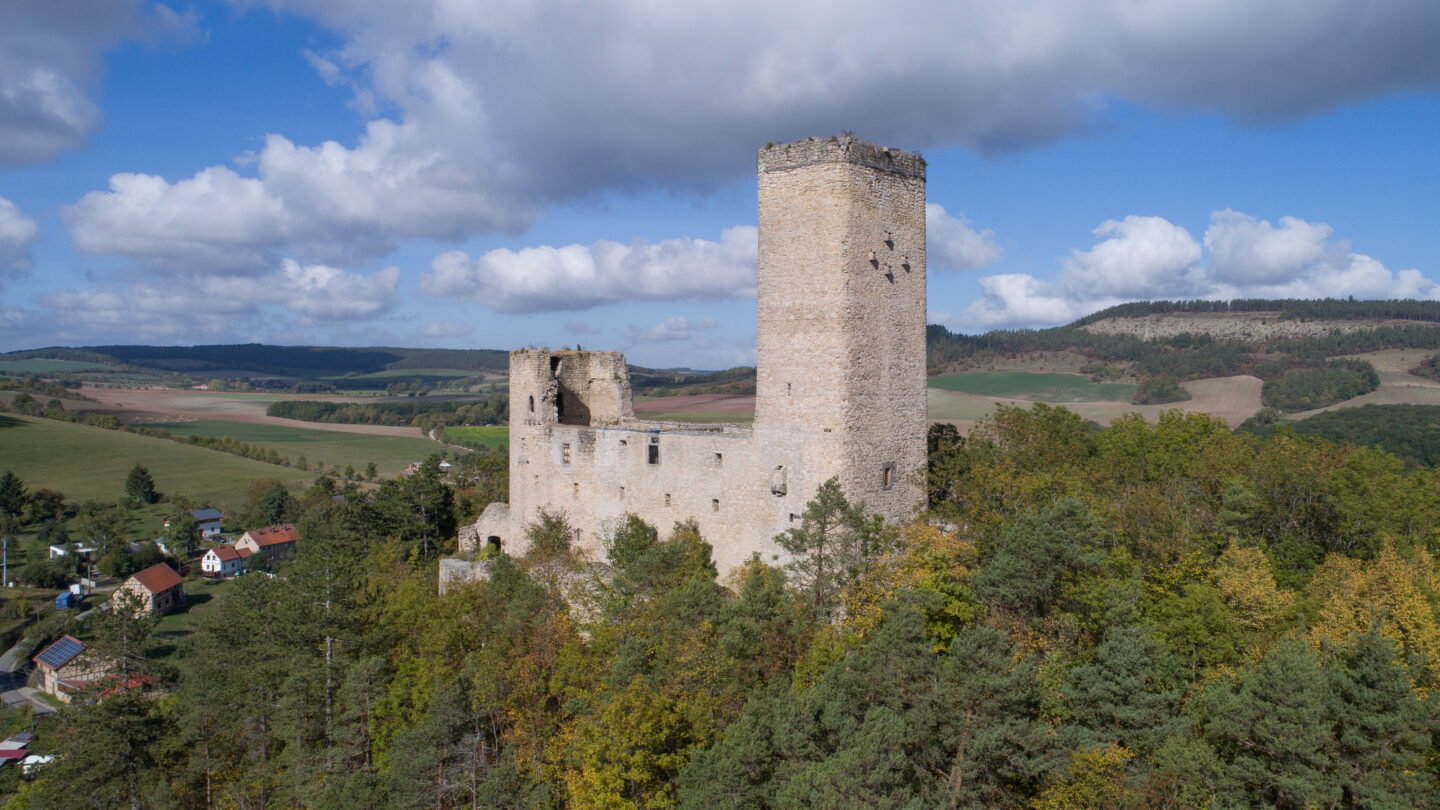
To the north-east of the spa town of Bad Liebenstein rises the castle ruins of the same name. As early as 400 years ago, Duke Johann Casimir of Saxe-Coburg appreciated the healing properties of the Liebenstein water and, therefore, visited the place repeatedly. Today, Bad Liebenstein is among the oldest spa towns in Thuringia. As early as 1360, the Lords of Stein were enfeoffed with the castle of the same name. Today the castle ruins towers picturesquely above the hilly surrounding countryside. In the immediate vicinity is also Altenstein Palace with its extensive landscaped park.
At a glance
Addresses
Castle ruins with viewing tower Visitor car park: Friedensallee 1
36448 Bad Liebenstein
T: 03 69 61 – 7 22 22
Castle ruins with viewing tower May to September: daily 10 am – 6 pm
October to April: Saturdays, Sundays and public holidays 10 am – 4 pm, weather permitting; otherwise by prior arrangement. A flag is flown to indicate when the site is open
The Duke Comes for a Cure
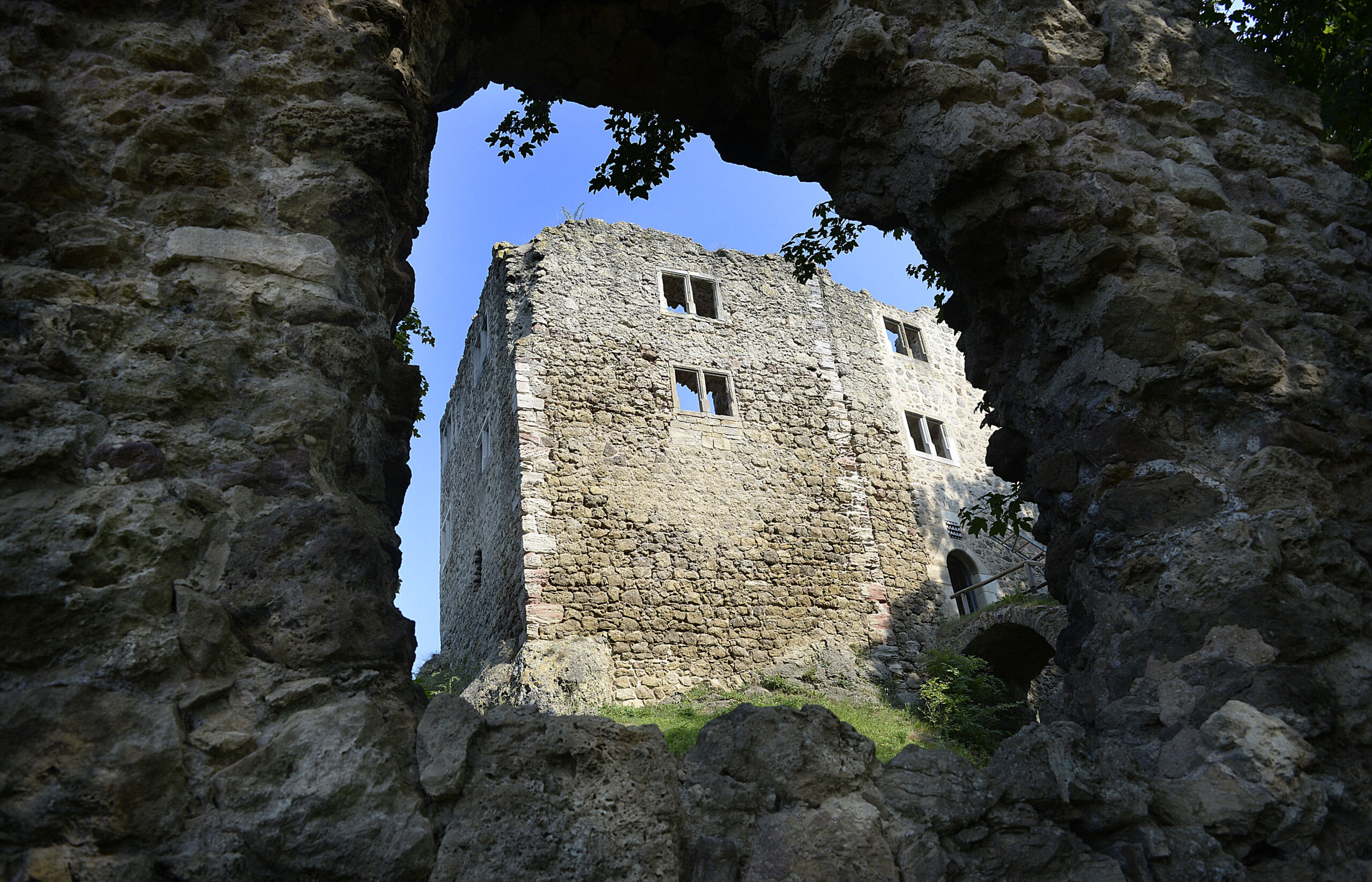
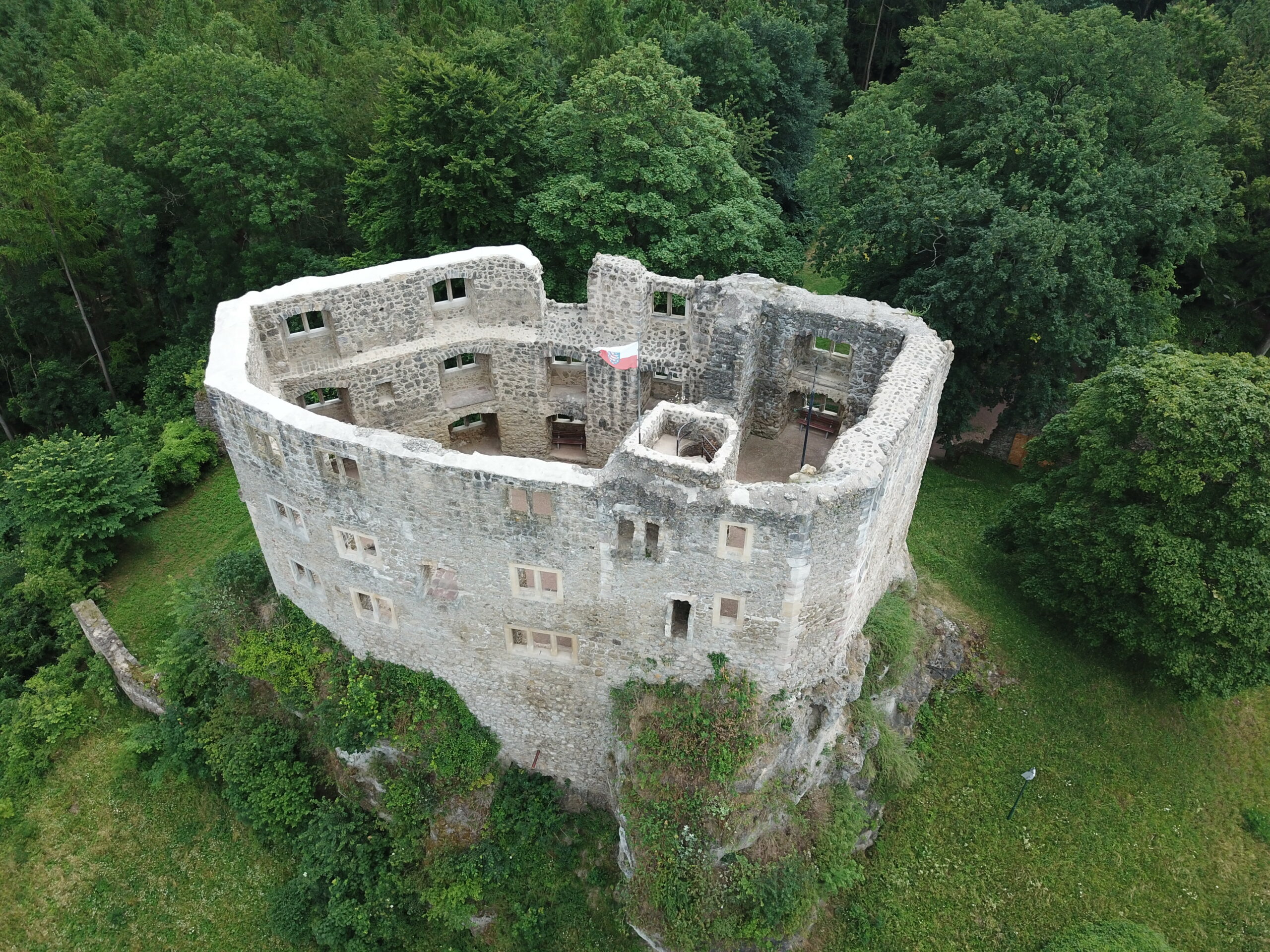
More than 400 years ago, the “Sauerbrunnen” (acidic spring) beneath Liebenstein Castle was already said to have “mysterious” properties. In 1610, the polymath Andreas Libavius investigated this “secret” and, on the orders of Duke Johann Casimir of Saxe-Coburg (1564–1633), wrote a treatise entitled Tractatus Medicus Physicus und Historia Des vortrefflichen Casimirianischen Sauer Brunnen unter Liebenstein nicht fern von Schmalkalden gelegen (Medical-Physical Treatise and History of the Excellent Casimirian Mineral Spring under Liebenstein, not far from Schmalkalden). The Duke greatly valued the healing powers of the water. In total, he spent ten years in what is now the spa town. During his stays, the Duke resided in princely fashion at Bad Liebenstein Castle with his court. The castle had been lavishly expanded and remodelled for this purpose by its owner Hermann von Stein. The former castle courtyard, for example, was increased by one storey to three storeys and the entire castle was given a uniform appearance. The windows took on a largely standardised form and were regularly aligned one above the other. Even today, the ruins reflect the state of the 16th and 17th centuries. At the end of the Thirty Years’ War (1618–1648), however, the castle was no longer in use. When the last male descendant of the Lords of Stein died, the estate passed to Duke Ernst I of Saxe-Gotha. In 1676, the last inhabitants finally left Liebenstein – and the castle gradually fell into decay.
The “Wise Ruler” Takes Over the Castle
It was not until around 1800 that the fortunes of Liebenstein Castle began to improve again. At that time, Duke Georg I of Saxe-Meiningen (1761–1803) took it under his care. Among his contemporaries, Georg I was known as a “wise ruler, benevolent prince and father of the people”, as an “active philanthropist, an admirer of merit, a patron of scholars and artists, and a man of noble, lofty character”. The much-praised duke initiated the first measures to preserve the castle. Among other things, he had the bridge to the entrance repaired and the tops of the walls secured.
The “Fortified House of Liebenstein”
What visitors see today is only part of what was once a far more extensive castle. The first documented mention dates from 1360, when the Franconian von Stein family was enfeoffed by the Landgrave of Thuringia with “the fortified house of Liebenstein”. The core area of the castle consists of the former residential tower and the castle courtyard later built over it. Parts of the former outer walls have been preserved. The complex itself stands on a 460-metre-high hill above the town of Bad Liebenstein. On the way there, visitors pass through the stretch of forest in which Martin Luther was once “kidnapped” and taken, for his own safety, to Wartburg Castle.