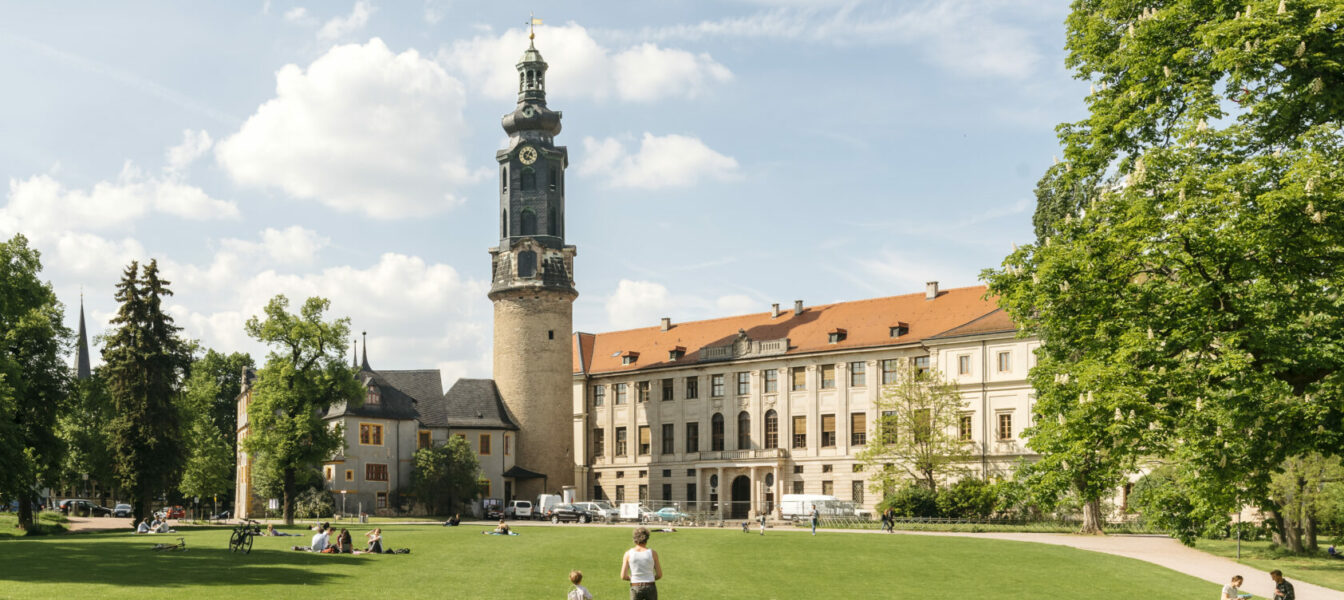
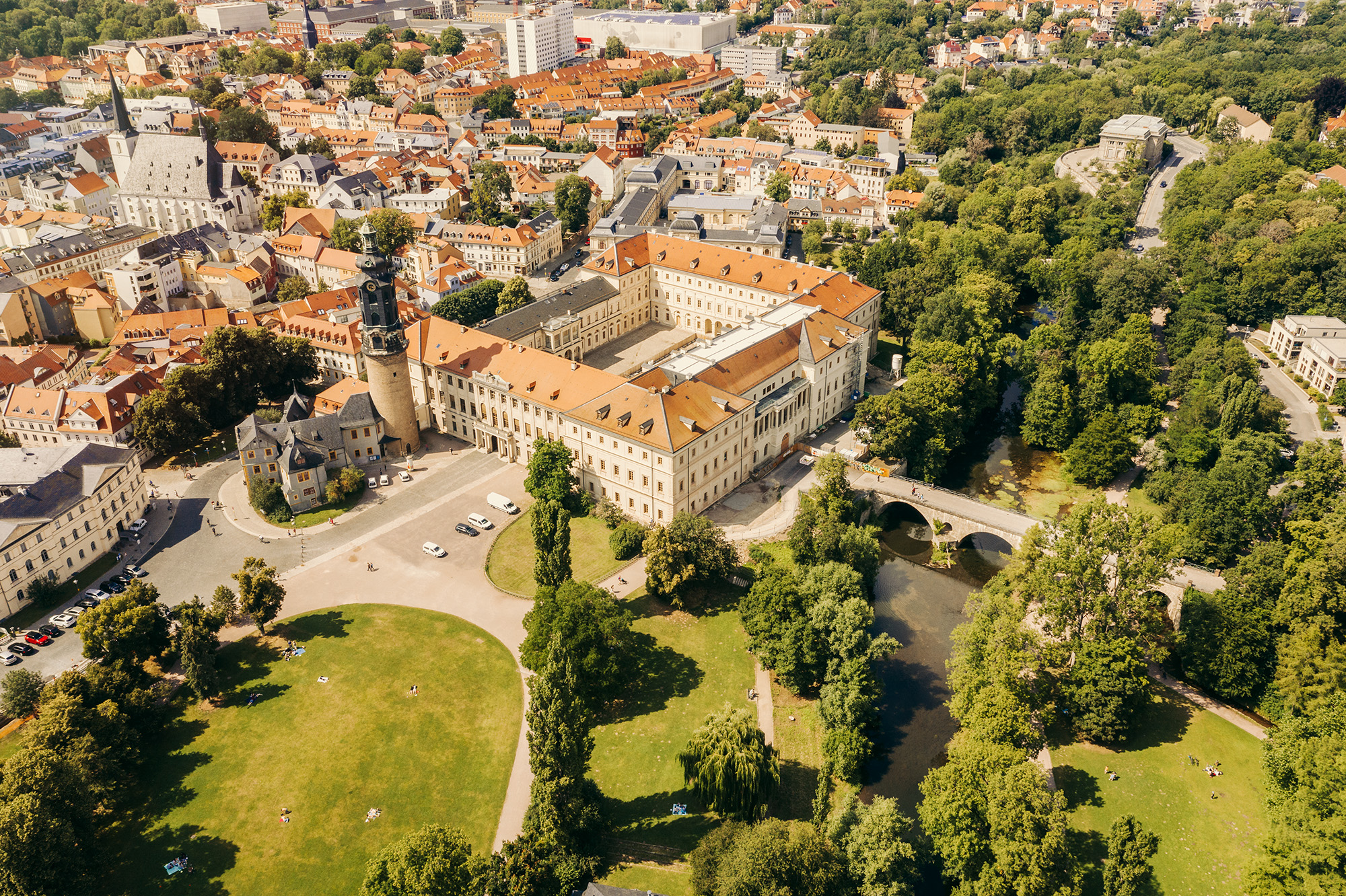
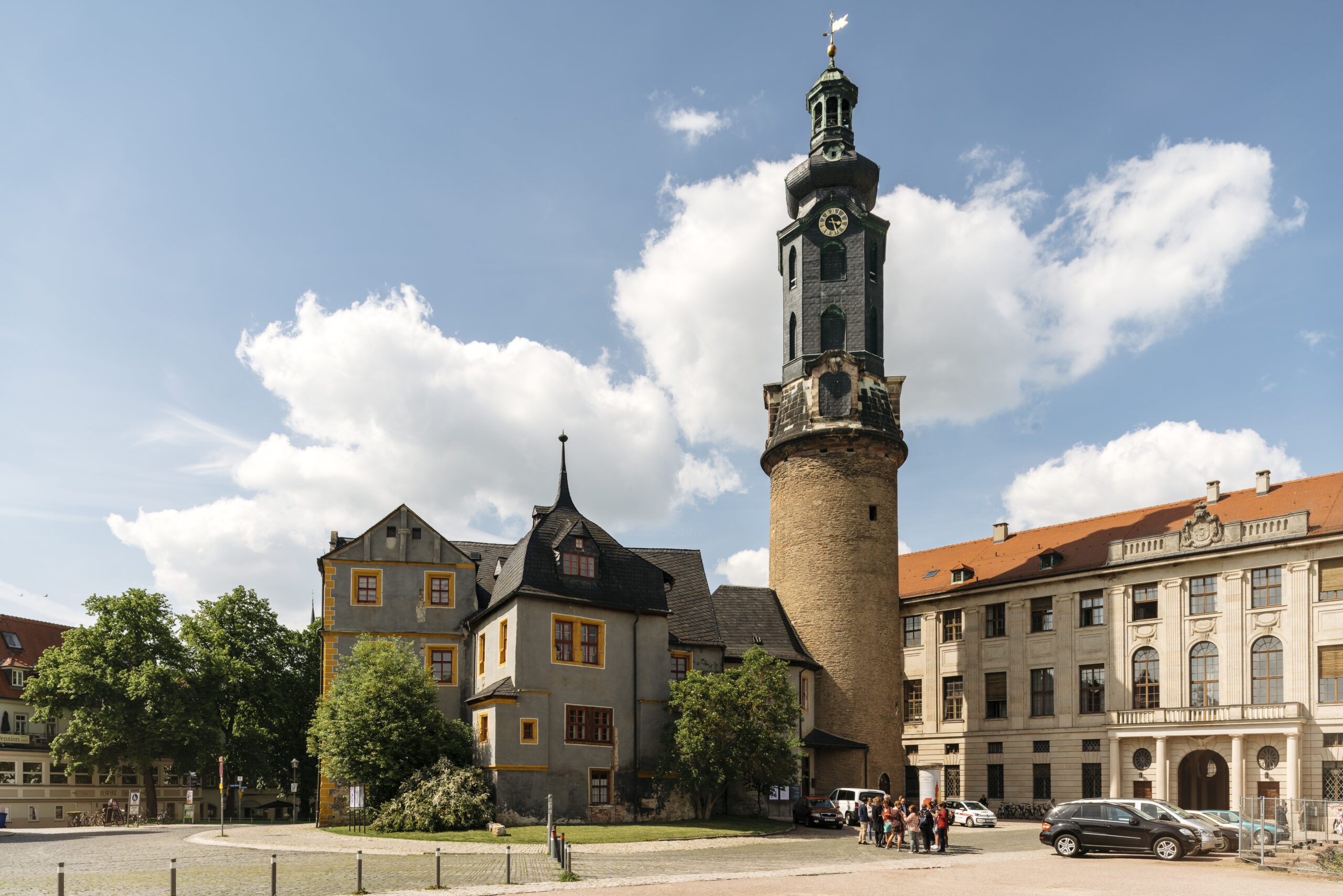
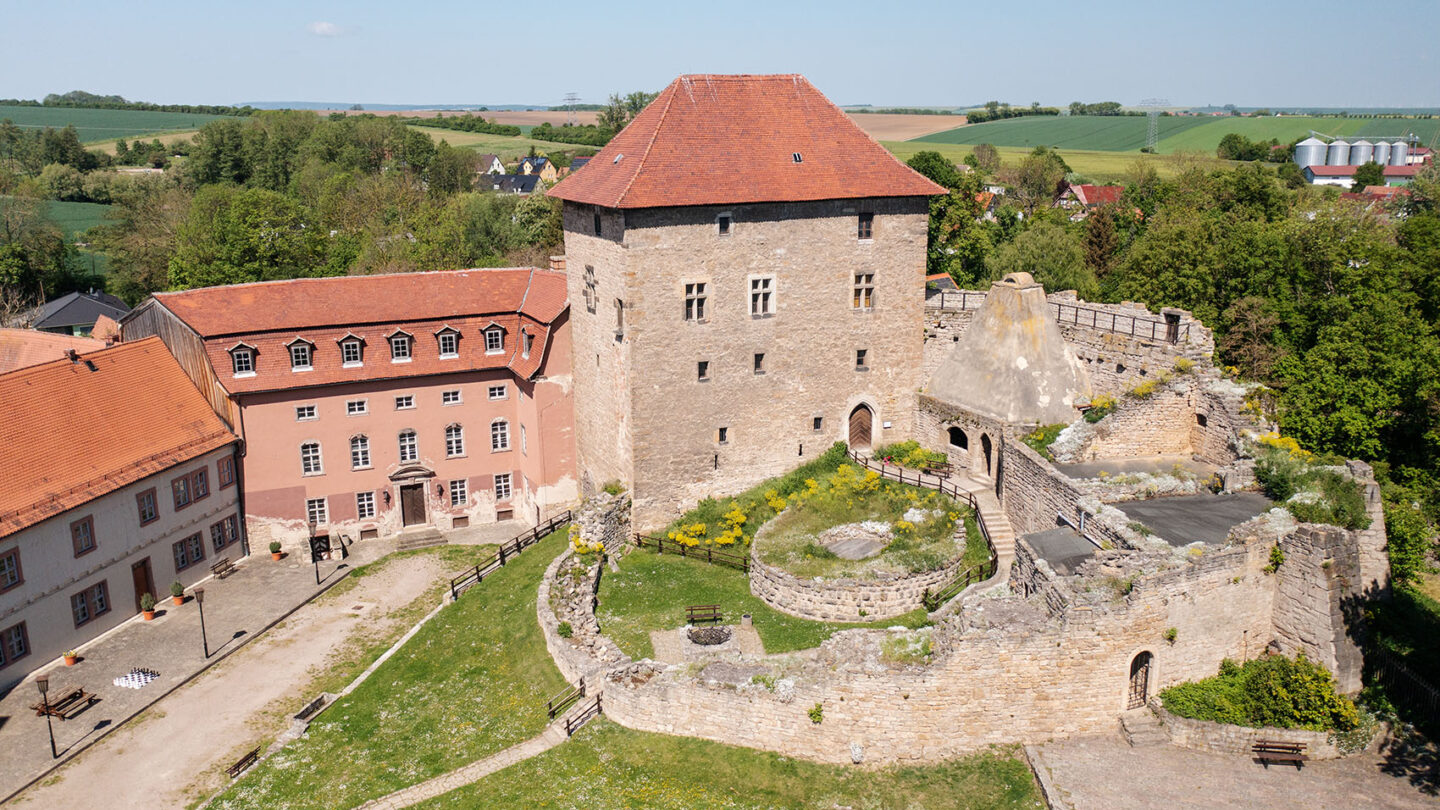
Standing resolute before the Weimar Residence Palace is the Bastille Ensemble – the oldest part of the palace complex, a surviving remnant of the early castle of Hornstein and a visible emblem of dynastic antiquity. The Bastille has withstood every destruction largely unscathed. The ensemble comprises the Gatehouse, the Palace Tower, and the Ladies‑in‑Waiting House. Numerous architectural details illustrate the transformation from fortress to palace, as well as the Gatehouse’s role as a court of law and seat of ducal administration.
At a glance
Address
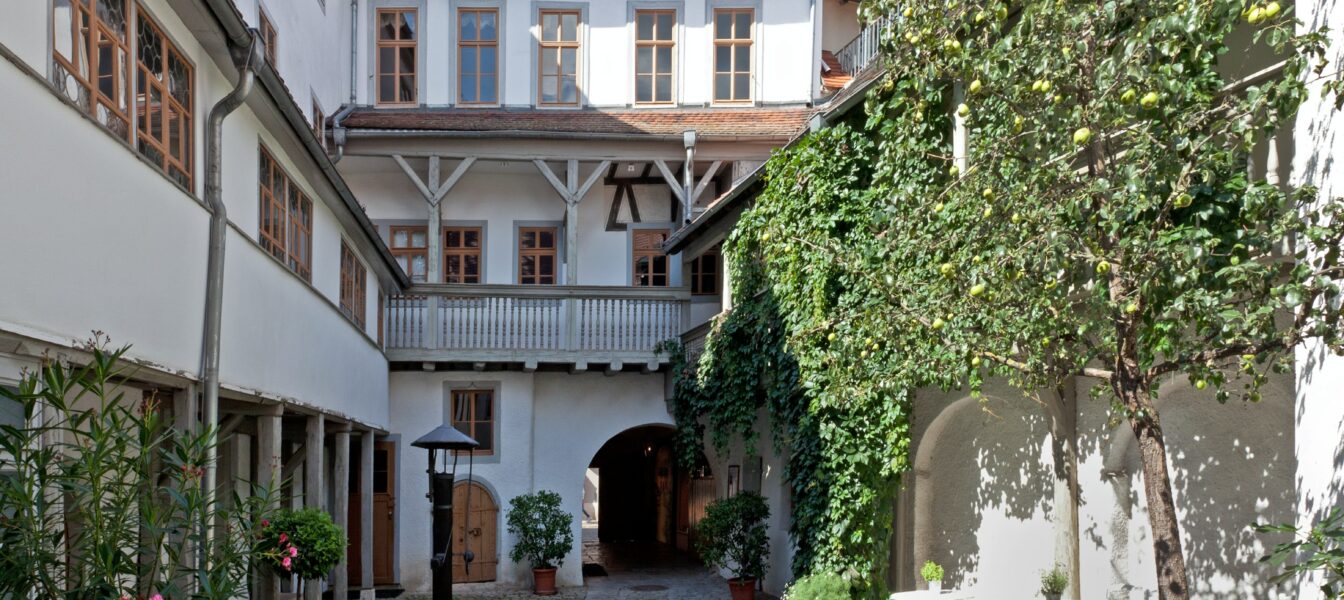
“Bach in Weimar” presentation at the Torhaus
Burgplatz 4
99423 Weimar
T: 03643 – 54 54 00 Email
Opening hours
‘Bach in Weimar’ exhibition at the Torhaus Tues to Sun, 10 am – 5 pm
all year round (except Christmas, New Year’s Eve and New Year’s Day)
Defiant Symbol of Power
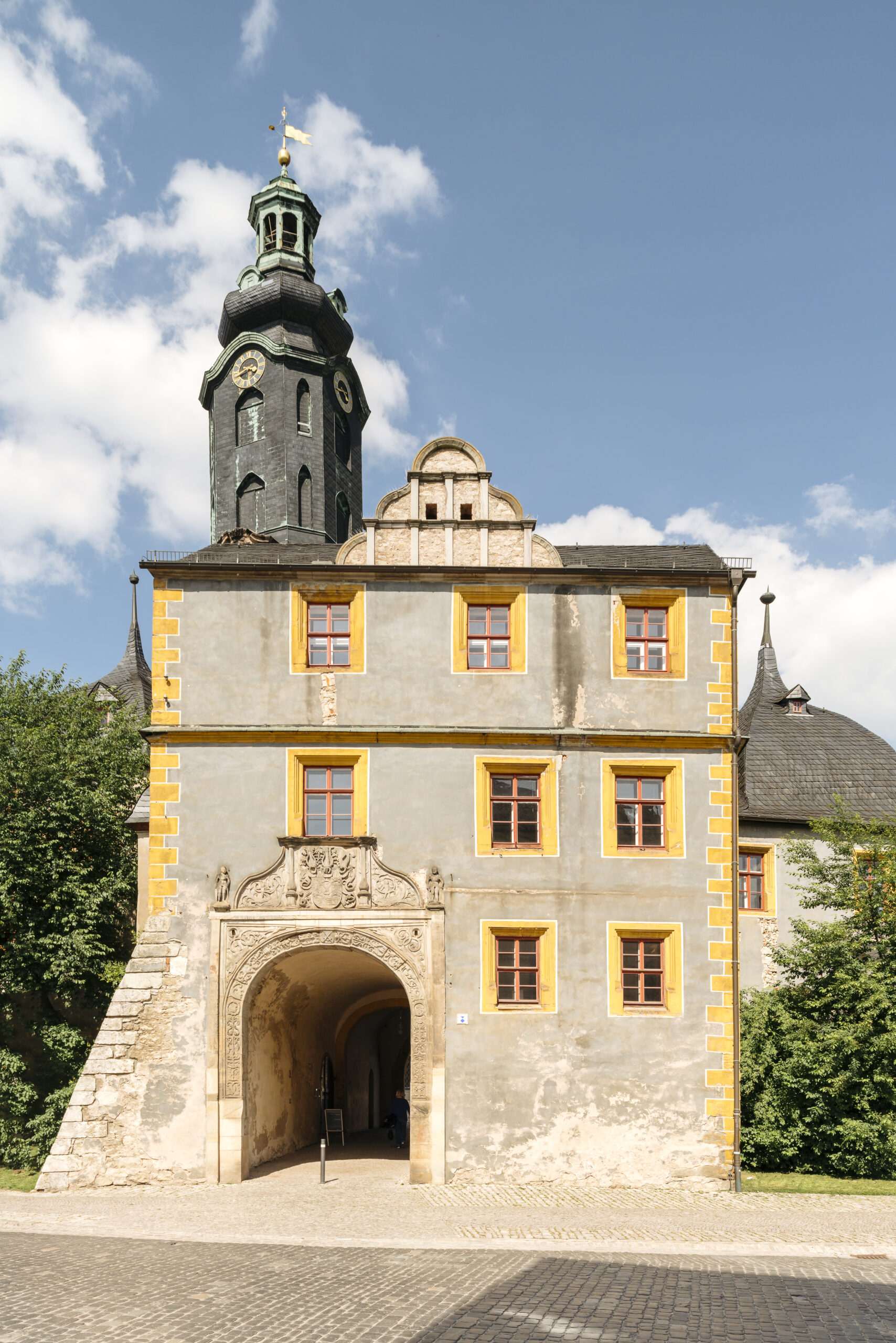
In the arch above the Bastille Gatehouse, one can still discern the former might of the Ernestines: the crossed swords were the visible emblem of their electoral dignity. During the Reformation and the Schmalkaldic War, however, the Ernestines lost this dignity – as well as their ancestral seat and much of their territory. From 1547, Duke Johann Friedrich I of Saxony therefore made Weimar his new hereditary seat and permanent residence. Though the electoral dignity had been lost, Johann Friedrich and his successors retained the Saxon electoral coat of arms above the Gatehouse, where it remains visible to visitors today.
Unshaken in Grey and Yellow
The Bastille is the oldest surviving part of the Weimar Residence Palace, its buildings remnants of Hornstein Castle, which in the mid‑16th century was transformed from a medieval fortress into a Renaissance palace. During these works, the Gatehouse acquired its distinctive ornamental gables and its representative west portal.
Today, the Bastille Ensemble stands before the large, classically influenced Residence Palace and is immediately striking for its defensive character, grey façade, and yellow‑edged windows. The ensemble is made up of the Palace Tower, the Ladies‑in‑Waiting House, and the Gatehouse itself, which once served as the principal entrance to the complex. Unlike the main palace, the Bastille emerged largely unscathed from the devastating fires of 1618 and 1774. While the Residence Palace was rebuilt and remodelled after these disasters, the Bastille remained untouched, instead being integrated into the new complex.
In 1729, the Palace Tower was heightened and crowned with an elegant ogee dome and lantern. From this period also date the tower bells, which are still rung on special occasions.
Johann Sebastian Bach – A Famous Prisoner
The Gatehouse retains traces of its early modern function as the seat of ducal justice and administration. In the courtroom, remains of sixteenth‑century wall paintings have been uncovered, probably depicting the ruler as the supreme guardian of law in the land. In the rent office, set into the wall, is one of the largest surviving strongboxes of the 16th century. In the cellar are detention rooms, some still fitted with wooden benches and iron anchor‑rings for shackles.
The most famous inmate was none other than Johann Sebastian Bach, imprisoned after accepting a post at the court of Prince Leopold of Köthen without his previous employer’s consent. Duke Wilhelm Ernst had the composer confined for four weeks in the magistrate’s chamber.
The foundation is restoring the Bastille Ensemble with the aim of making it accessible as a “speaking monument” and immersive historical experience. Exhibitions will include the earlier history of the palace up to the Classical period. Currently, the multimedia exhibition Bach in Weimar is housed here.