Address
Ehrenstein Castle Ruins
99326 Stadtilm, Ehrenstein

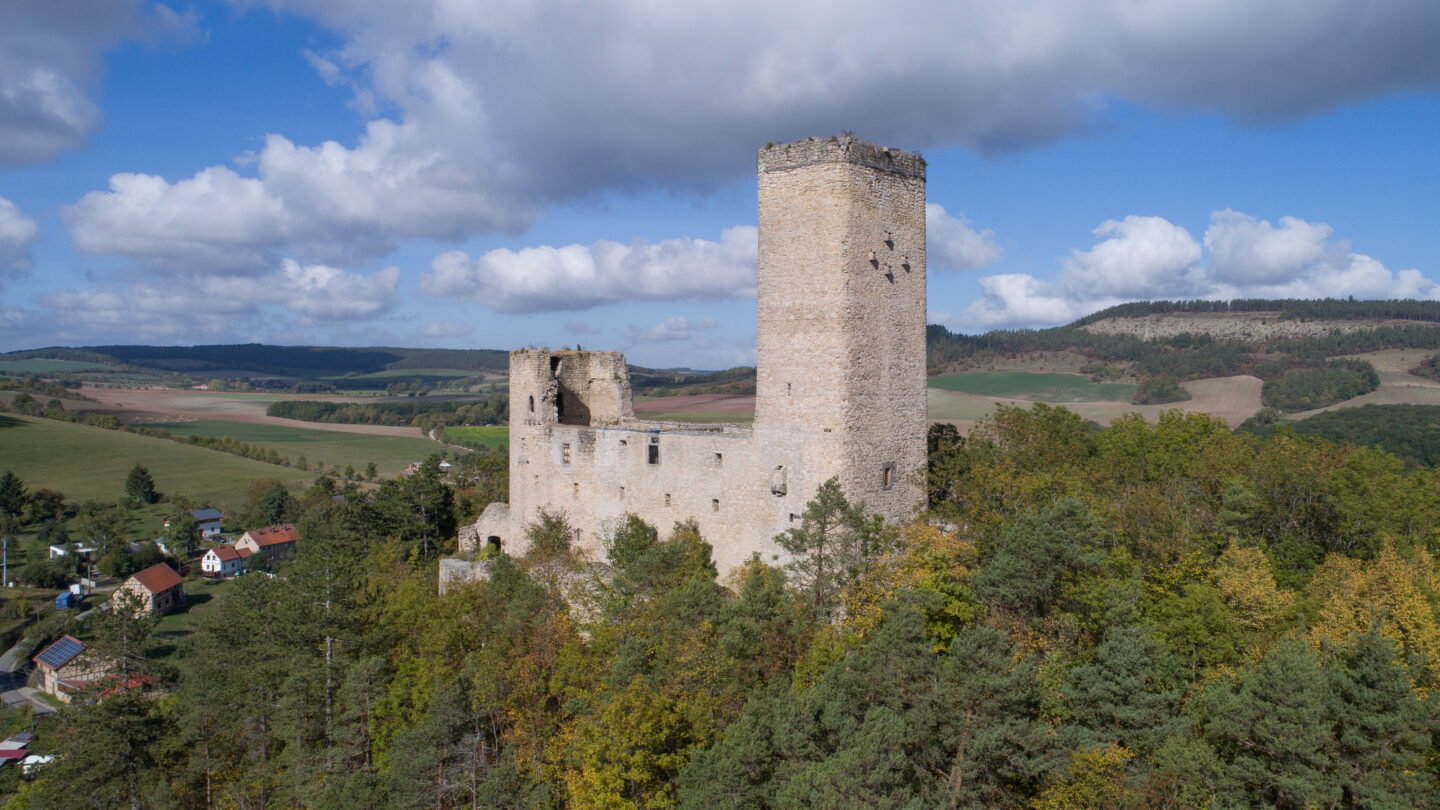
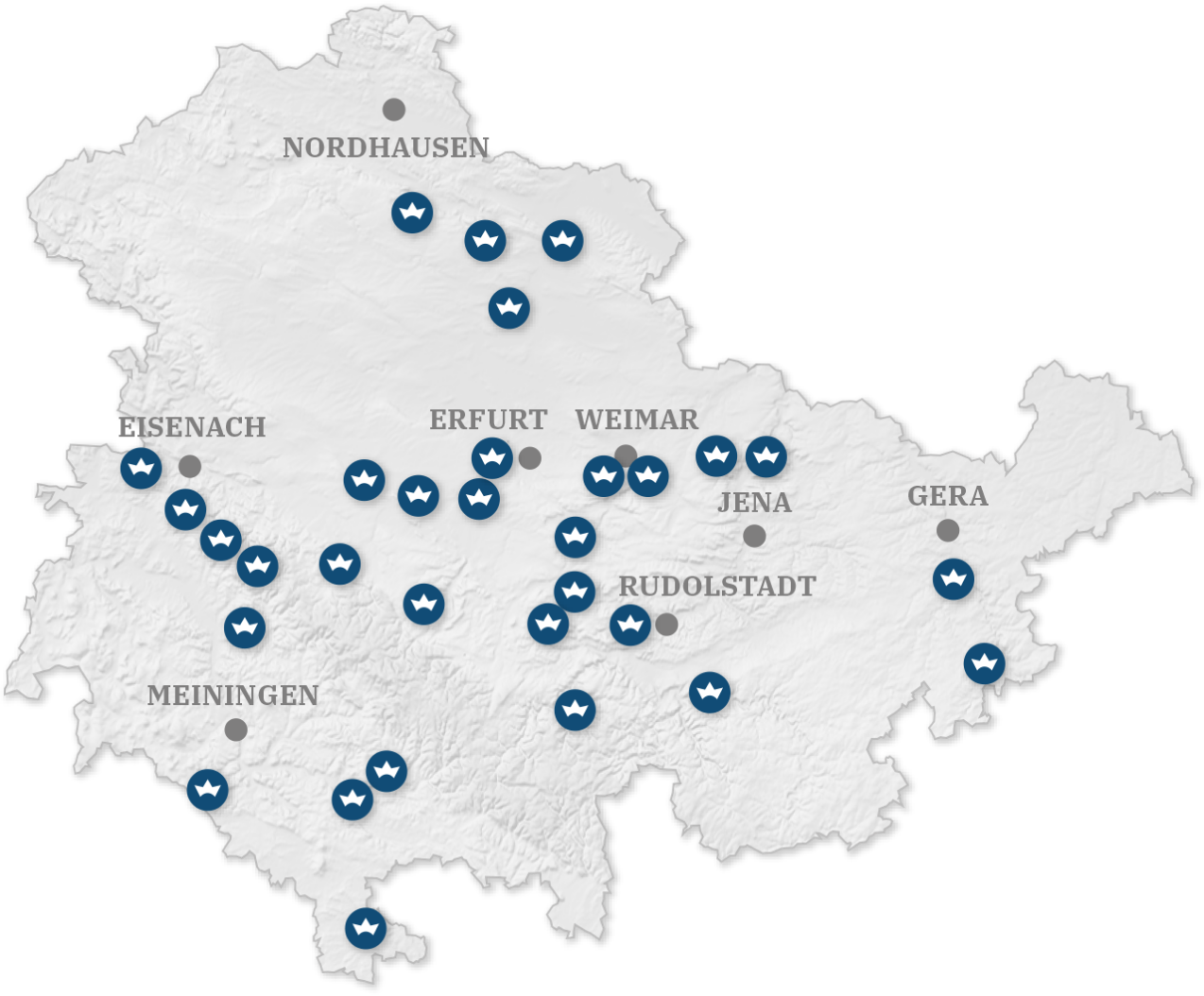
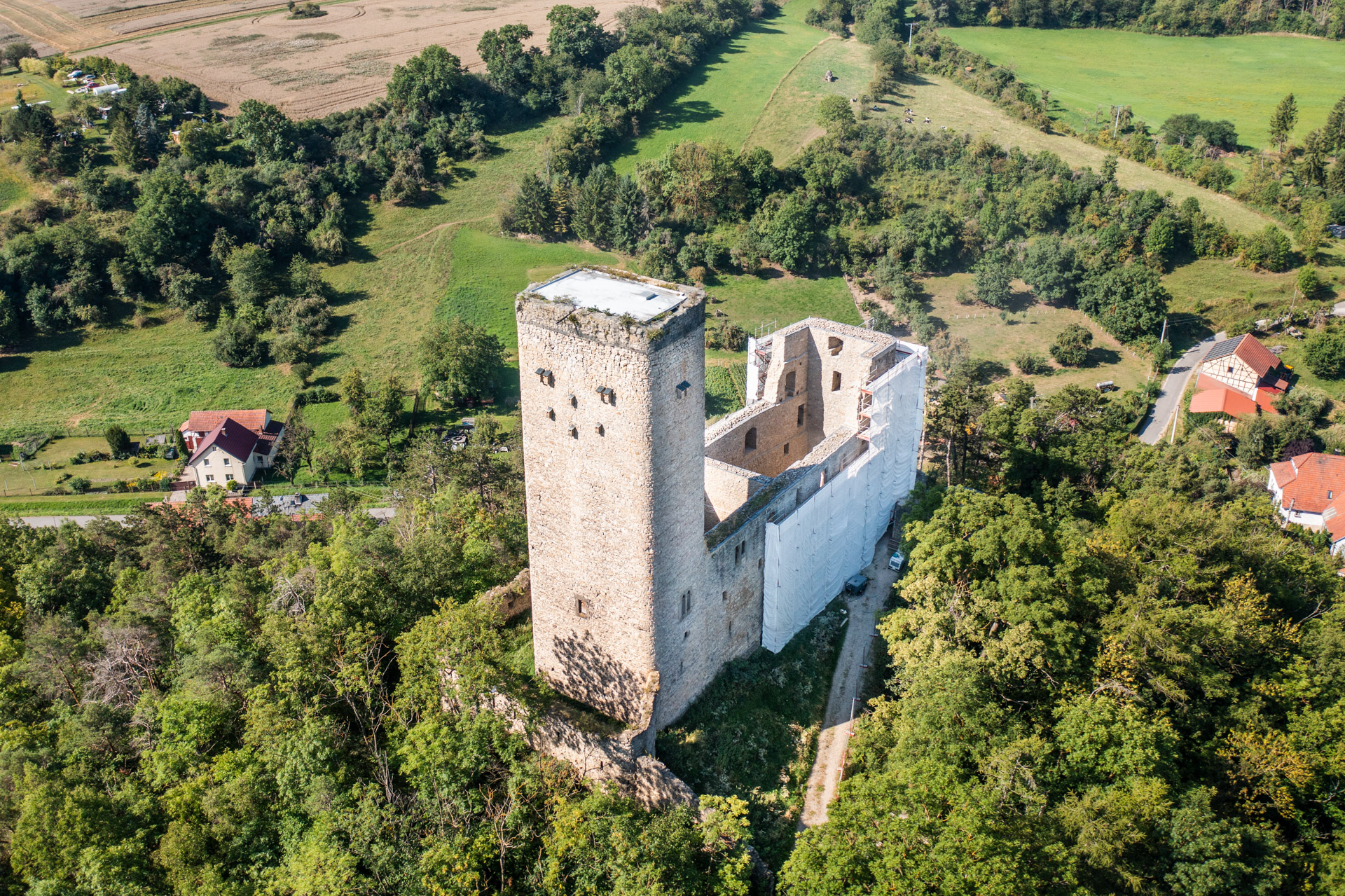
Between Weimar and Rudolstadt, above the small village of Ehrenstein, rise the impressive castle ruins of the same name. Once, the Counts of Schwarzburg resided on this hill. After changing hands several times, the castle was abandoned at the end of the 17th century. Noteworthy are the compact design of the complex and its rounded corners. From afar, the square keep, 25 metres high, can already be seen.

The ruins are temporarily only partially accessible for safety reasons. In recent years, severe weather has caused significant damage to the structure. Once extensive safety measures have been completed, the ruins can be viewed in full again.
Ehrenstein Castle Ruins
99326 Stadtilm, Ehrenstein
The oldest known reference to the castle dates from 1346, describing it as “hus zcu dem erinstein” (House to the Erinstein). At the time, it belonged to the Counts of Schwarzburg and was probably built by Günther XXI (1301–1349).
He entered the history books when, as the Wittelsbach candidate for the succession to Ludwig of Bavaria, he stood for election as King of Germany. On 30 January 1349, Günther was, in fact, elected King of Germany in the Imperial City of Frankfurt. This set him in opposition to Karl IV, whose own election had not been recognised by the Wittelsbachs. Ultimately, Karl IV prevailed, thanks to diplomatic skill, military superiority, and Günther’s fatal illness, which led to his renunciation of the crown.
Despite their rivalry, Karl ordered that Günther be buried in Frankfurt Cathedral with full royal honours.
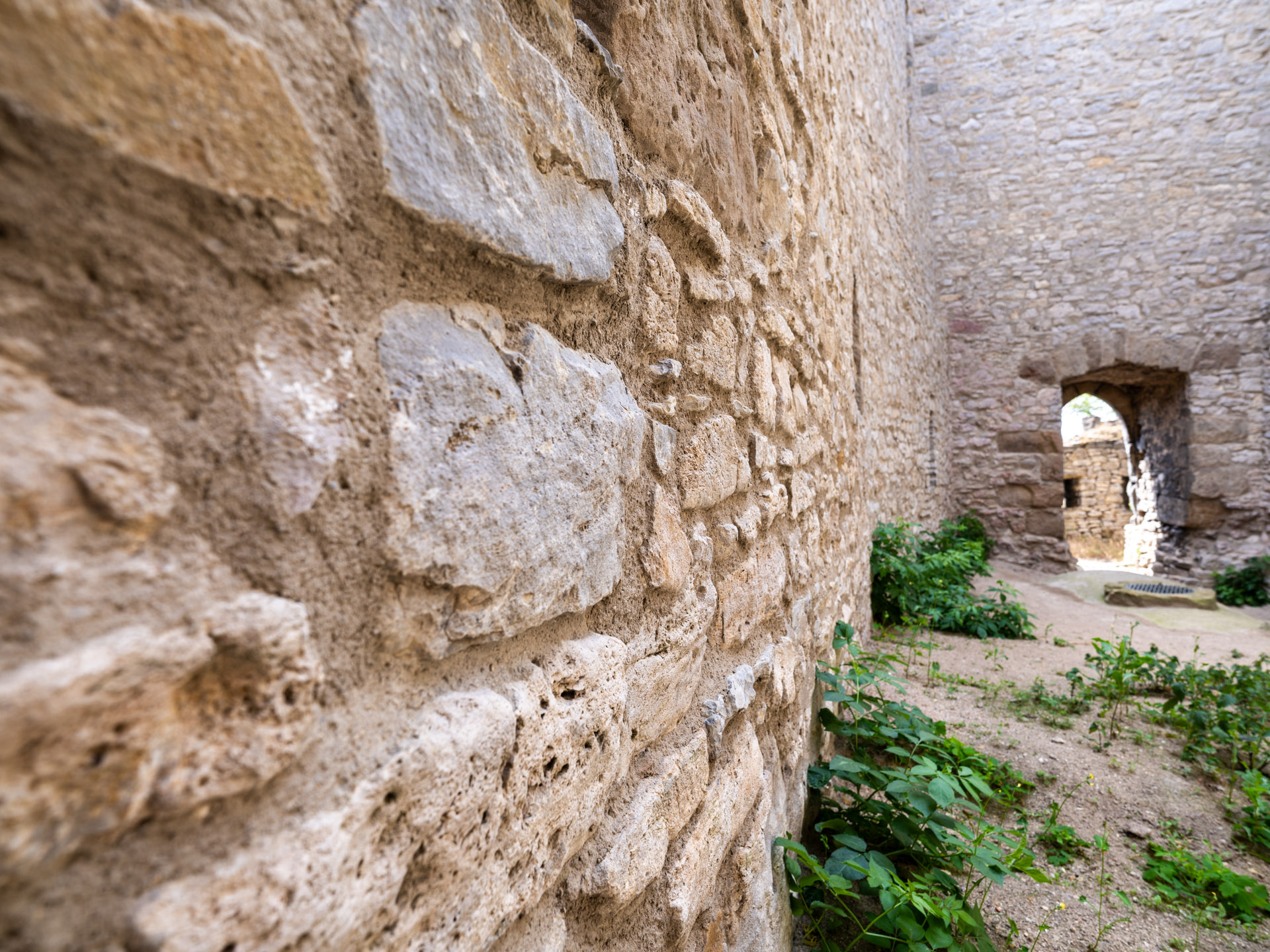
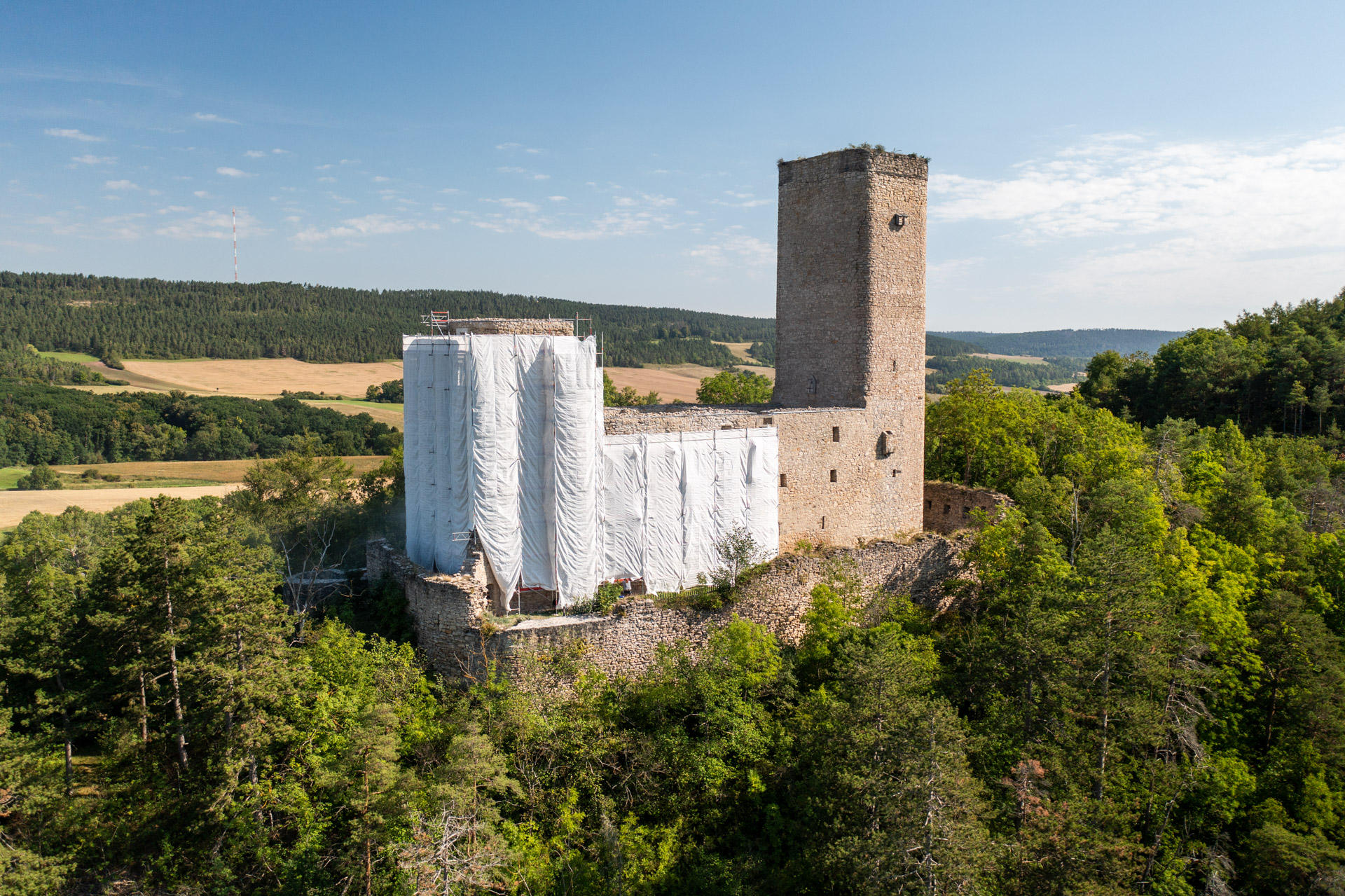
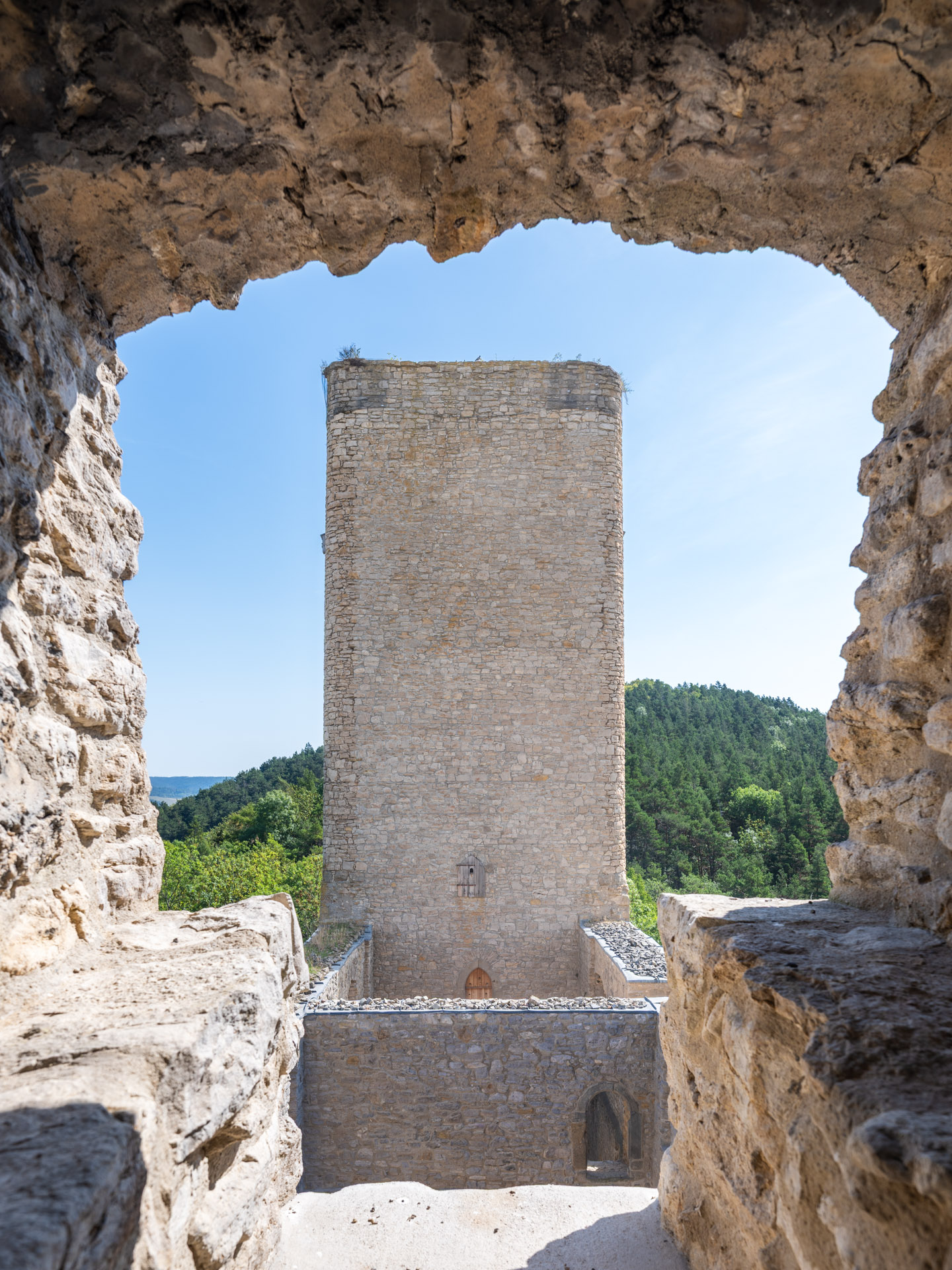
Günther is thought to have left his mark not only on Ehrenstein, but also on Liebenstein Castle in the Ilm district. Both complexes were built in the first half of the 14th century, notable for their simplicity of form and their focus on essential functional elements. Particularly striking are the compact layout and rounded corners, for which specially cut stones were used. These rounded corners were likely more a matter of appearance than fortification.
The oldest part of Ehrenstein Castle is the core section, situated at the highest point of the spur. It consists of a tower and a three-storey residential building nearly 30 metres in length. Opposite the core stands the keep. At around 25 metres high, this distinctive square tower is visible from far away. The complex is surrounded by a 12-metre-wide neck ditch, dug to protect it from attackers.
For centuries, Ehrenstein Castle remained in the possession of the Schwarzburg family, after which it passed to the Counts of Gleichen. They were unable to retain it permanently due to financial difficulties. Further changes of ownership followed until, in 1610, the complex returned to the Schwarzburgs.
By then, however, it was already in a dilapidated condition. It was used for a time as the seat of the bailiff, but decline proved inevitable. By the end of the 17th century, the site was abandoned, the roof structure removed, and Ehrenstein Castle officially became ruins.