Opening hours
Palace Museum
all year round, Tue–Sun 10 am–6 pm
Palace Park
open to the public all year round

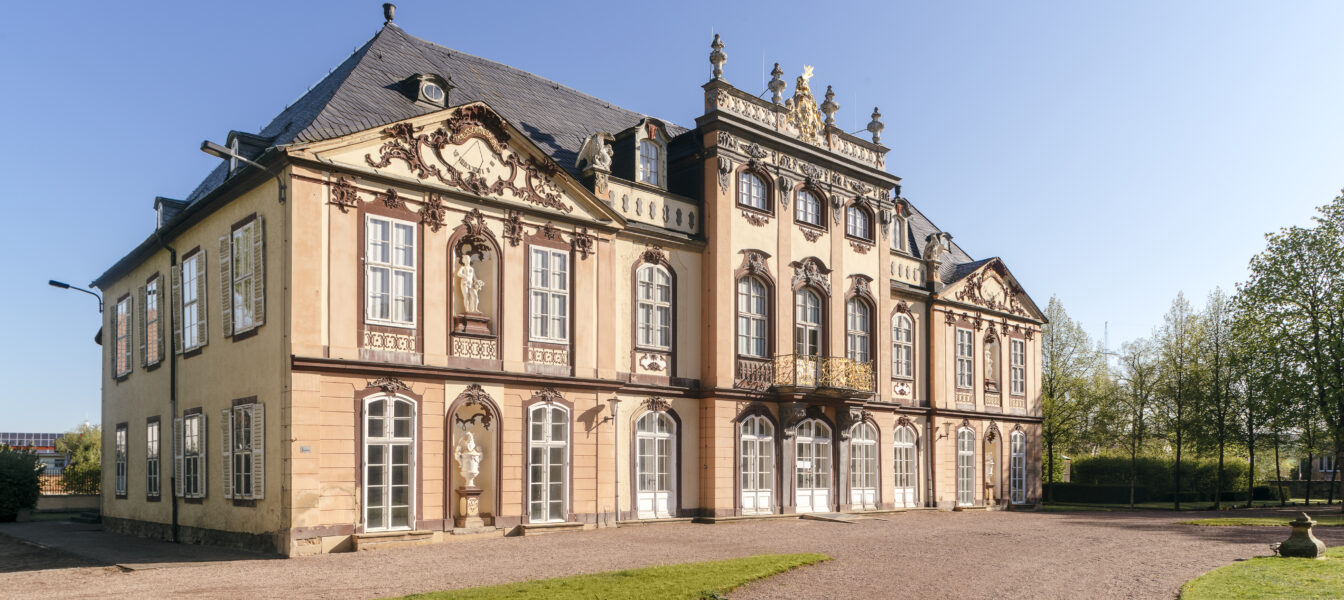
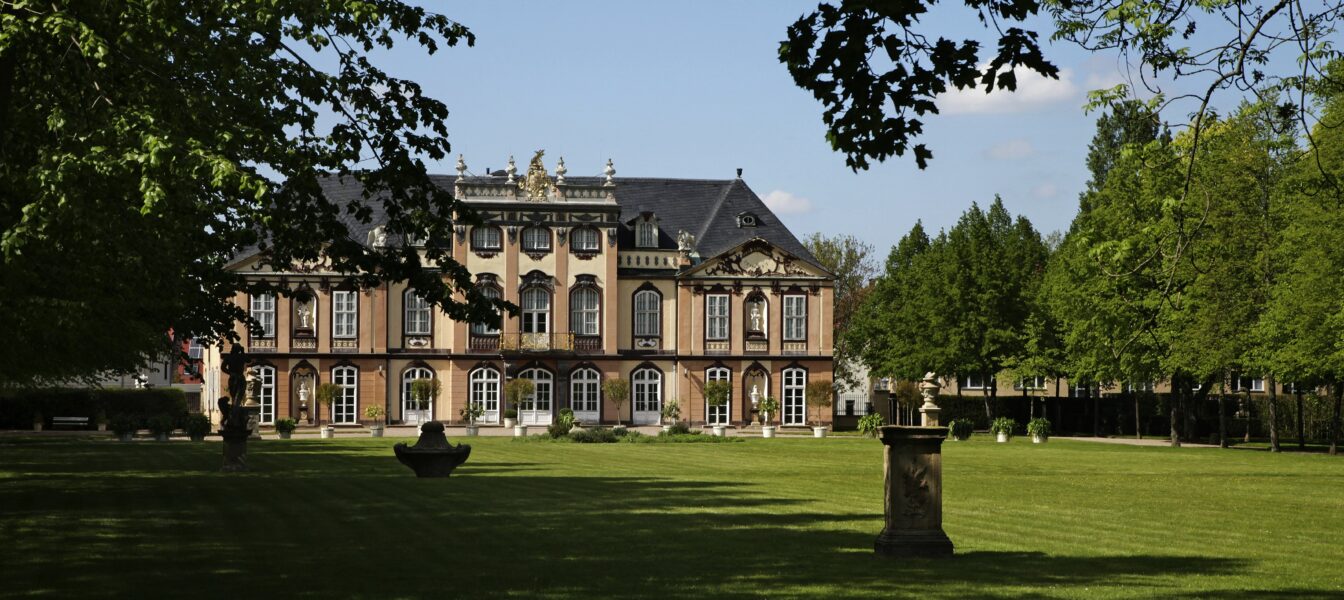
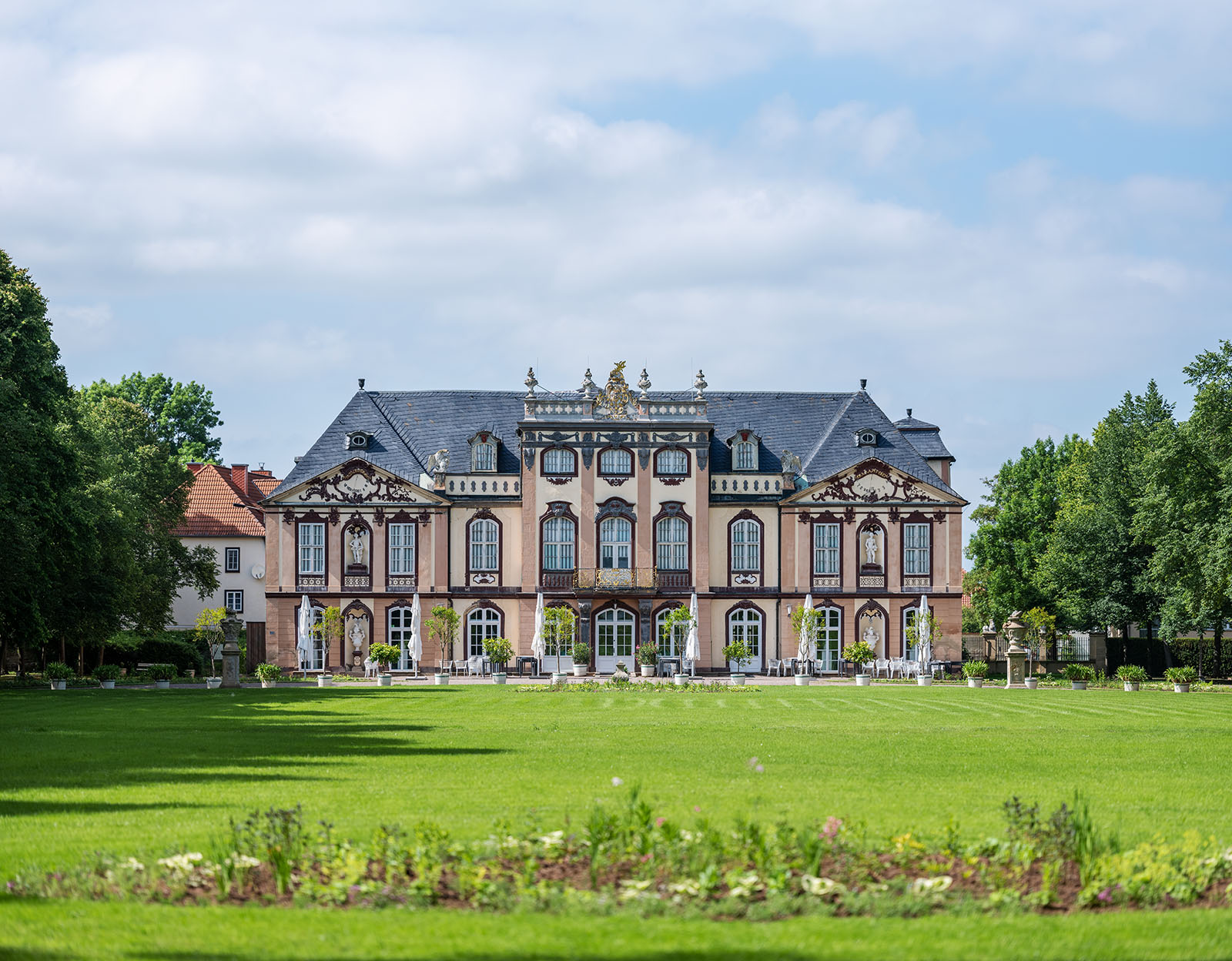
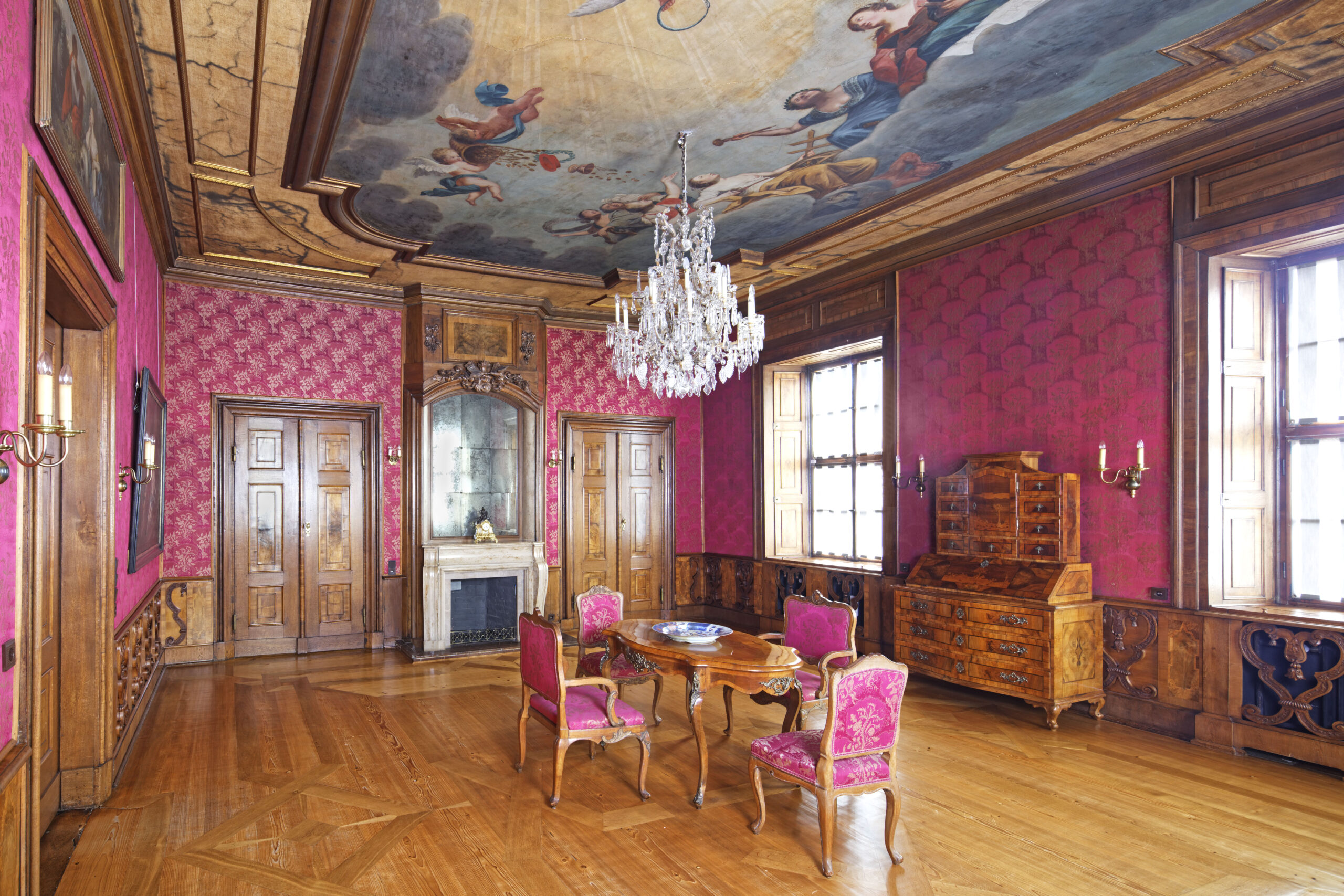
For 14 years, Count Gustav Adolf von Gotter called Molsdorf Palace his home. He had transformed a former moated palace into a picturesquely situated Baroque pleasure palace. However, the extravagant lifestyle of this diplomatic climber ultimately shattered the dream, and Gotter was compelled to sell the property. Visitors can explore the museum housed within the palace, including its historical rooms and special exhibitions, as part of a guided tour. The symmetrical Baroque garden from Gotter’s era was later converted into a landscape park. Some original sculptures remain intact.
Located about ten kilometres southwest of Erfurt, Molsdorf Palace is a distinctive gem among Thuringia’s palaces, largely due to its illustrious builder. Gustav Adolf von Gotter (1692–1762) led a remarkable career. Born in Gotha to a middle-class family, he entered the service of Duke Friedrich II of Saxe-Gotha-Altenburg, later becoming an envoy in Vienna, a court councillor, and a privy councillor. In 1724, the Emperor elevated him to nobility, naming him Baron and Imperial Count. Ten years later, Count Gotter capped his rise by purchasing Molsdorf Palace, transforming the former moated palace into a Baroque pleasure retreat. Thanks to his connections with leading European courts, he enlisted renowned artists for the project, including the Weimar court architect Gottfried Heinrich Krohne and the stucco artist Johann Baptist Pedrozzi.
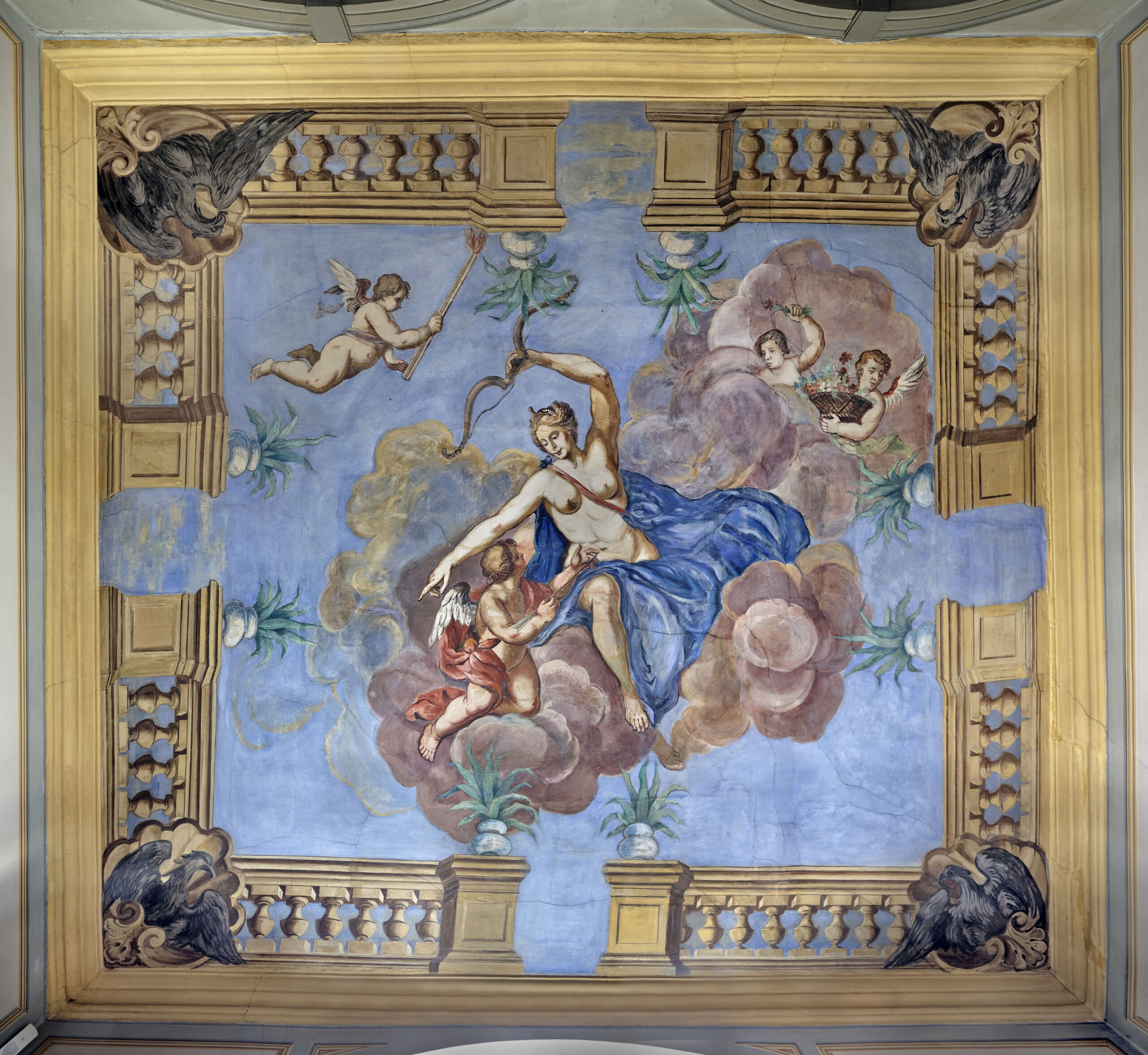
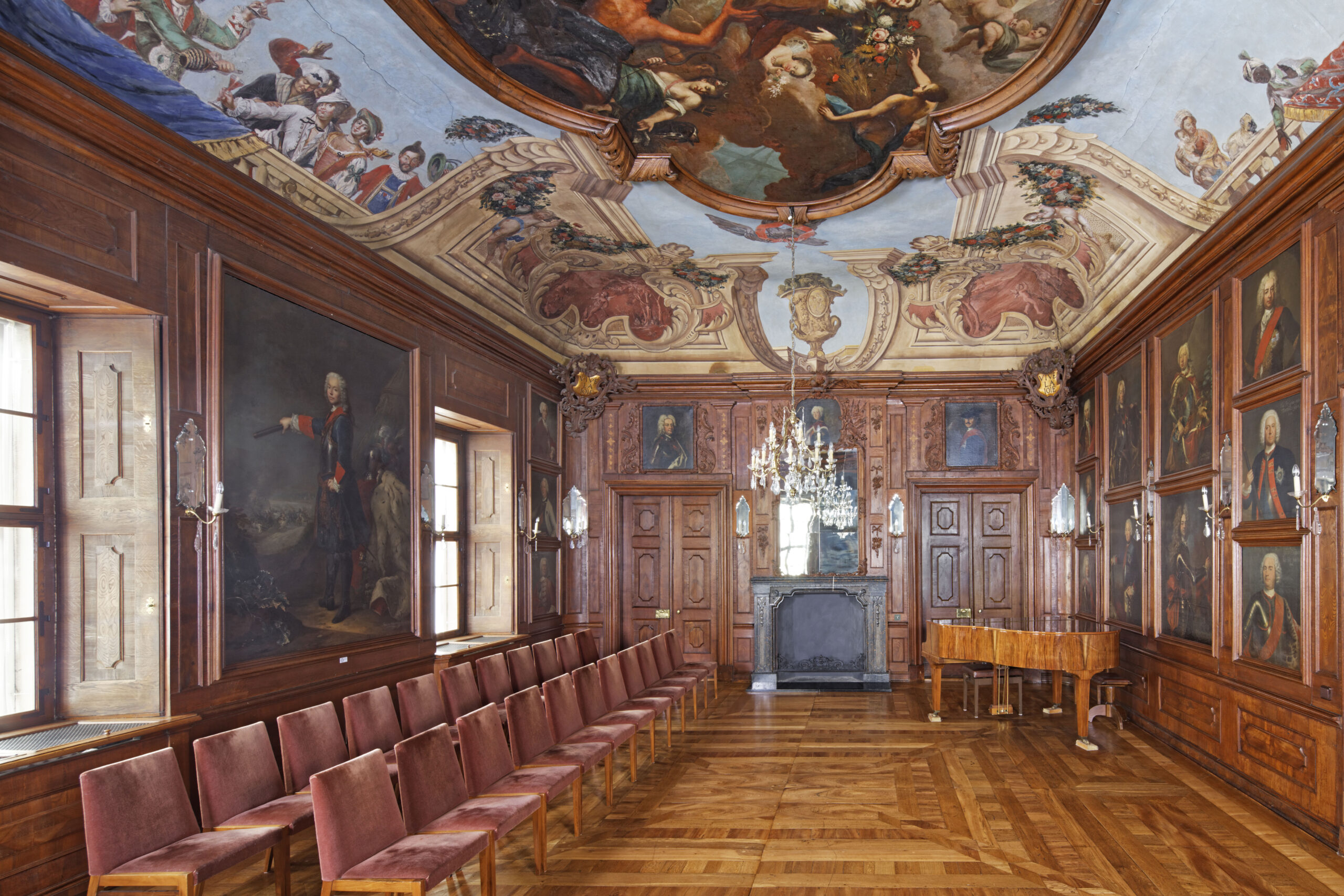
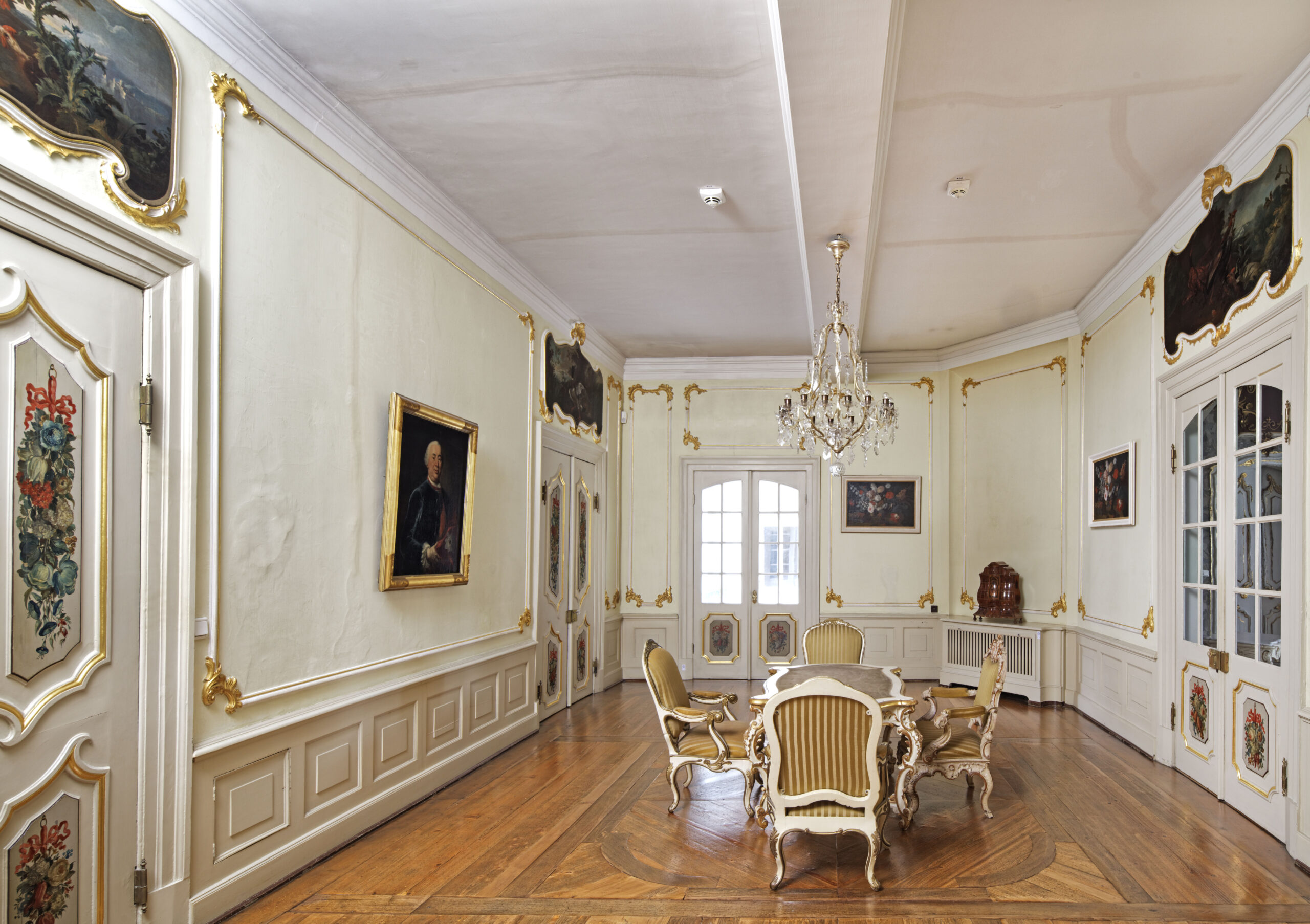
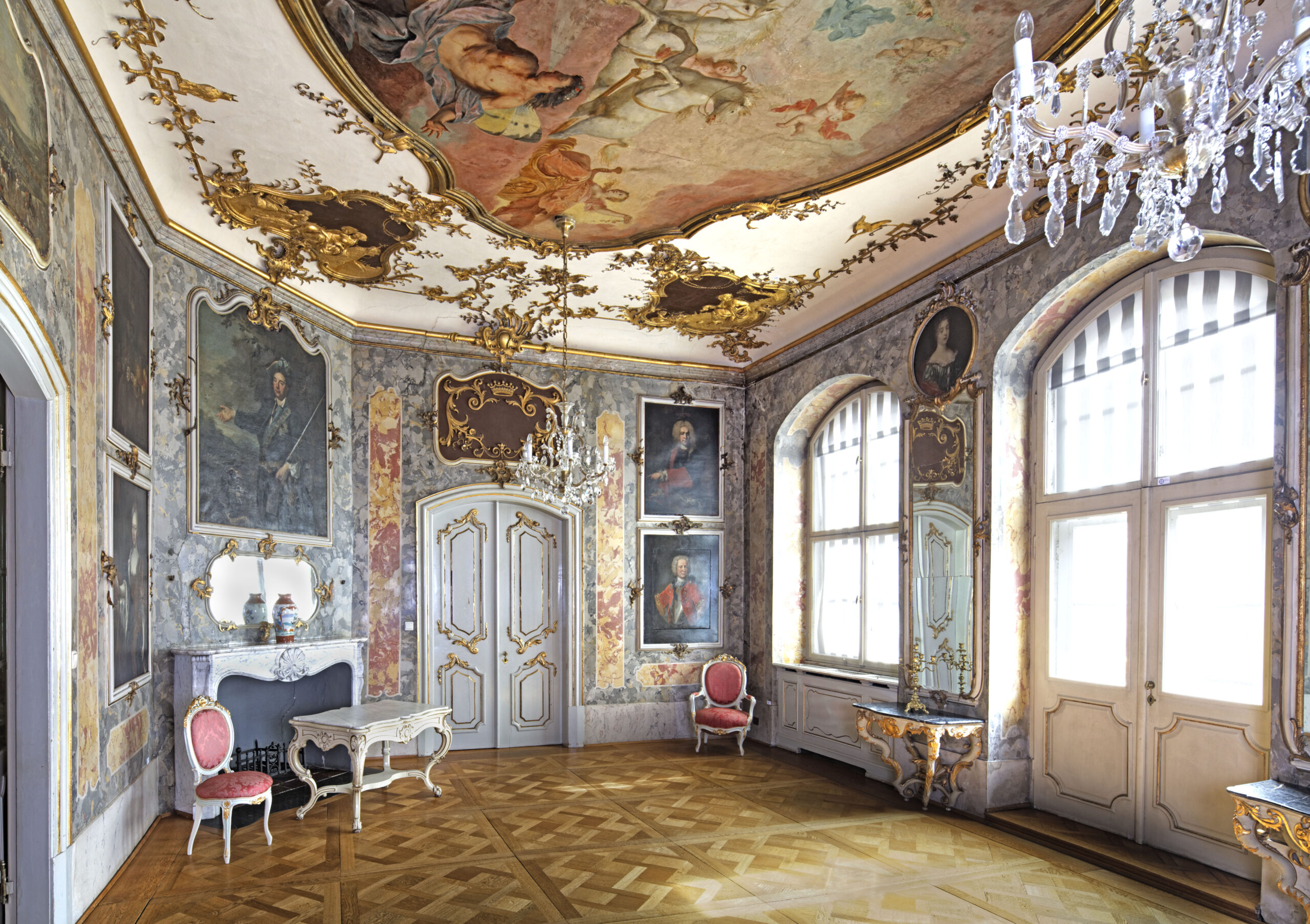
Count Gotter adorned the lavish banqueting hall on the upper floor with oak panelling and 33 paintings. These portray two of his benefactors: Friedrich der Grosse (Frederick the Great) and Prince Eugen of Savoy, among others. The hall prominently features the motto “Vive la joie” (“Long live joy”), the creed of the Hermit Order of Joyous Recluses, of which Gotter was a member. In addition to being a shrewd and highly decorated diplomat, Gotter was a bon vivant known for his opulent lifestyle. His banquets became legendary – reportedly featuring curious offerings such as bowls filled with rings, chains, and watches, from which guests could select a keepsake. The splendid marble hall served as a reception space and introduced guests to his parade apartments. A painting in the hall depicts the count in hunting attire. After 14 years, he was forced to sell the estate, which then passed into the hands of Duke Friedrich III of Saxe-Gotha-Altenburg. The palace was converted into a chamber estate, and its moat was filled in. The Palace’s elegant marble bath, dating from 1910, remains one of the few surviving private luxury baths from the early 20th century. Commissioned by Countess von Gneisenau, it was crafted using green-veined marble.
Molsdorf Palace is surrounded by an eight-hectare landscaped park. Originally laid out in strict Baroque geometry and adorned with numerous sculptures, the grounds were redesigned between 1822 and 1826 by Gotha court gardener Johann Rudolph Eyserbeck. While preserving the garden’s main axis, he introduced meandering paths, an irregularly shaped pond, and removed most of the sculptures, some of which are now displayed in the lapidarium, a collection of works in stone. In place of the original parterre beds, a large lawn with flowerbeds was created as a pleasure ground in front of the palace.