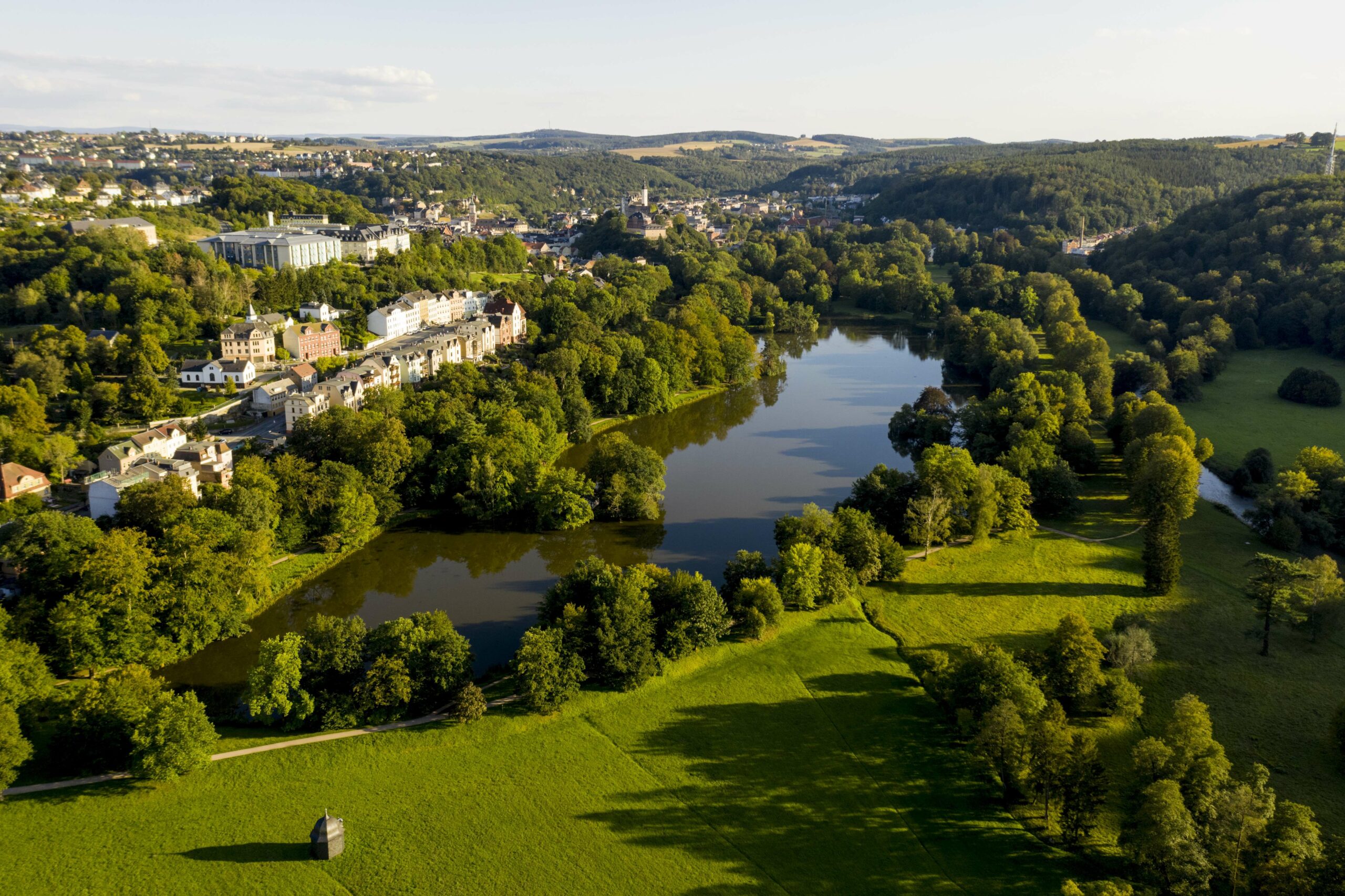
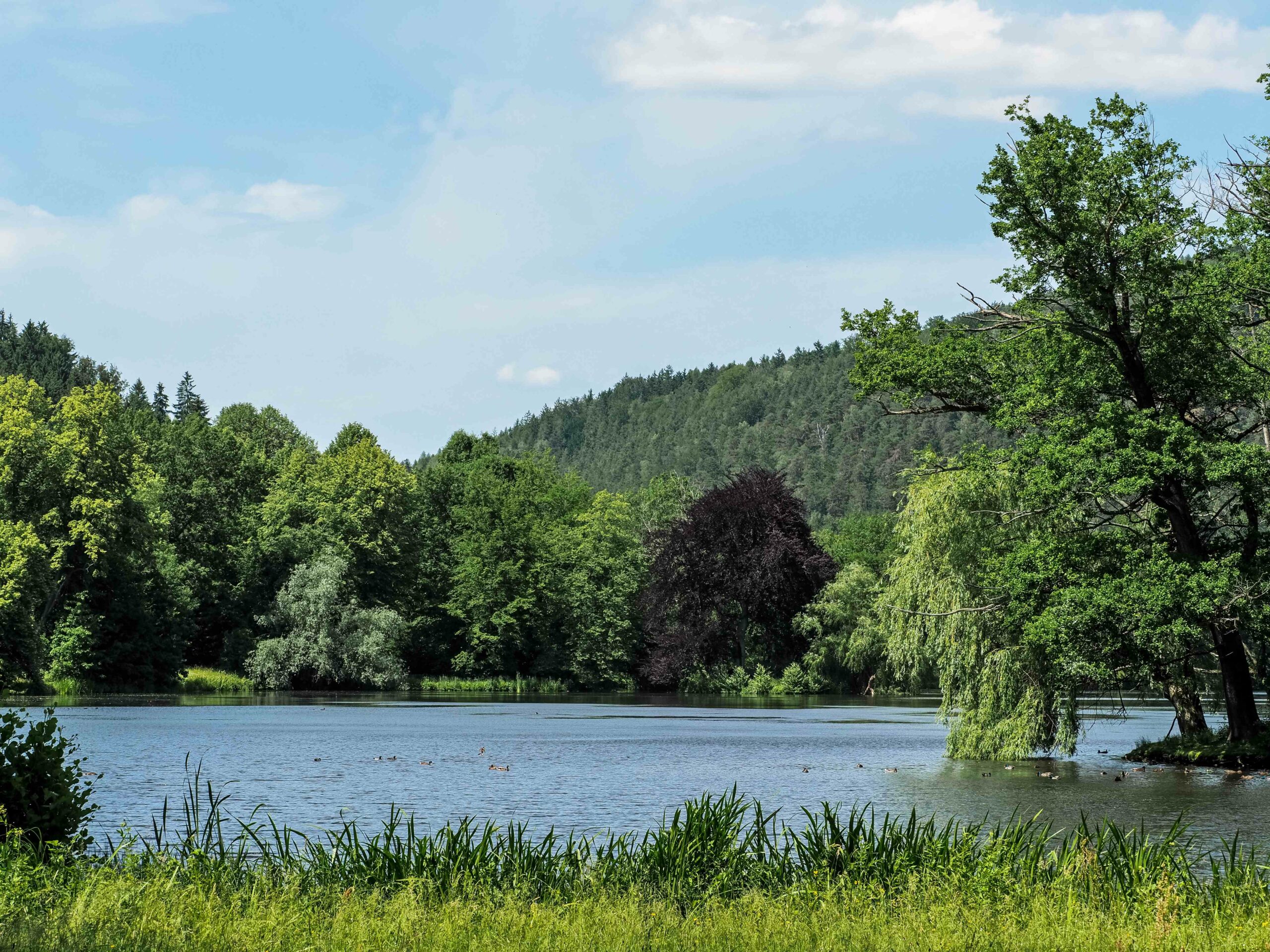
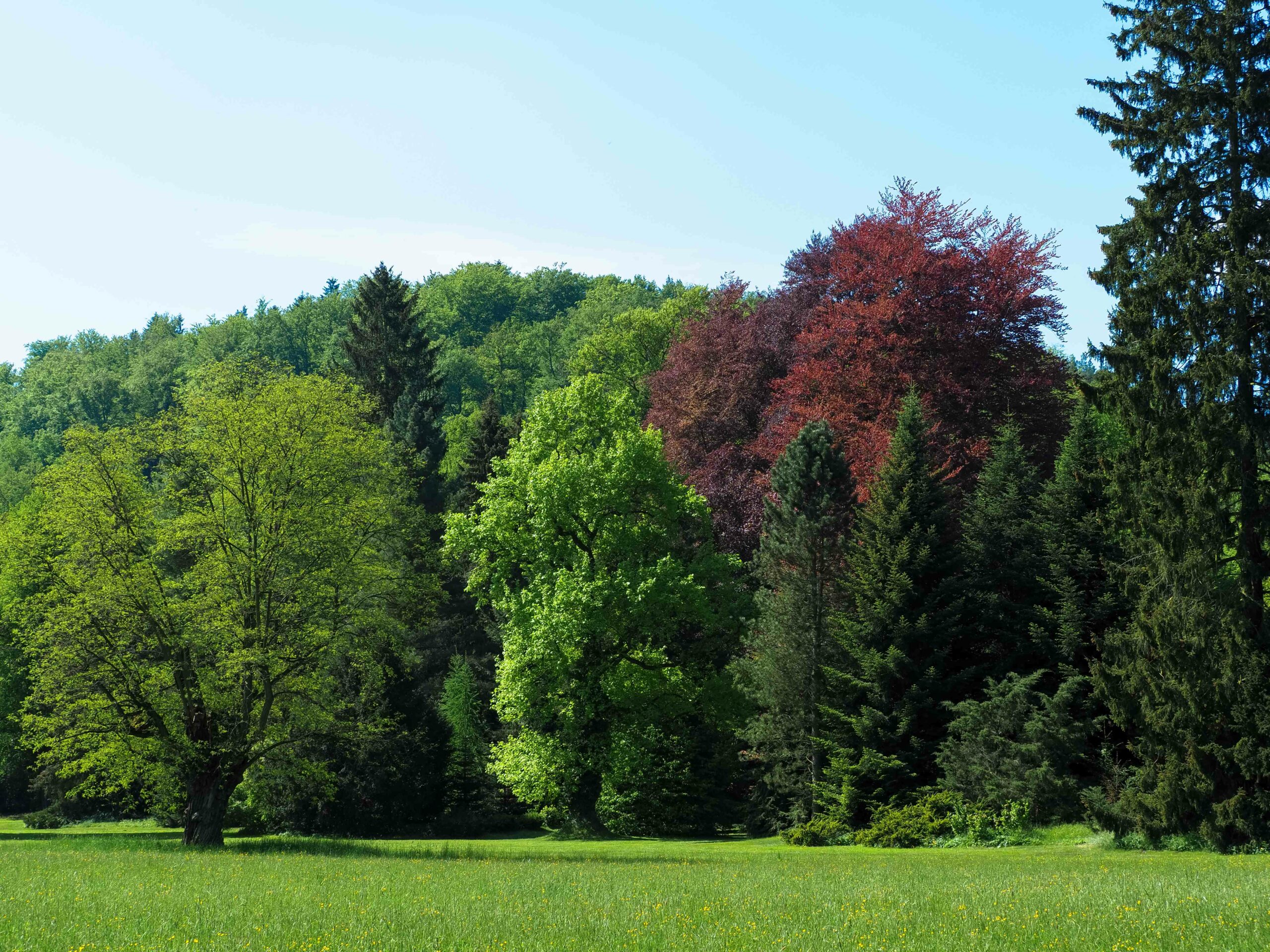
Particularly noteworthy are the flower garden and pleasure ground remodelled by Reinecken, the further developed pinetum with rare conifer trees, and the park lake with its islands and sweeping banks.
At a glance
Address
Greiz Summer Palace
with the State Collection of Books and Engravings
Greiz Princely Park
07973 Greiz
Friends of Greiz Park Association (Freundeskreis Greizer Park e.V.) Website
Opening hours
State Collection of Books and Engravings with Satiricum April–September: Tue–Sun 10 am–5 pm
October–March: Tue–Sun 10 am–4 pm
Open on Easter Monday and Whit Monday
Closed on 24, 25 and 31 December and 1 January
Park/Garden
until dusk
Example of Late-Classical Garden Art
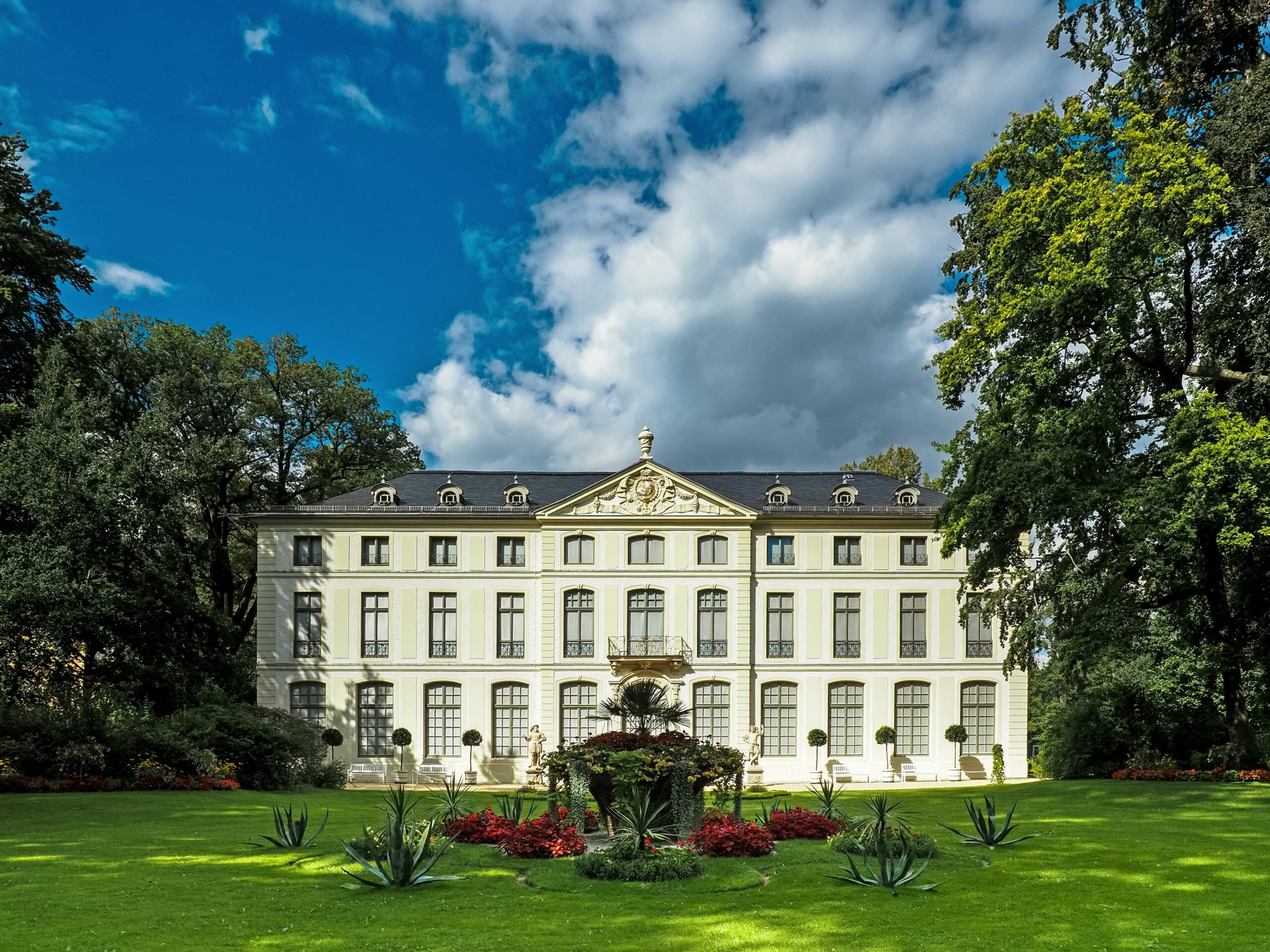
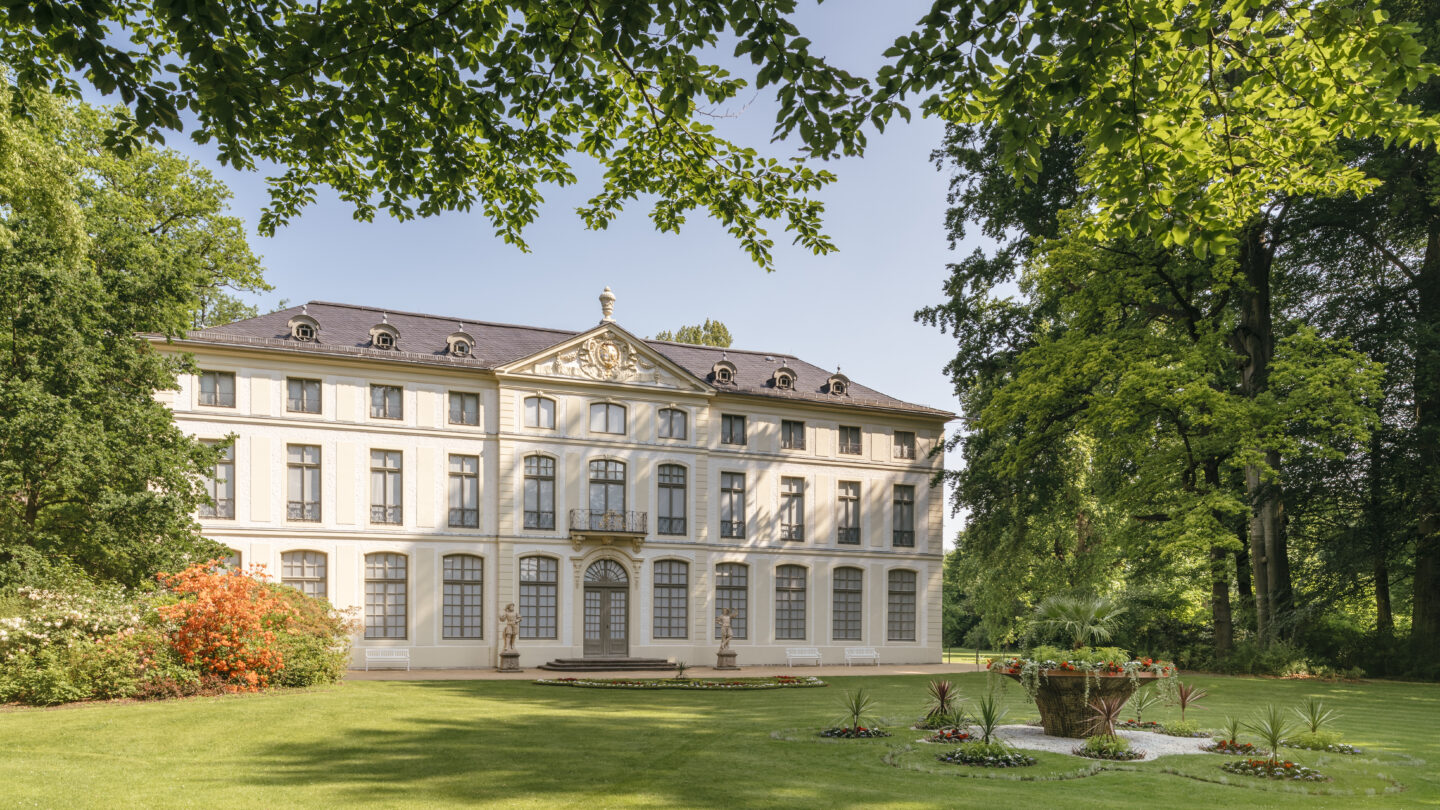
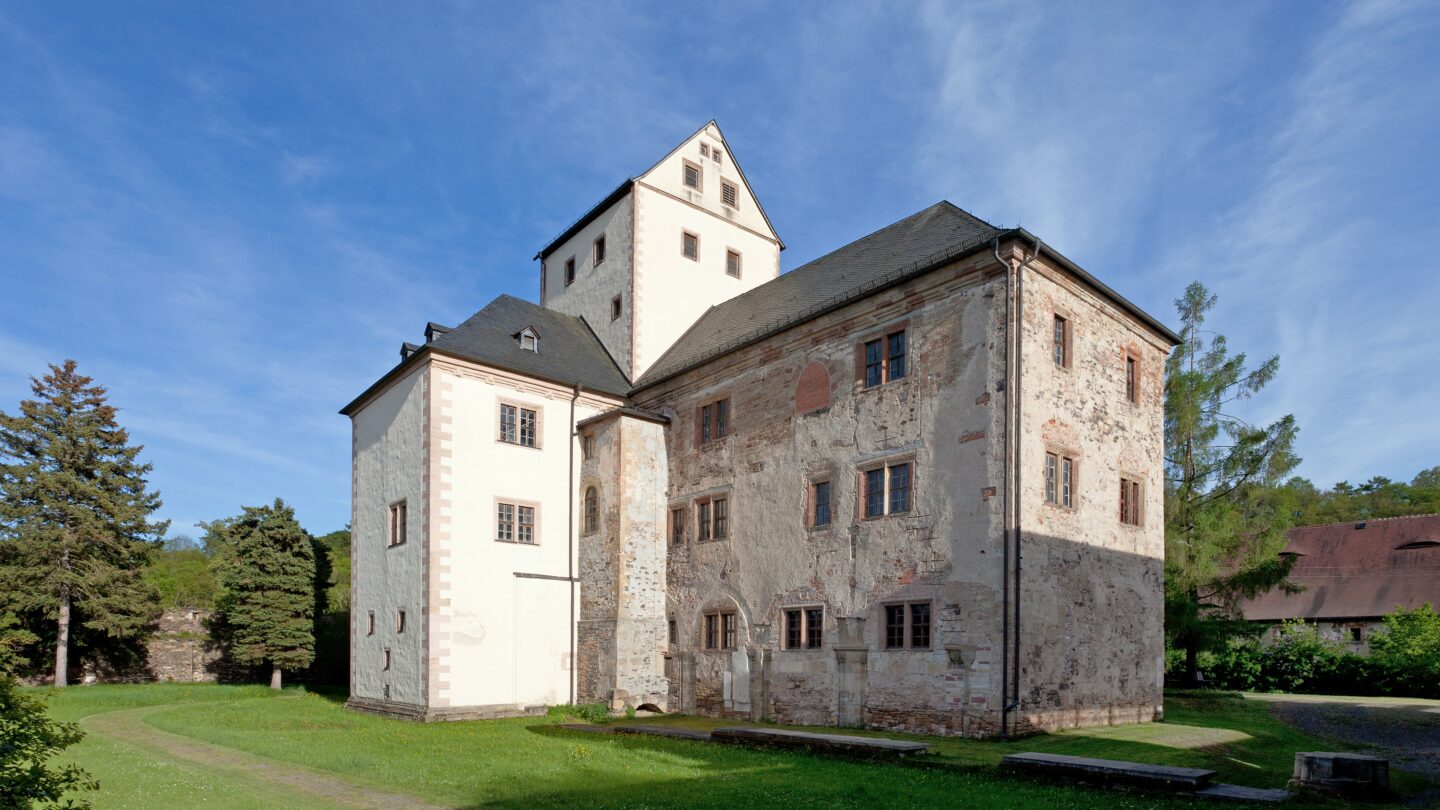
Replacing an earlier building, construction of the new Summer Palace was initiated here and completed in 1769. The elaborate interior furnishings continued until 1778, and by 1783, the redesign of the garden hall was also complete. To the north‑east of the palace, an initial landscaped garden area was created, distinguished by the unique pinetum – a collection of native as well as exotic conifers. After a flood destroyed the pleasure garden, work began on laying out a landscape park around the Summer Palace.
In the 19th century, the economically advancing town was connected to the railway. Its initially planned route would have severely disrupted the estate and thus met with the determined rejection of the Reuss family. A compromise was reached. The renegotiated route not only ensured the tranquillity desired for a retreat but also brought a considerable sum in bond money into the princely coffers. Heinrich XXII Reuss used this to commission the renowned Pückler pupil and former Weimar court gardener Carl Eduard Petzold to design what is now the roughly 45‑hectare Greiz Landscape Park. For implementation, Petzold successfully recommended the gardener Rudolph Reinecken, well known to him from Muskau.
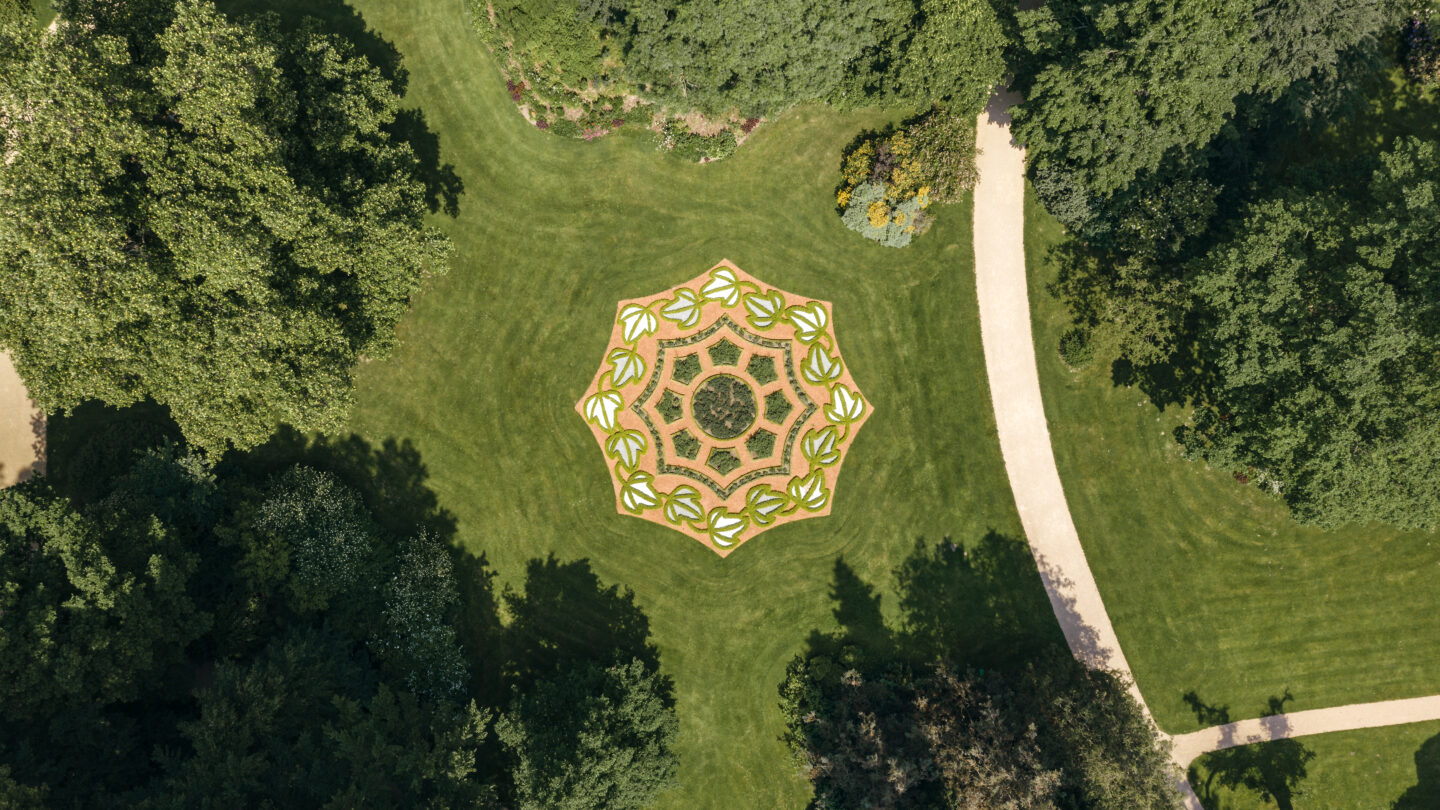
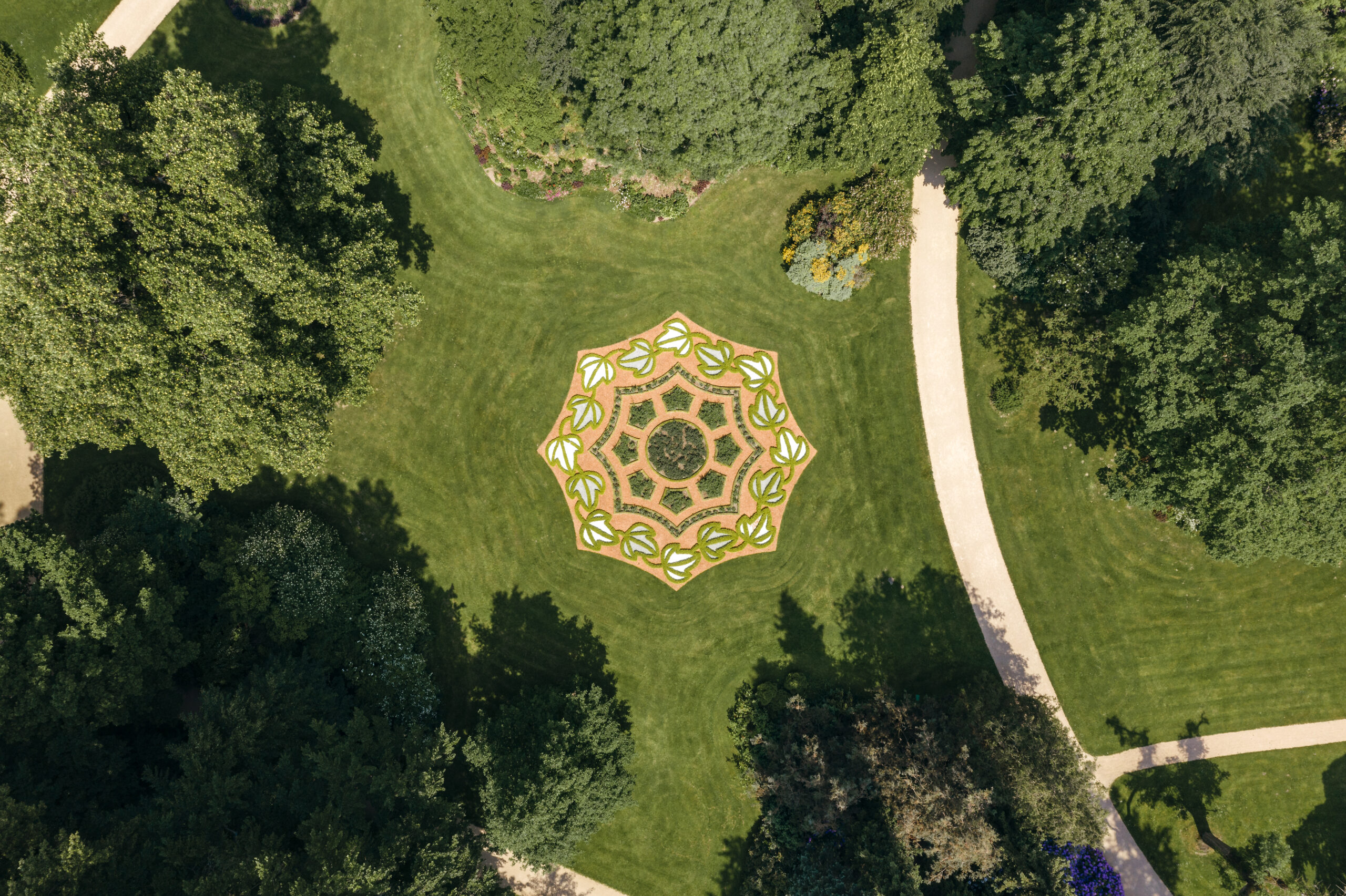
Greiz, aerial view, ornamental bed
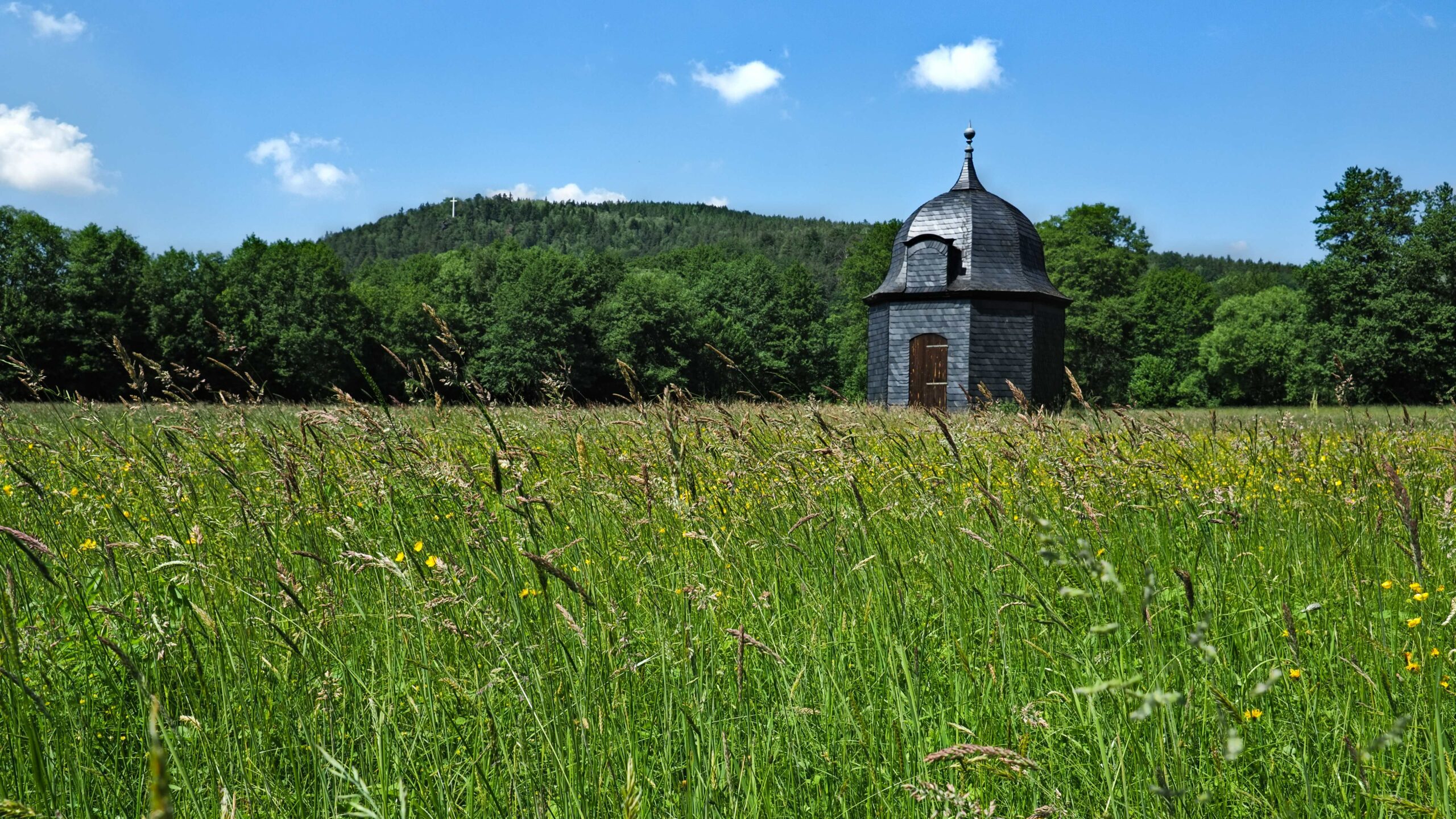
It is fair to say the entire complex bears Reinecken’s imprint – without overshadowing Petzold’s fundamental concepts. Over his five decades of work in Greiz, Reinecken questioned some of Petzold’s designs, allowed himself certain deviations, and even added entirely new features. Highlights of the park, esteemed as an unparalleled example of late‑classical landscape garden art in Thuringia, include – alongside the aforementioned pinetum – the roughly 8‑hectare Binsen Pond at the park’s centre, the Lime Avenue, and the Rotunda. The “White Cross”, erected after the early death of Princess Sophie, wife of Heinrich XX Reuss of the elder line, closes a magnificent vista, as does the open‑sided Gasparini Temple commemorating a princely wedding. The pleasure ground and the flower garden at the Summer Palace are richly planted in the style of the late 19th century, with ornate beds and potted plants.
Landscape Park on the Banks of the River Elster
The Princely Greiz Park is almost entirely level; it occupies the broad river meadow at the foot of the crag crowned by the Upper Palace of Greiz, ancestral seat of the elder line of the House of Reuss. In the 18th century, a summer residence, the Summer Palace, was built here close to the River Elster. In front of it spread a formal Baroque garden with orangery tubs, until a flood in 1799. The destruction of the garden led to a complete new beginning.
The new landscape park incorporated the extensive adjoining water meadows. A former fishpond was reshaped into an irregular park lake, while deliberate plantings and winding paths created varied vistas. In 1873, the internationally sought‑after garden artist Carl Eduard Petzold, a pupil of Pückler, produced a design plan with significant revisions to realise the landscape park concept even more fully.
Characteristic is the contrast between the elaborately maintained areas around the palace and the more natural meadows with picturesque groups of trees further away.
For decades, court gardener Rudolph Reinecken oversaw the implementation. The finely detailed flower garden and the ornamental beds in the pleasure ground are his creations. Spaciousness plays an important role in large 19th‑century parks, which merge seamlessly into the surrounding landscape.