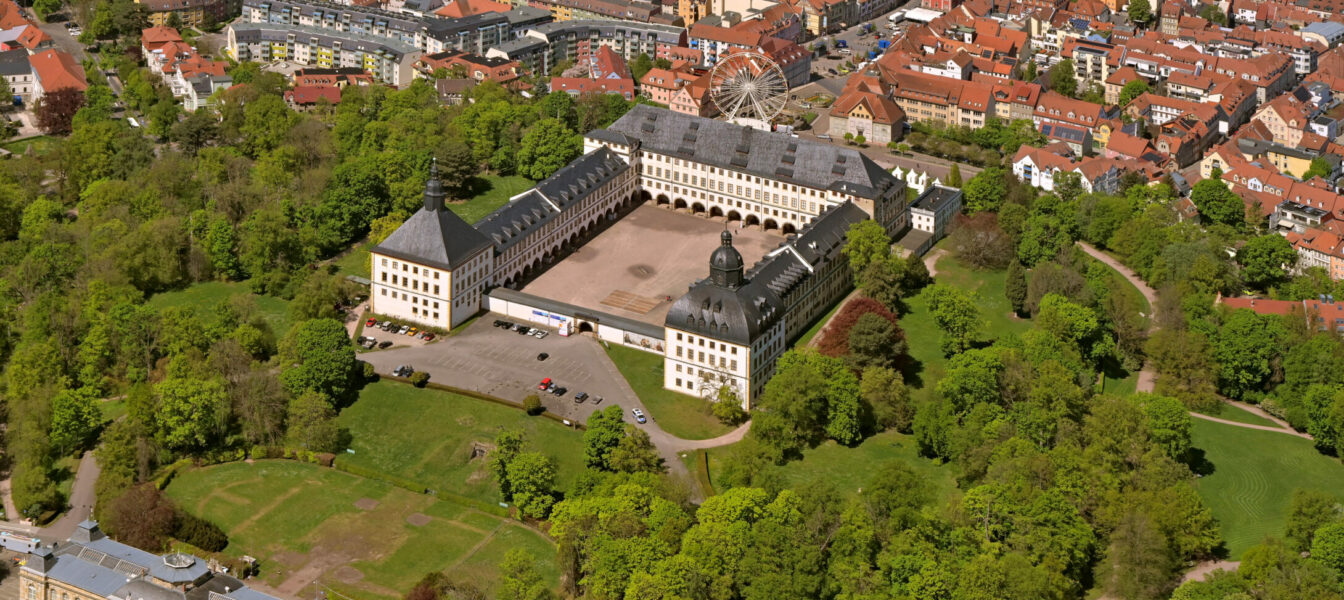
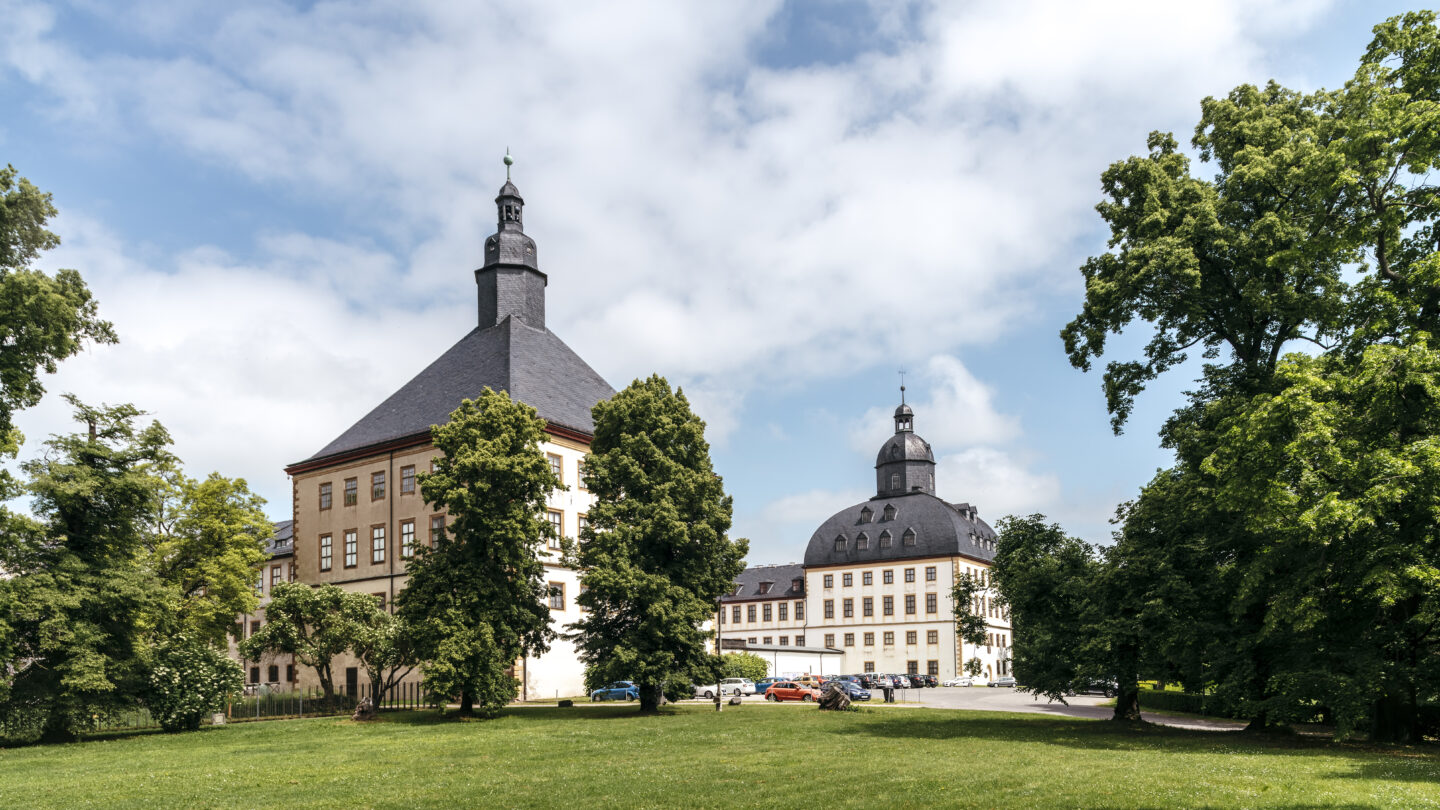
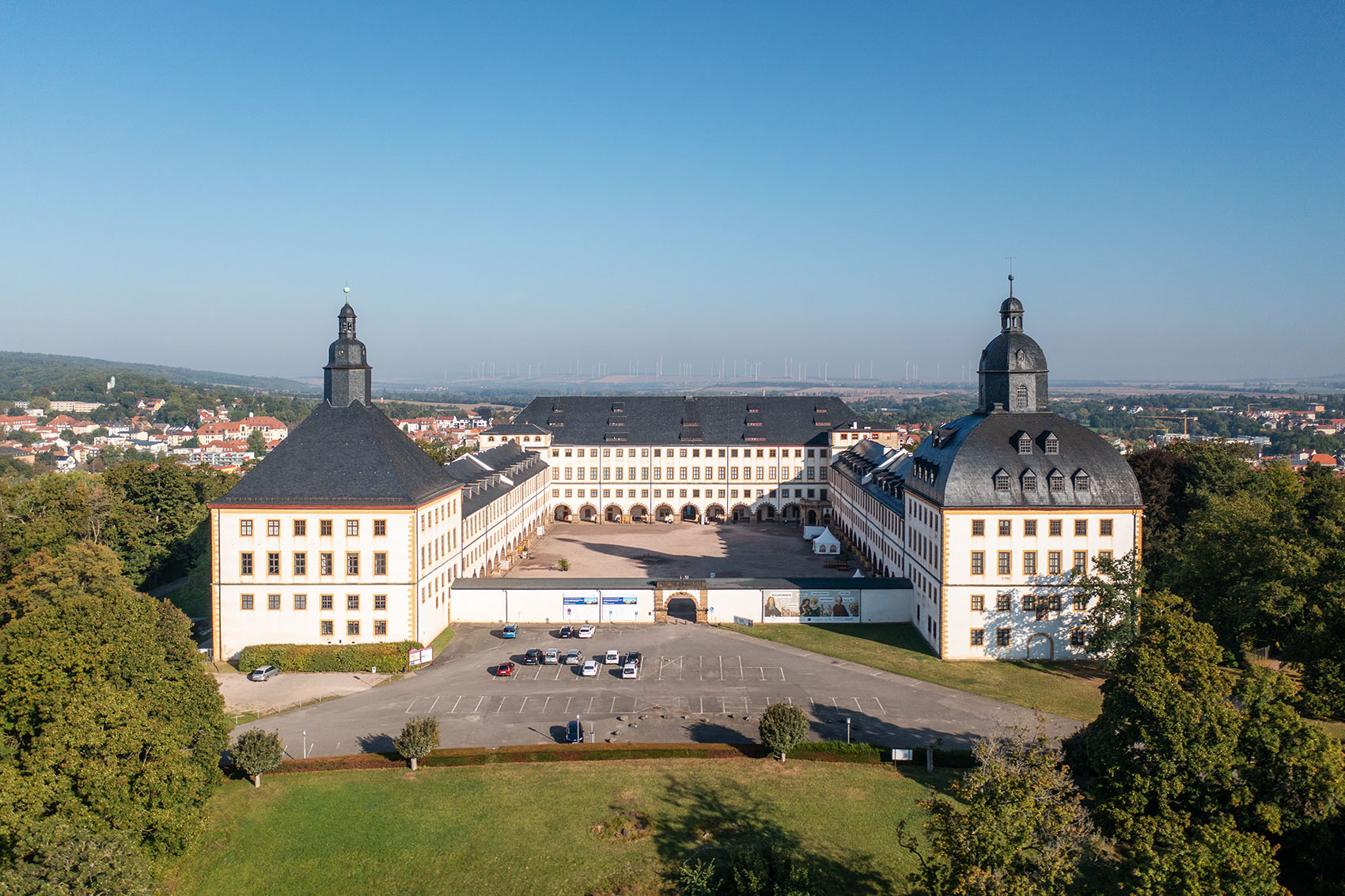
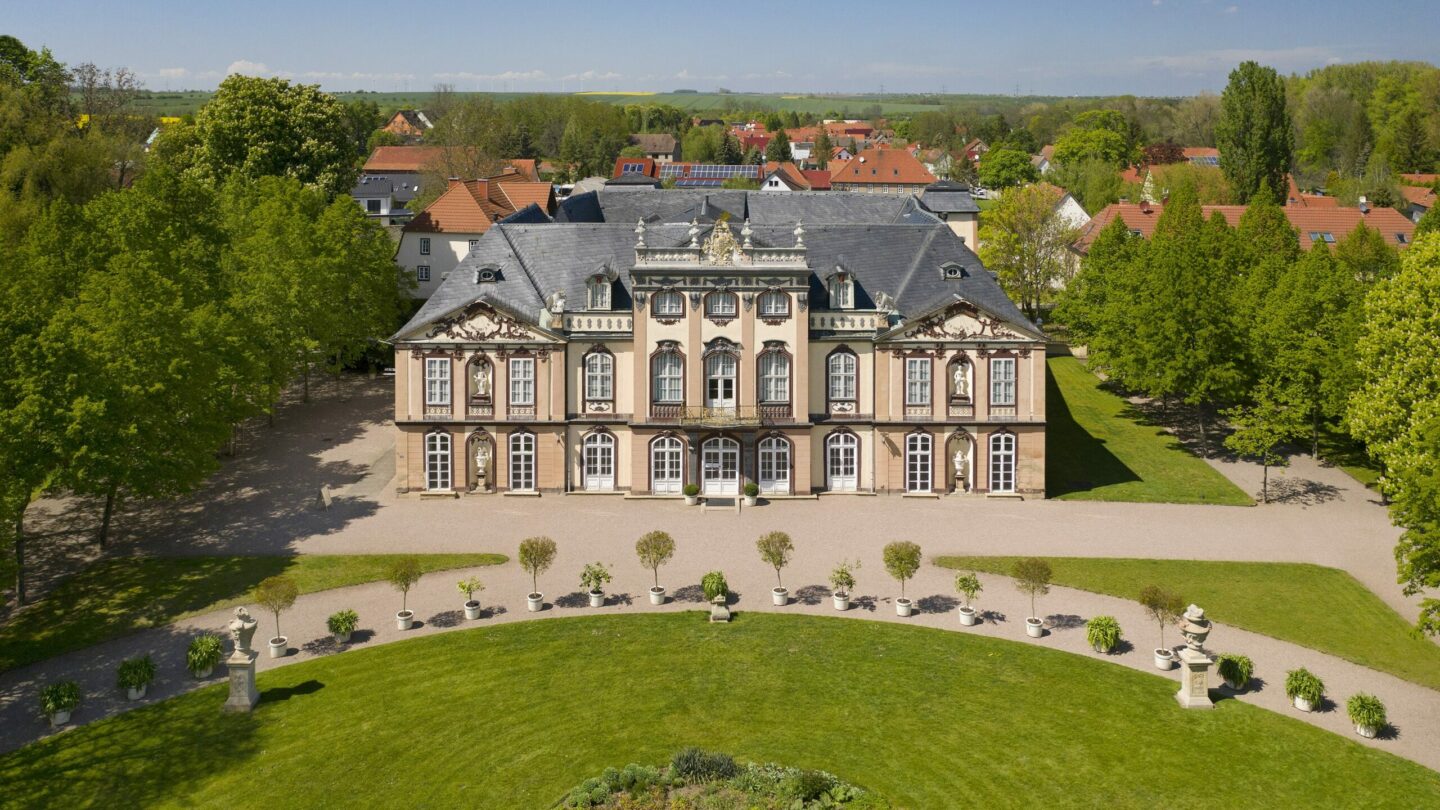
Friedenstein Palace is one of Thuringia’s most significant palace complexes in terms of art and cultural history. Following the founding of the Duchy of Saxe-Gotha in 1640, it was built between 1643 and 1656 under Duke Ernst I of Saxe-Gotha, known as ‘the Pious’. The simple three-winged complex of Friedenstein Palace, visible from afar, has been repeatedly remodelled and refurnished. It houses works of interior art ranging from the Baroque to Historicism.
A sprawling park extends to the east, south and west of the palace. The two main areas of the grounds, the Orangery Garden and the English Garden, date back to the 18th century.
The palace is home to the Friedenstein Palace Foundation in Gotha, which comprises the Palace Museum, the Natural History Museum, the Historical Museum and the Ekhof Theatre, as well as the Gotha Research Library.
The park and gardens surrounding Friedenstein Palace are a testament to various epochs of garden art, unique in this complexity within Thuringia. The Ducal Park in Gotha contains two particular highlights, a late Baroque garden and one of the earliest landscape parks in the English style.
Exhibition at the Orangery in 2026
Closed from 26 to 28 June 2026 due to the heat.
The English Garden
The gardens belonging to the palace attained a new quality during the reign of Prince Ernst II, who assumed office in 1772. Only 20 years after the creation of the cost-intensive formal garden still entirely shaped by the Baroque understanding of garden design, a new era had already begun in Gotha. The English Garden to the south of the Schlossberg (Palace Mountain) is considered, alongside Wörlitz, to be among the earliest landscape parks on the European mainland. This remarkable achievement was thanks to the progressive outlook of Duke Ernst II of Saxe‑Gotha‑Altenburg, who brought to Gotha the garden artist John Haverfield from Kew Gardens, directly from the mother country of the landscape garden style. According to his plans, a park was created with gently curving paths, varied, lively landscape scenes, and a lake that can never be entirely viewed at once.
In the 19th century, the entire palace complex was extensively laid out, with the individual gardens merging to form the Ducal Park. In 1864, on the site of the former kitchen garden, the Natural History Museum was erected. The areas to the north and south in front of the approaches to the palace, created only in the 20th century, have been remodelled several times.
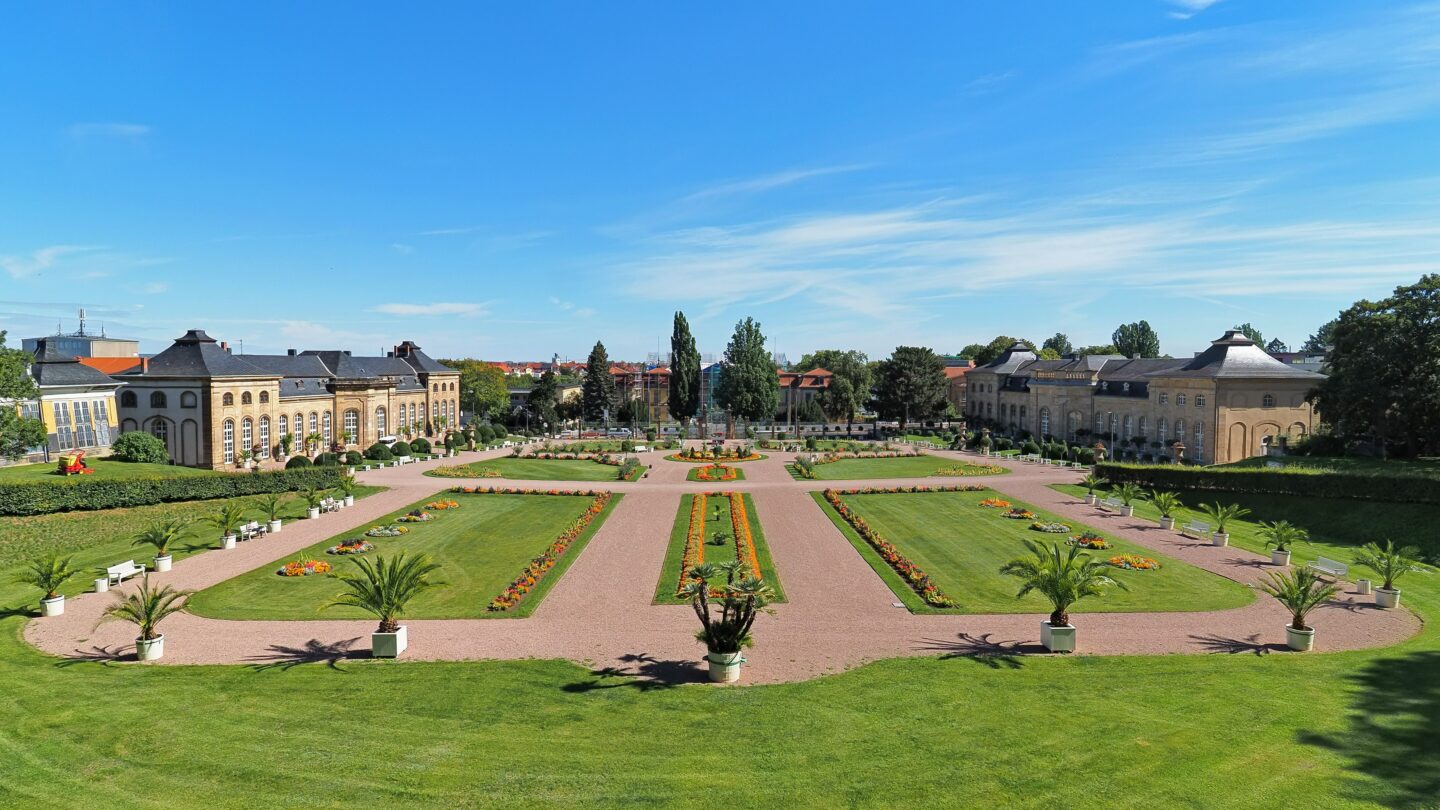
Orangery Parterre with Orangery House and Laurel House
One of the oldest surviving garden features of Friedenstein Palace is the orangery garden laid out to the east of the palace from 1747. The orangery parterre on the eastern slope of the Schlossberg was created in 1749, strictly symmetrical and regular in form, flanked by greenhouses and imposing buildings for the overwintering of exotic plants. In summer, the countless valuable potted specimens, including various citrus varieties and pineapples cultivated in Gotha with particular devotion, were set out in the garden parterre, arranged like an amphitheatre.
Garden
From 1772 onwards, much of the palace was dismantled, which also freed up space for creating gardens. The first documented garden was the so‑called Palace Rampart Garden in front of the east side of the palace, which likely disappeared with the de‑fortification in 1772. One of the oldest surviving gardens at Friedenstein Palace is the Orangery Garden laid out from 1747. The palace gardens gained a new quality under Prince Ernst II, who took office in 1772. Returning from a journey to England with abundant inspiration, he commissioned the creation of an English Garden centred on an elongated pond. On the site of the former kitchen garden, the Natural History Museum was erected in 1864. The areas to the north and south in front of the approaches to the Palace, created only in the 20th century, have been remodelled several times. The gardens surrounding Friedenstein Palace bear witness to different eras of garden art and are unparalleled in this diversity within Thuringia.
Castle Museum, Ekhof Theatre, Gotha Ducal Museum Closed on Mondays (except public holidays)
November to March: 10.00–16.00
April to October: 10.00–17.00
Closed on 24 December and 31 December
Listen to the Garden – An audio guide by children, for children
Children see things differently – including the Ducal Park in Gotha. Now you can learn about the garden from their perspective. As part of the ‘Listen to the Garden’ project, a group of pupils from the Arnoldischule Gotha are creating an audio guide for children. The Thuringian Castles and Gardens Foundation’s sponsors and project partners are the Sparkassen Cultural Foundation of Hesse-Thuringia and the Thuringian State Media Authority. The audio guide presents the plants – both large and small – as well as the stories and special features of the Ducal Park and the Ducal Orangery in a child-friendly way.
With the support of their partners, the pupils planned and carried out the production process. From choosing the topics and writing the text, through developing the concept, to recording the audio tracks and sound effects, the pupils took the lead and were in charge.
The ‘Hör mal’ project is a collaboration between museums in Thuringia, schools, the Sparkassen Cultural Foundation of Hesse-Thuringia and the Thuringian State Media Authority (TLM). In many towns and cities across Thuringia, children and young people are producing audio guides for children at a museum in their local area. The aim is to explore topics covered in class in greater depth and to consolidate the knowledge the pupils have acquired.
The school’s role as a place of learning is being expanded, and the museum is being established as a venue for imparting knowledge. This project serves to strengthen the pupils’ connection to their local community.
Recommended reading on Friedenstein Castle and Park