Address
Finkenberg
99887 Georgenthal
Georgenthal Local Authority
Tambacher Straße 2
99887 Georgenthal
Website
Opening hours
Exhibition at the Kornhaus
Viewing by arrangement, free admission, donations welcome

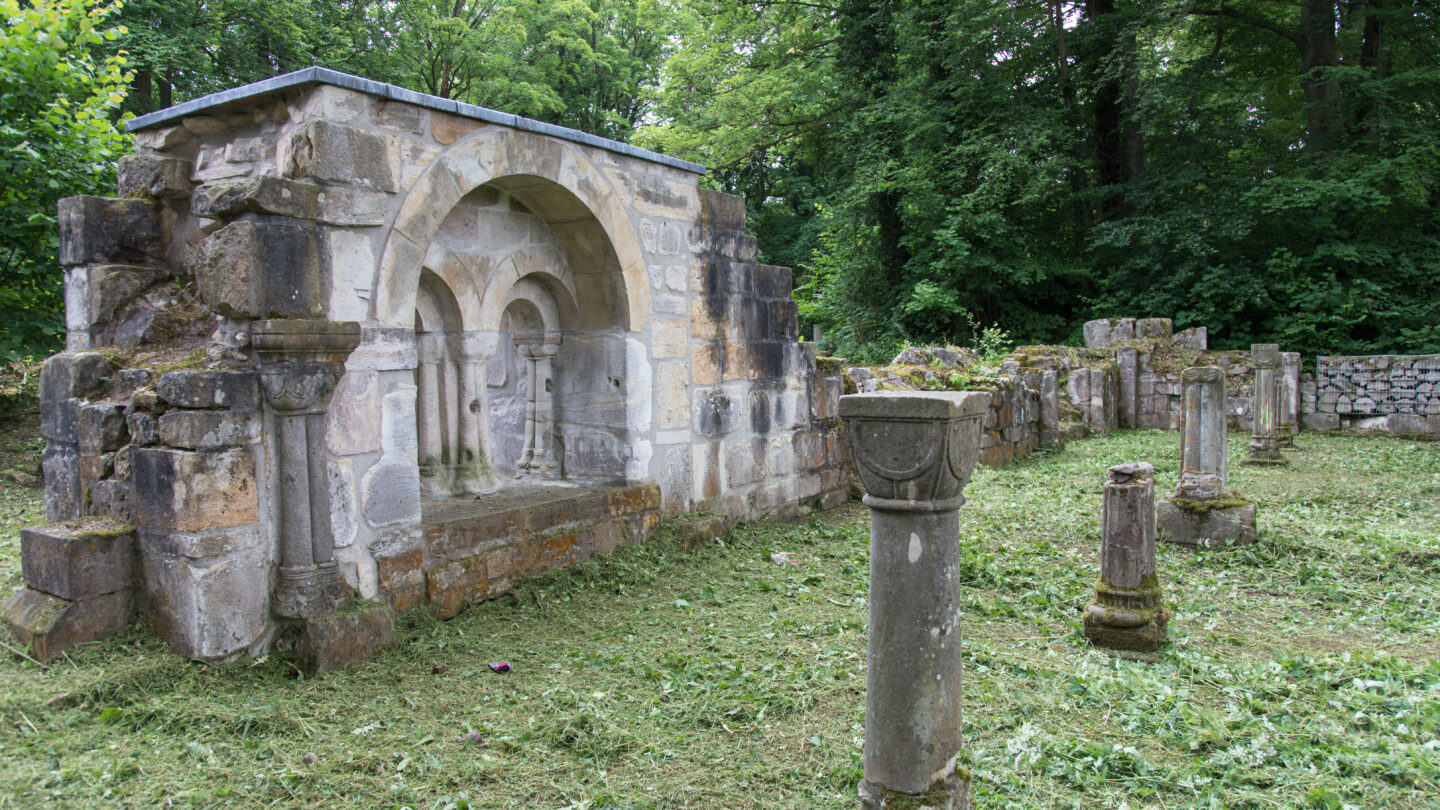
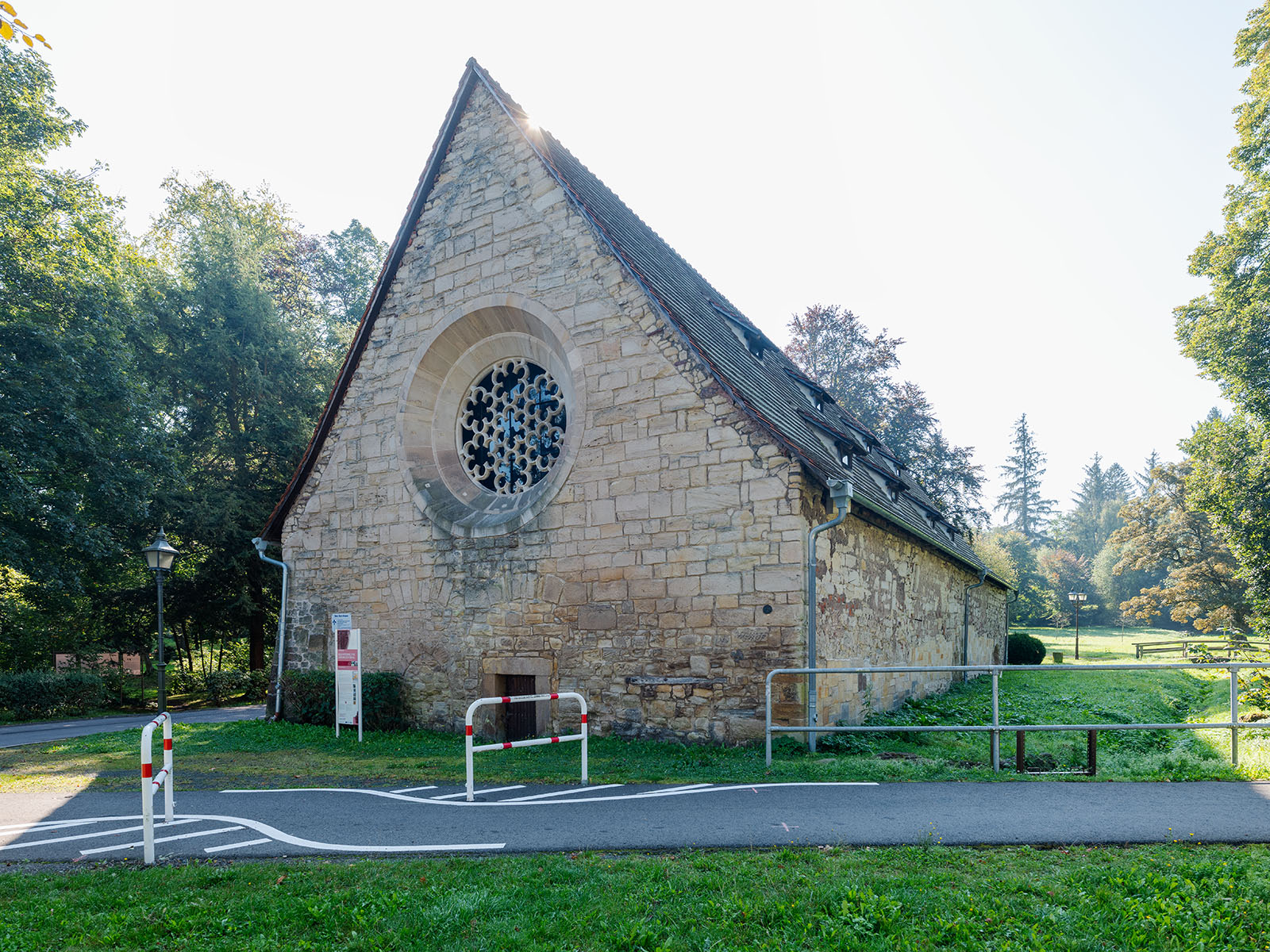
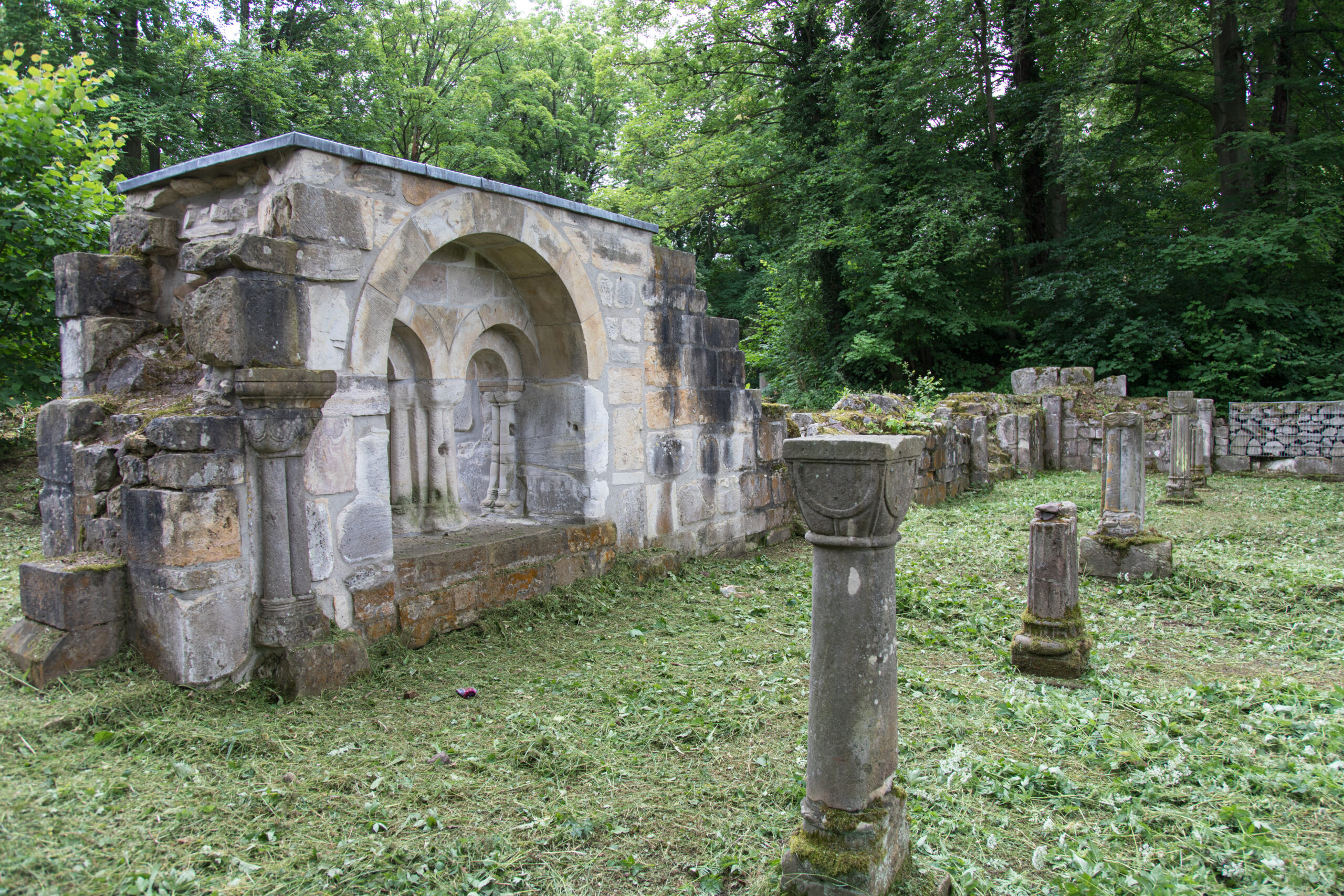
On the northern edge of the Thuringian Forest, around 16 kilometres south of Gotha, lie the remains of Georgenthal Monastery. Founded around the year 1140 as a Cistercian abbey, it reached its zenith in the early 16th century, when the scholar Georg Spalatin taught there. Of the former three‑aisled pillar basilica, only column stumps and sections of wall survive. Nonetheless, Georgenthal Monastery remains an important architectural monument. A testament to its former grandeur is the so‑called Granary, with its late‑Romanesque rose window.
Finkenberg
99887 Georgenthal
Georgenthal Local Authority
Tambacher Straße 2
99887 Georgenthal
Website
Exhibition at the Kornhaus
Viewing by arrangement, free admission, donations welcome
He himself was, by his own account, “occupied with worldly matters” and therefore unable to serve God as he wished. For this reason, the monks were to “pray to the Lord unceasingly on his behalf.” When Count Sizzo III of Käfernburg founded Georgenthal Monastery, probably in 1140, his motives were not solely pious. Power‑political considerations also played a role. The new monastery was situated at a strategically significant point, only a few kilometres from the Benedictine abbey of Reinhardsbrunn. Founded only a few years earlier by the Thuringian Landgraves, Reinhardsbrunn later became their proprietary monastery.
By establishing his own abbey at Georgenthal, Count Sizzo sought to curb the Landgraves’ growing influence over his territory.
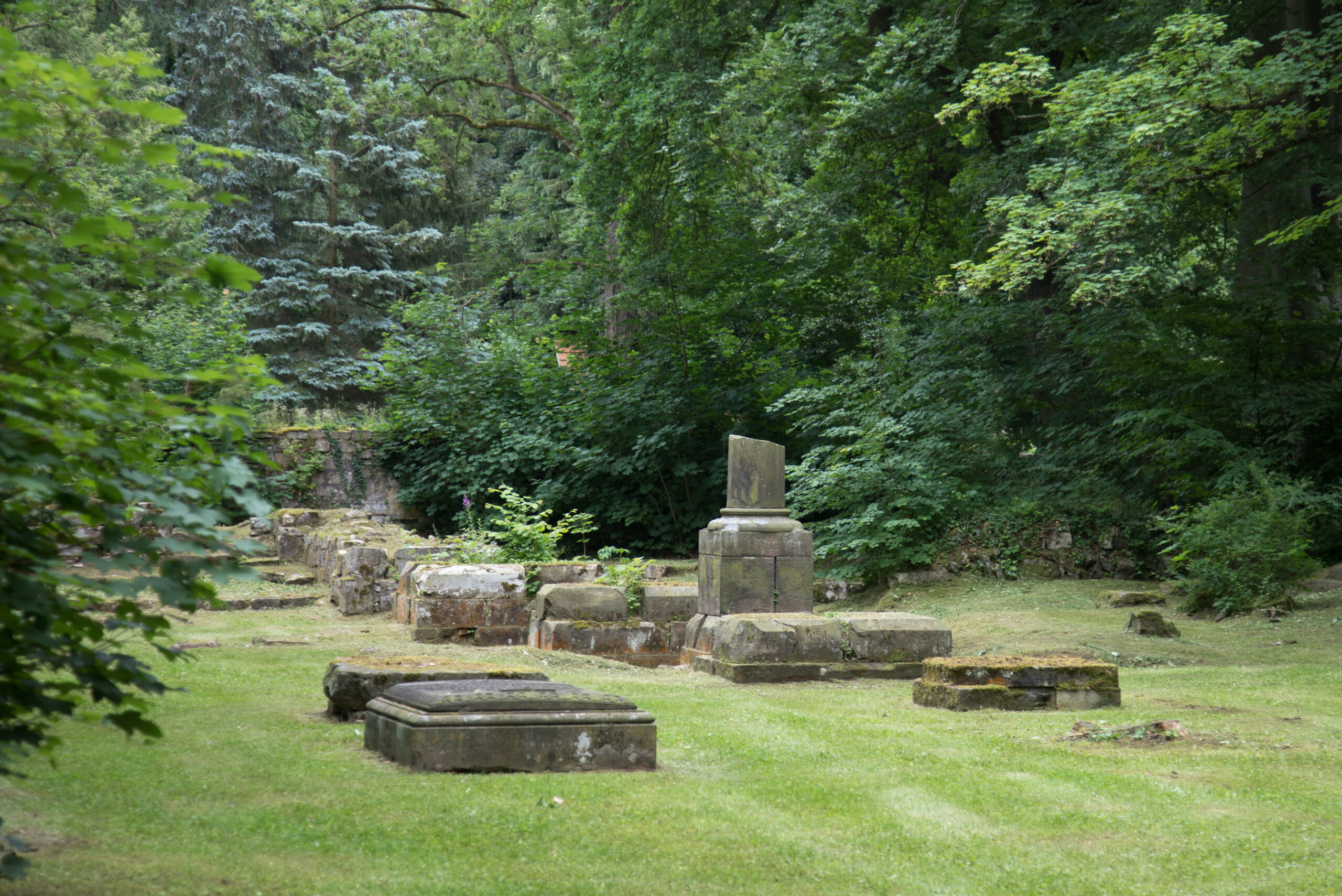
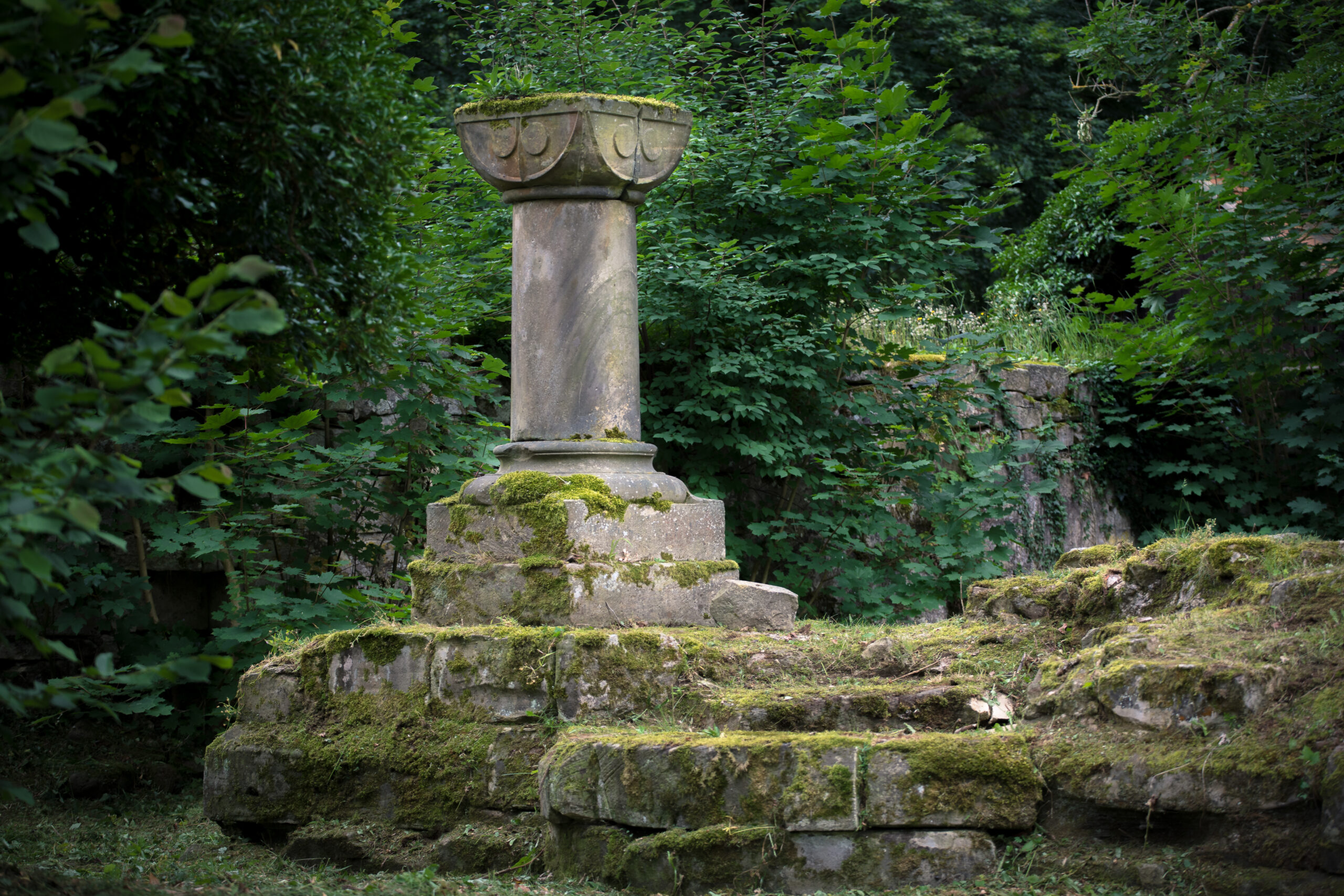
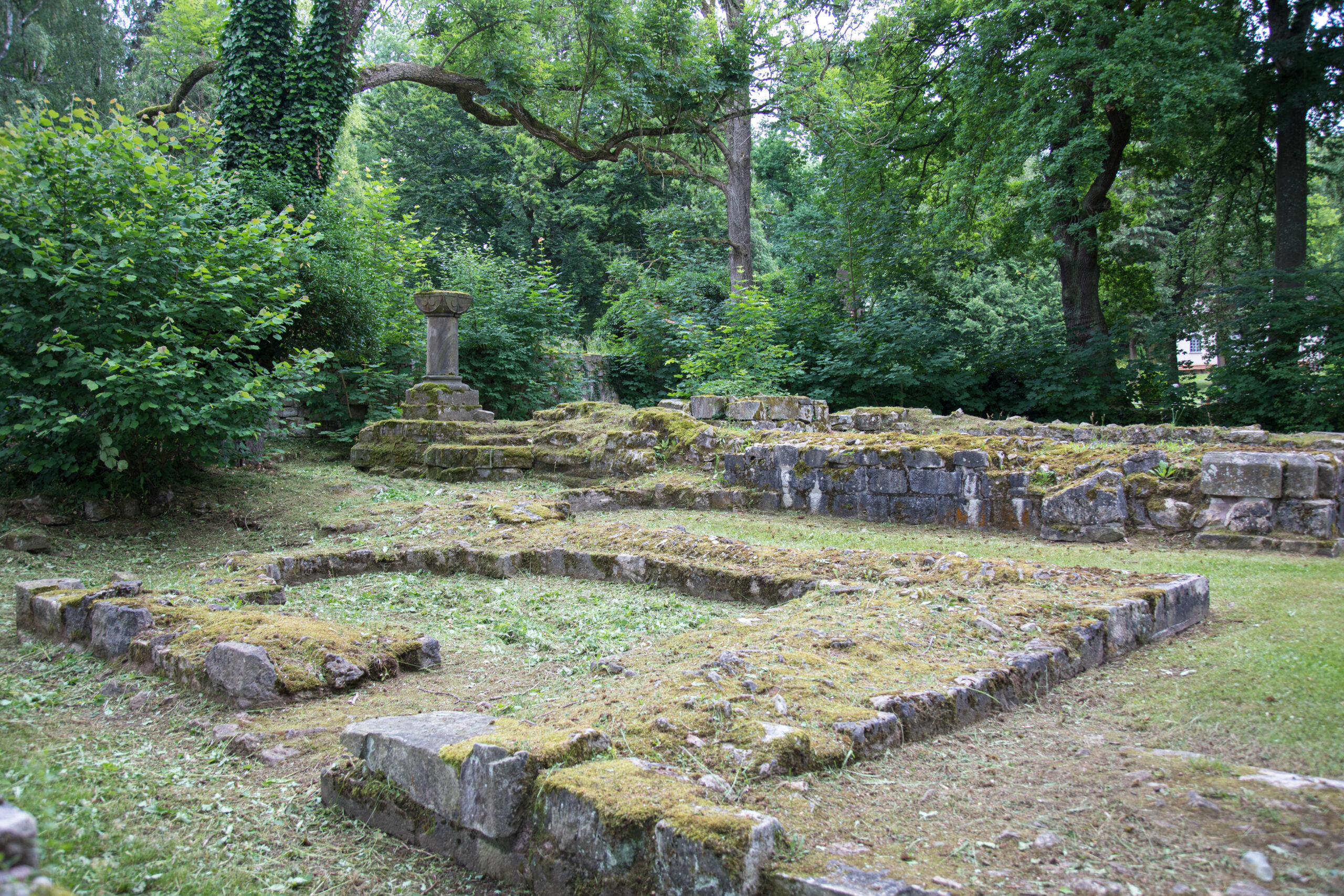
From 1143, the Cistercian monastery received its first abbot, and monks from its French mother house at Morimond took possession of the convent buildings. Construction of the monastery church began in 1152. Modelled on the abbey church at Paulinzella, the building was laid out as a three‑aisled pillar basilica with a cruciform ground plan. Of the once splendid church, only foundation remains and column stumps have endured. A memorial plaque now marks the site where the founder’s burial vault is thought to lie.
The monastery experienced its golden age in the early 16th century, when Georg Spalatin taught here. The philosopher and humanist was a close associate of Martin Luther, as well as Chancellor of Wittenberg and private secretary to Friedrich the Wise. While Luther was in hiding at Wartburg Castlenear Eisenach, Spalatin lent him his bible, which is said to have been used for Luther’s famous translation. Only a few years later, the Peasants’ War signalled the monastery’s downfall. It was plundered and largely destroyed, the monks fled, and the abbey was ultimately dissolved. In the following years, the monastic buildings were almost completely dismantled, with only a few outbuildings surviving. In the 19th century, a devastating flood uncovered the columns and foundations of the church, prompting further excavations.
The most notable surviving building of the former monastery complex is the so‑called Granary. Originally, this imposing structure probably housed the monastic hospital. Following secularisation, it was converted into a grain store. Today it serves as an exhibition space. Particularly remarkable is the repeatedly restored, late‑Romanesque stone rose window in the building’s north gable. Also preserved is St Elisabeth’s Church, located within the former monastic enclosure; before being converted into a church, it is thought to have served as the abbot’s residence.