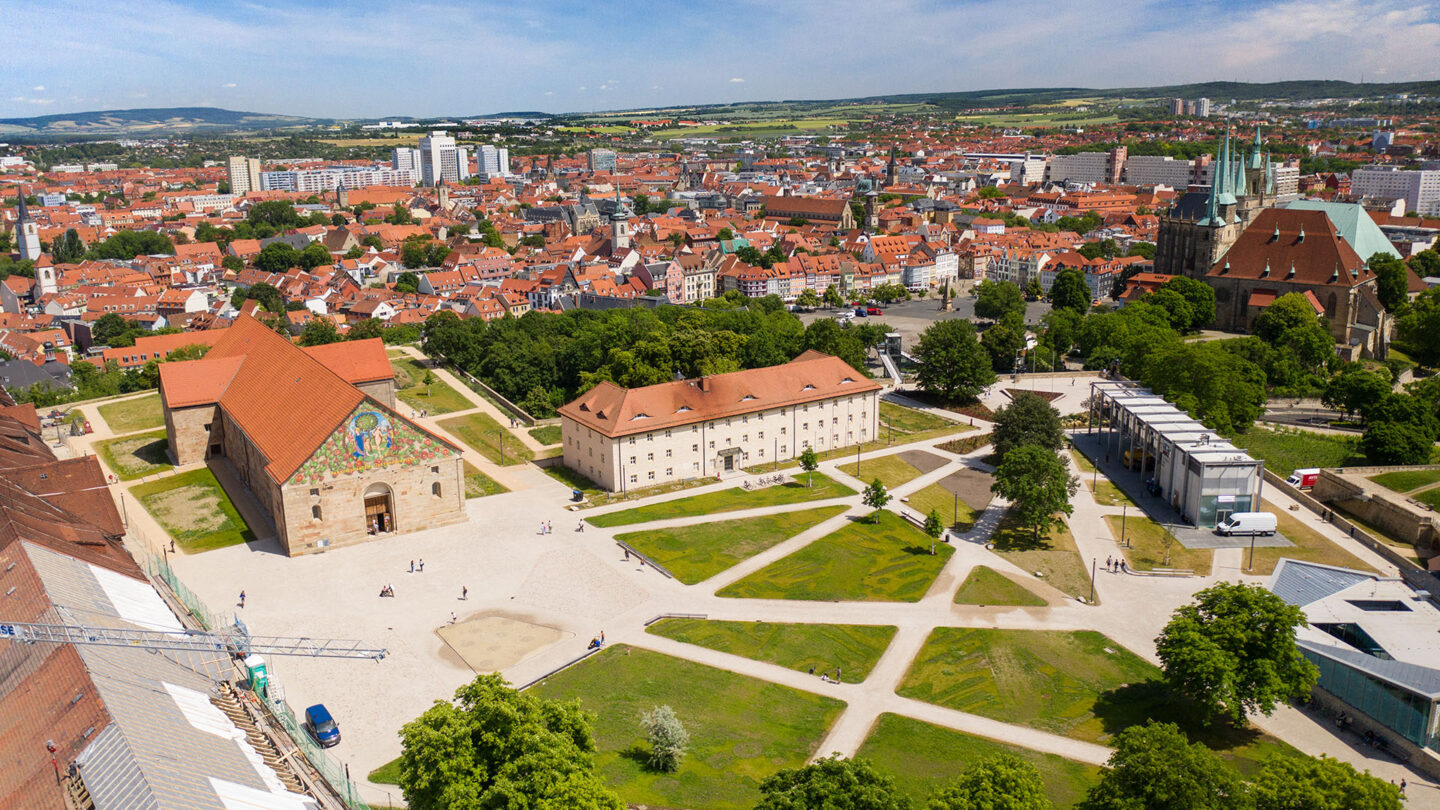
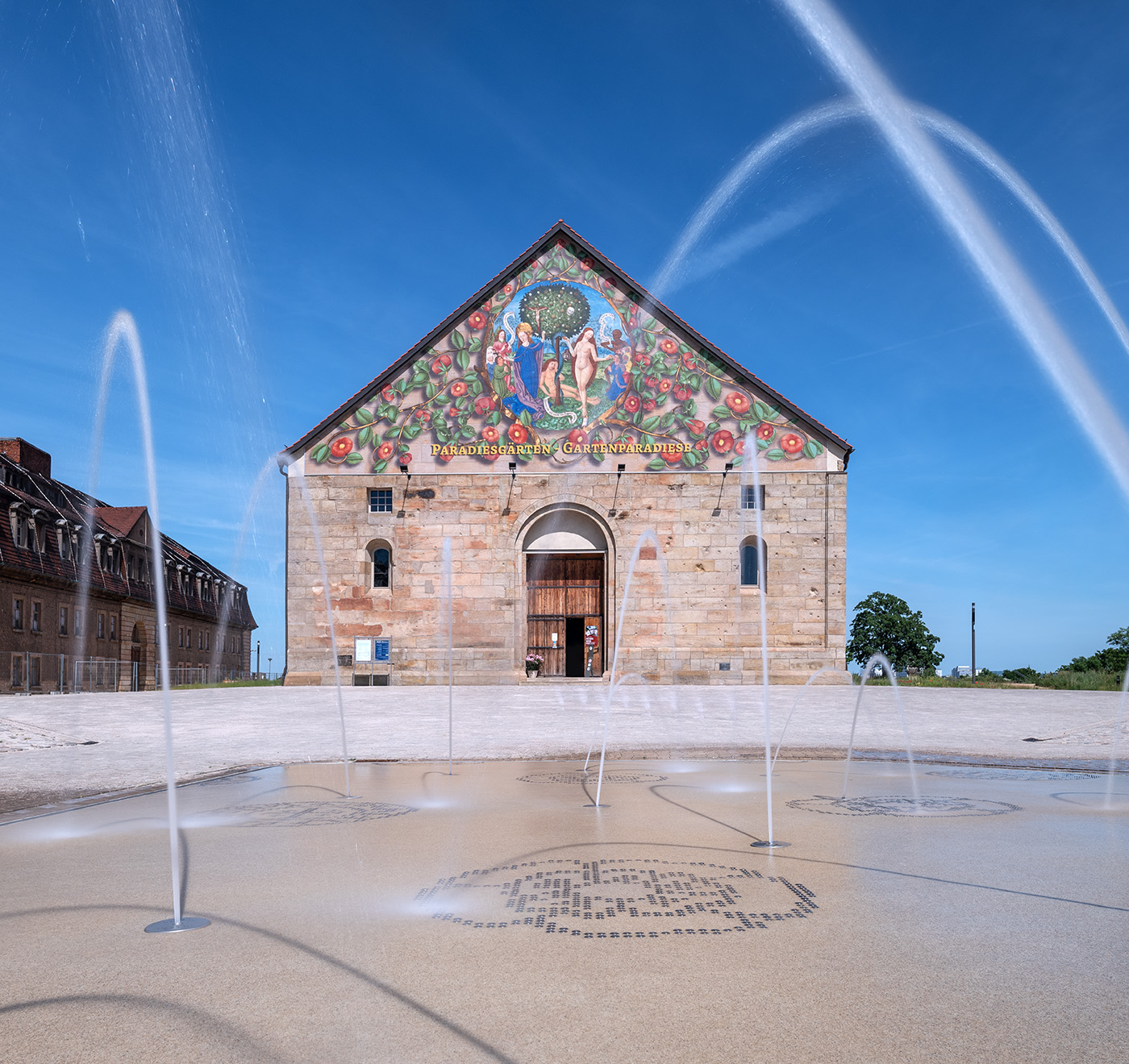
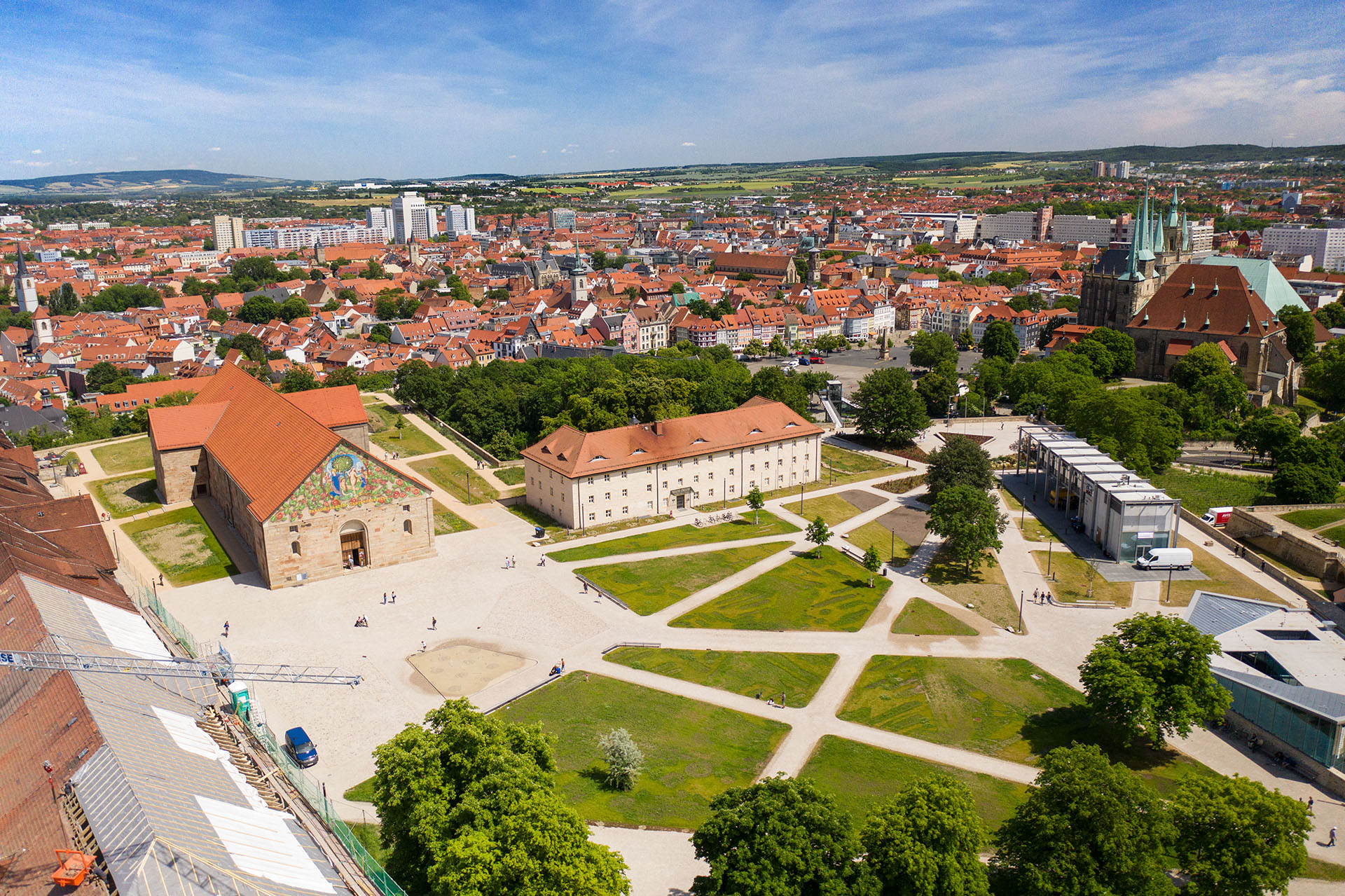
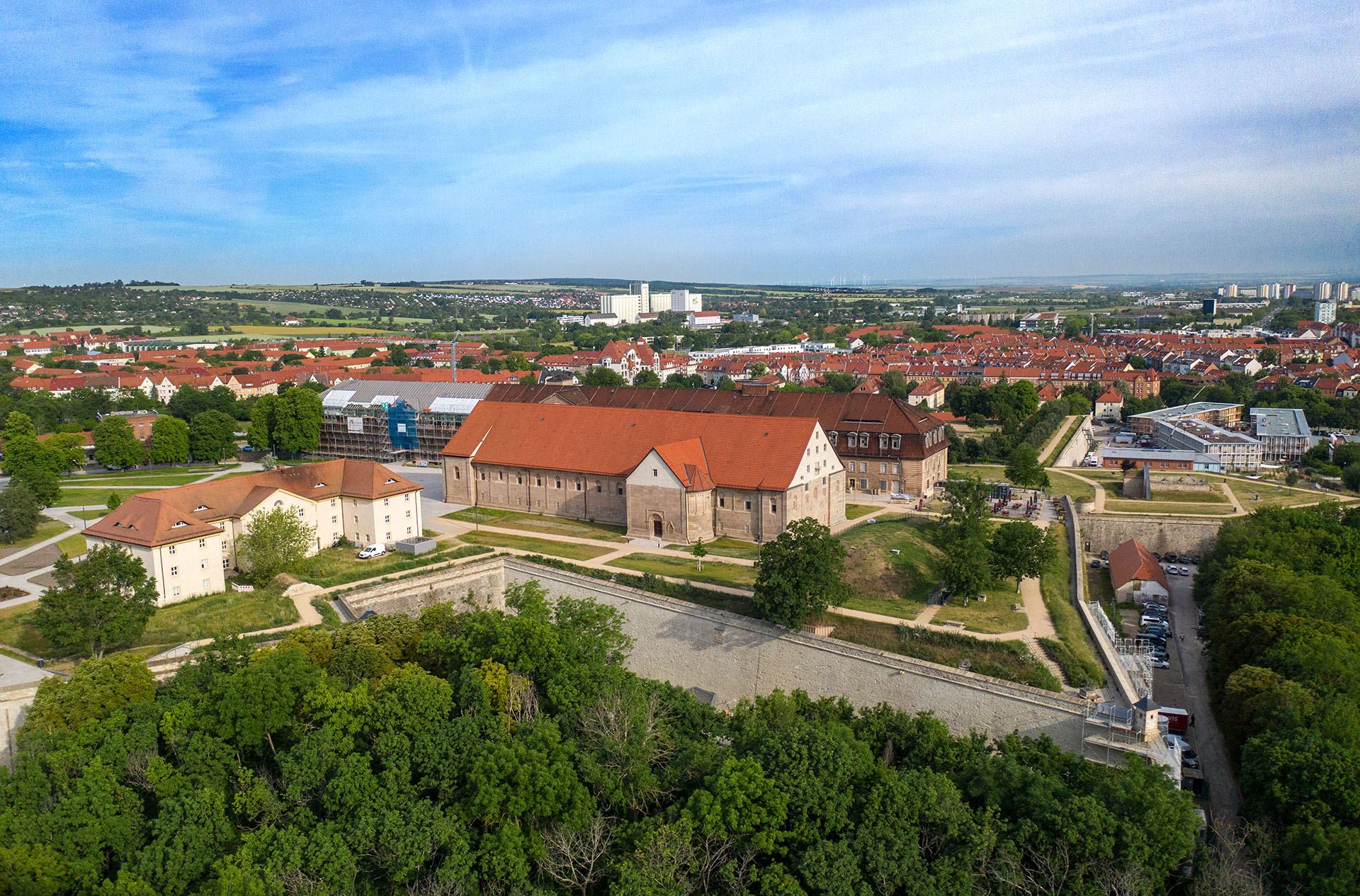
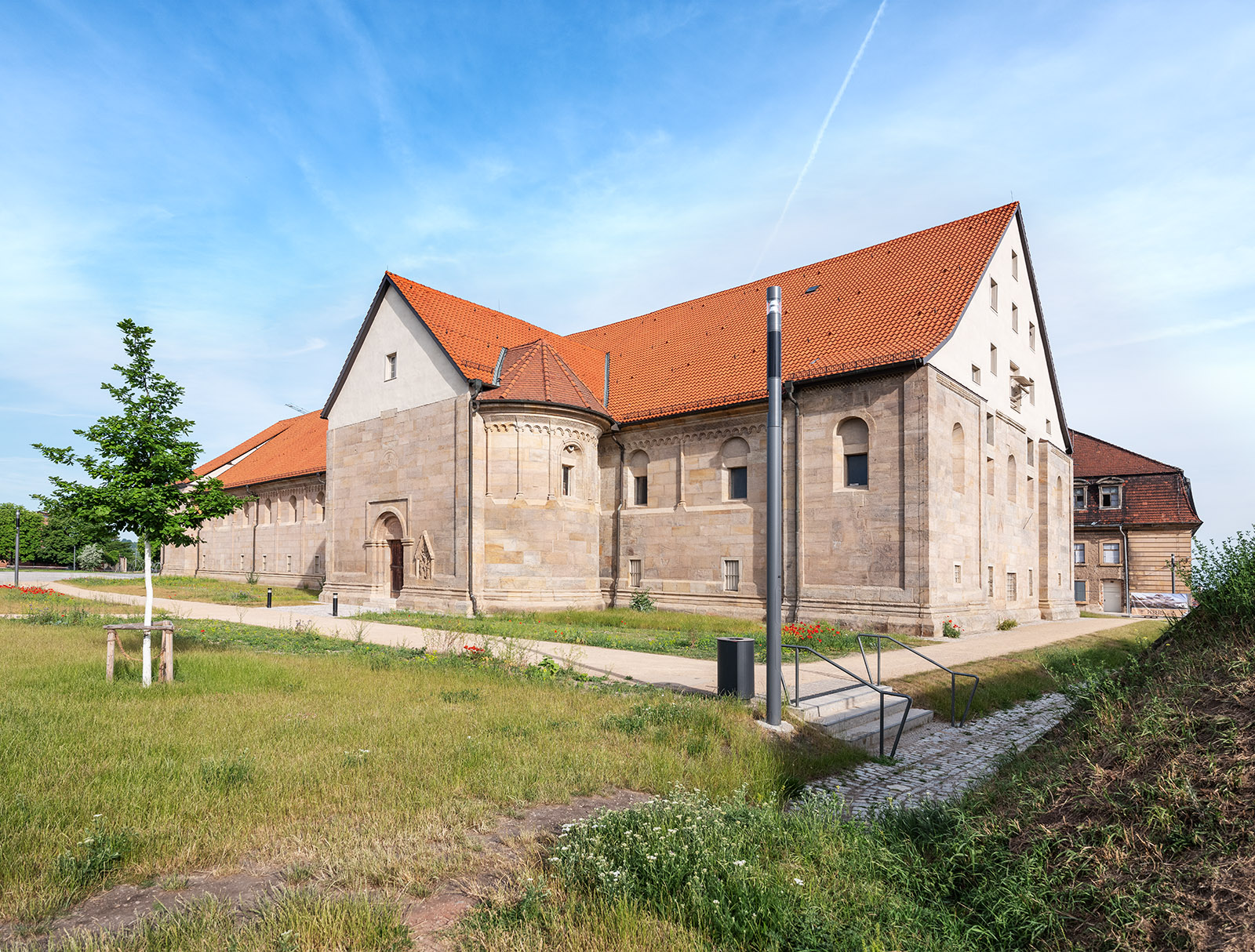
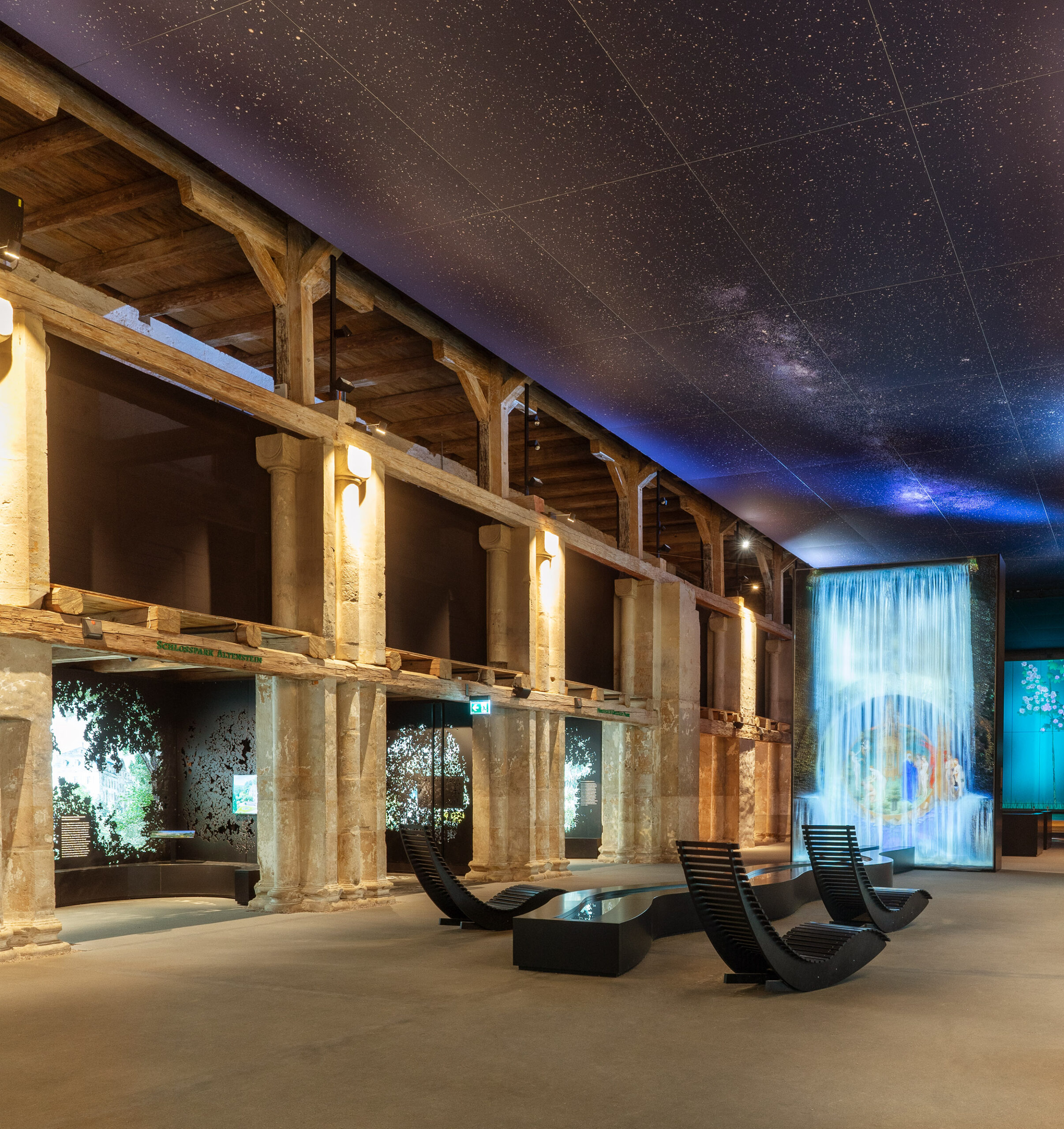
It was destroyed, misused, and stripped of its dignity – the Monastery Church of St Peter and St Paul. Following secularisation, in 1820 Prussian troops converted it into a provisions store. In recent times, the former house of worship has regained something of its former dignity through the partial removal of the storage floors. The church was built some 900 years ago upon the then highest elevation within the Erfurt city walls – the Petersberg (Peter’s Mountain). The pillar basilica of the former Benedictine monastery followed the model of the Hirsau School. Inside, some of the oldest wall paintings in Thuringia are preserved.
Where monks once walked, Thuringian garden art has now taken root. The exhibition ‘Paradise Gardens – Garden Paradises’ offers a journey through the historic parks and gardens of the Thuringian Castles and Gardens Foundation. This atmospheric exhibition also provides insights into St Peter’s Monastery itself and monastic garden culture.
A “sight that shakes one’s inmost feeling”. Thus wrote Constantin Beyer in his 1821 city chronicle. What so unhinged the writer was the burned‑out Monastery Church of St Peter and St Paul. At the end of 1813, in the midst of the Wars of Liberation, it had been caught between the lines. French troops had entrenched themselves in the citadel on the Petersberg. The fortress had been erected some 150 years earlier and completely enclosed the monastery – a fatal location, as events would show.
The Prussians opened fire. Although they ultimately succeeded in driving out the French, they inflicted grievous damage upon the church. Reconstruction was out of the question for the new rulers of the land; instead, from 1820 they converted the sacred building into a provisions store for the Prussian military. To that end, the remains of the towers were demolished, the clerestory with its windows removed, three storage levels inserted, and a pitched roof erected.
In the Footsteps of Hirsau and Barbarossa
Around the year 1060, the Benedictine monastery was founded by the Archbishop of Mainz. From 1127, the monastery church was rebuilt on the Hirsau model. In keeping with this monastic reform movement, the church was constructed as a flat‑roofed pillar basilica – with a separate lay church, a chorus minor for brethren in minor orders, and a distinct area for the patres, the priest‑monks. In accordance with Hirsau tradition, no crypt was built. At a length of 75 metres, the monastery church is regarded as the first major building of the Hirsau School on Thuringian soil.
The Monastery of St Peters assumed a leading role among Thuringian monasteries in the Early and High Middle Ages. Until the end of the 13th century, it hosted several synods as well as imperial and court assemblies of the German emperors and kings. In 1181 it was here that Emperor Friedrich Barbarossa and Heinrich der Löwe (Henry the Lion) faced their decisive confrontation: the rebellious duke was compelled, at the court assembly in Erfurt, to submit to the Staufer emperor.
Hidden Treasures
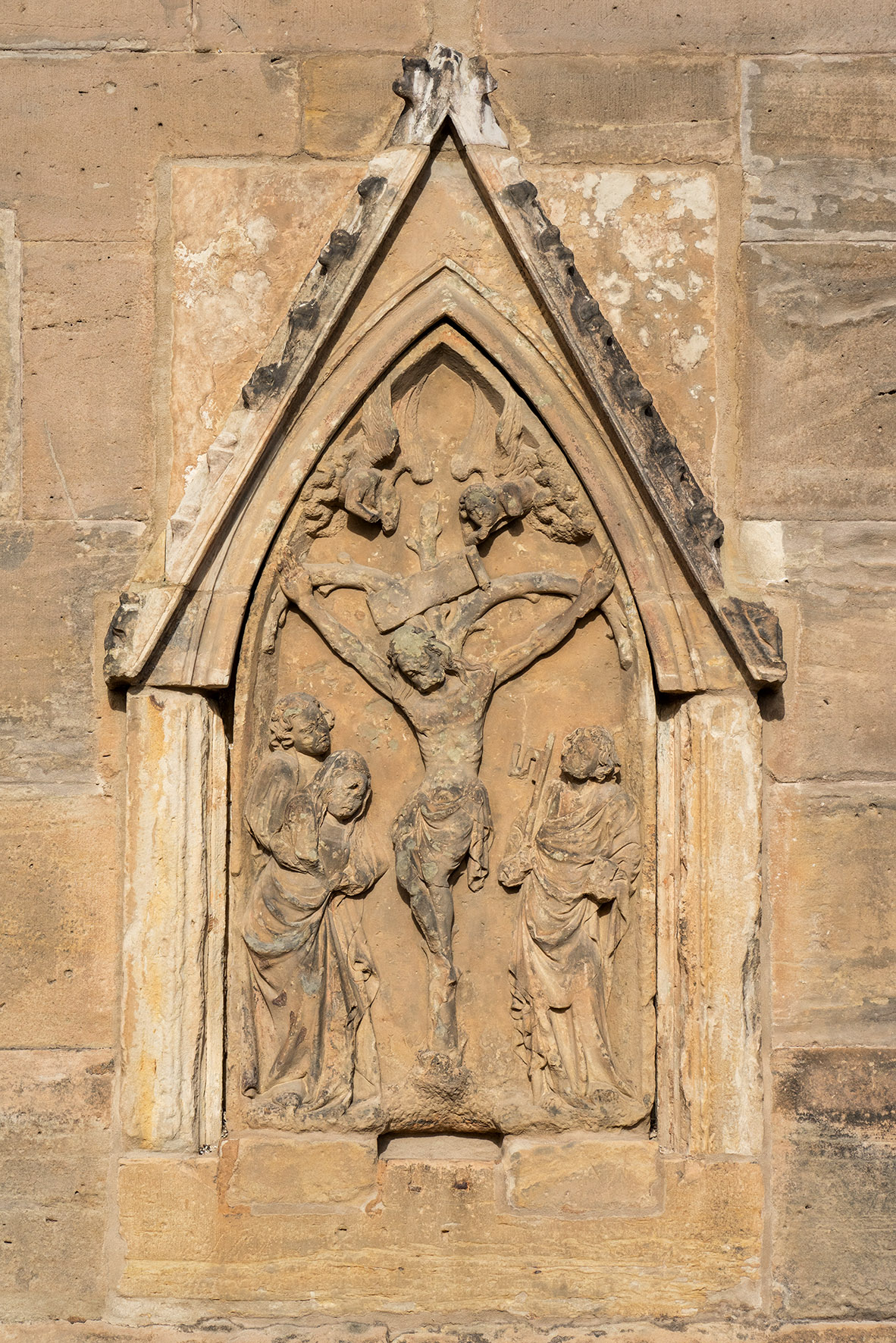
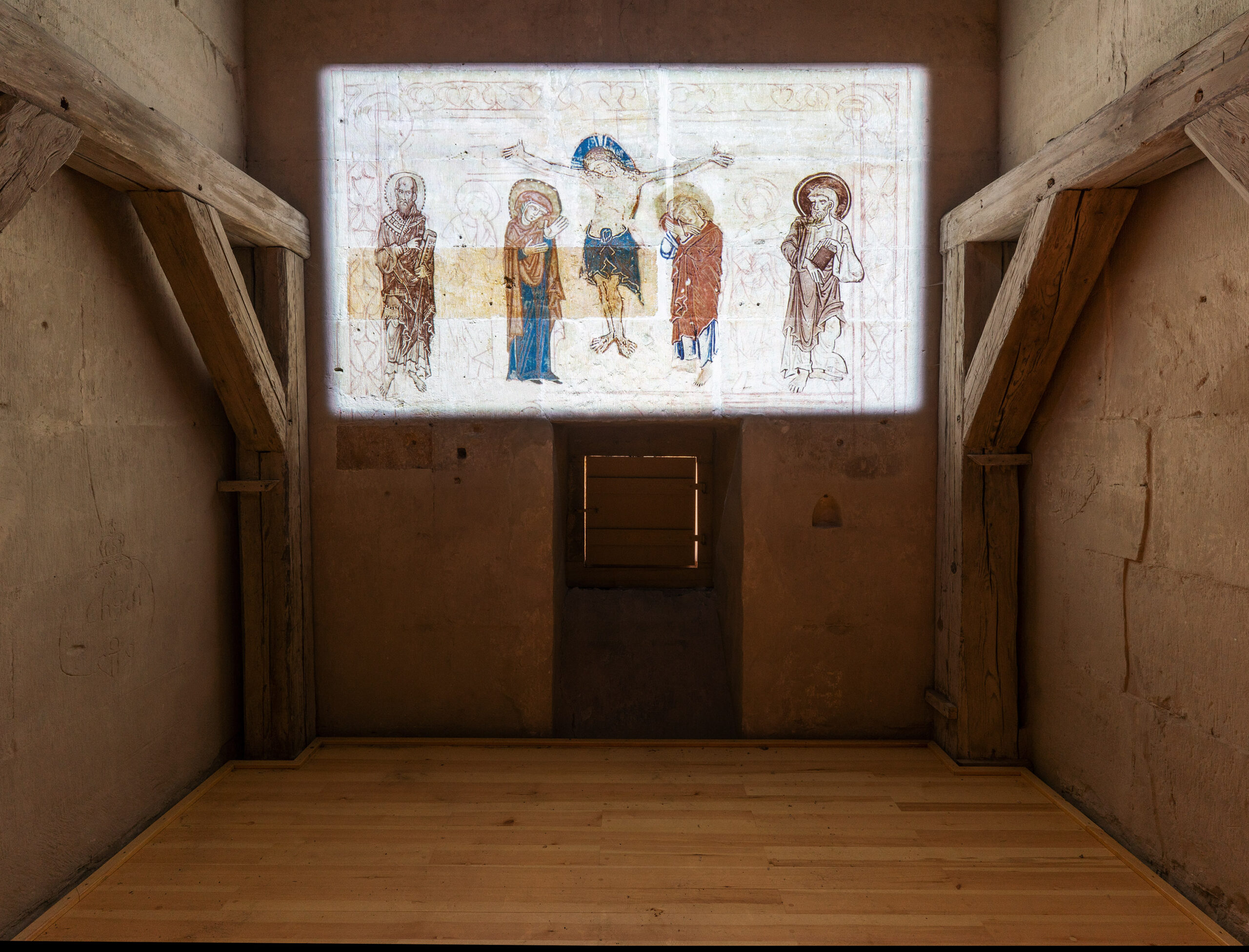
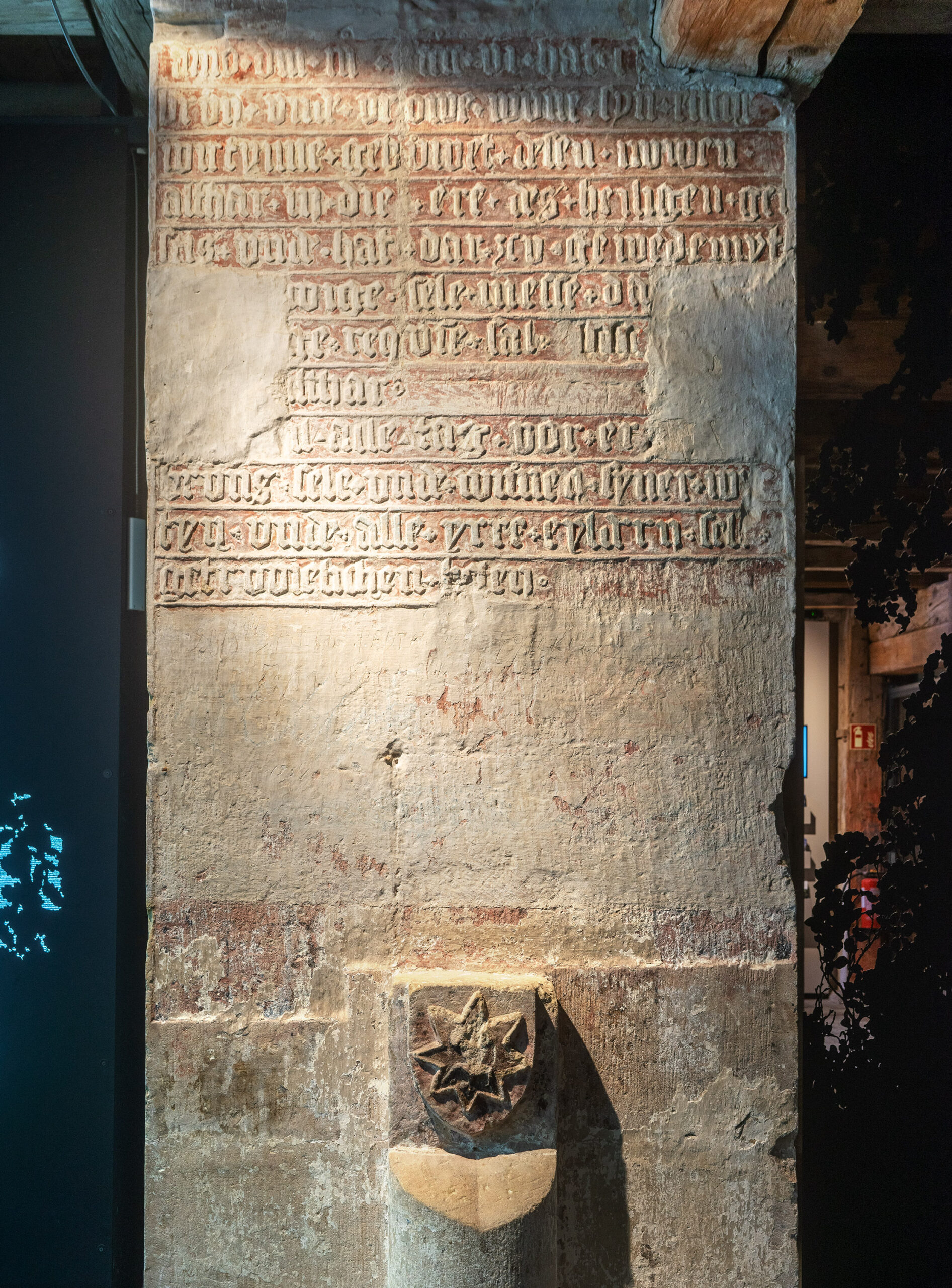
Despite its destruction and misuse, the church remains a remarkable witness to medieval architecture. The masonry is composed of unusually large ashlar blocks, some reaching a length of two metres. On the south exterior wall of the transept, an incised drawing survives, dating from around 1360 and depicting the so‑called Man of Sorrows. Beneath layers of early modern paint in the church’s interior, wall paintings from the first half of the 13th century have endured, including a Crucifixion scene and two over‑life‑size figures of saints. Evidence suggests these depict the apostles Andrew and John. The images rank among the oldest surviving wall paintings in Thuringia.