“Up to then it had gone with me like cooks who have a row of pots on the fire, from some of which they only allow a little tasting. But now I was to serve the whole meal; that is, with all my instruments, with singing, and with my pen, to show what I had learned.” In this way, Georg Philipp Telemann (1681-1767) recalled his time in Eisenach. In 1708, he took up a post there as concertmaster. Soon, however, the duke tasked him with establishing a court orchestra. With his small ensemble, Telemann also performed regularly at nearby Wilhelmsthal Palace, where some of his works were premiered.
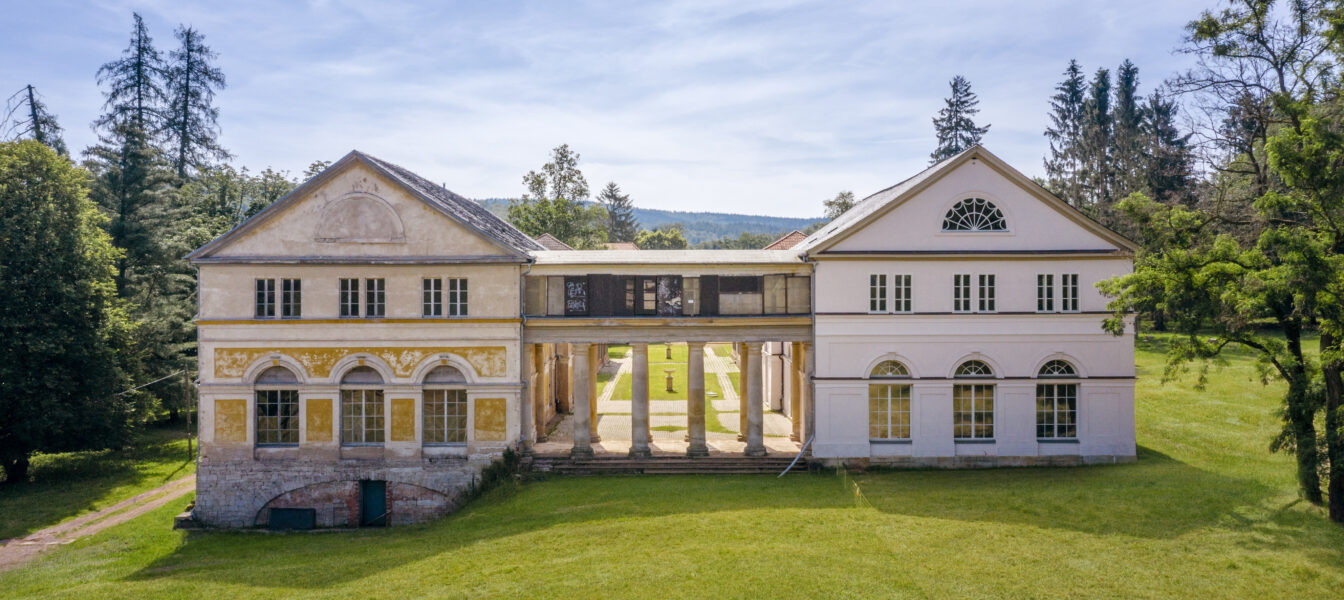
Thus, the Baroque palace complex counts among the few secular Telemann premiere venues that have survived in their original form. The so-called Telemann Hall in the New Palace now forms the heart of the complex. It is considered the oldest freestanding concert hall in Europe and impresses not only with its splendid stucco work of hunting and musical motifs but also with its excellent acoustics. Today, the hall is used as a venue on selected dates, particularly during the biennial Telemann Days.
At a glance
Address
WilhelmsthalPalace and Park
Wilhelmsthal 5
99834 Gerstungen, Wilhelmsthal
T: 03 69 61 – 70 2 2
Hunting and Pleasure Palace Complex near the Wartburg
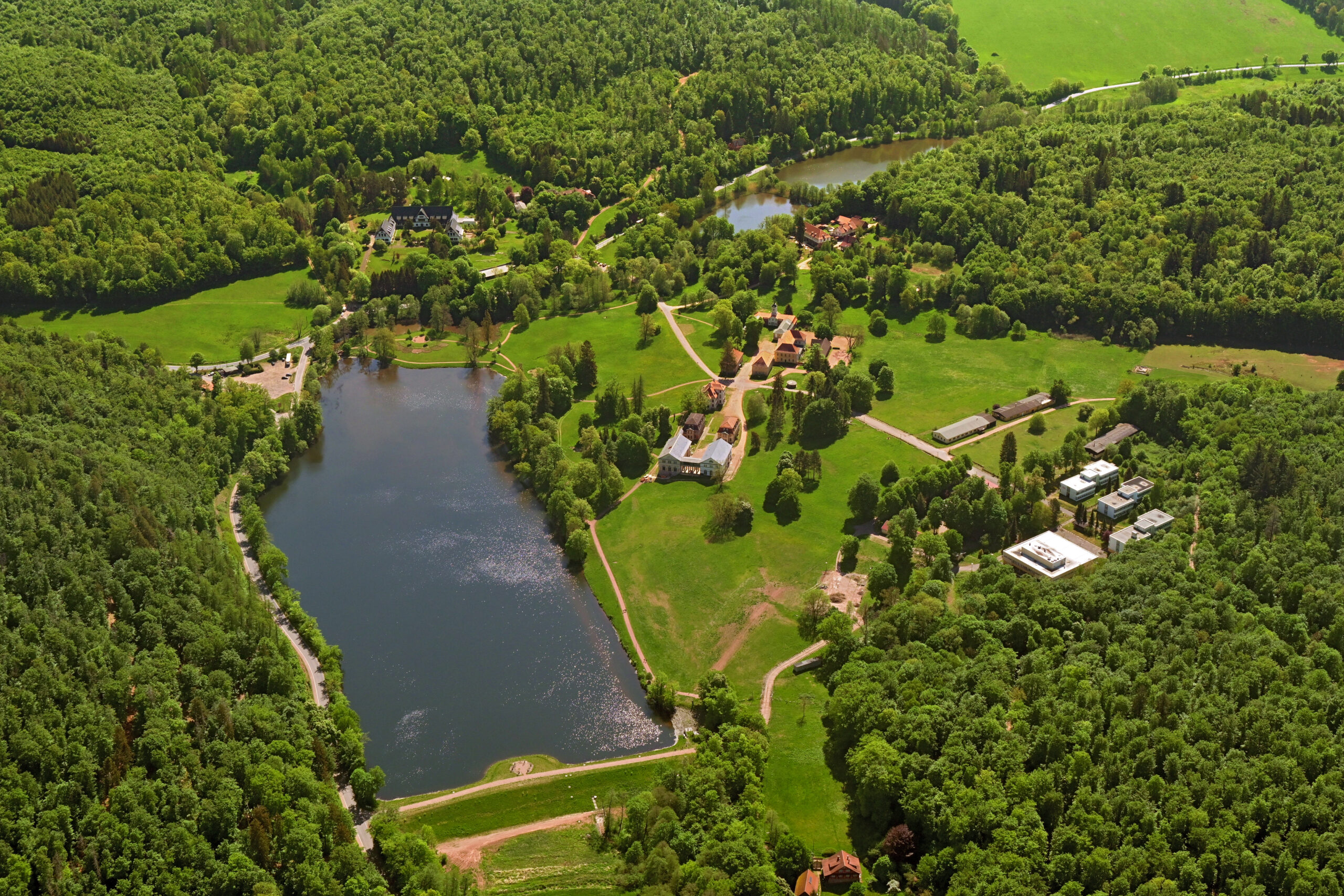
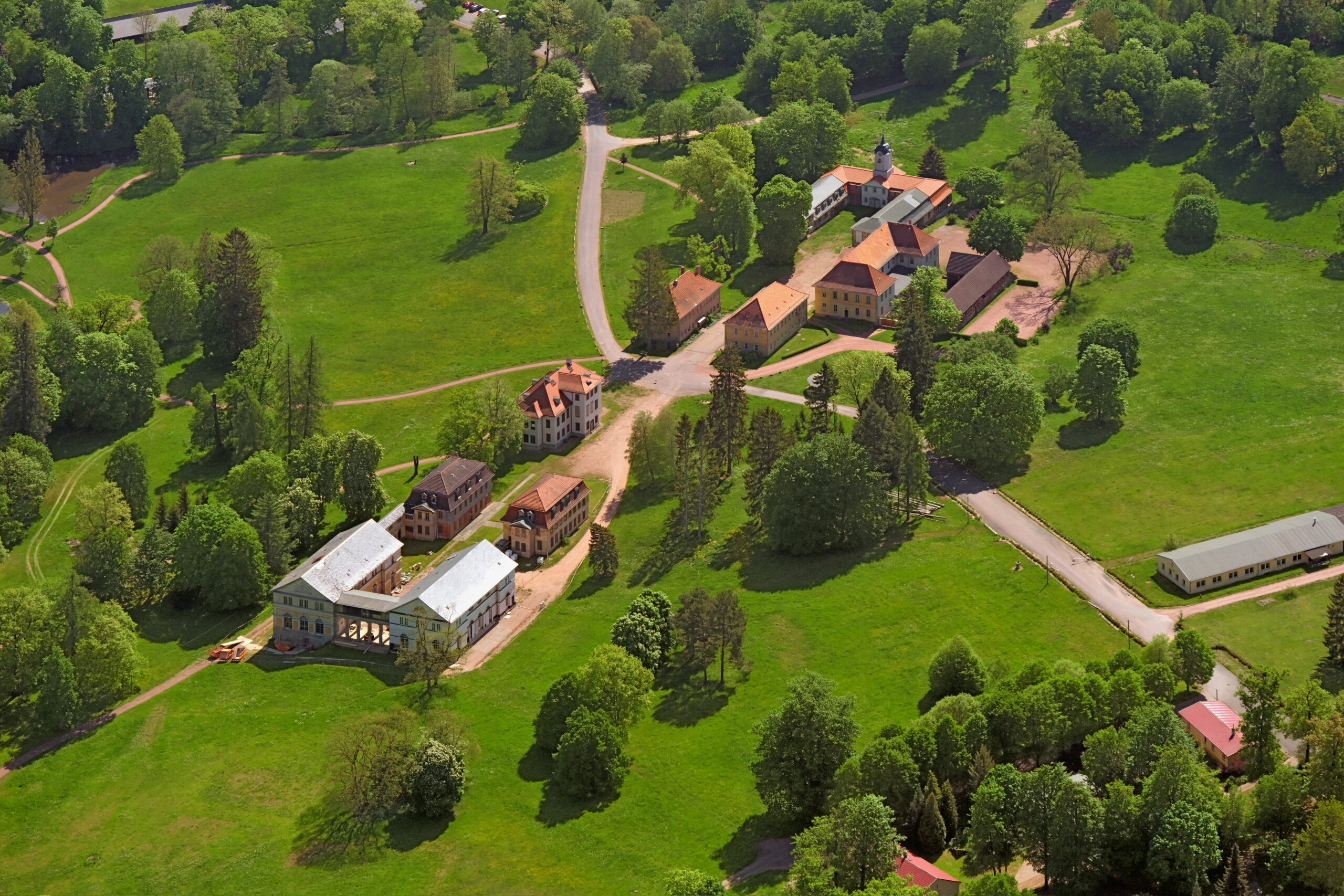
The origins of the palace complex go back to Duke Johann Wilhelm of Saxe-Eisenach, who around 1700 began building a Baroque hunting and pleasure palace at Wilhelmsthal, named after him. The historical starting point is the corps de logis, also called the Old Palace. The princely residence was constructed under the direction of Eisenach’s master builder Johann Mützel as a plastered timber-framed building. The interiors, including the banqueting hall, received rich decoration. On either side of the Old Palace, pavilion buildings and further service structures were erected in paired arrangement along an axis. Along another axis, geometrically structured gardens were laid out to the north and south and complemented by an artificially dammed lake. The core of the ensemble was the Old Palace at the intersection of both axes. The Riding Hall and the New Palace mark the end of the palace axis. From 1801, the Telemann Hall was connected to the newly erected pavilion opposite to form the New Palace by means of an added colonnade. In 1910, a covered passage to the Prince’s House, the Prince’s Walk, was added. In this context, the pavilion was also extended to match the exterior appearance of the hall building.
A Work by Prince Pückler
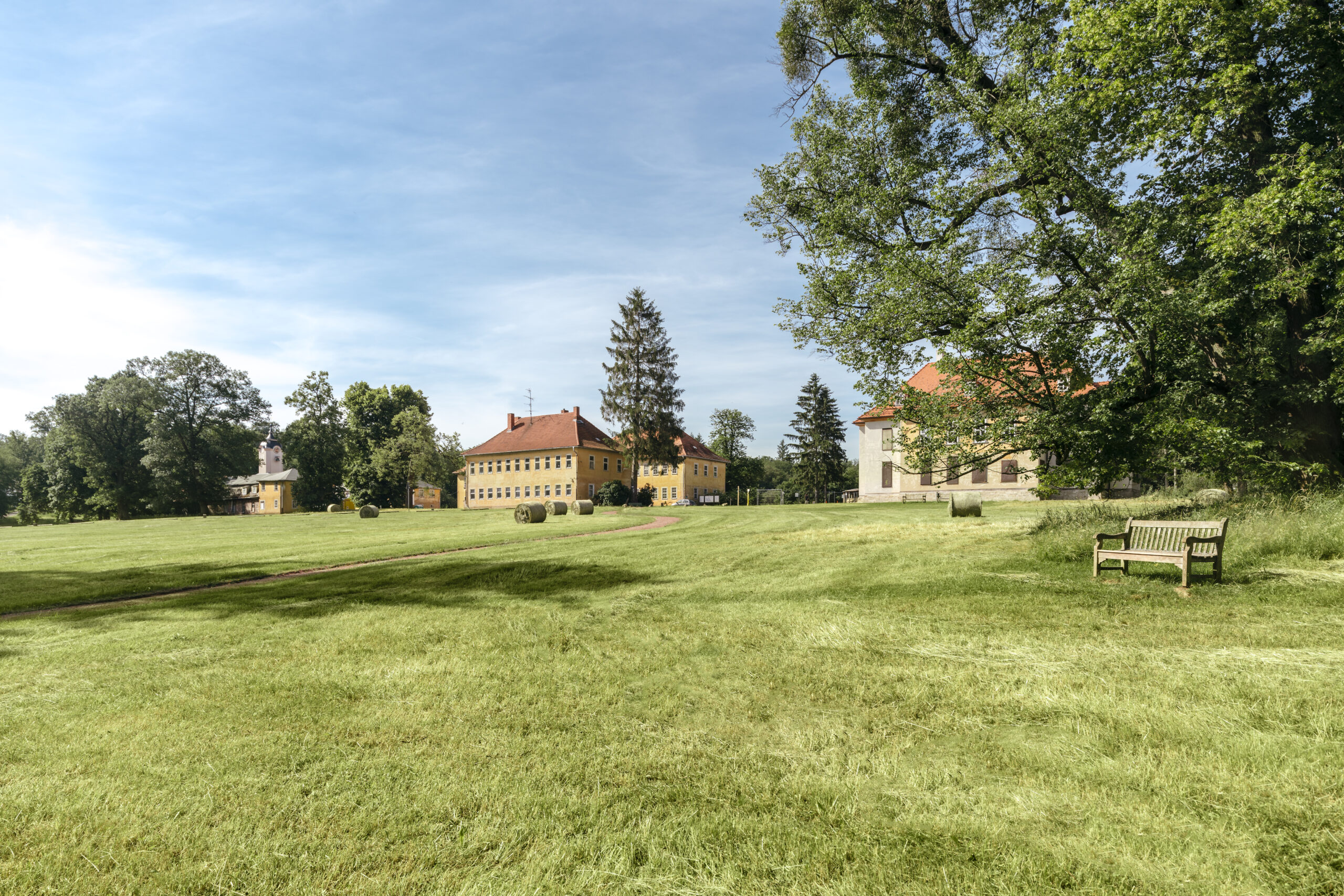
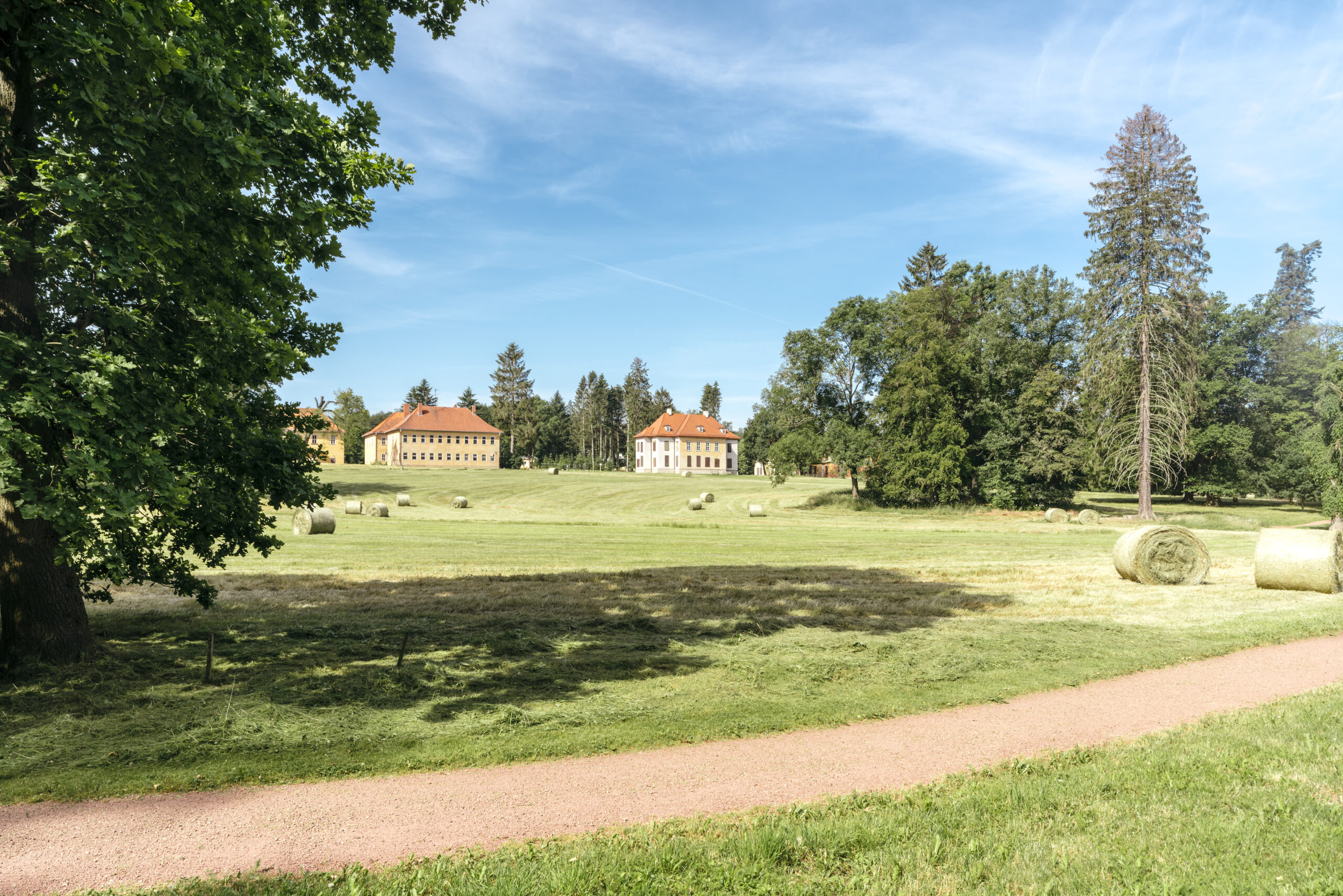
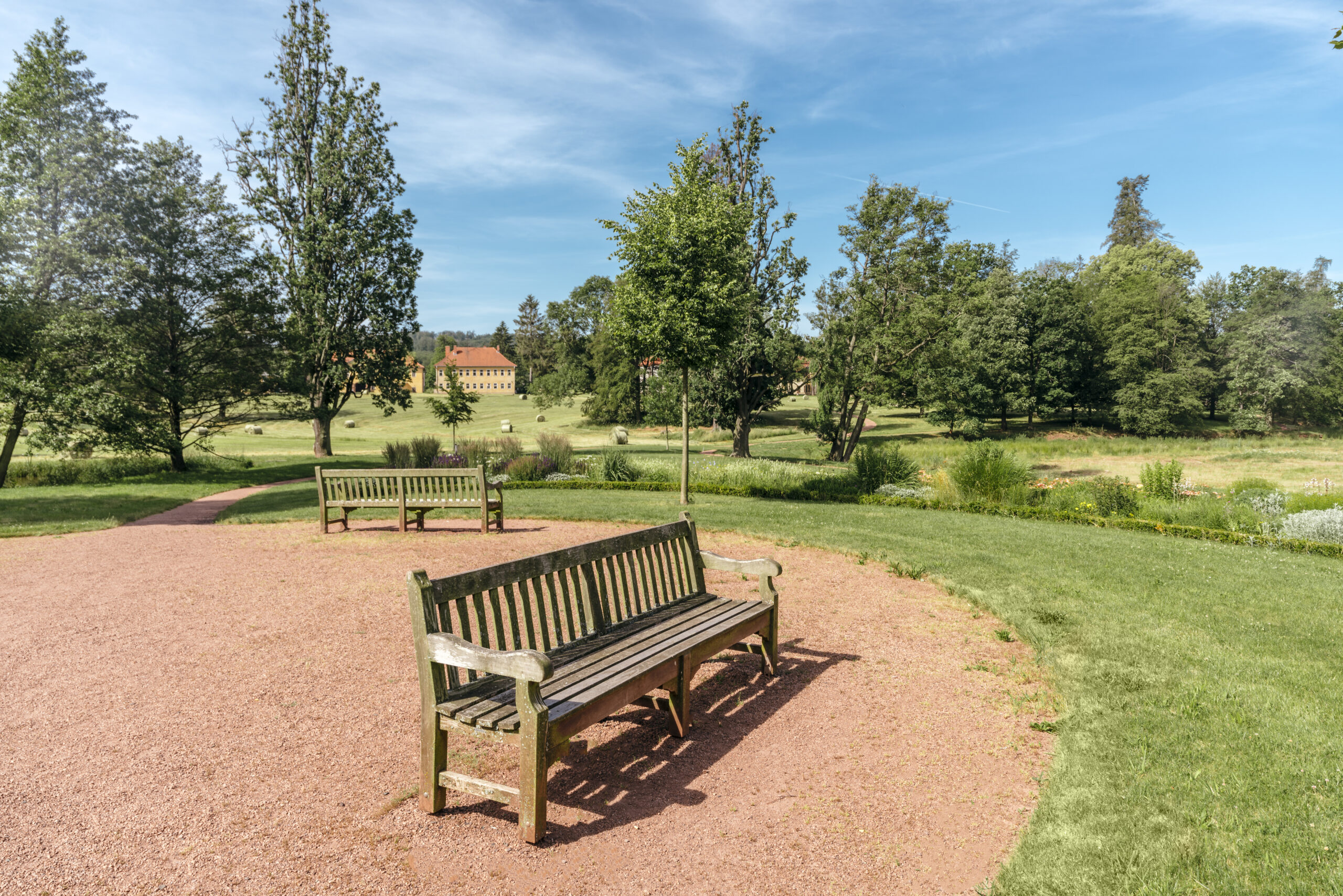
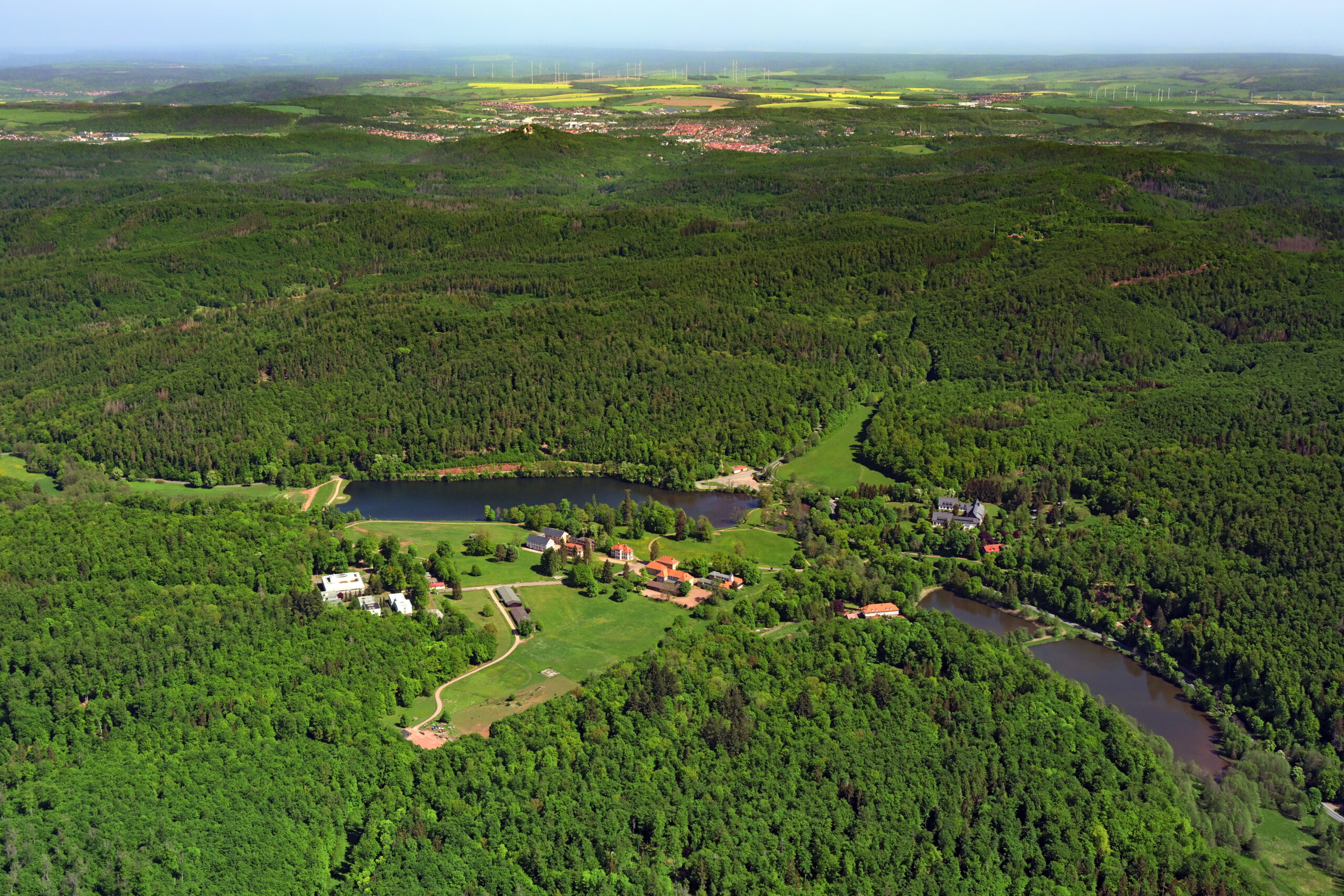
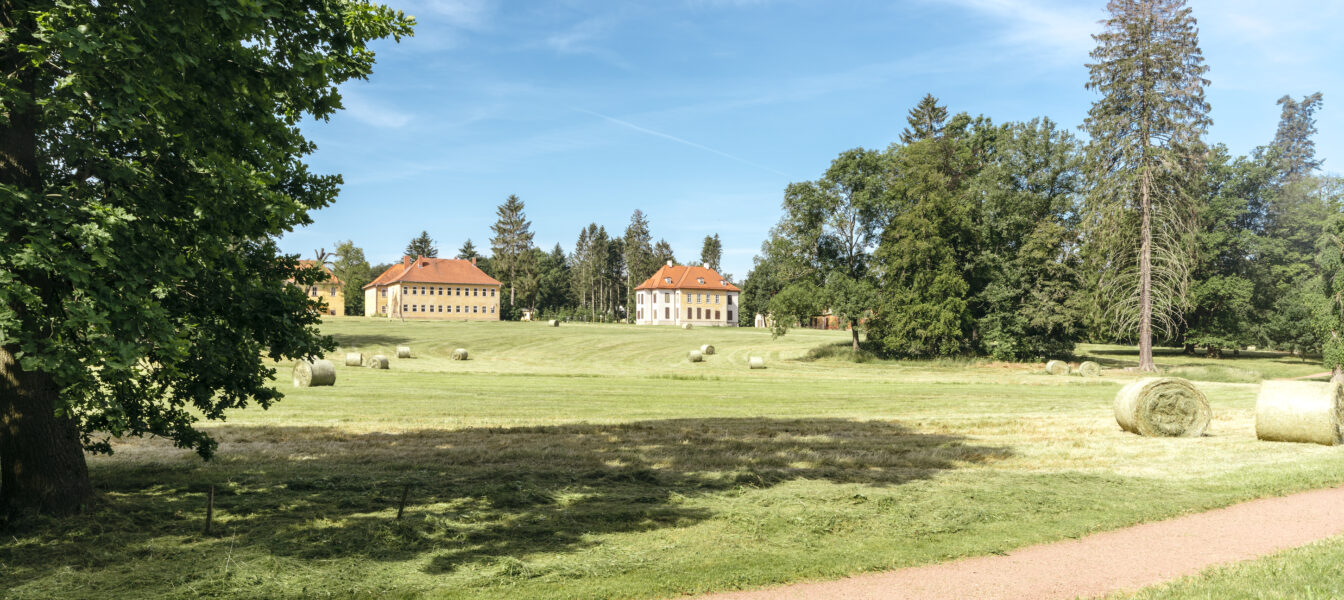
Wilhelmsthal Palace is embedded in a 15-hectare park with an artificially dammed lake, once plied by Venetian gondolas. Towards the end of the 18th century, Duke Carl August had the formal garden transformed into a landscape park. Another redesign took place in the mid-19th century, and since then the park has borne the hallmark of Prince Hermann von Pückler-Muskau. The immediate surroundings of the palace and the flower island were adorned with flowerbeds. Most of the grounds present themselves as finely composed nature with smooth transitions into the surrounding landscape. In recent years, extensive restoration work has been undertaken to bring this back to life.