The largest twin-castle complex in Central Germany
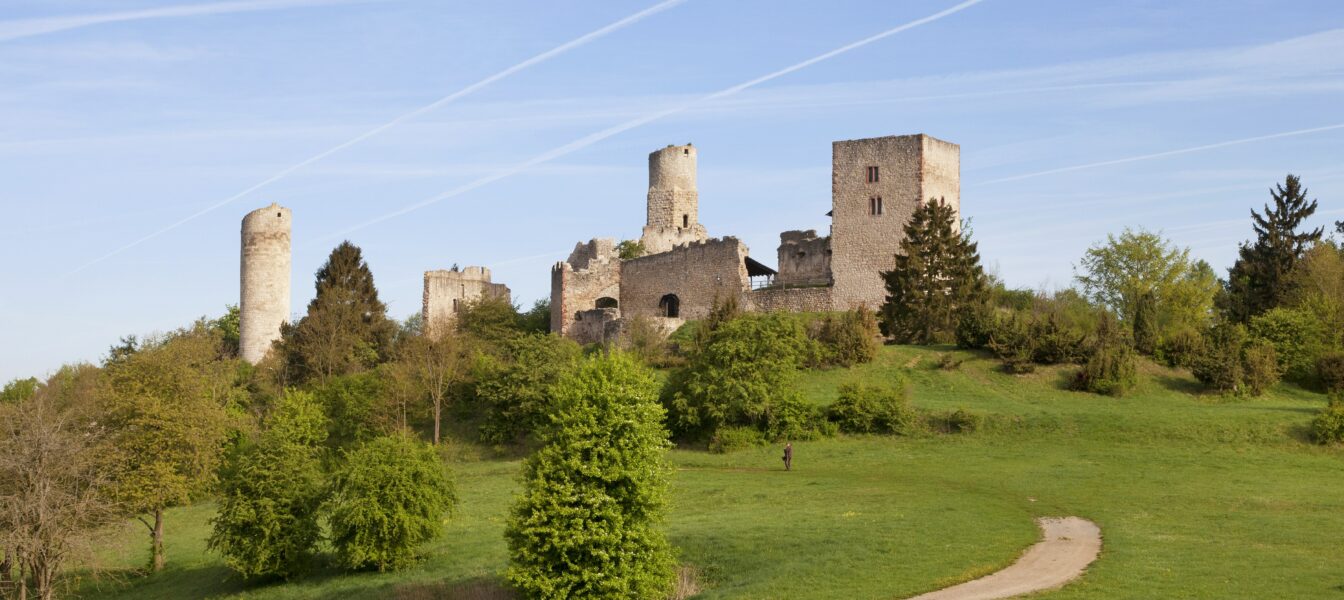
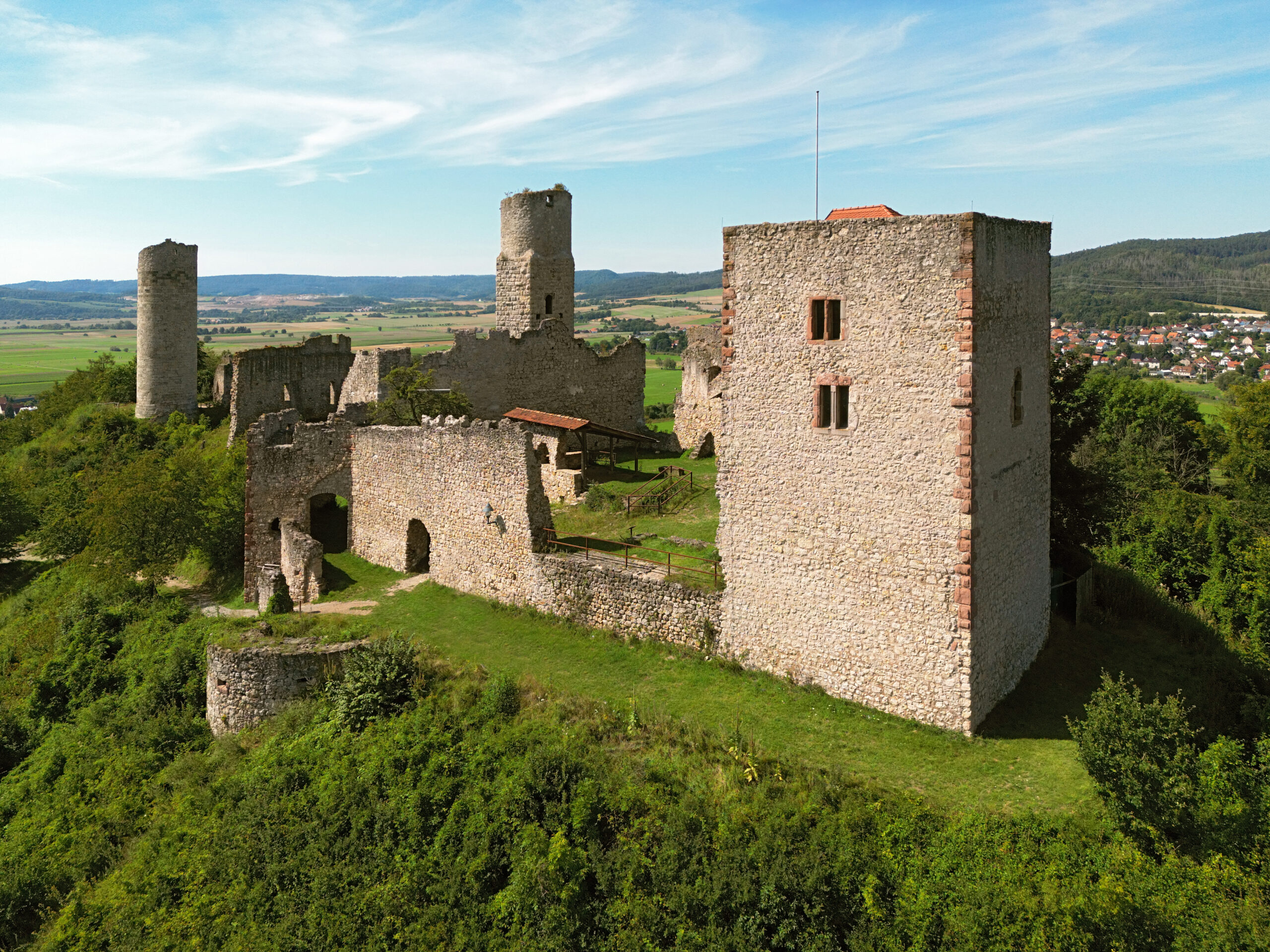
In the picturesque Werra Valley, around 17 kilometres west of Eisenach, there is not just one castle – but two. Brandenburg near Lauchröden is one of the largest double-castle complexes in Central Germany. The origins of this striking castle complex probably date back to the year 1200. The main construction period spanned the 13th to the 15th centuries. Although only ruins of the complex remain today, they are no less impressive. From the mighty walls, visitors are treated to a magnificent view down into the Werra Valley and up to the heights of the Rennsteig.
Castle Museum
April to September
Sundays and public holidays 11 am – 5 pm
Park/Garden
Open all year round
The Brandenburg’s Escort
It is impossible to miss and dominates the landscape of the middle Werra Valley – the Brandenburg ruins near Lauchröden. It is regarded as Thuringia’s largest double castle and is also one of the oldest castles in the state. Yet very little is known about its early history. What is known, however, is that the ‘Via Regia’ ran very close by. In the Middle Ages, this east-west route was one of the most important and significant trade routes. The ‘Via Regia’ was to play a further important role in the castle’s history. This is because the Counts of Wartberg held the so-called ‘Geleit’ (escort duty). They were therefore obliged to escort passing trade caravans safely to Eisenach – in return for appropriate remuneration, of course. The counts presumably derived their name from the office of burgrave bestowed upon them at Wartburg Castle. From 1224 onwards, they took their name from their new residence, Brandenburg. In their heyday, the Counts of Wartberg enjoyed great prestige. This is evident, amongst other things, from the fact that two members of the family accompanied the Landgrave on the crusade to the Holy Land in 1227. However, neither the Landgrave nor Ludwig II of Wartberg returned. Consequently, the office of burgrave was no longer filled and the family lost its influence. There is no further record of the Wartberg name after 1435.
Upper House and Lower House
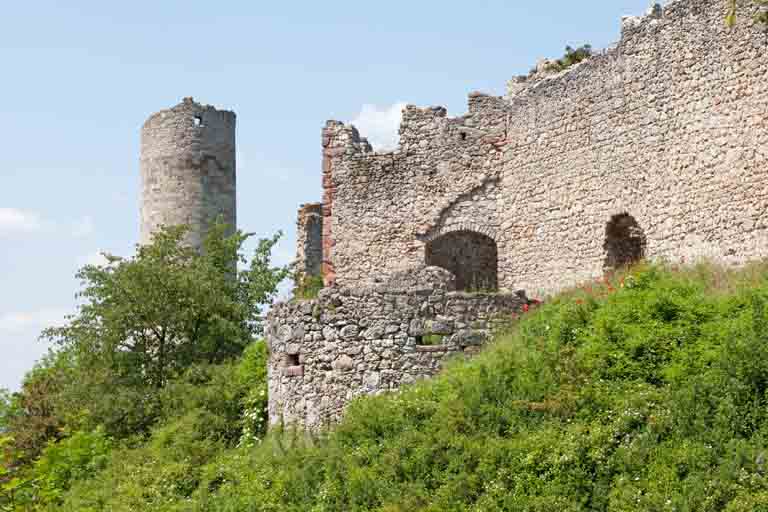
The double castle complex consists, on the one hand, of the western castle. It is also known as Niederhaus and faces the Werra Valley. Its most striking feature is the round keep. Even today, the castle is protected by a gatehouse and a strong wall.
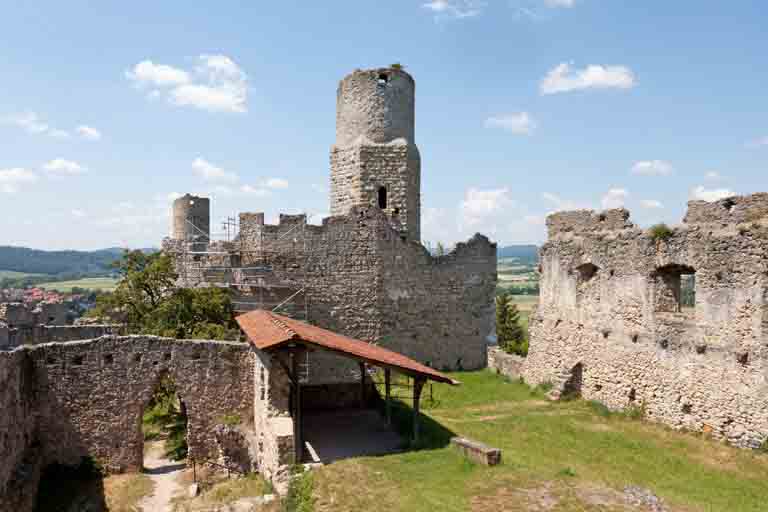
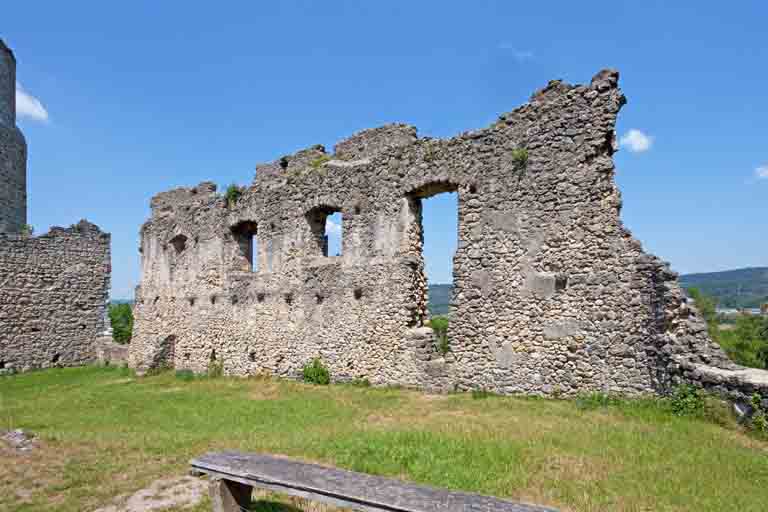
Secondly, the castle complex comprises the eastern castle, also known as the Oberhaus. This part of the complex faces the rising slopes of the Rennsteig and is surrounded by a curtain wall. The Oberhaus comprises two sections. The western section houses the imposing keep dating from the first half of the 13th century. The 18-metre-high tower has a striking design: its lower section is hexagonal, whilst the upper section is circular. In the eastern part of the Oberhaus, remains of the curtain wall, the cistern, the late medieval great hall and the early modern residential tower (Kemenate) have been preserved.
The decline has been halted
Since the Thirty Years’ War, the castles had fallen into disrepair and become a public quarry. It was not until 1841 that Grand Duke Karl Friedrich of Saxe-Weimar-Eisenach issued a decree prohibiting “the unauthorised extraction of building stones”. During the GDR era, the twin castle was situated in the immediate vicinity of the inter-German border and was therefore closed to the public. Following the end of the GDR, initial stabilisation and restoration work was undertaken, which was later continued. Today, the castle is freely accessible and offers visitors a magnificent view of the Werra Valley.