Schwarzburg Palace: An extracurricular learning centre

Memorial to German History
Schwarzburg Palace
Schwarzburg Palace: An Extracurricular Learning Centre – at a glance

Contact
Dr Anke Költsch
Coordinator, Schwarzburg Palace – Extracurricular Learning Centre
Mobile: 0173 / 3419810
Email: lernort@thueringerschloesser.de
Thuringian Castles and Gardens Foundation
Heidecksburg Castle
Schloßbezirk 1
07407 Rudolstadt
Address
Schwarzburg Palace
Schloßstraße 1
07427 Schwarzburg
Courses and activities
An overview of all learning opportunities is available on
the Thuringian school portal
and also further down this page.
Fancy finding out more about the castle’s history?
Our media guide takes you on an exciting journey – from the comfort of your own home or right here on site!
Schloss Schwarzburg, an extracurricular learning centre, was established as part of the federally and regionally funded project ‘SchlösserWelt Digital&Original 2022–20 25’ and will receive funding from the BKM until 2028.
All the programmes offered by the learning centre
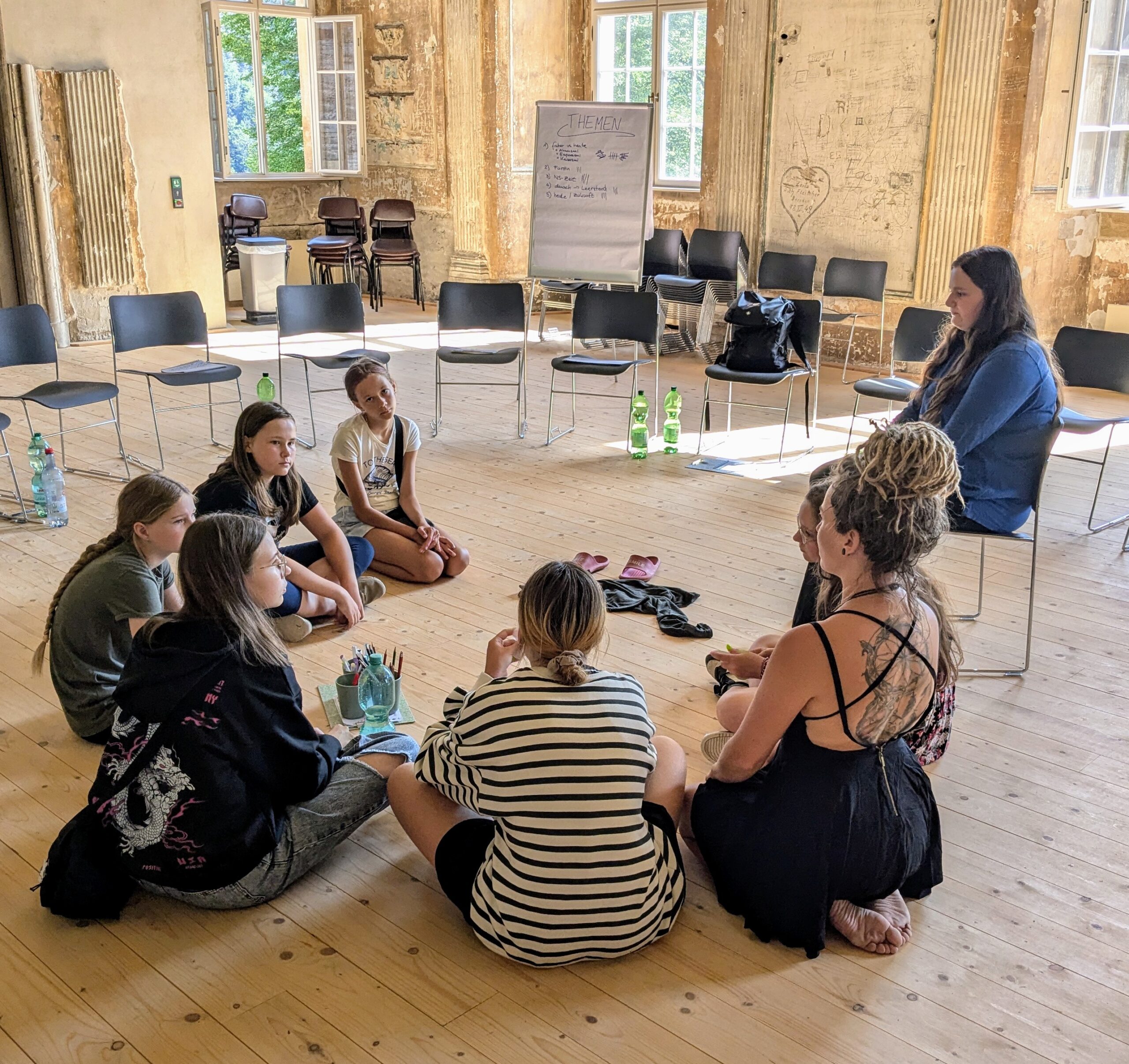
The learning centre’s programmes demonstrate how regional history in rural areas can be utilised for out-of-school learning. They cover the entire history of the castle complex, whilst placing a strong emphasis on the history of democracy and dictatorship, as well as democracy education. Inquiry-based, discovery-based and participatory learning, together with collaborative projects, form the basis for exploring topics relating to historical and political education, remembrance, democracy education and beyond.
Our services in detail
- Actionbound (a digital treasure hunt set in the grounds) featuring historical photographs and information about the castle’s history – QR code available on site
- Locating historical and current photographs on site plans
- Multimedia guide with audio stations, main theme: making decisions
- Analogue and digital 3D models of the palace complex before and after 1940
- Exercise in source criticism using historical interior photographs (black-and-white and colourised) as examples
- Inclusive module (created in collaboration with the Inclusive Workshop for Culture and History e.V., funded by the Thuringian State Agency for Political Education): guided tour in plain language, Schwarzburg case (containing artefacts) and timeline
- Democracy education in collaboration with various educational stakeholders, e.g.
- Film: Memory Walk Schwarzburg (focusing on barracks camps and forced labour). The ‘Memory Walk Schwarzburg’ is based on a format developed by the Anne Frank House in Amsterdam. The event was organised by Zukunftswerkstatt Schwarzatal e.V. and funded by the ZEIT-Stiftung Ebelin und Gerd Bucerius. The Saalfeld-Rudolstadt Partnership for Democracy organised and ran the event, which was supported and facilitated by the Laura Concentration Camp Memorial in Lehesten and the STSG (Laura Concentration Camp Memorial: 2025: Memory Walk Schwarzburg).
- Holiday camp ‘In Search of Traces at Schwarzburg Castle’ – Report from the German Adult Education Association: Simply well done – A holiday camp at Schwarzburg Castle
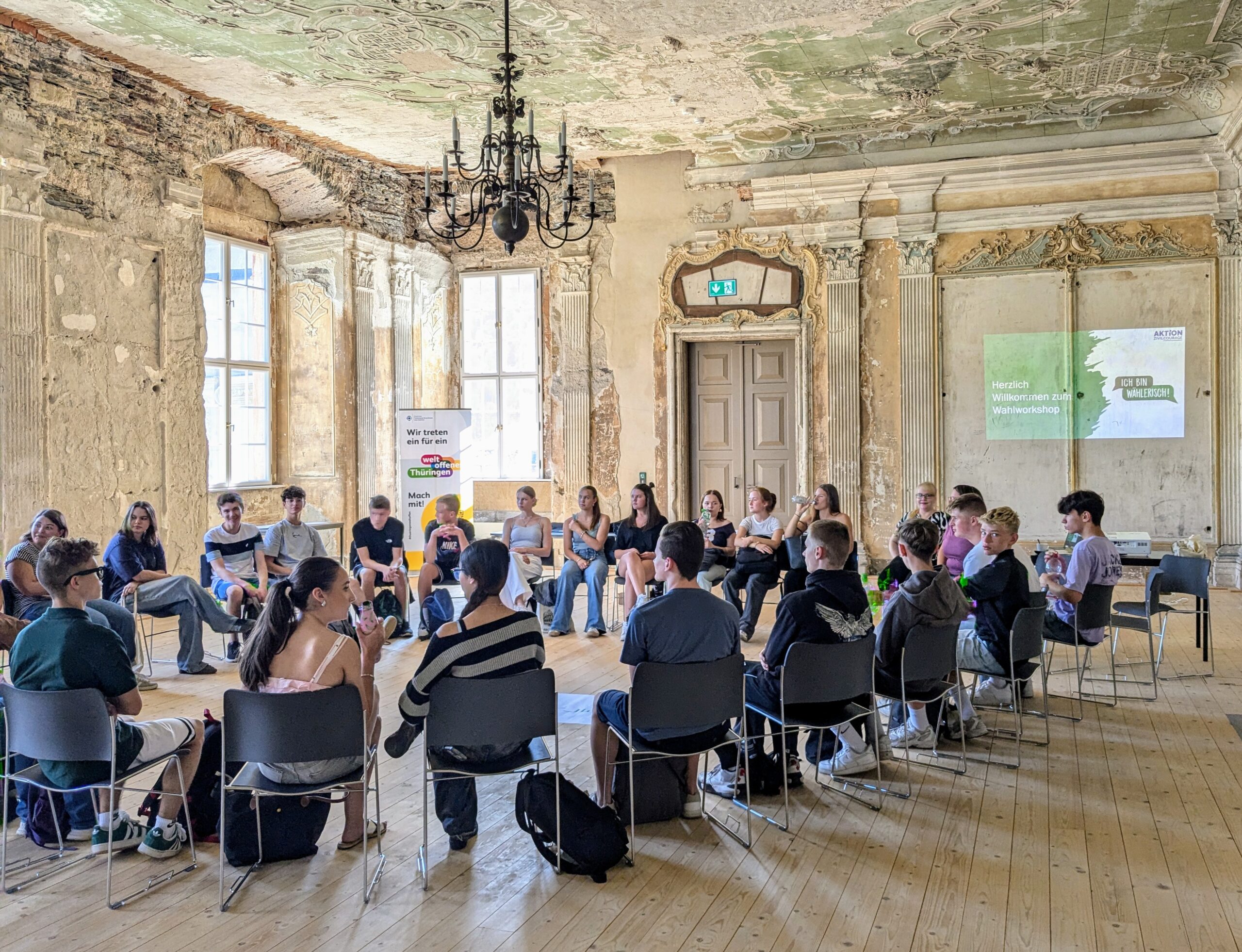
- ‘Ich bin wählerisch’ first-time voters’ project – Aktion Zivilcourage e.V. Dresden for two Year 10 classes from the Fridericianum Grammar School in Rudolstadt at the off-campus learning centre, Schwarzburg Castle, in 2024. Link:
- ‘Nation&Du’ school workshop 2025
Our range is constantly growing and evolving! We welcome suggestions and are keen to hear your views!
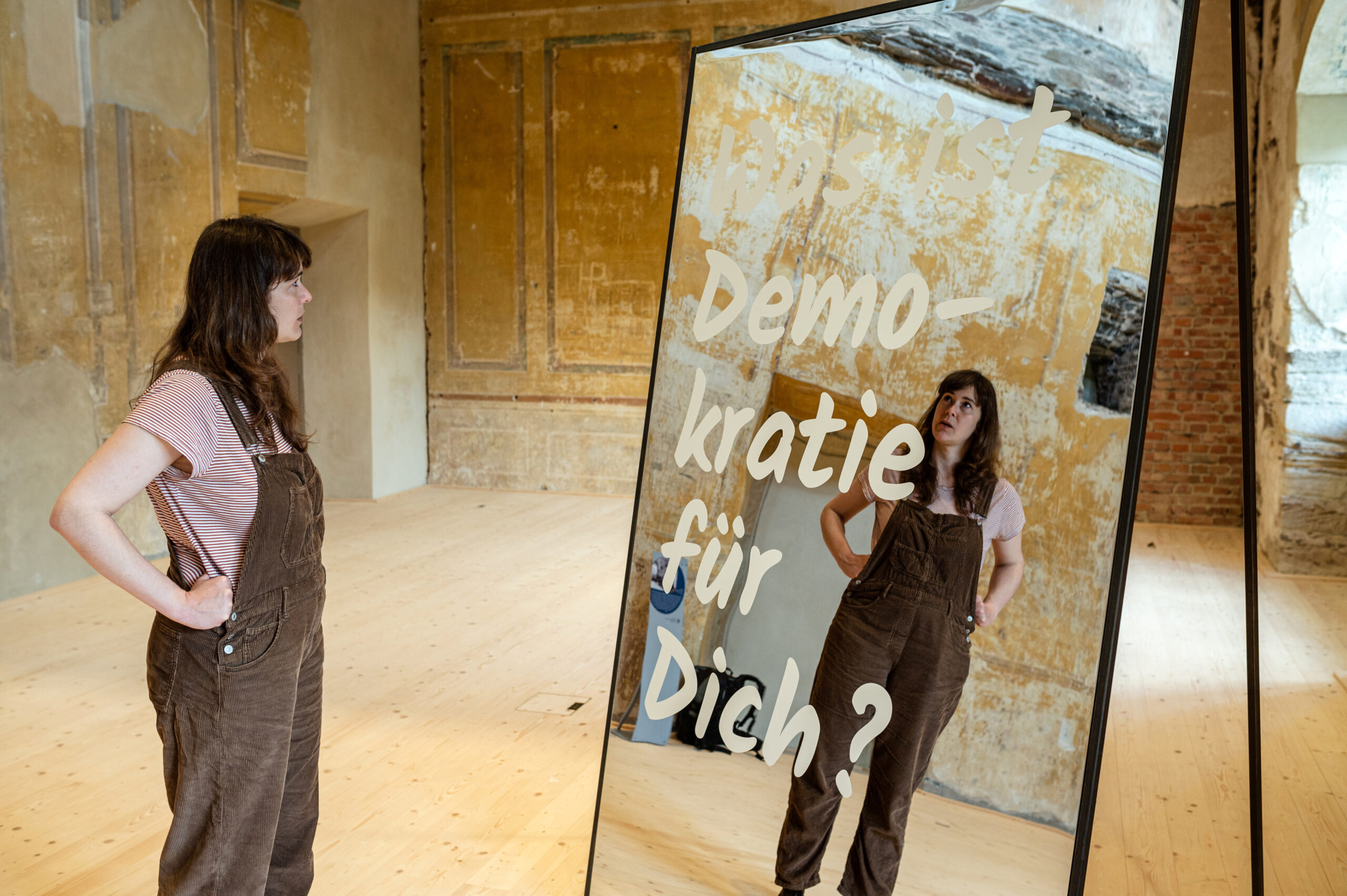
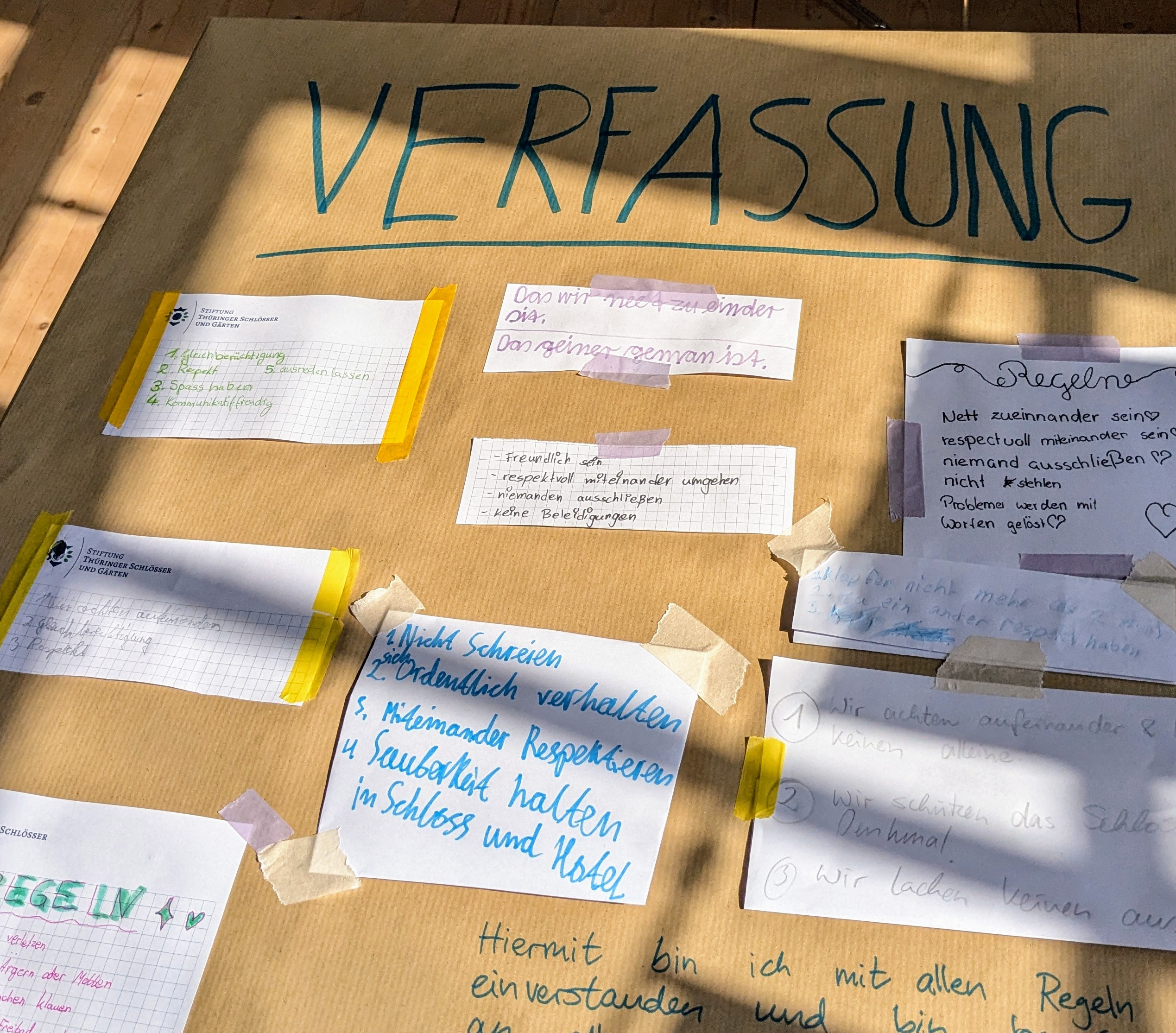
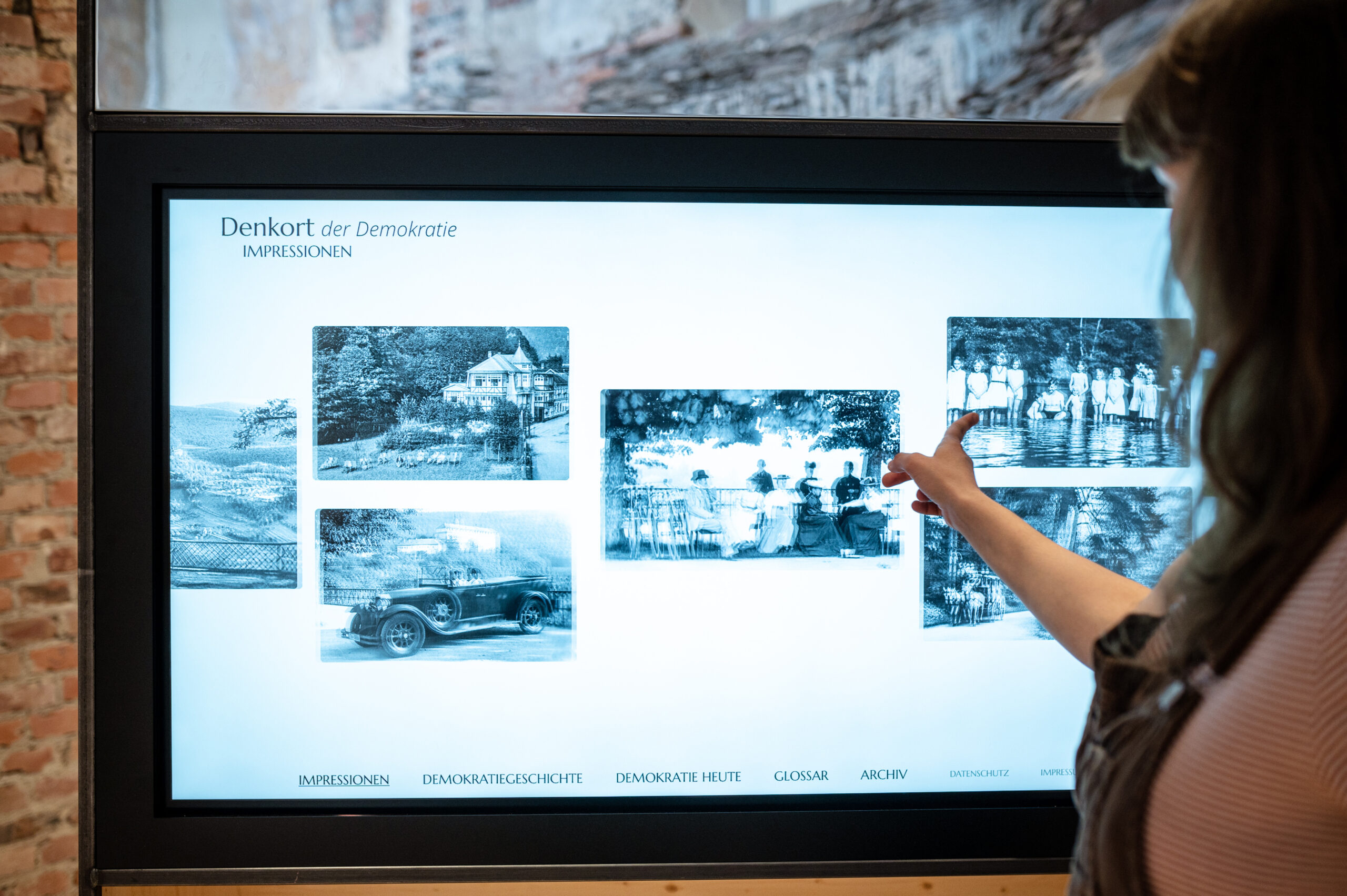
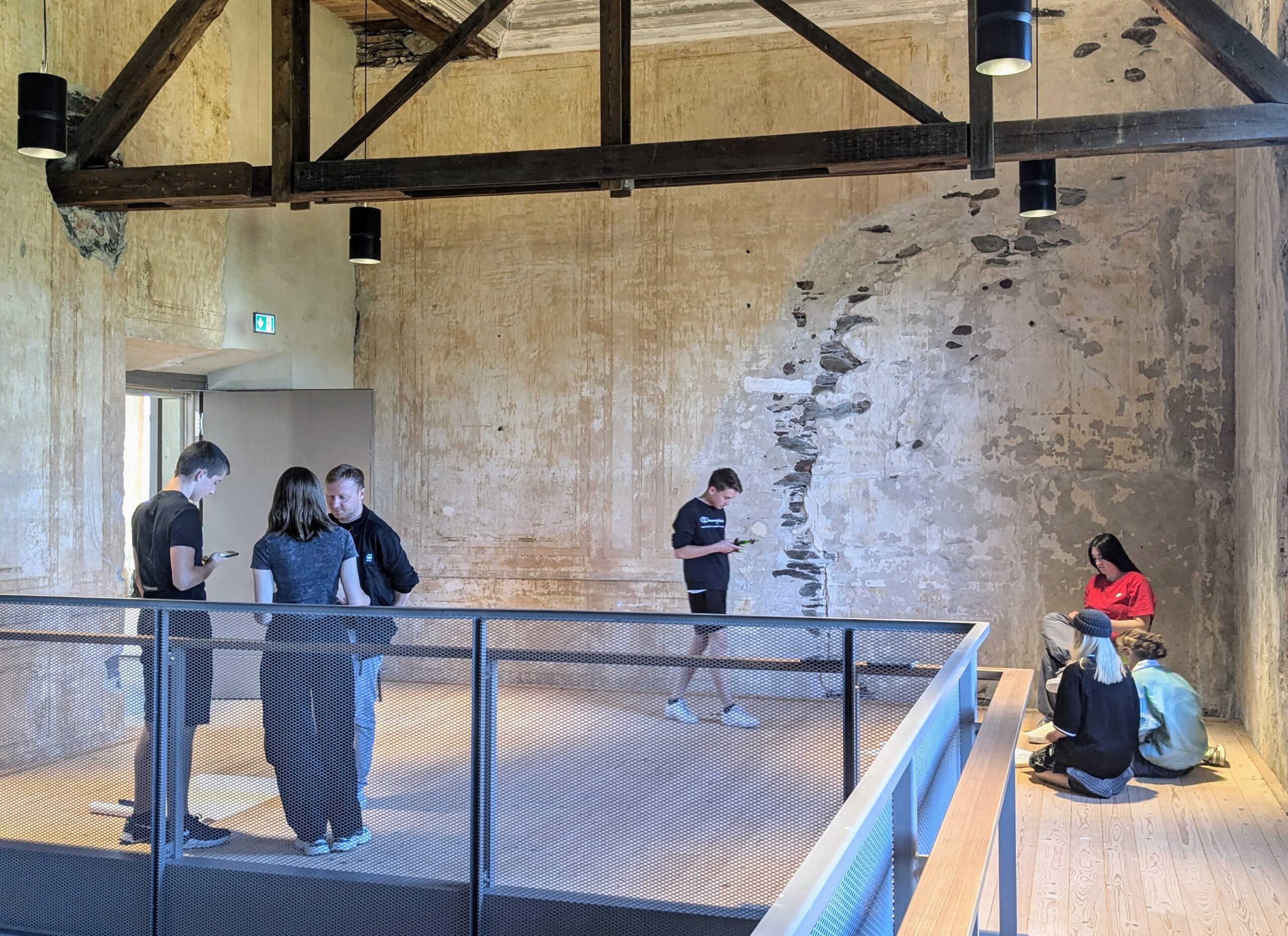
Thematic approach: Between monarchy, democracy and dictatorship
Schloss Schwarzburg, an extracurricular learning centre, is dedicated to the eventful history of the castle complex’s construction, use and the Schwarzburg dynasty. The ancestral seat of the Counts and Princes of Schwarzburg – one of Thuringia’s oldest noble dynasties – boasts a history stretching back more than 900 years as a castle, regional fortress, hunting lodge, summer residence and a venue for dynastic receptions.
Following the abdication in 1918, it served as the residence of the last princely couple. In 1919, the Weimar Constitution was signed by Reich President Friedrich Ebert within sight of the palace, at the ‘Weißer Hirsch’ hotel complex.
Between 1940 and 1942, the Nazis began converting the castle complex into a Reich guest house. To this end, the Baroque main building was largely gutted, whilst the adjoining wings and parts of the castle chapel were demolished. To carry out the demolition work, the Nazis set up a barracks camp below the castle, where foreign labourers and forced labourers were housed. After the conversion work was halted in 1942, Schwarzburg Castle was used until the end of the war to store works of art as well as materials from government departments and industry.
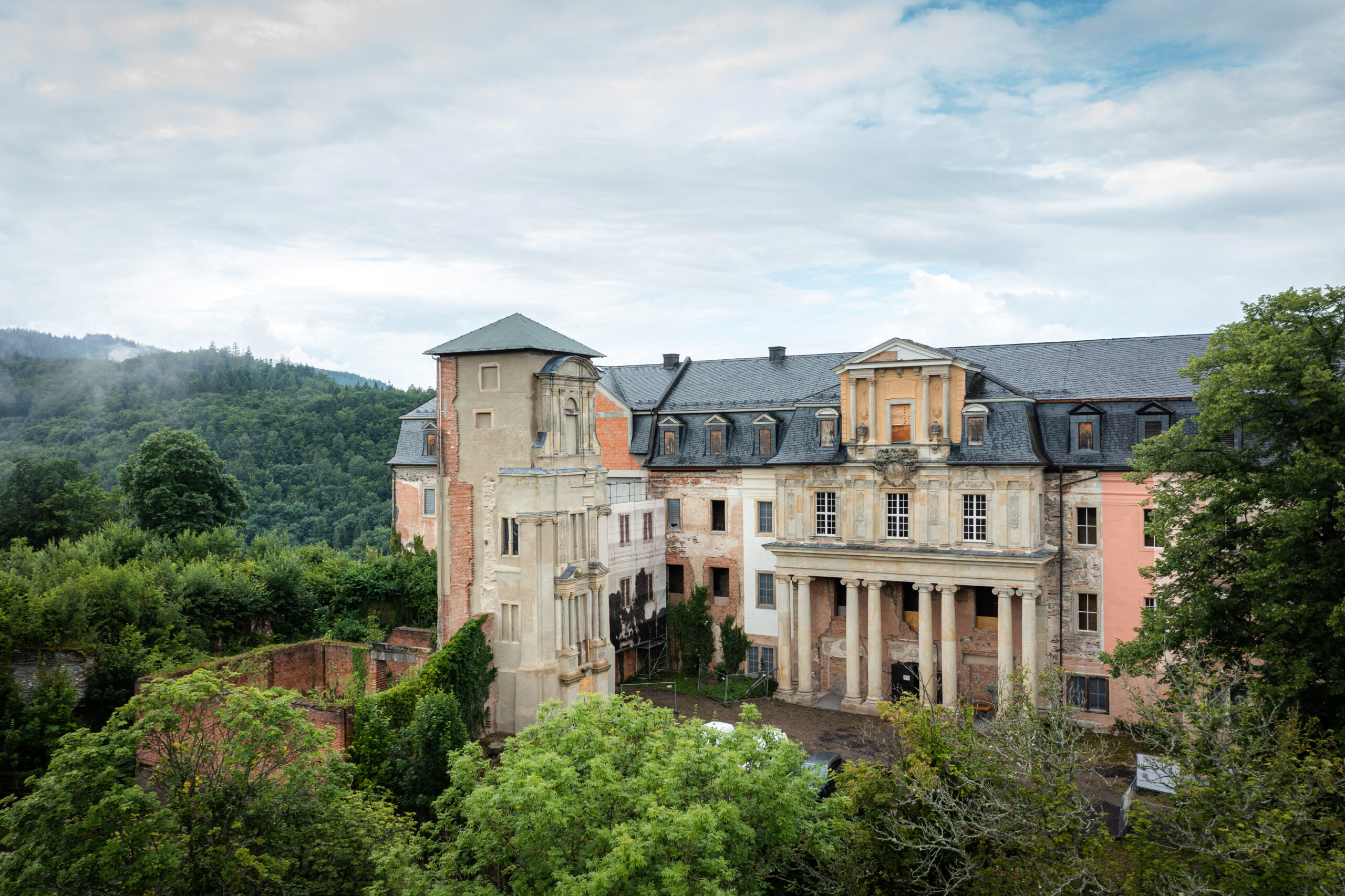
In the GDR, there were various plans to refurbish the castle complex – which had been left to fall into disrepair – but none of them were ever implemented. However, the garden house, known as the Kaisersaalgebäude, began to be used for tourism from 1971 onwards.
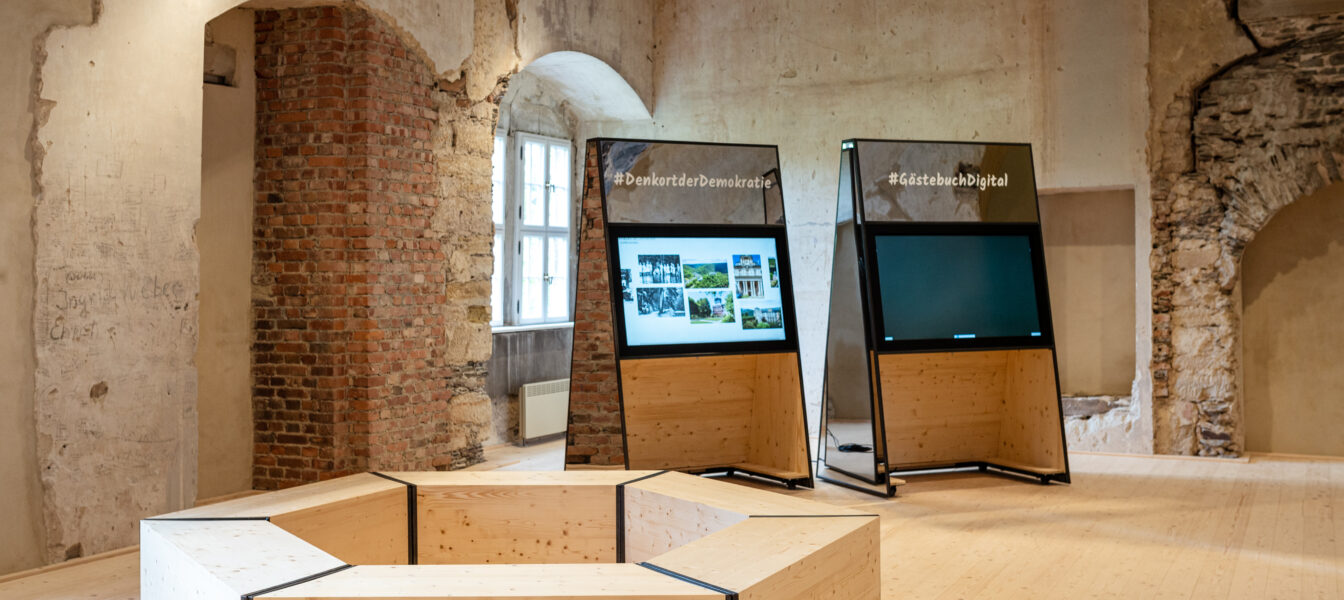
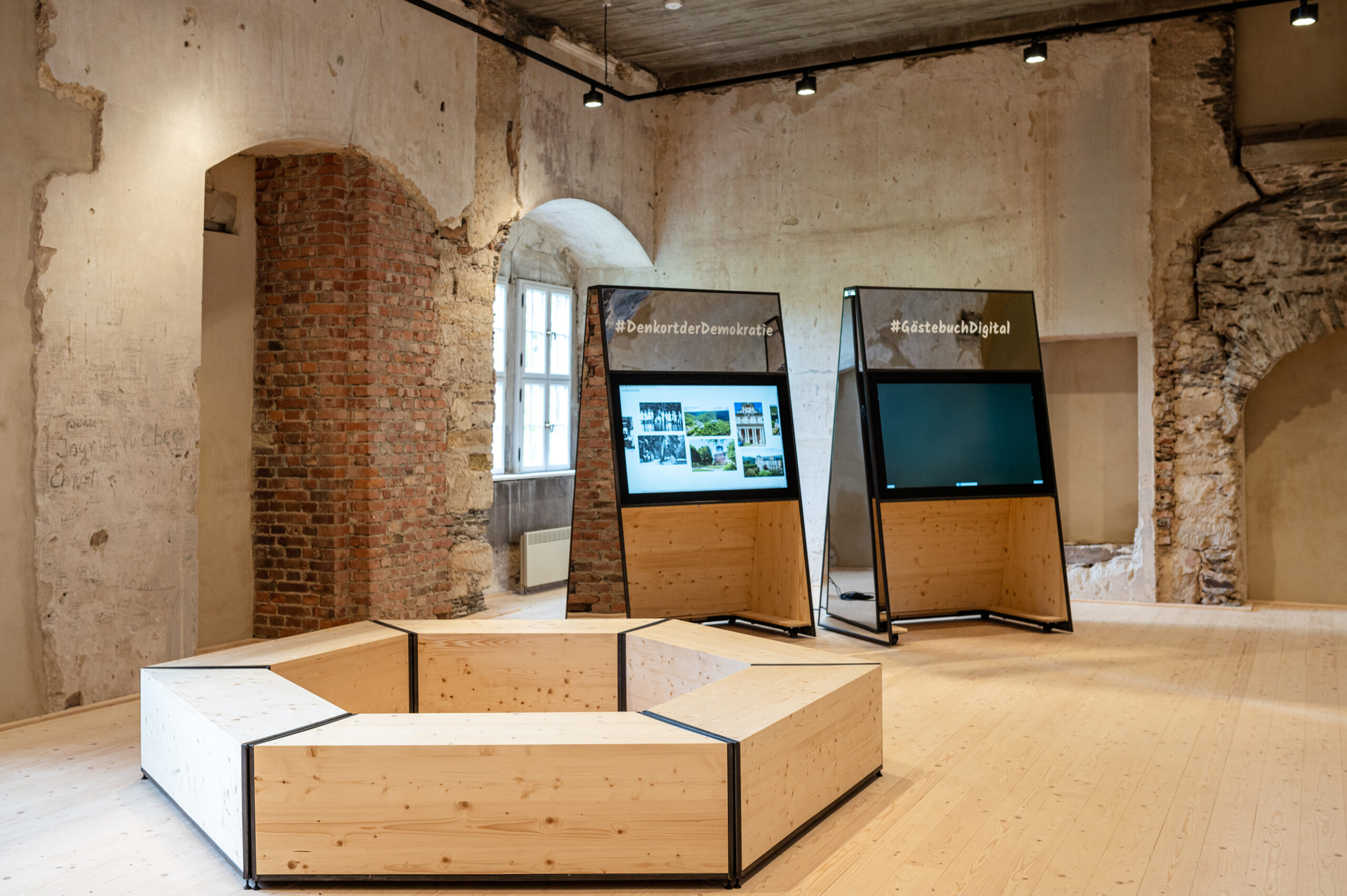
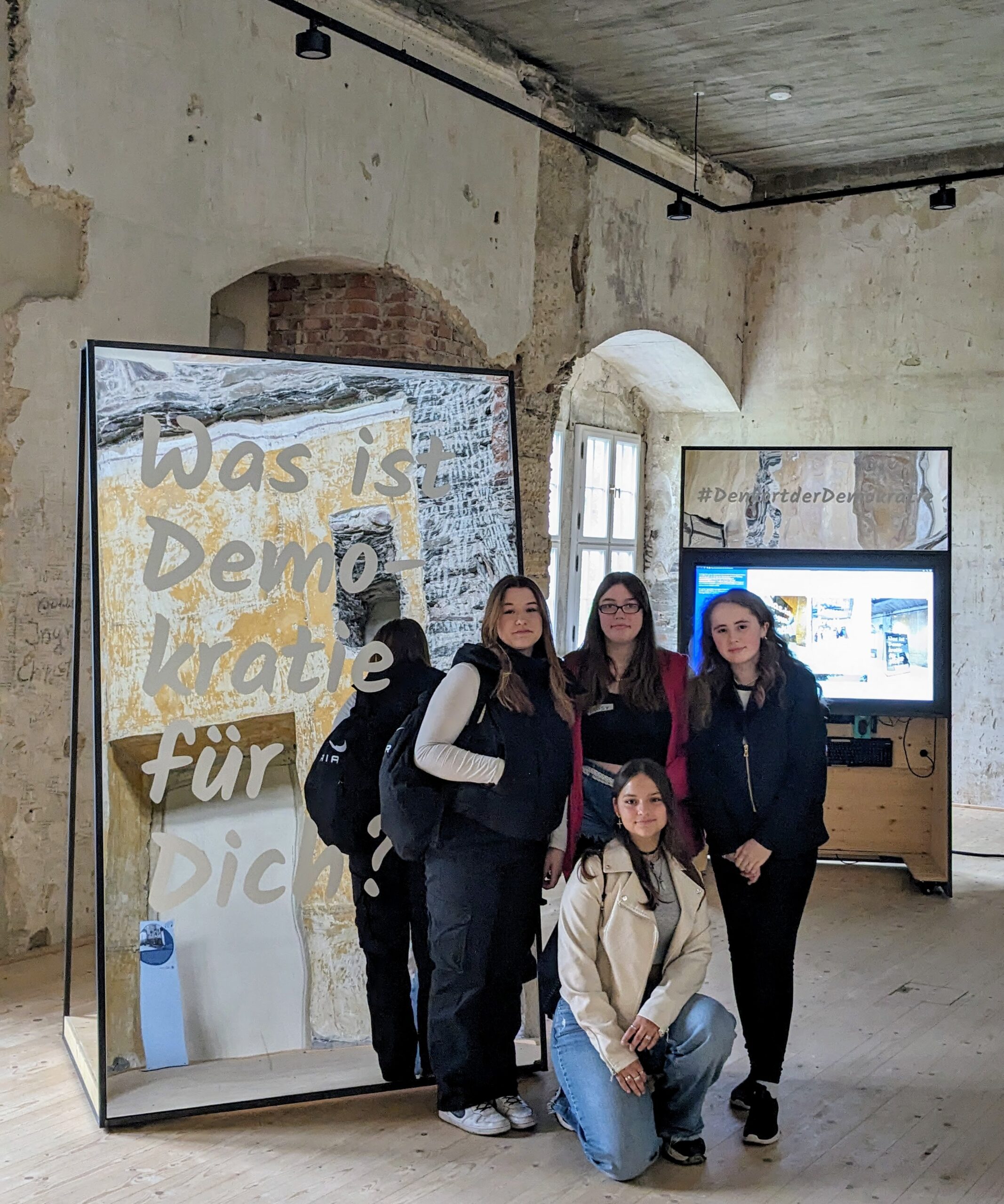
Since 1994, the castle complex has been part of the Thuringian Castles and Gardens Foundation, which has been preserving and gradually restoring it ever since. Parts of the main building are now used as a ‘Memorial to Democracy’ and as an extracurricular learning centre.
A heritage conservation and architectural approach
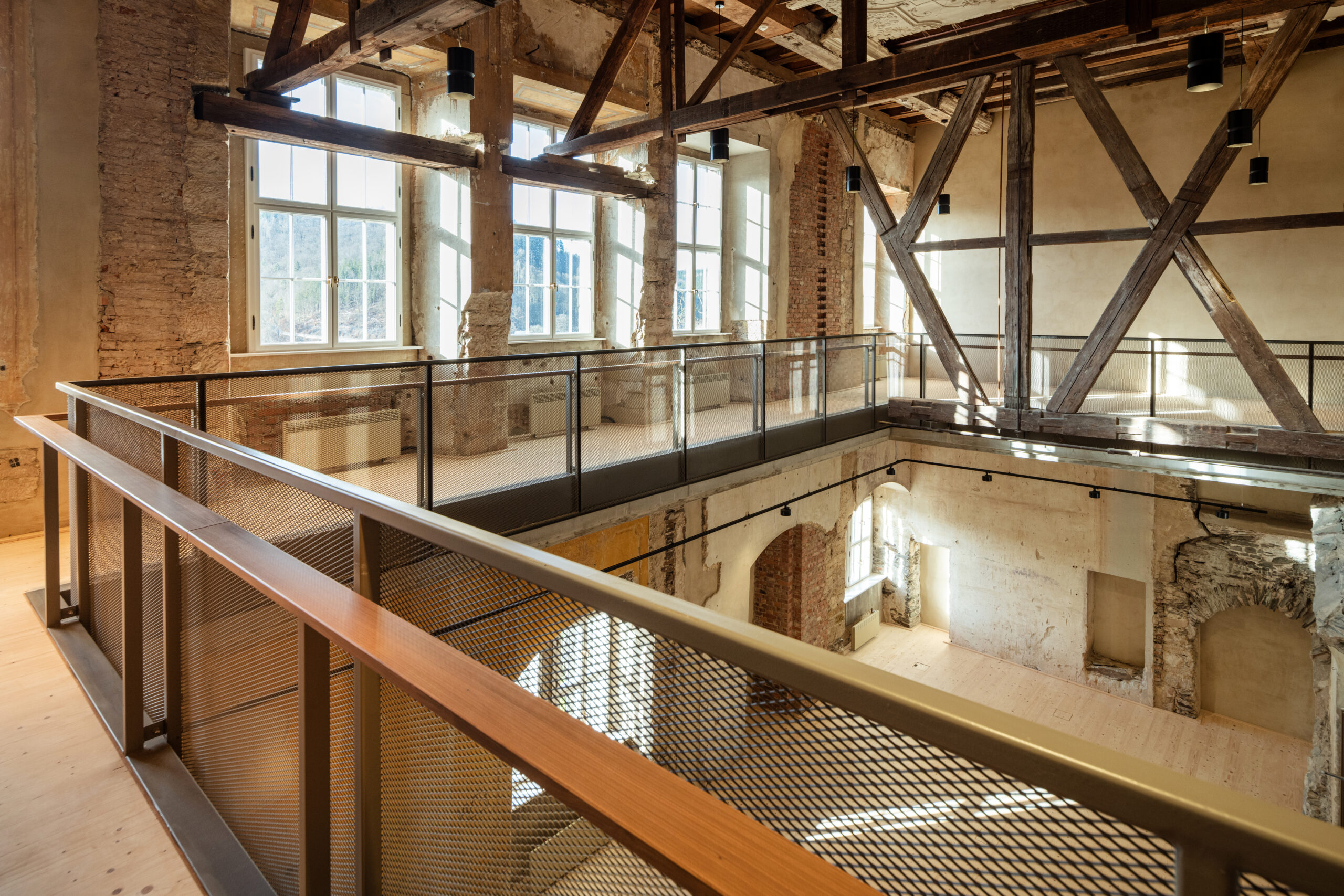
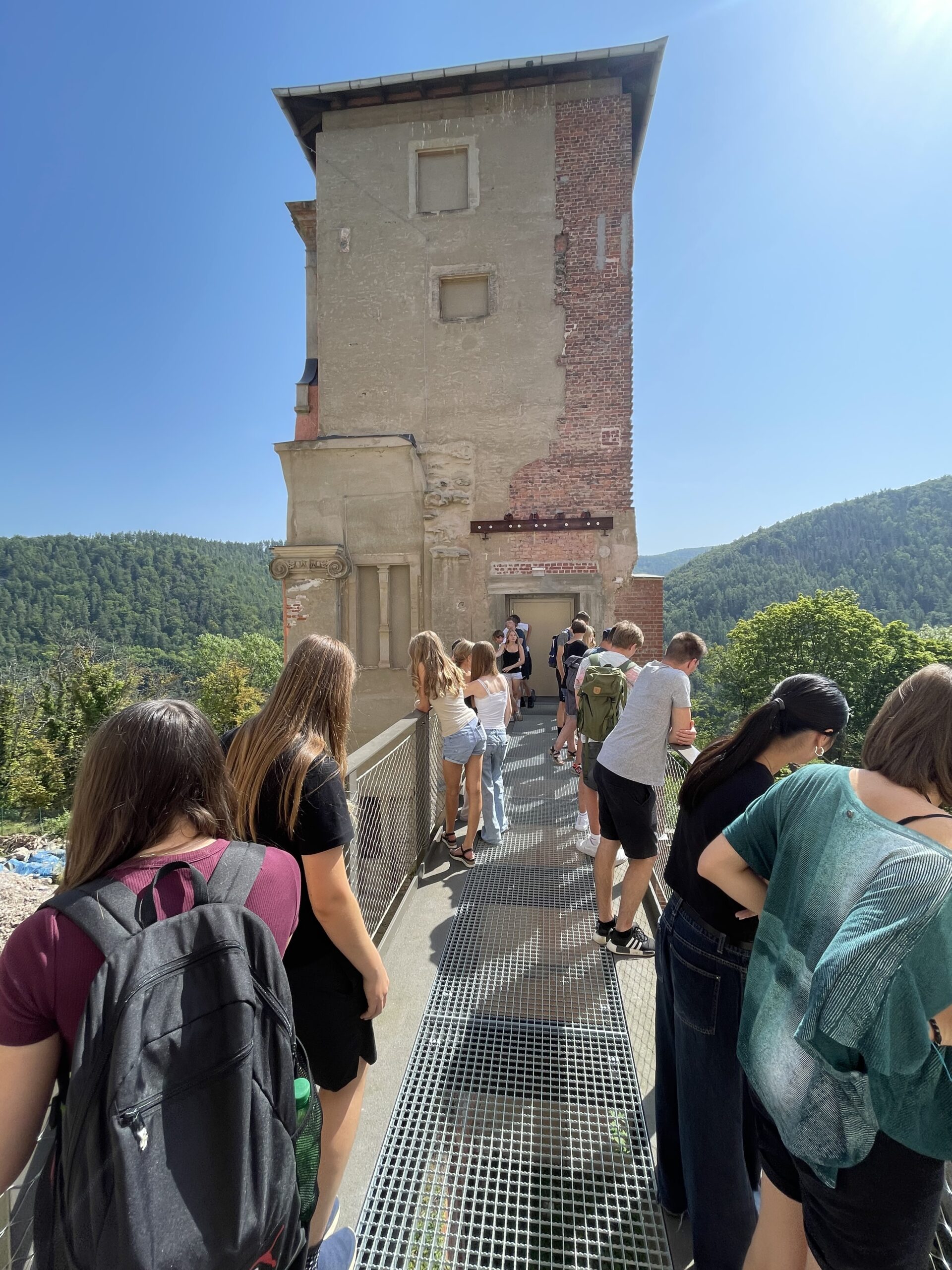
The approach to the conservation and restoration of this historic building – which had been severely damaged by the Nazis – involved preserving all the historical layers, including the evidence of their destruction, which makes a visit here a powerful experience for young people. Schloss Schwarzburg, as a monument of architectural and historical significance, thus becomes in itself a rich source for an exciting exploration of the past and the traces it leaves behind.
Find out more under ‘National Urban Development Projects: Shaping Democracy! Democracy Education and the Culture of Remembrance as a Task for Architectural Culture’
2025 Award for Cultural Education in Castles and Gardens
In 2025, the Schloss Schwarzburg extracurricular learning centre was awarded the Prize for Cultural Education in Palaces and Gardens by the Friends of Prussian Palaces and Gardens Association.
Our partner schools
The out-of-school learning centre has three partner schools, which actively support us by providing various opportunities for stimulation, advice, testing and evaluation.
- Geschwister Scholl Secondary School, Bad Blankenburg
- Fridericianum Grammar School, Rudolstadt
- From May: the “J. H. Pestalozzi” State Support Centre, Rudolstadt
Accommodation recommendations for schools and school groups (selection)
Partnerships and collaboration (examples)
- The Buchenwald and Mittelbau-Dora Memorials Foundation
- Thuringian State Agency for Political Education
- Leibniz Institute for Educational Media | Georg Eckert Institute in Braunschweig
- Thuringia Democracy Education Network
- Friends of Schwarzburg Castle – A Place of Reflection on Democracy e.V.
- Thuringian State Museum at Heidecksburg: Princely Worlds of Experience at Schwarzburg Castle.
- Friedrich Ebert Foundation, Thuringia Office
- Society for the Study of the History of Democracy (GEDG)
- Weimar Republic Association
- Bad Blankenburg State Sports School, Sports and Conference Centre in Thuringia
- VHS Weimar, Political Education & Digitalisation Programme Division
- Saalfeld-Rudolstadt Partnership for Democracy
- Zukunftswerkstatt Schwarzatal e.V.
- ‘Laura’ Concentration Camp Memorial