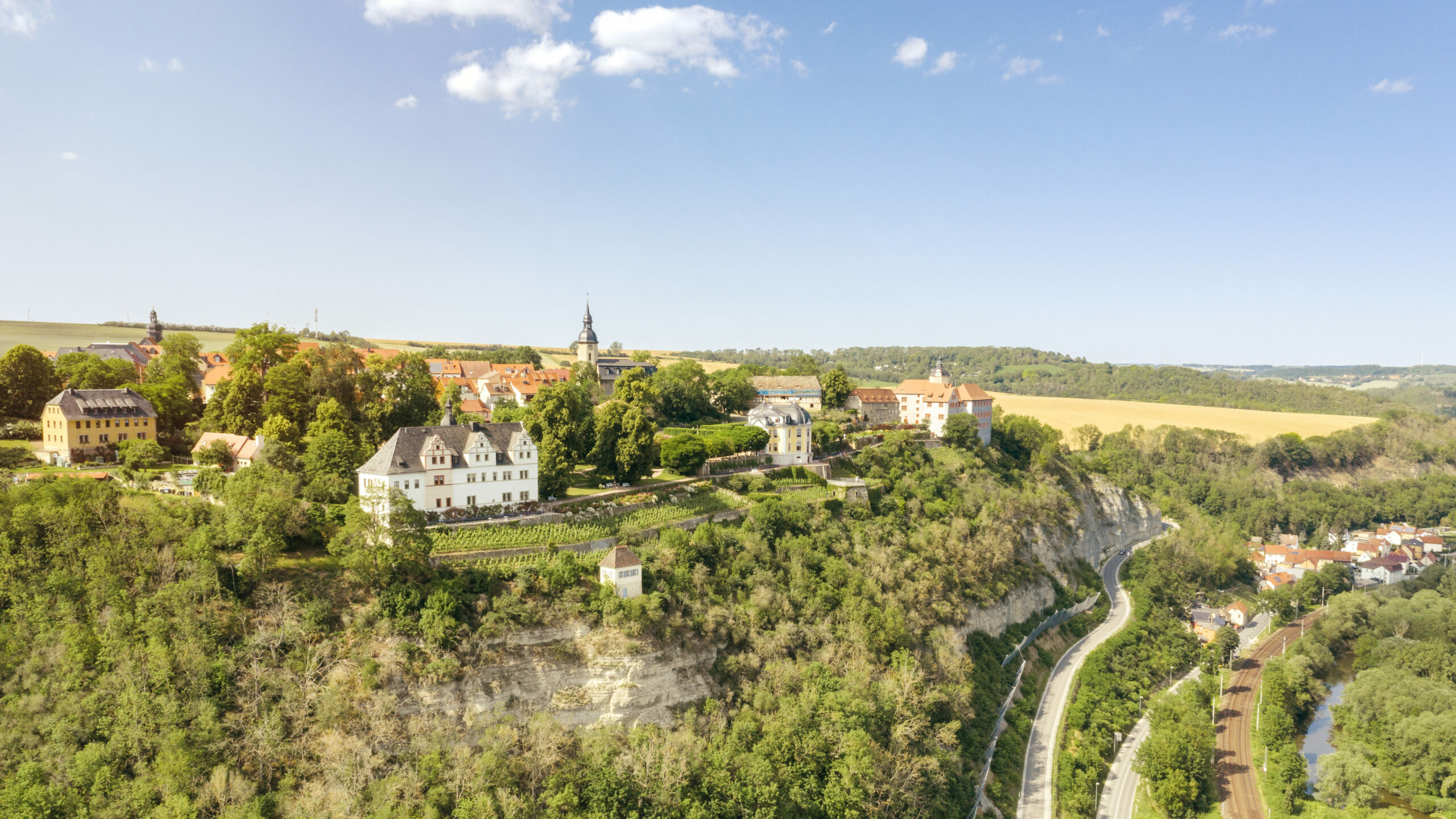
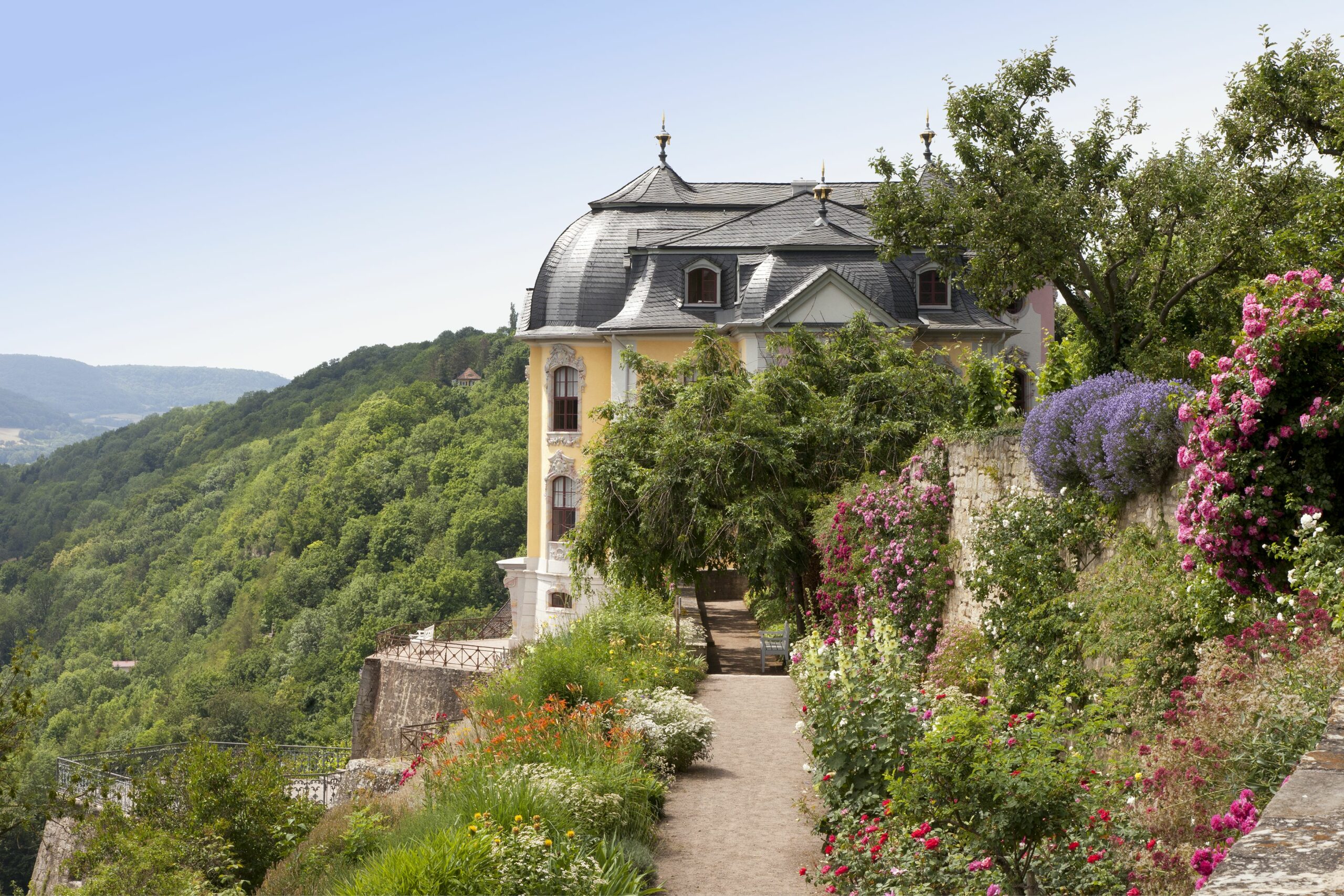
Three palaces, three characters – the unique ensemble of the Dornburg Palaces perches on a rock above the River Saale Valley. The dukes of Saxe‑Weimar‑Eisenach valued the “Balcony of Thuringia” as a summer residence. More than 800 years of history are united here. The Old Palace contains remains of a medieval palace. The Rococo Palace is an elegant 18th‑century pleasure palace with a porcelain collection. The Renaissance Palace is closely associated with Johann Wolfgang von Goethe. He enthused about the lovingly tended palace gardens – they are sheer delight for strollers and rose lovers. The wine from the Dornburg Palace Mountain is as popular today as it was then.
At a glance
Construction work
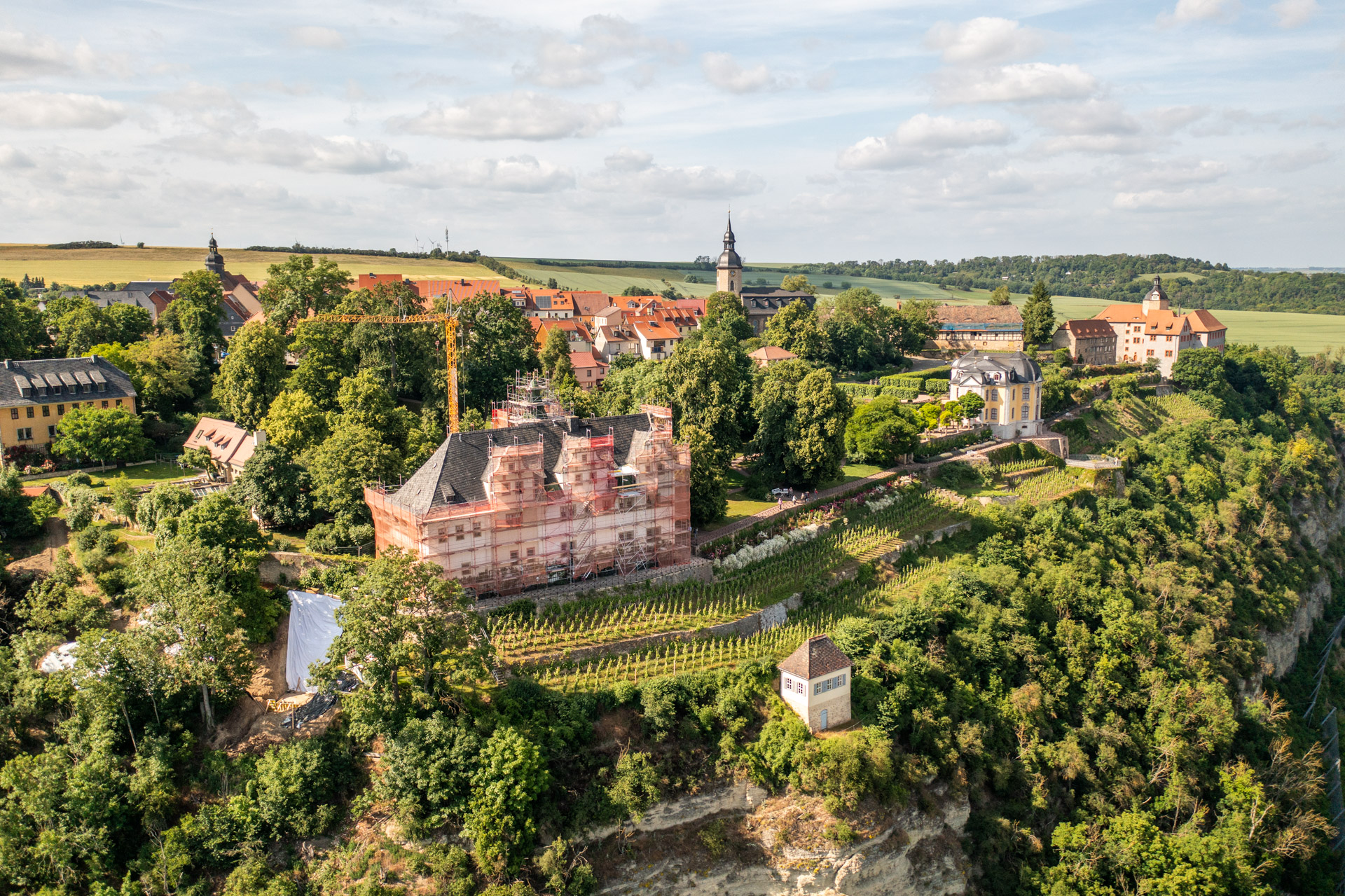
The Renaissance castle is closed due to renovation work.
Dornburg Palaces Museum
Season from April to October
02 April to 01 November 2026
daily except Wednesdays 10 am to 5 pm
Also open on Wednesdays on public holidays
Park and garden
Open all year round from 9 a.m. until sunset
Free admission
Dogs allowed on a lead
Events organised
Every year a wide variety of events and
events take place at the Dornburg castles and
and Gardens. You can find an overview here.
Three Palaces – One Ensemble
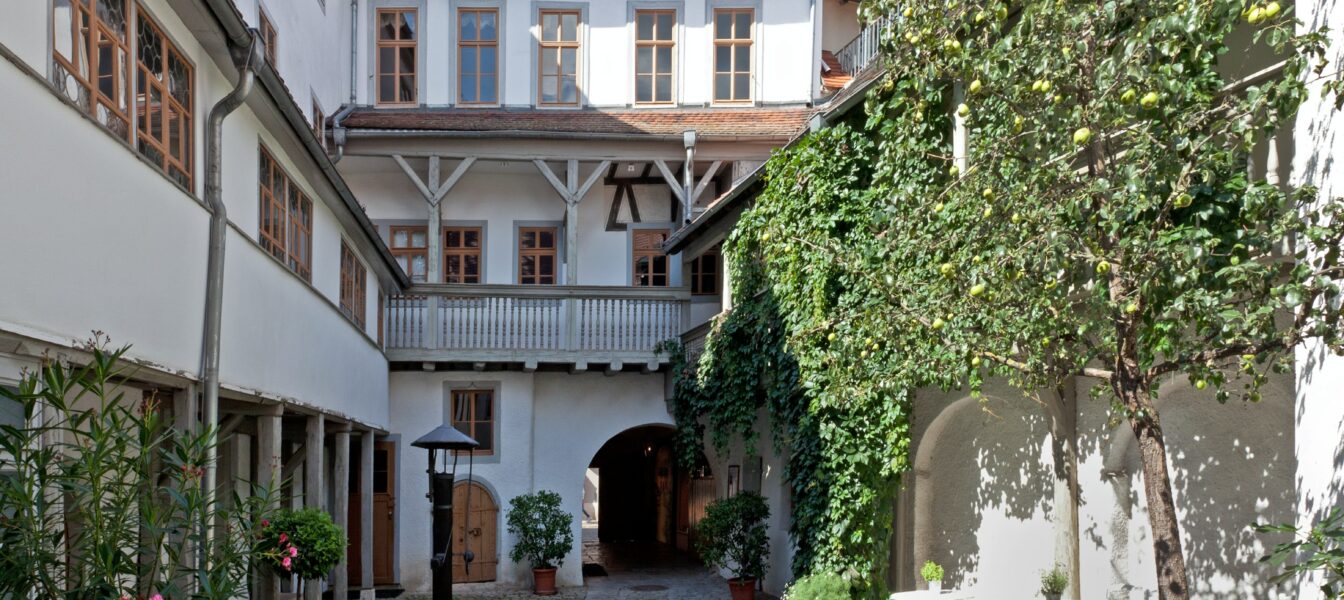
The origins of the Dornburg Palaces lie in a High Medieval palace complex at the northern end of the palace rock. In the 16th century, the Old Palace took its place, and almost simultaneously the Renaissance Palace was added to the south. In between, the Rococo Palace was built in the 18th century – the imposing triple backdrop was complete. Initially, however, the palaces served very different purposes and did not even belong together. Only in 1824, did Grand Duke Carl August of Saxe‑Weimar‑Eisenach purchase the Renaissance Palace to join the other two, and he had them linked by a variety of terraced garden layouts. Today, the Renaissance and Rococo Palaces as well as the gardens can be visited. The Old Palace is used as a conference centre.
Amusement, Hunting and the Military – the Rococo Palace
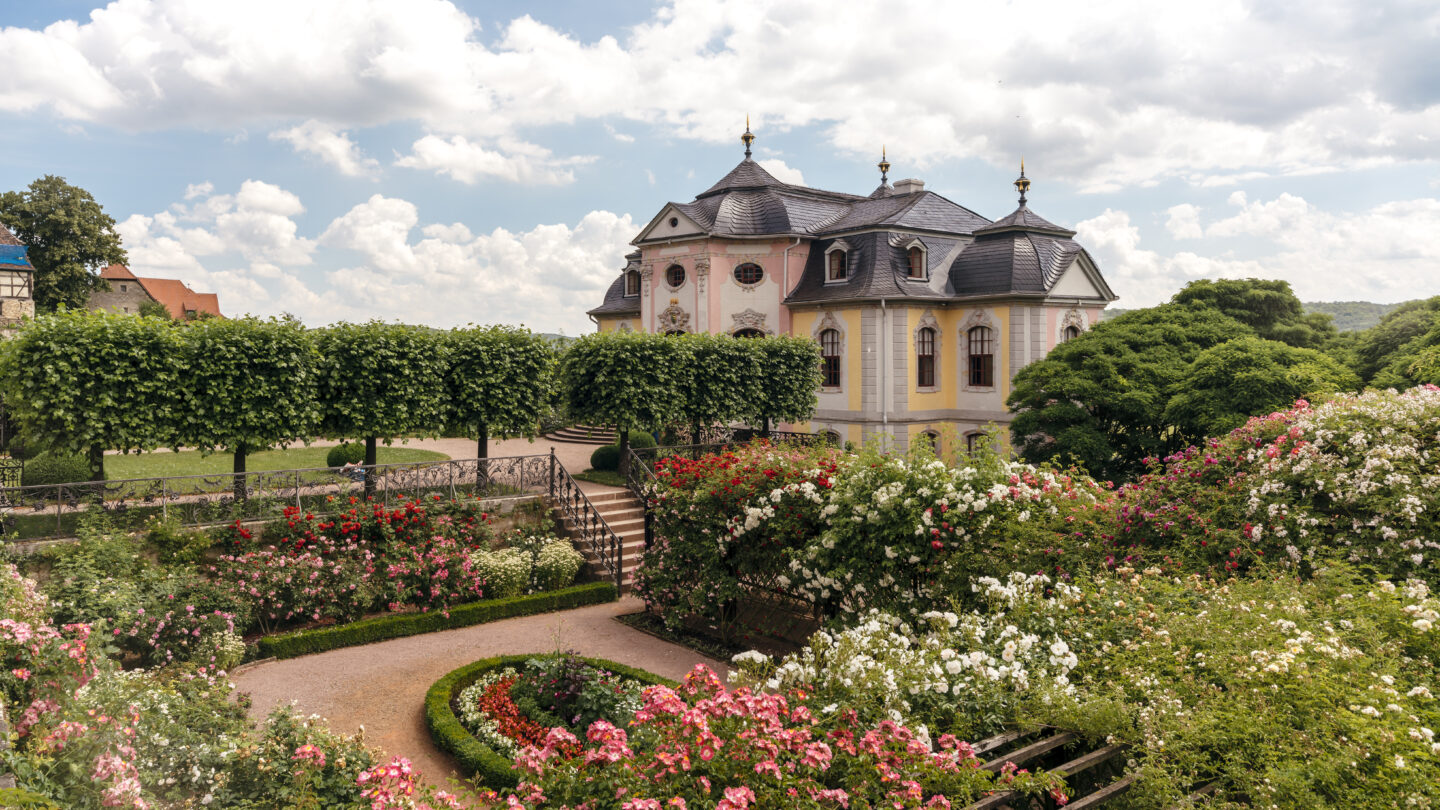
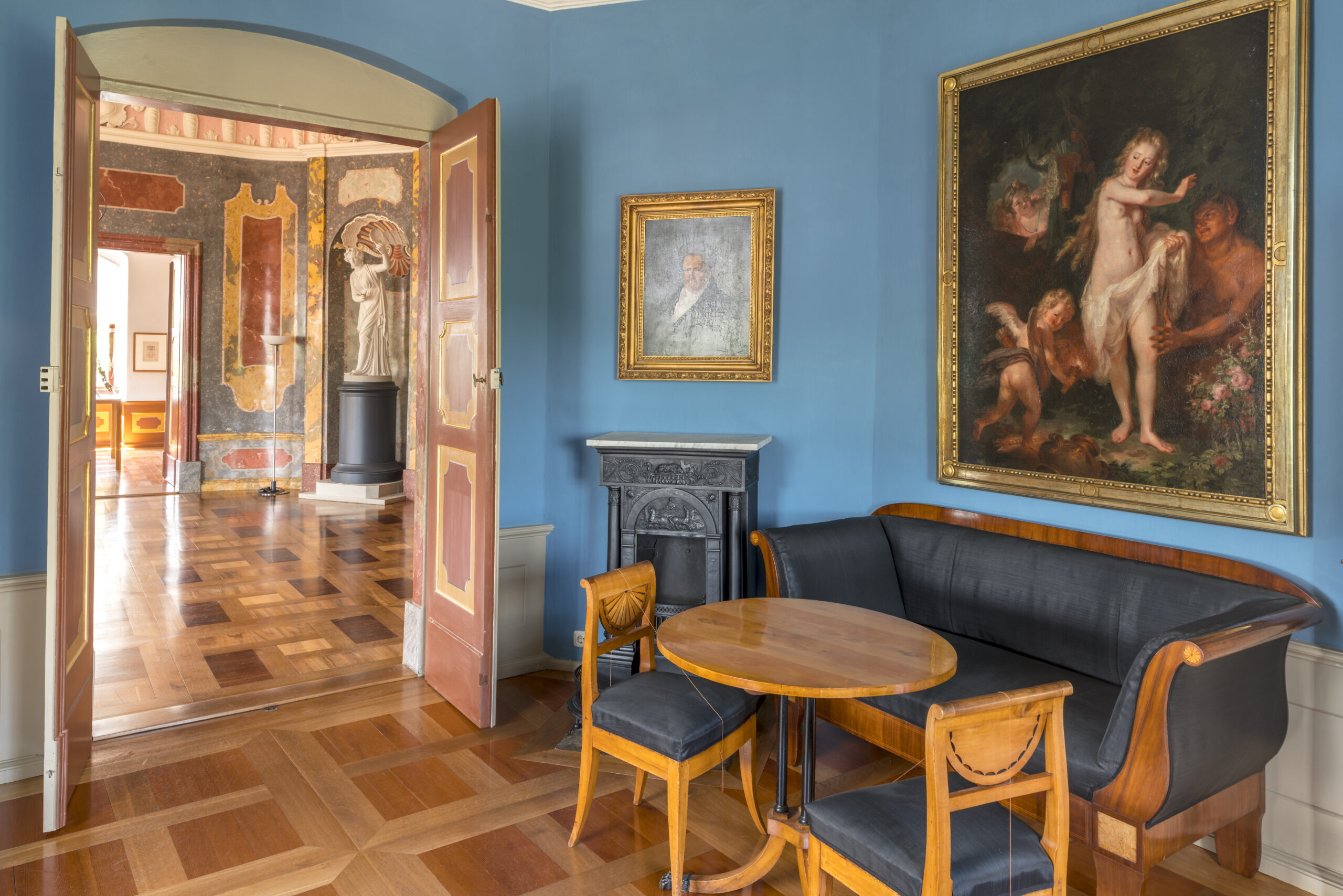
Around 1740, Duke Ernst August I of Saxe‑Weimar‑Eisenach had the Rococo Palace confidently positioned in the middle of the Dornburg Palace ensemble. It was one of many building projects of the absolutist ruler. He valued Dornburg Palace above all for its nearby hunting grounds. He also wished to emulate Elector Augustus the Strong and stage a military review after the model of his famous Zeithain encampment. Although this never came to pass, the bastion‑like terraces on the steep slope recall the idea. The little Pleasure Palace makes imaginative use of the hillside location. The storeys are accessible directly from the garden terraces – the upper floor via an elegantly curving external staircase. There, the banqueting hall with its stucco marble in bold colours reflects the baronial ambitions of the builder. In the apartments arranged to the sides, the more restrained ideals of Classicism later found expression. From 1875, Grand Duke Carl Alexander gave the palace its finishing touches. He consistently oriented himself on the style of its time of construction and fitted out the dining room in Rococo forms, which many of his contemporaries tended to shun. There he assembled a collection of porcelains from China, the Netherlands and Thuringian manufactories.
From Palace to Conference Centre – the Old Palace
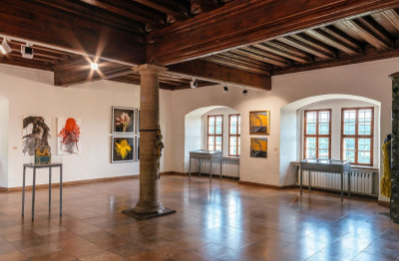
In the mid‑16th century, the Old Palace assumed its present appearance. It unites four structures of different ages, given a uniform face by façade colour and window shapes. The keep, for example, dates from the 12th century. A late medieval women’s chamber was also incorporated into the palace building. By contrast, the south wing was newly built in the Renaissance style and houses two large halls. In addition to the impressive wooden ceilings, painted Renaissance ornament has been preserved. Various uses shaped the building into the 20th century. Since 2004, following comprehensive restoration, the palace has served as a modern conference centre.
Goethe Was Here – the Renaissance Palace
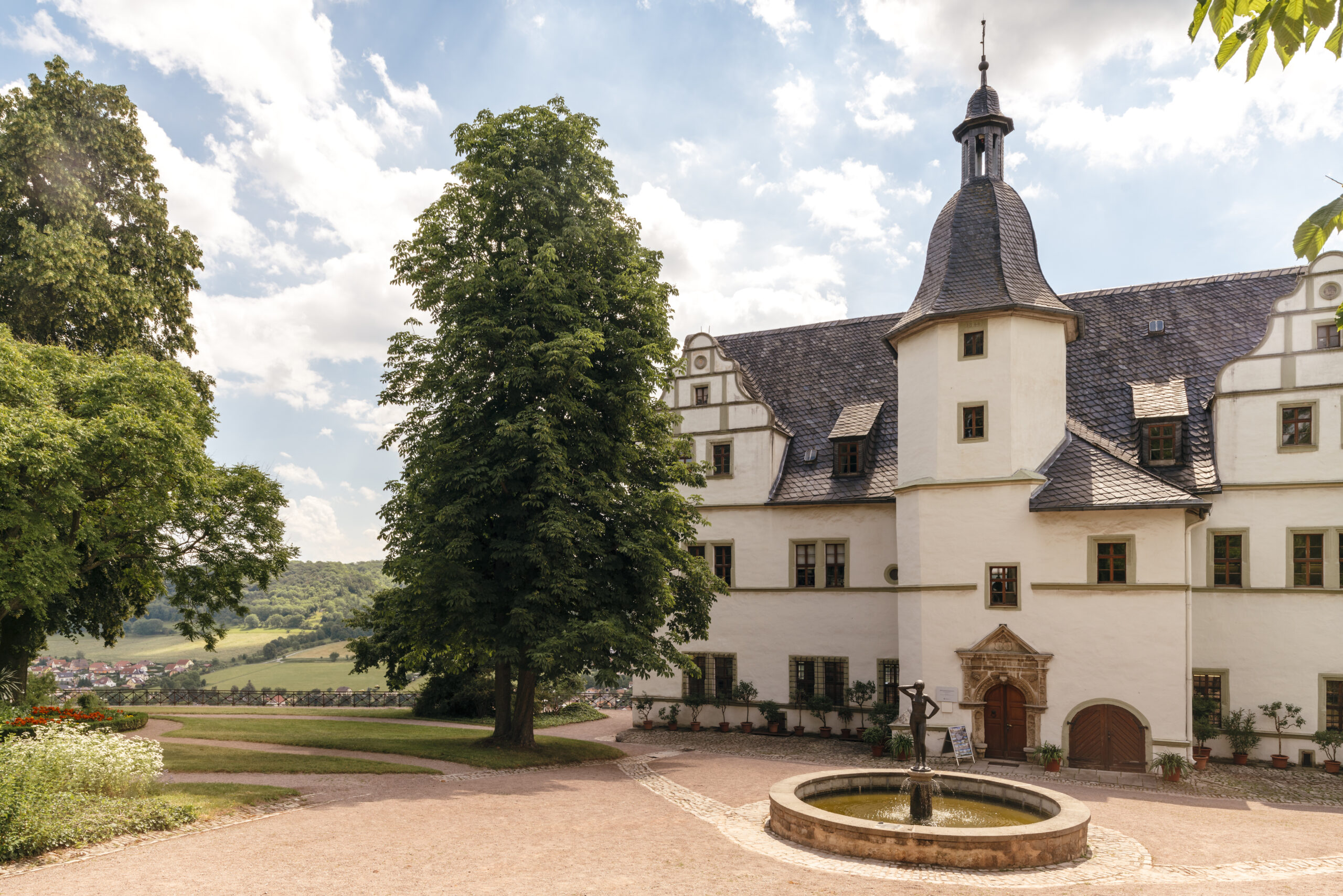
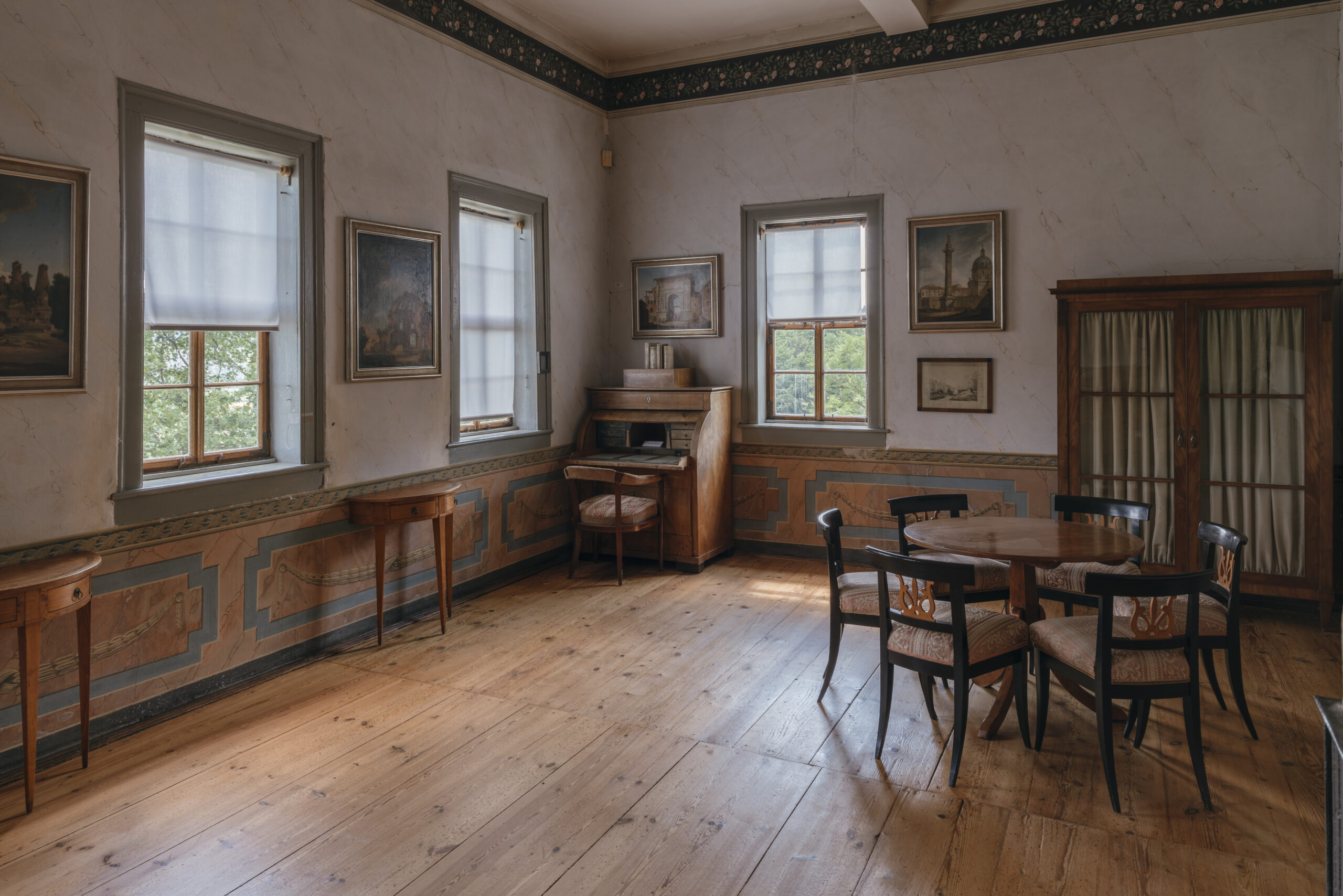
Strictly speaking, it was not even a palace at first – the Renaissance Palace was built in the mid‑16th century as a manor house. It acquired its distinctive appearance with gabled dormers and a niche portal a few decades later. In 1824, Grand Duke Carl August bought the building and incorporated it into the ensemble of his Dornburg Palace summer residence. Alterations made it more comfortable, and the ruler himself took up quarters here in summer. The palace became famous above all through his friend and Privy Councillor Johann Wolfgang von Goethe. After Carl August’s death, he withdrew to Dornburg Palace in the summer of 1828 and lived for several weeks in the Mountain Parlour. In addition to many letters and research notes, evocative poems were written here.
Dornburg Palaces Museum
Two of the Dornburg palaces can be visited as museums. In the rococo palace, the tour leads through 18th and 19th century works of interior art. In the Renaissance palace (currently closed due to building work), the focus is on Johann Wolfgang von Goethe’s stay in 1828. The neighbouring stables are home to the Bauhaus Workshop Museum.
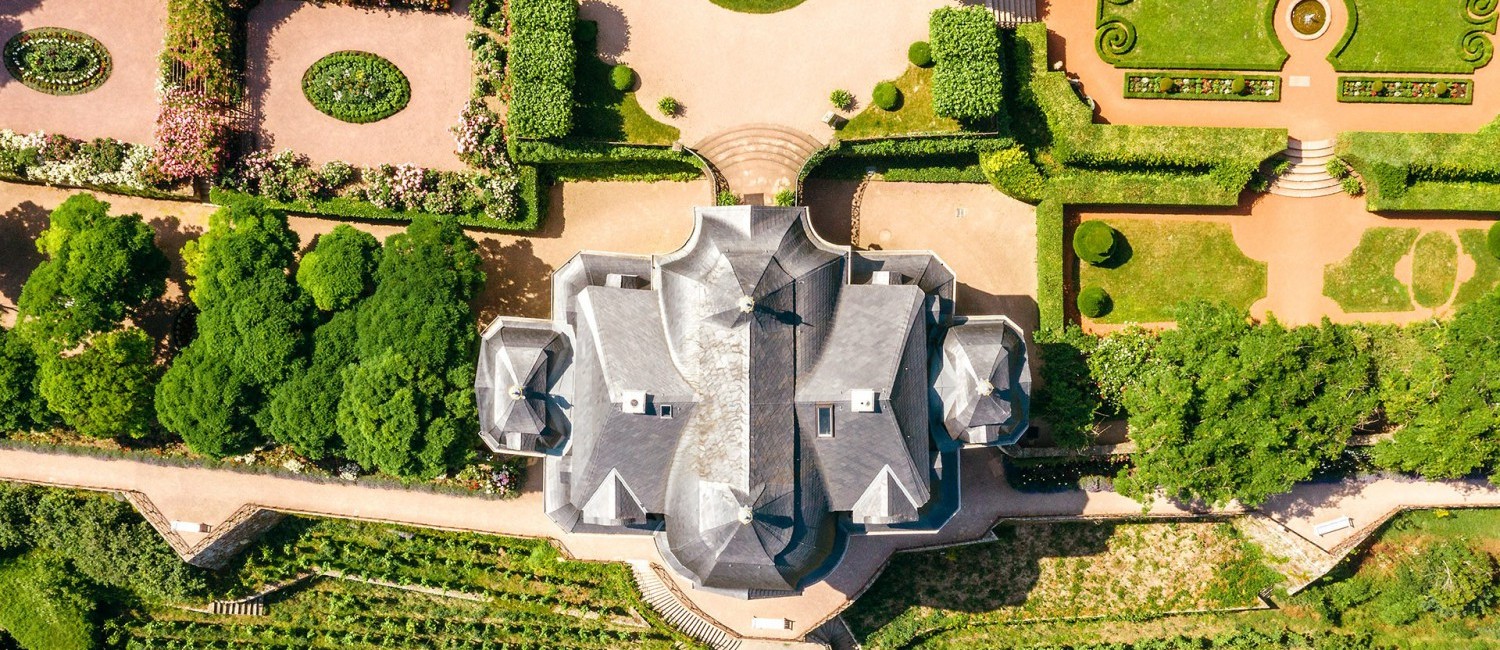
“The view is splendid and cheerful, the flowers bloom in the well‑kept gardens, the vine trellises are heavily laden, and beneath my window I see a thriving vineyard (…),” is how Johann Wolfgang von Goethe described the palace gardens in 1828. A few years earlier, Carl August had commissioned his court gardener Carl August Christian Sckell to connect the three palaces of differing character into a single ensemble through the design of the gardens. The garden artist created intimate garden rooms in different styles, including the landscape park, the ash walk and the tea place. The gardens became famous for their wealth of roses, which luxuriantly entwine an arbour walk and, in great numbers and variety of cultivars, line the terrace paths. The vineyards admired by Goethe are still cultivated; the wine is available in the museum shop.